
HISPANIA - The Centuries of the Crown
"I have placed another world under the rule of the King and Queen, so that the Hispanic monarchy, once considered poor, has become the richest."
Letter from Columbus, October 1500
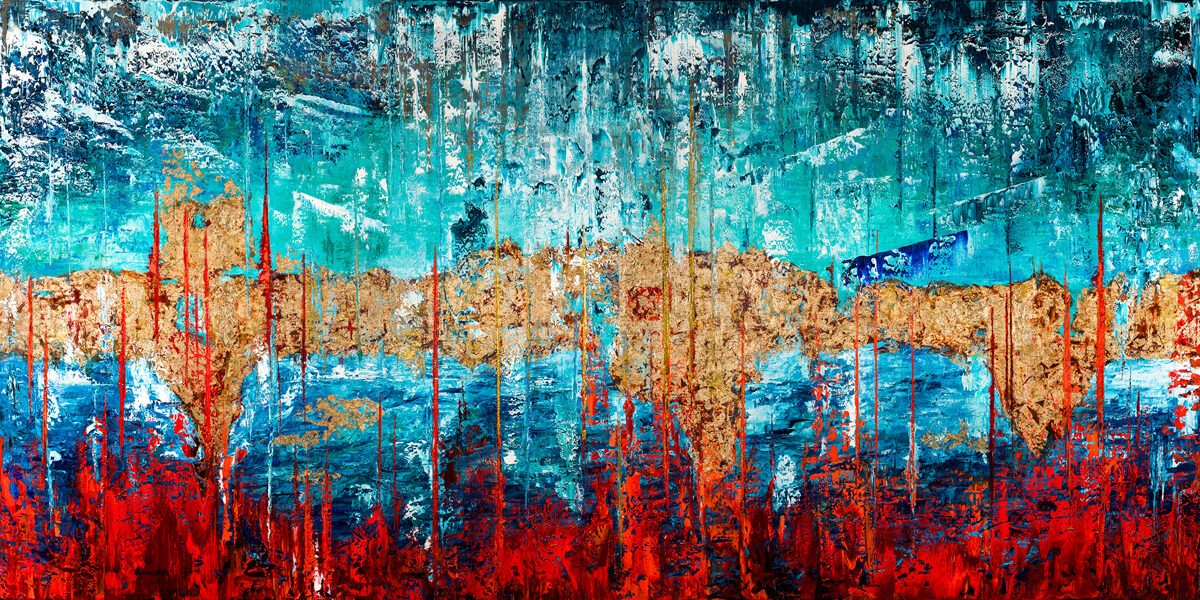
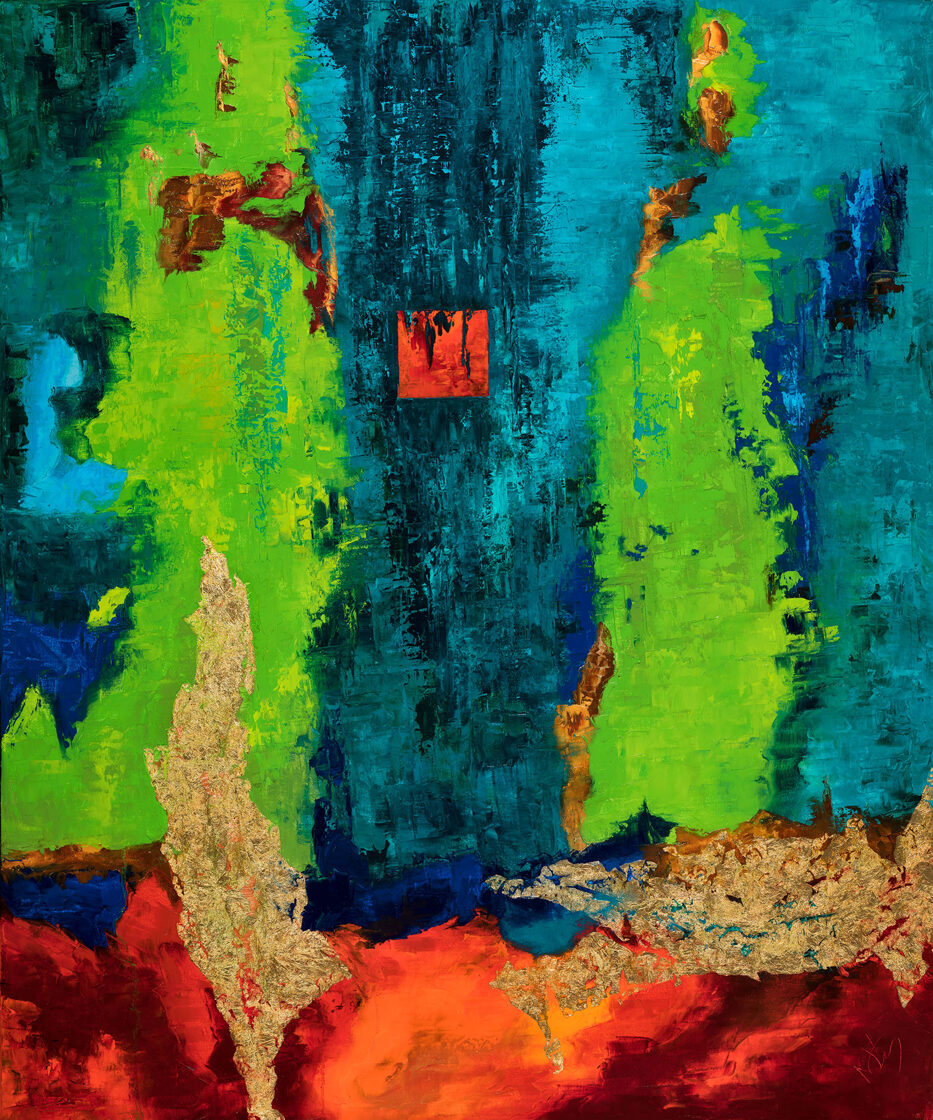
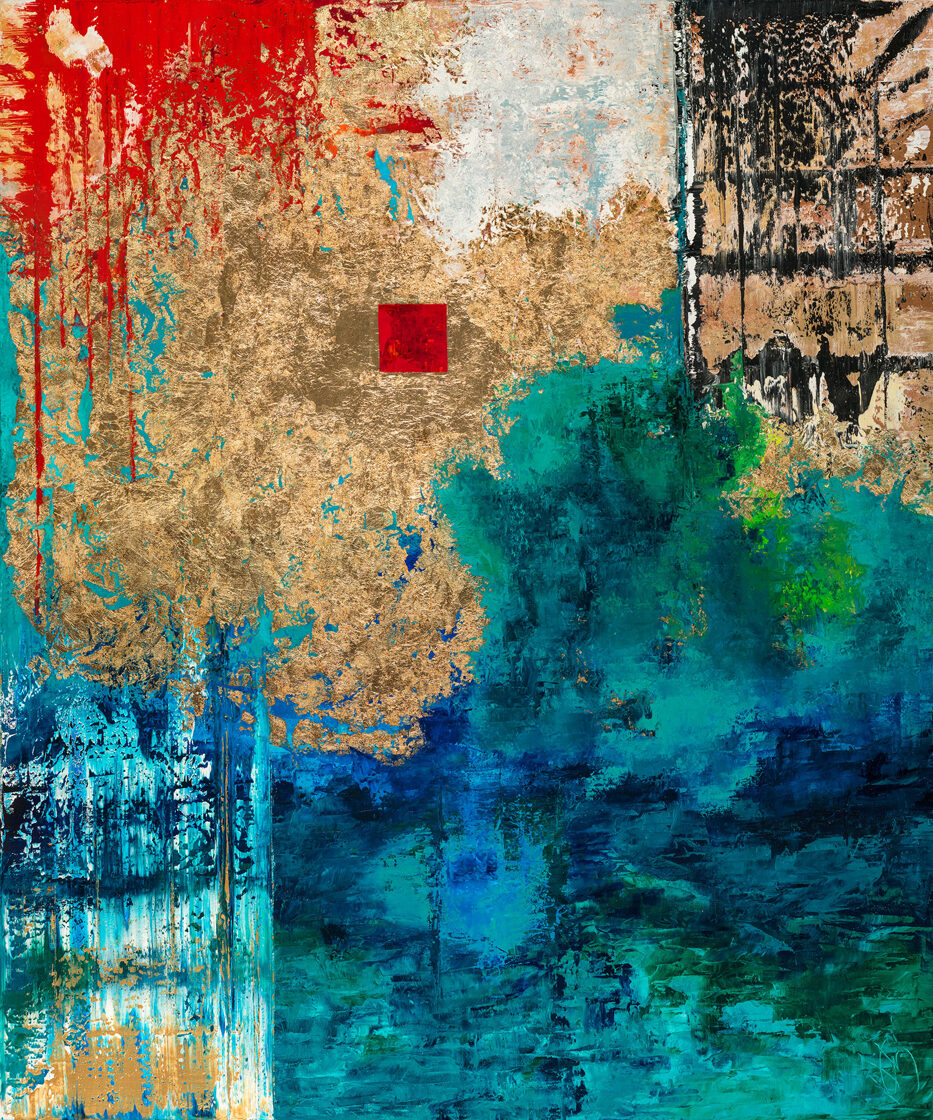
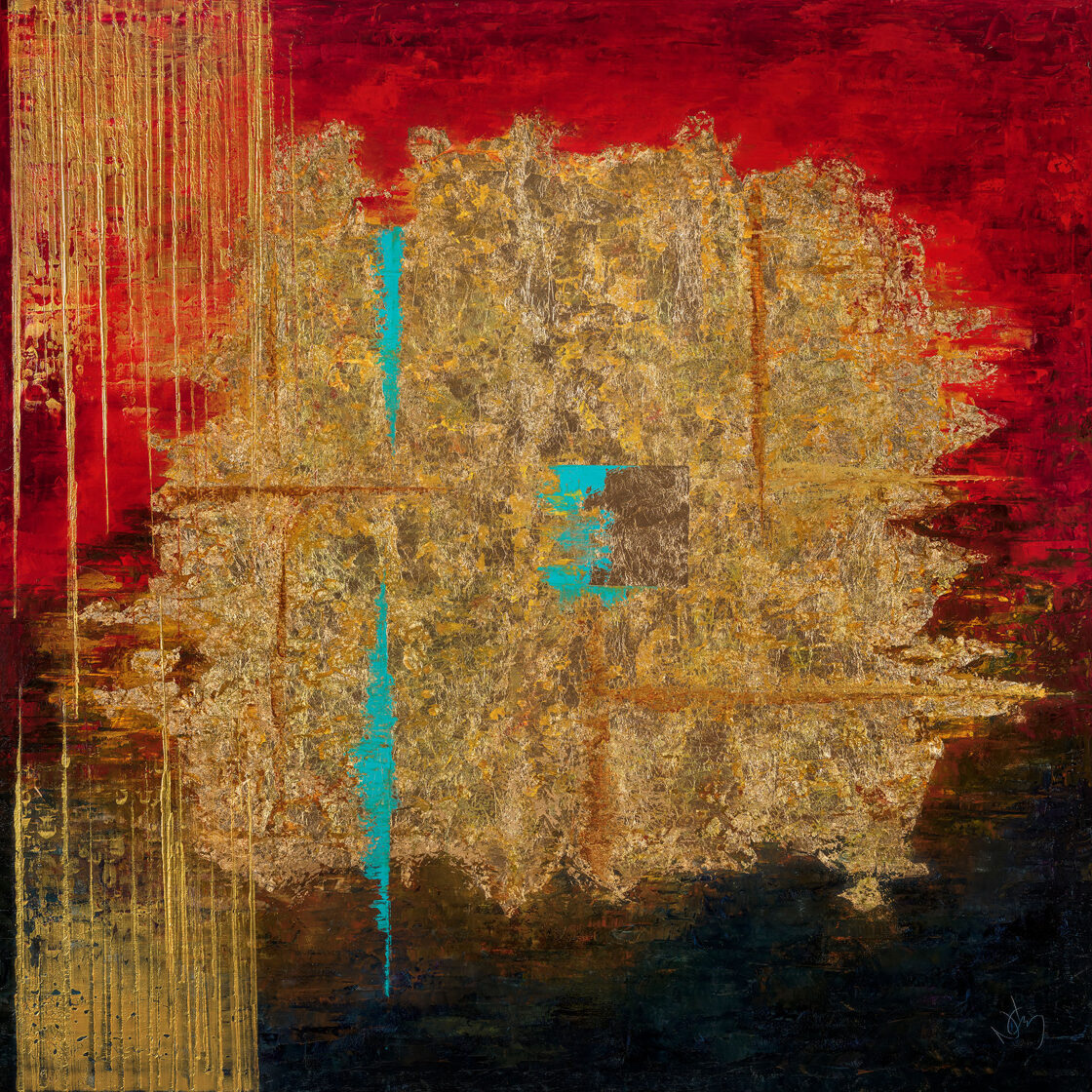
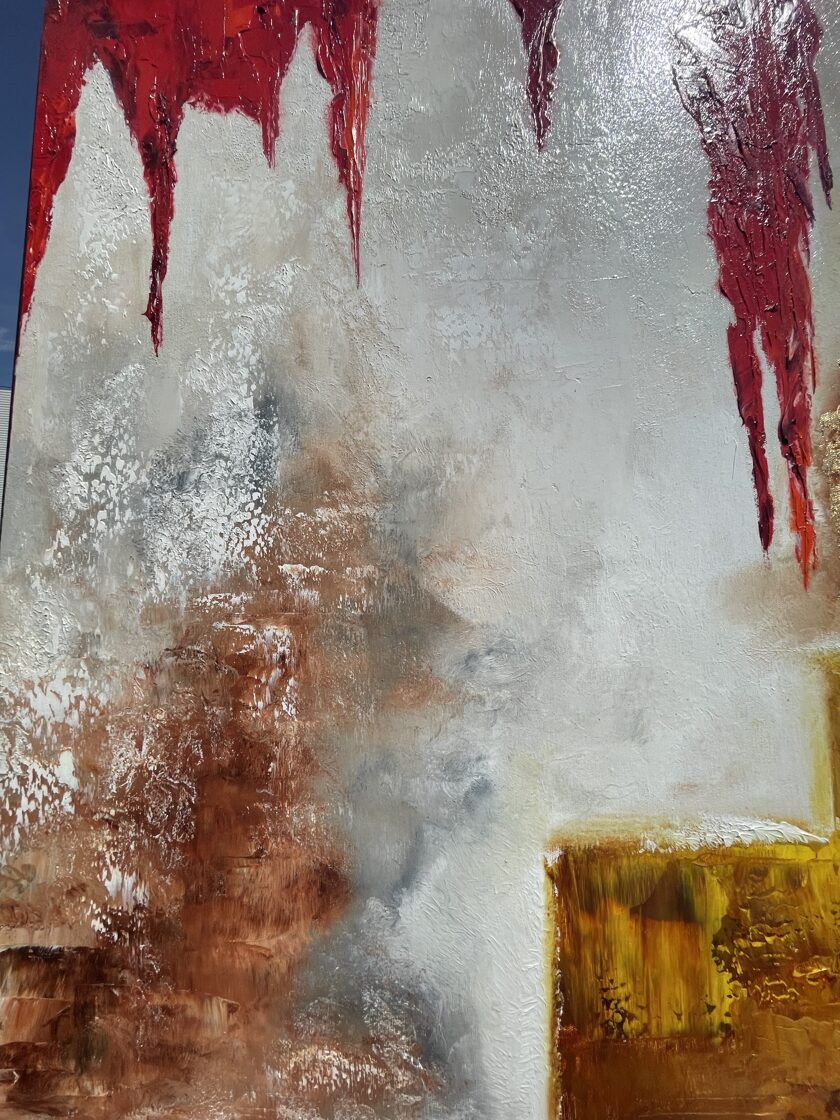
Initial
125x250cm, oil, gold, canvas, 2024 Sitges/Barcelona
SOLD
The birth of the Hispanic monarchy as we know today dates back to 1469, when Isabella, Queen of Castile, married King Ferdinand II, who ruled Aragon. The eldest daughter of the Aragonese ruling couple, Joan of Arc and her husband, the German-Roman Emperor Michael I, had a child together, Philip the Fair. Philip's first-born, Charles V, inherited the Spanish throne in 1516. In 1520, Charles V was elected the Holy Roman Emperor. He became the ruler of vast territories, including part of the New World and the islands of Asia. It was said:
"The empire where the sun never sets".
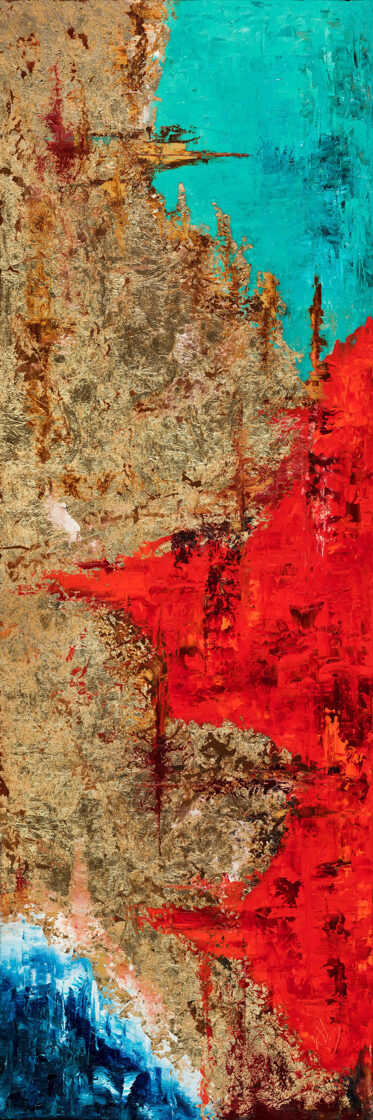
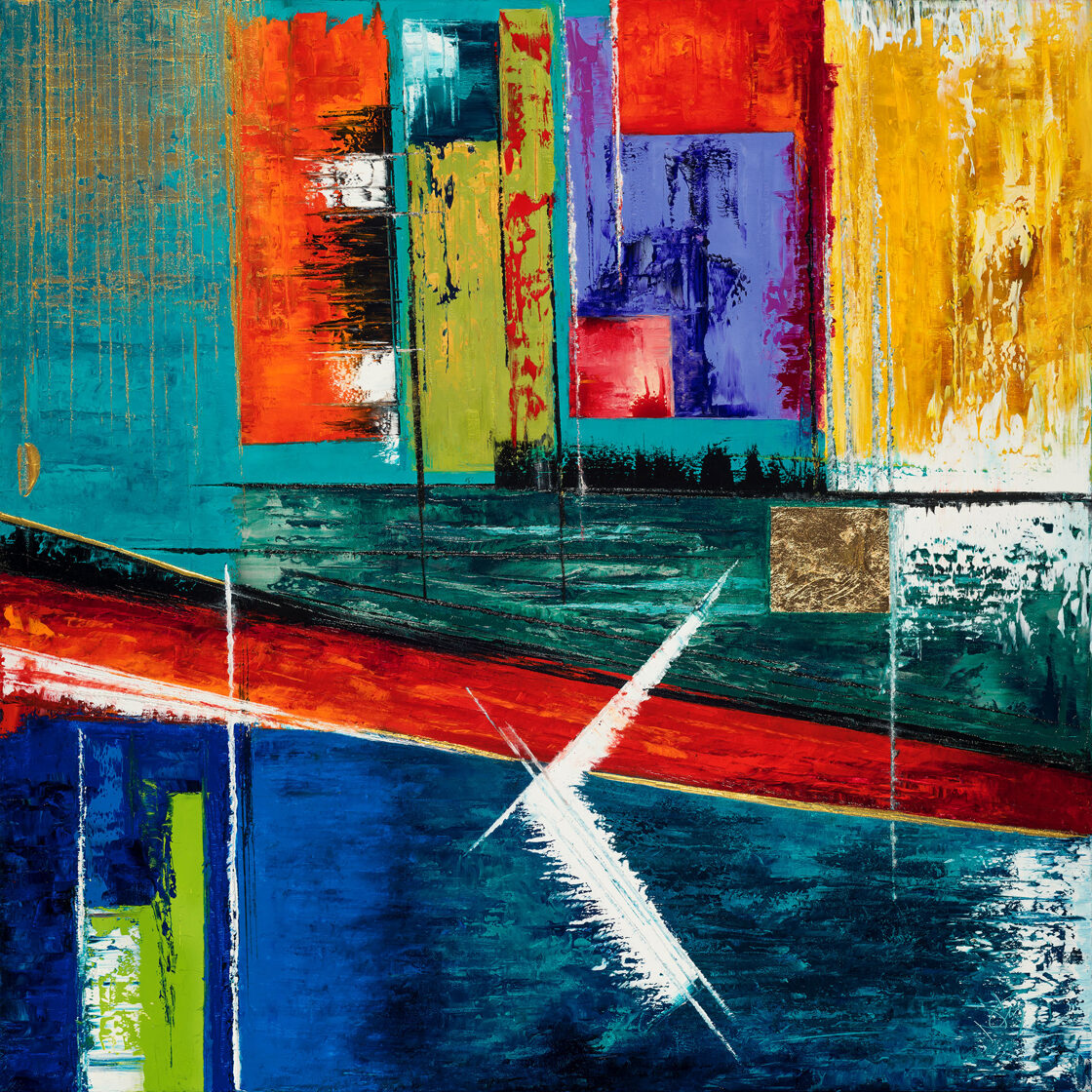
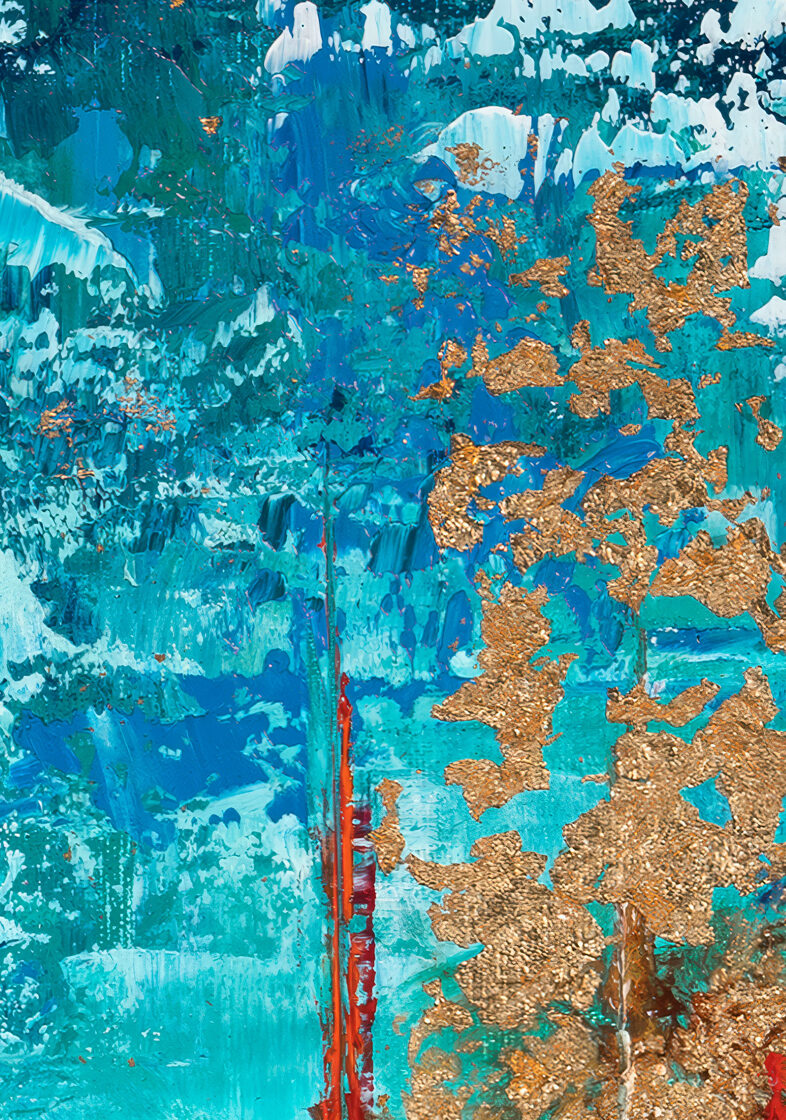
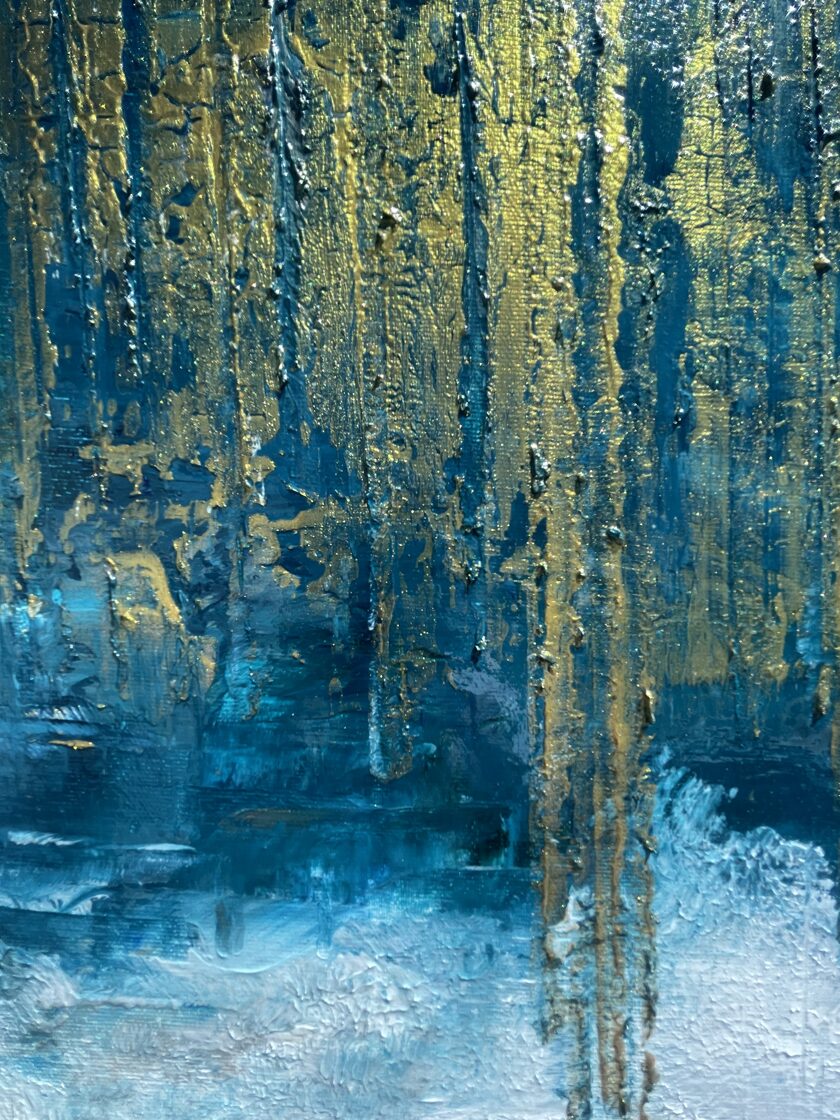
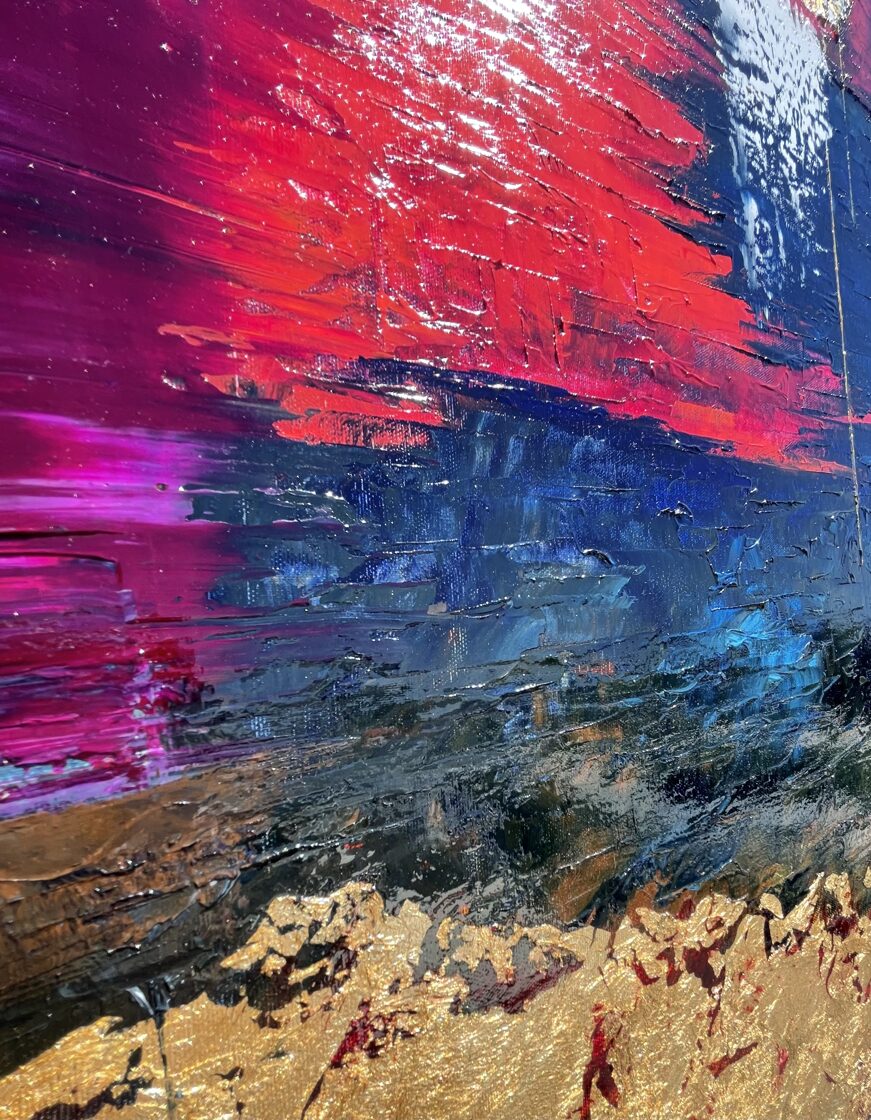
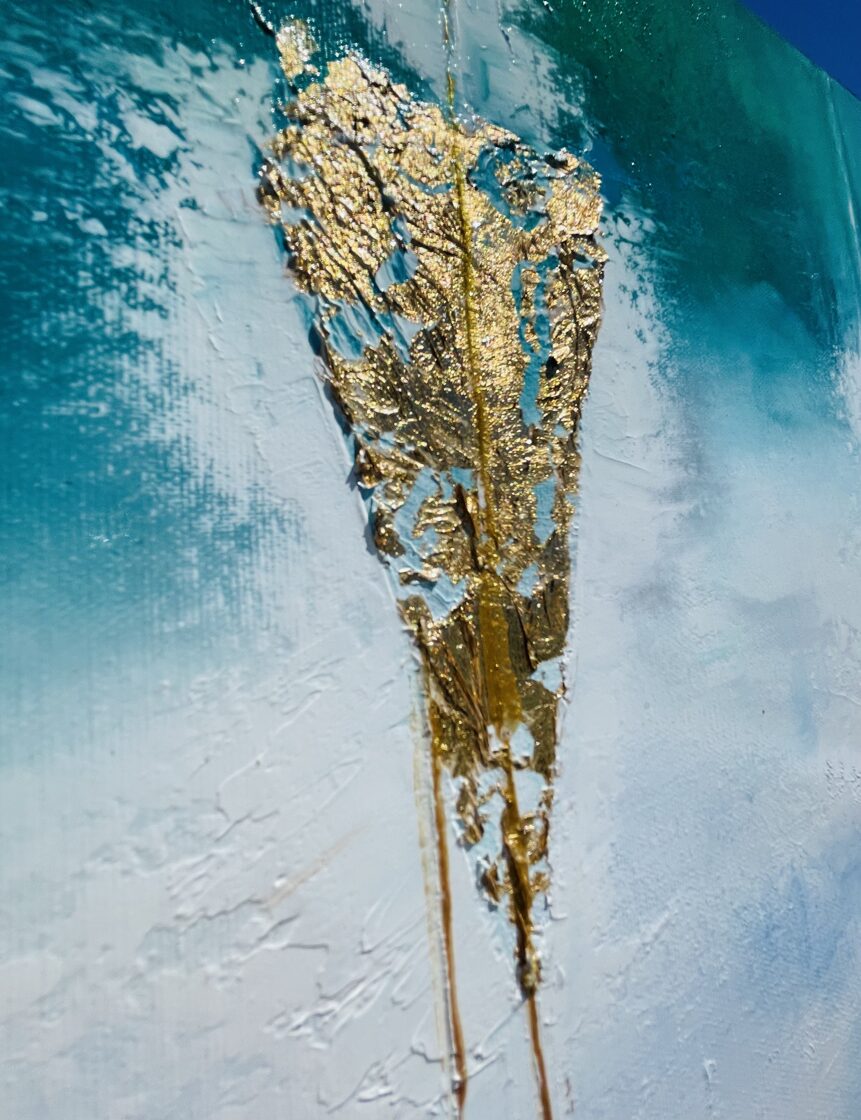
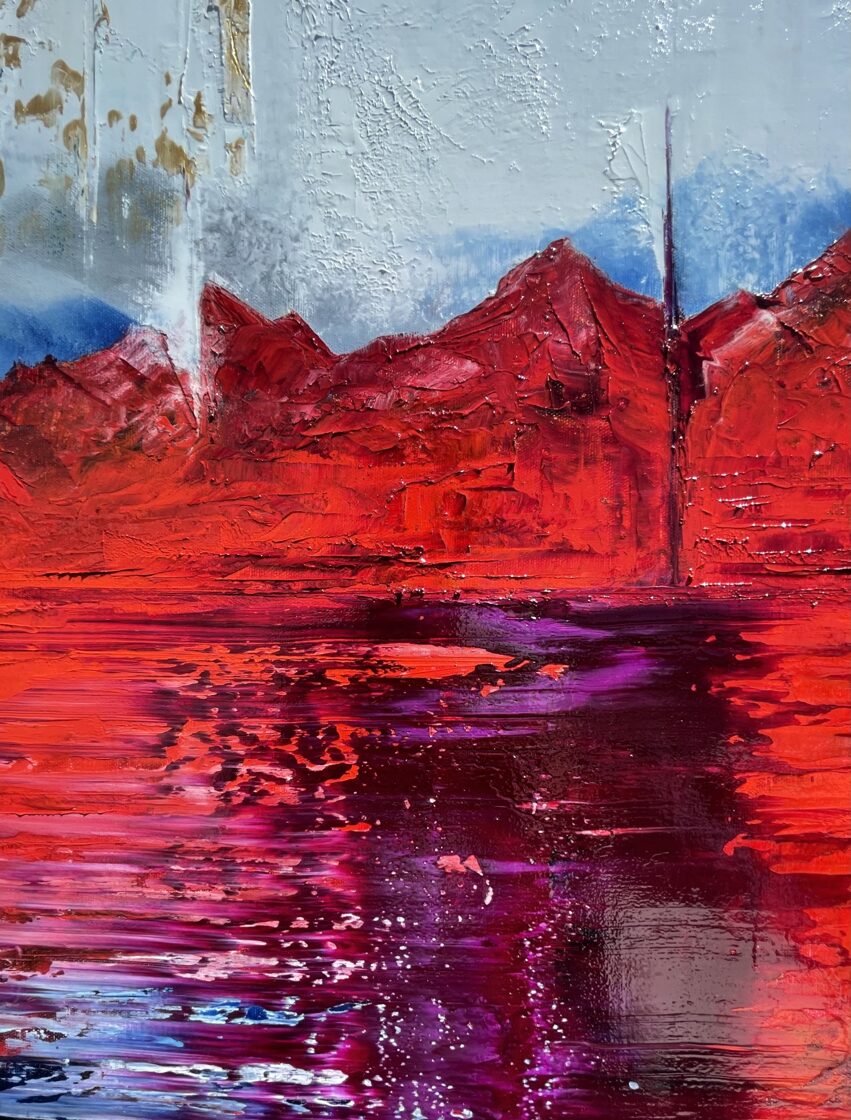
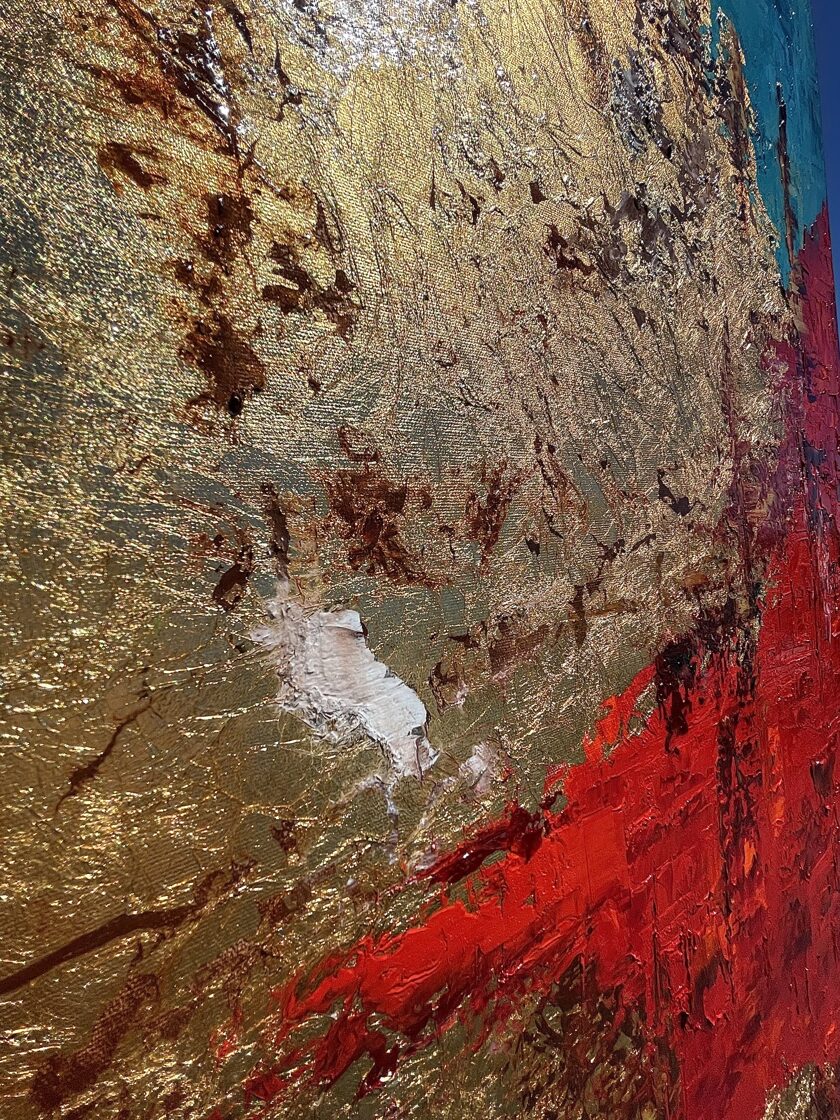
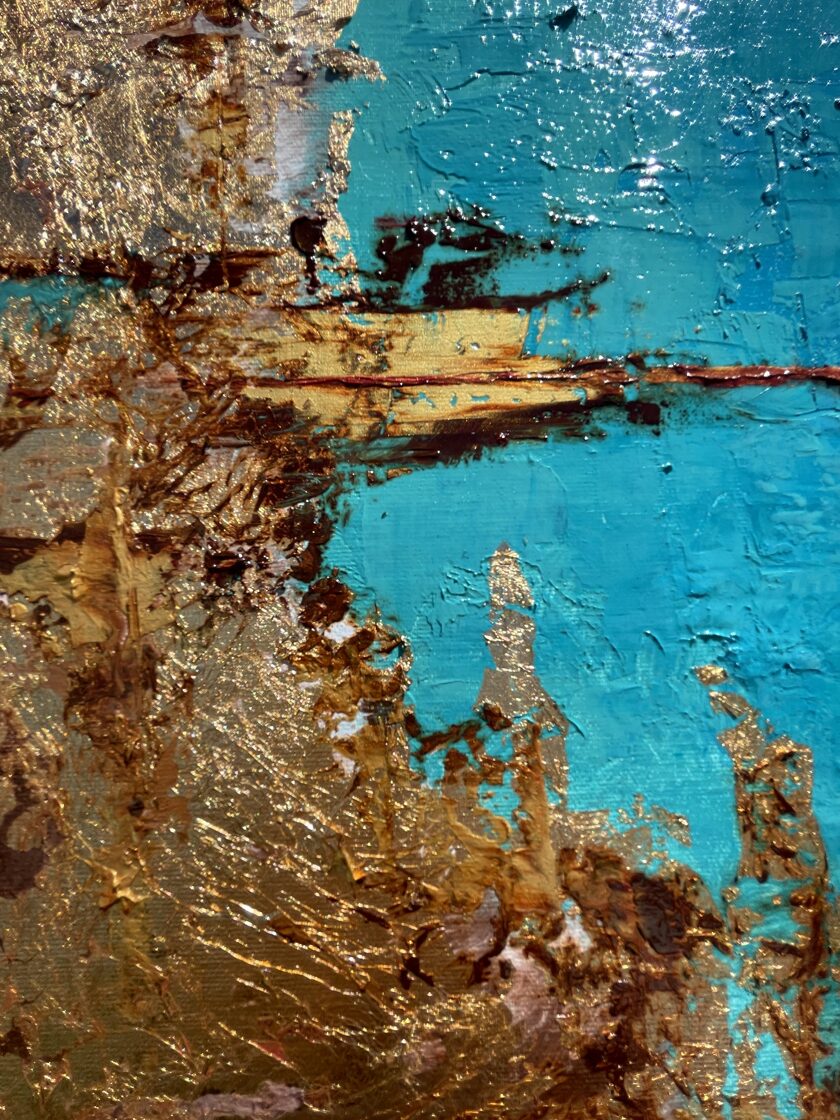
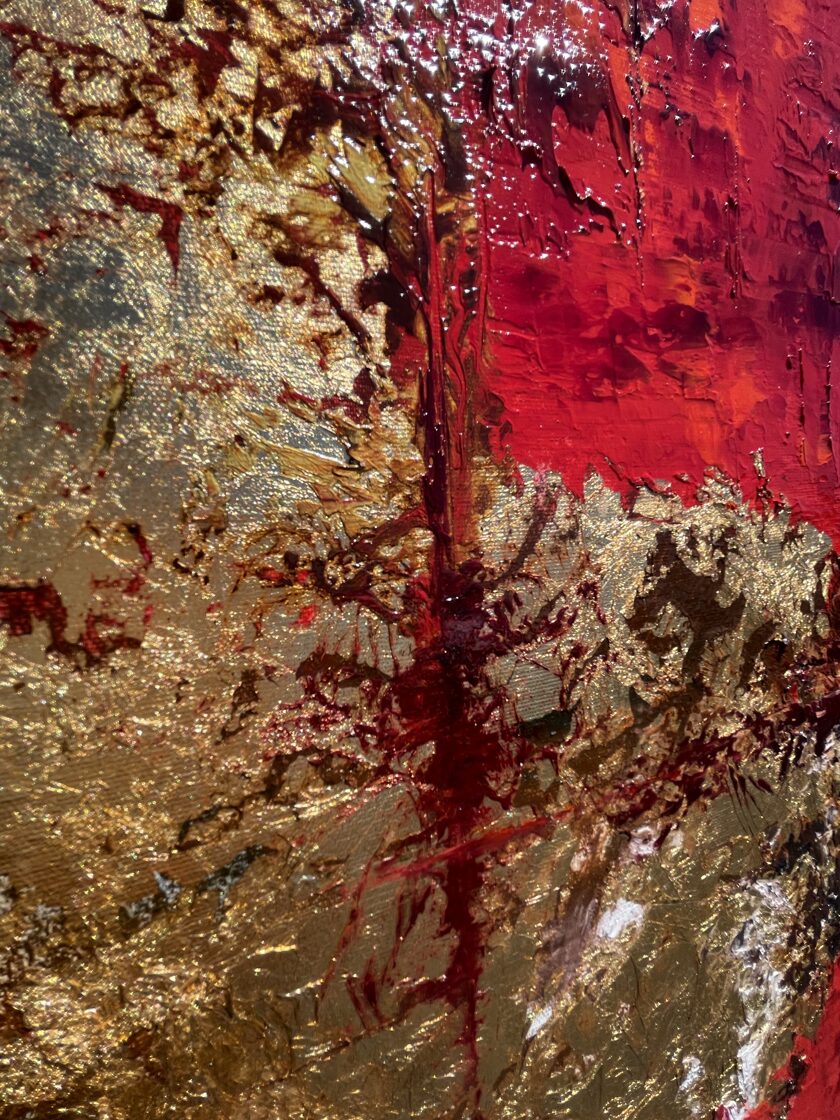
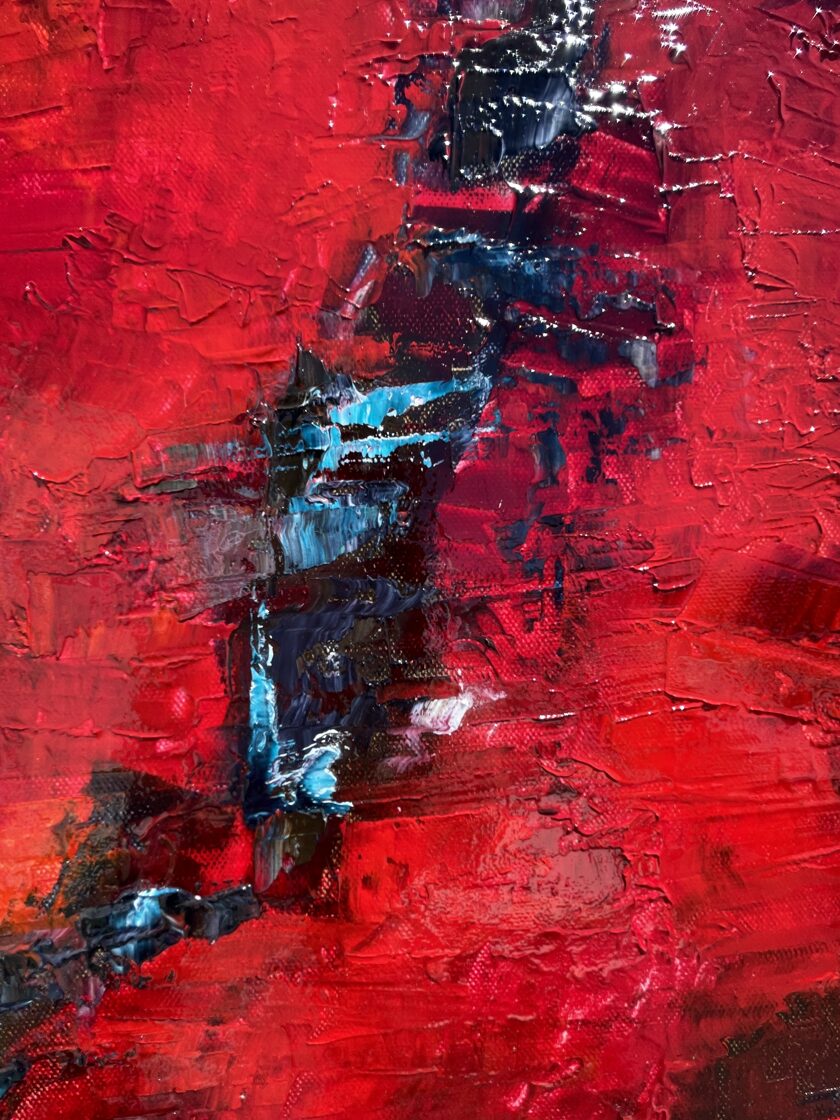
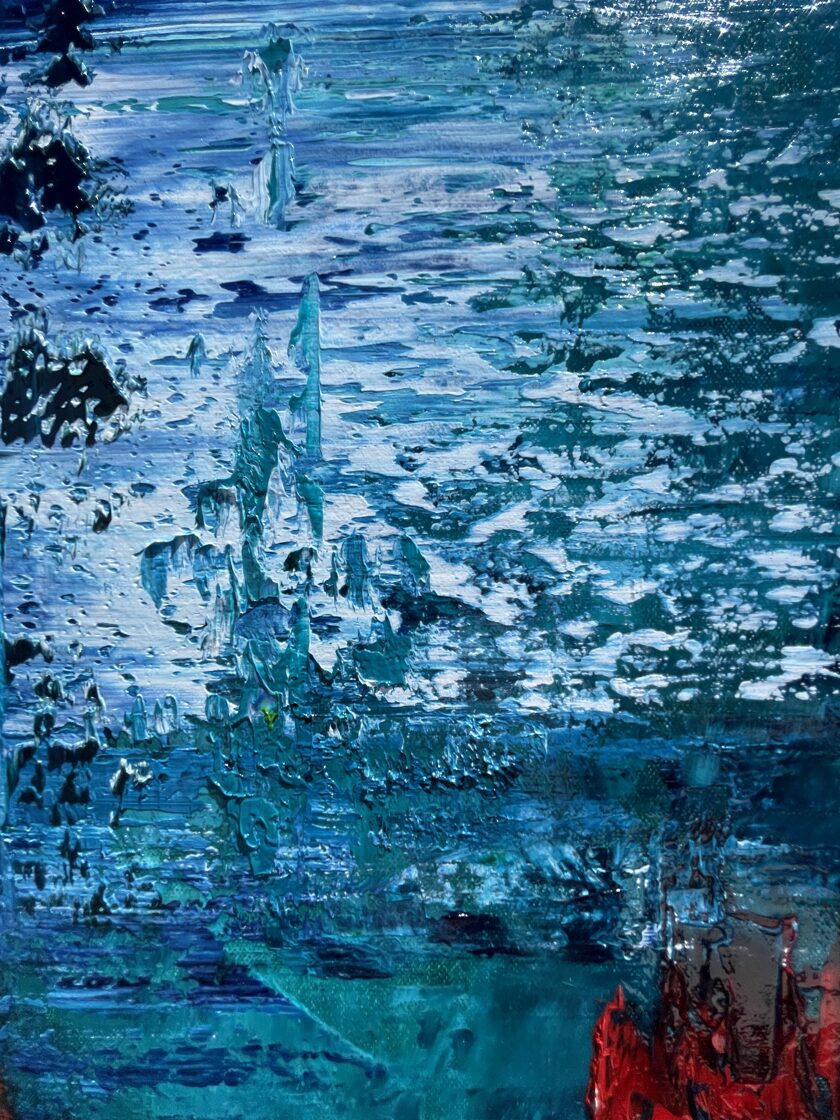
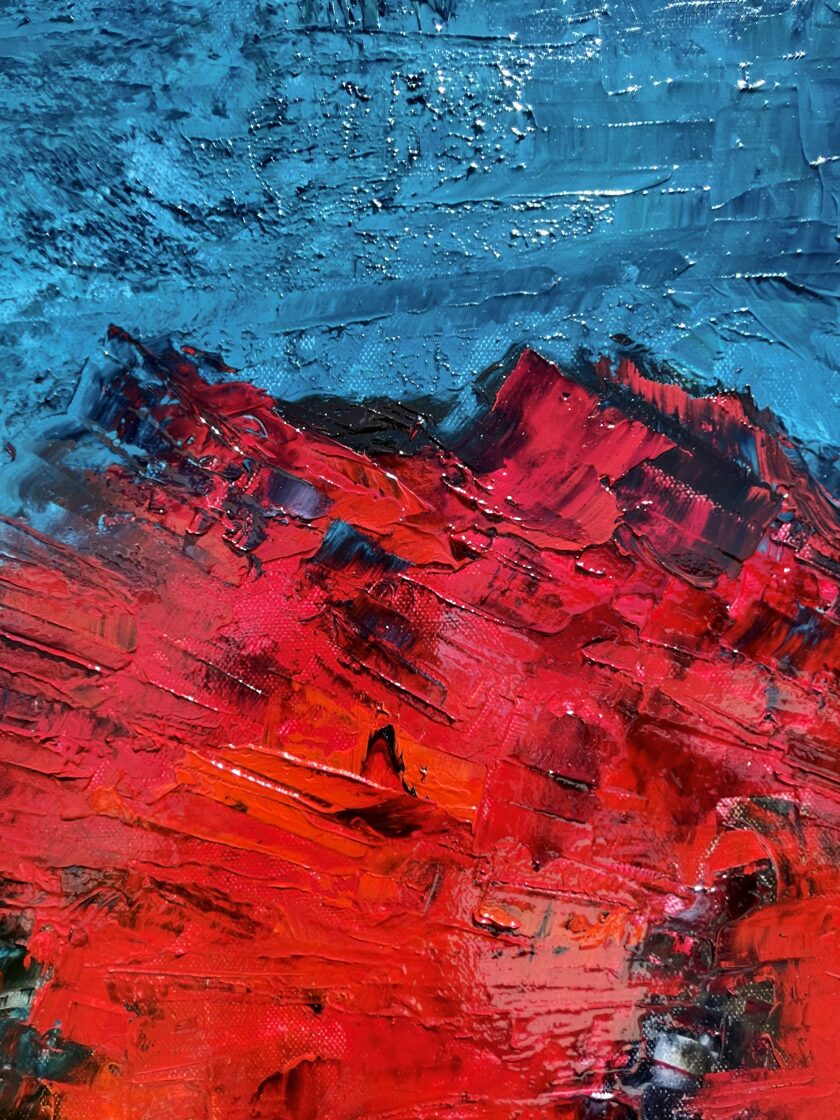
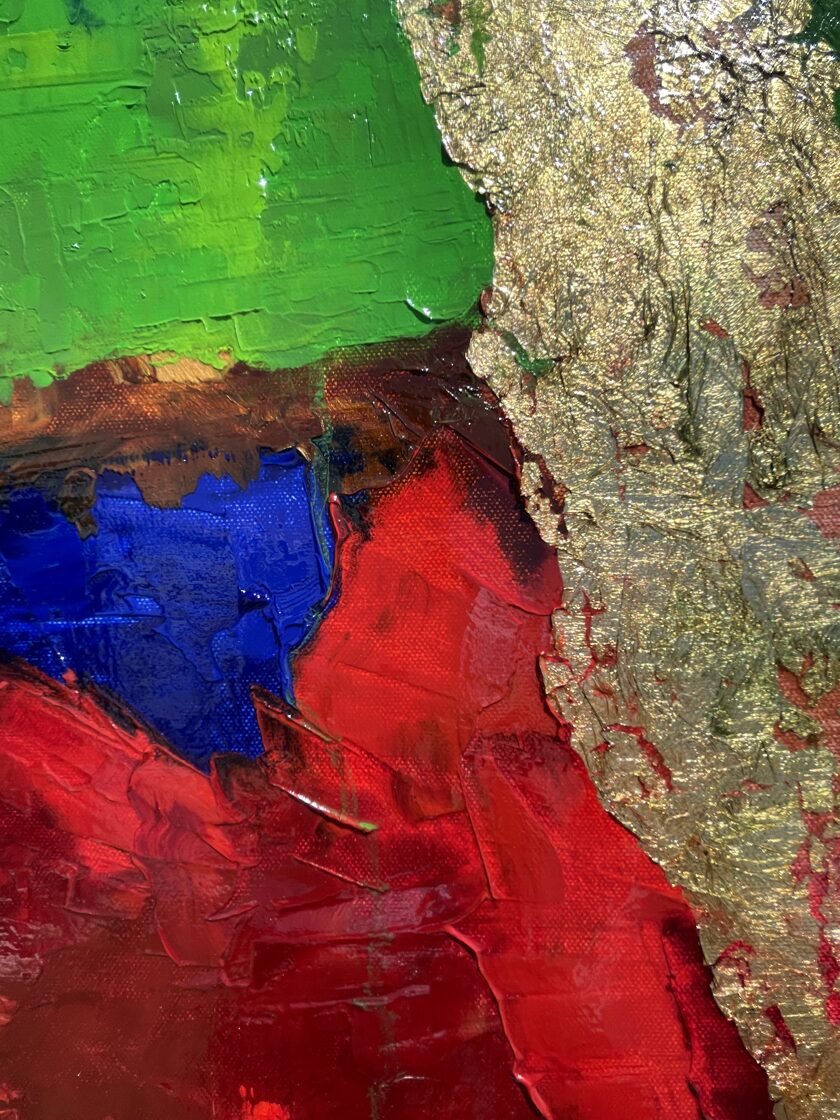
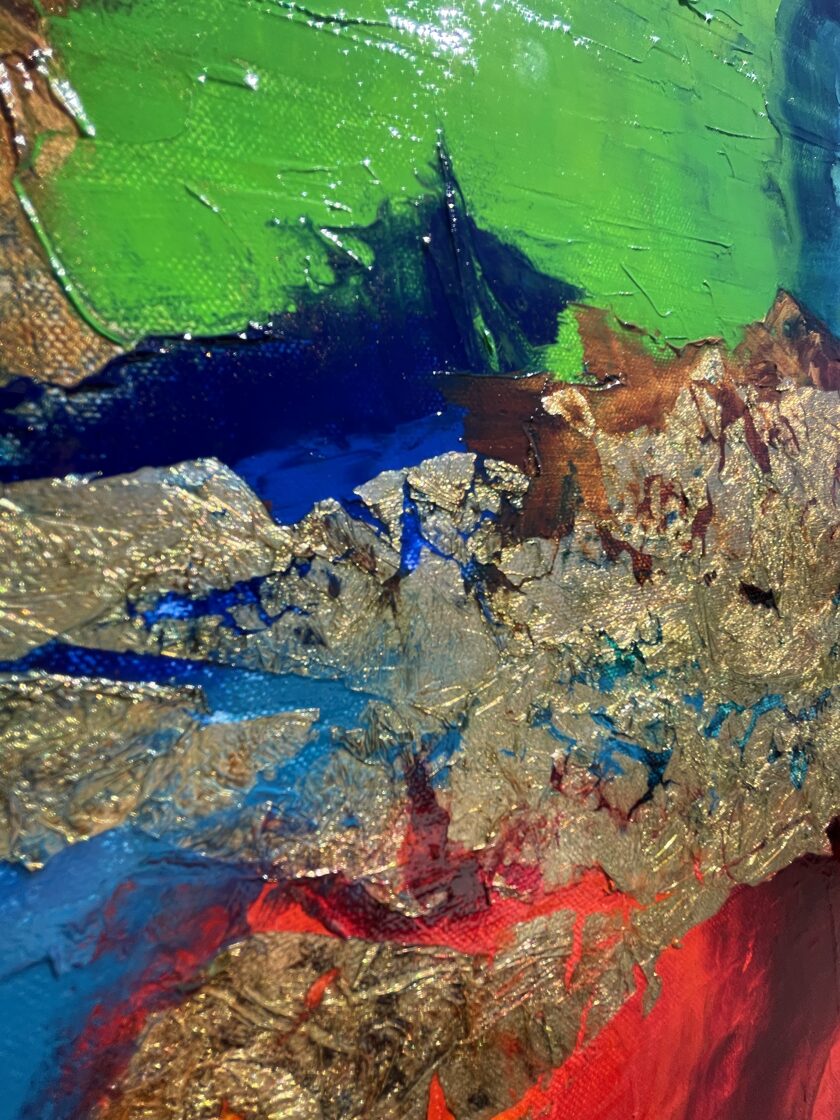
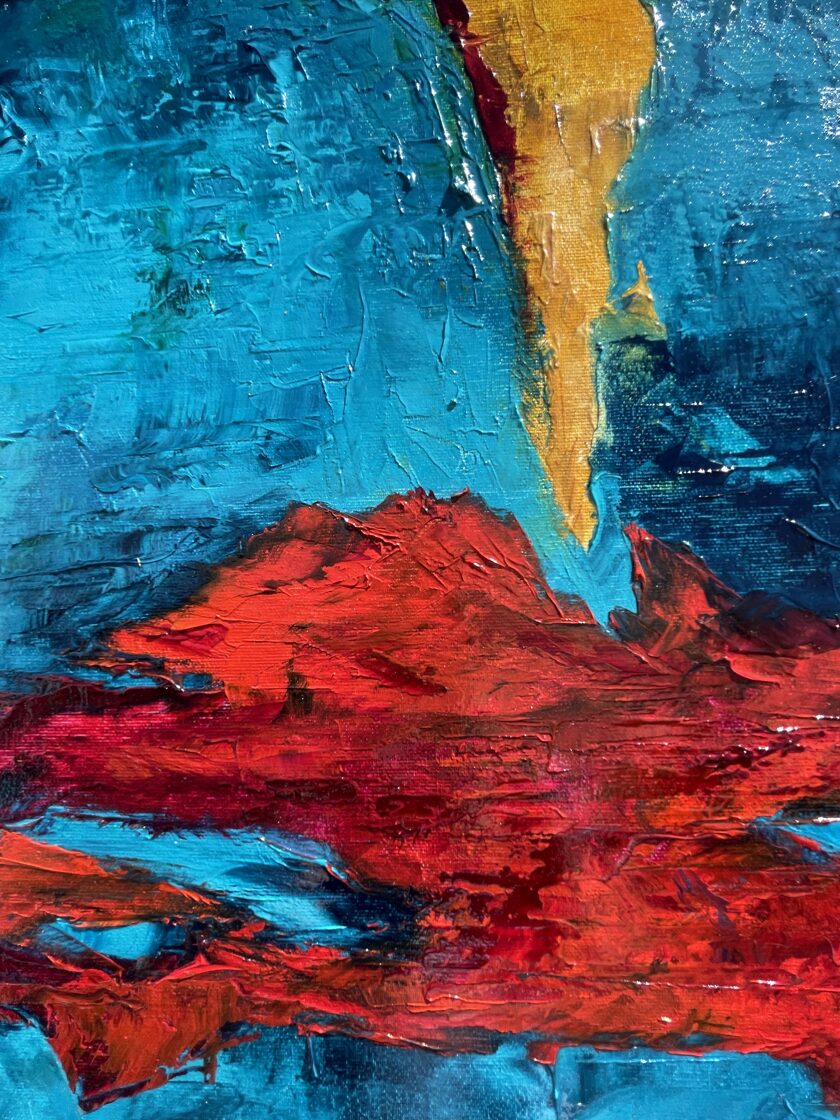
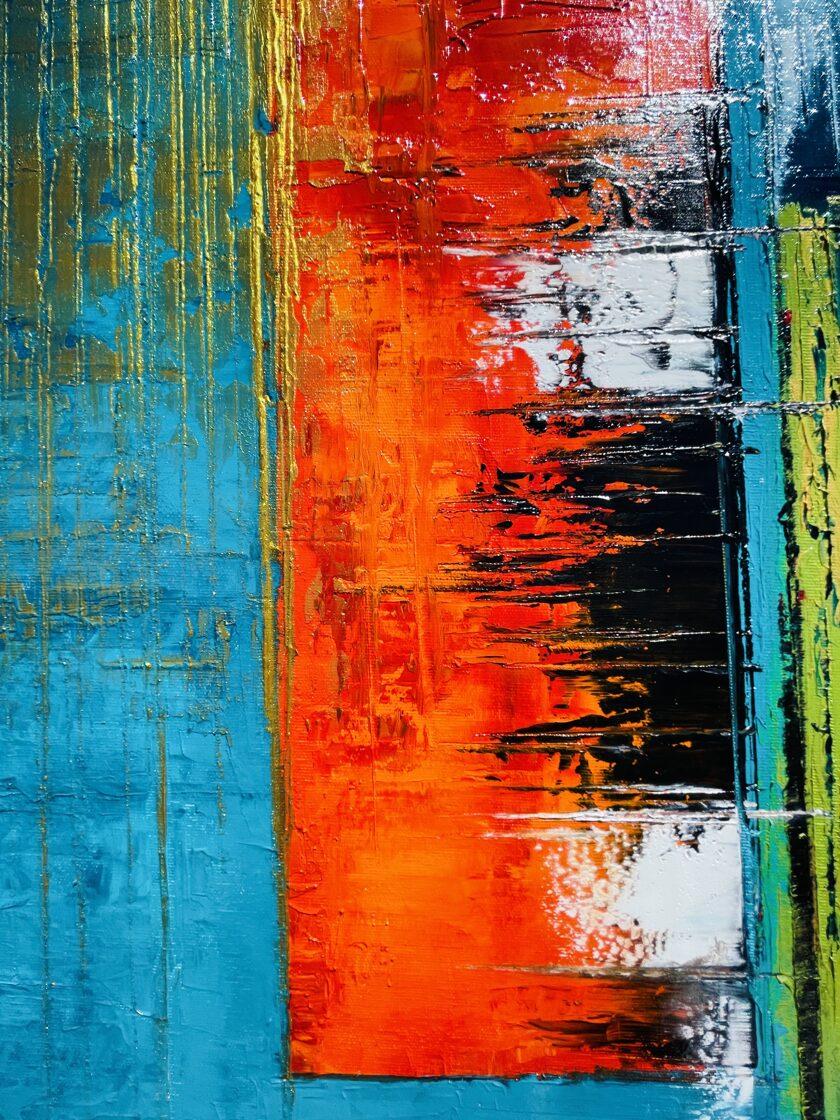
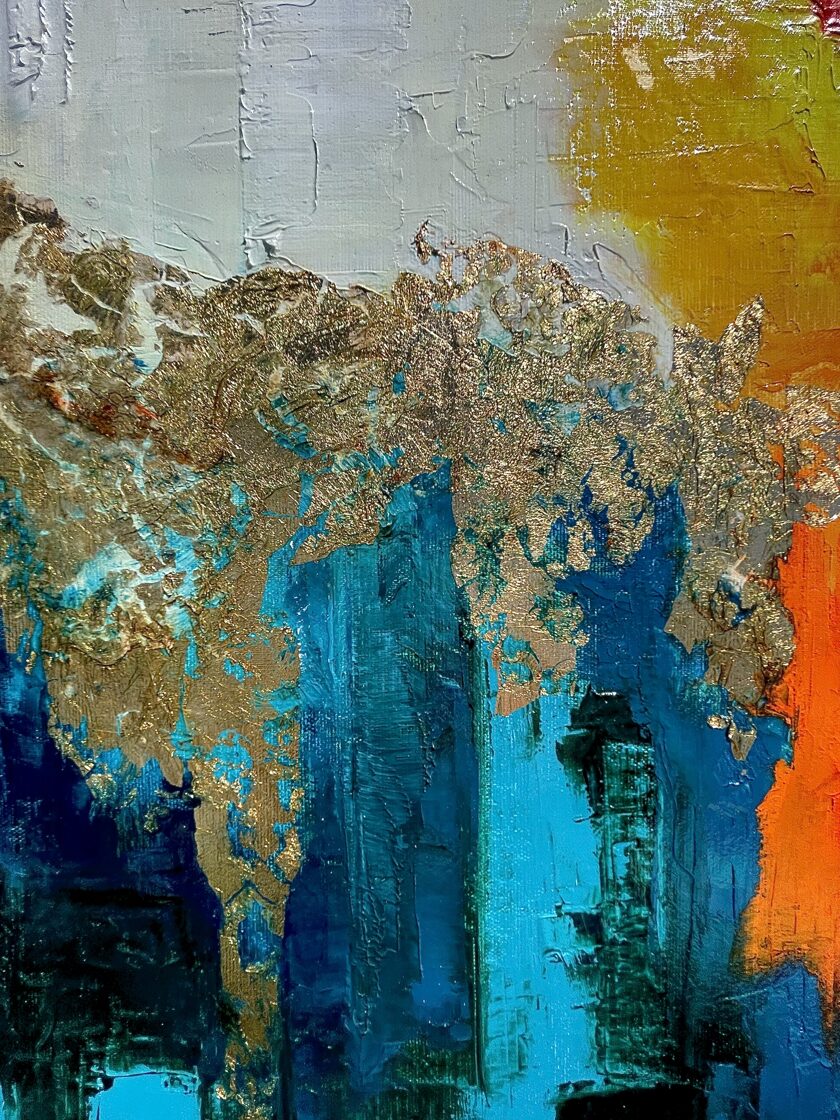
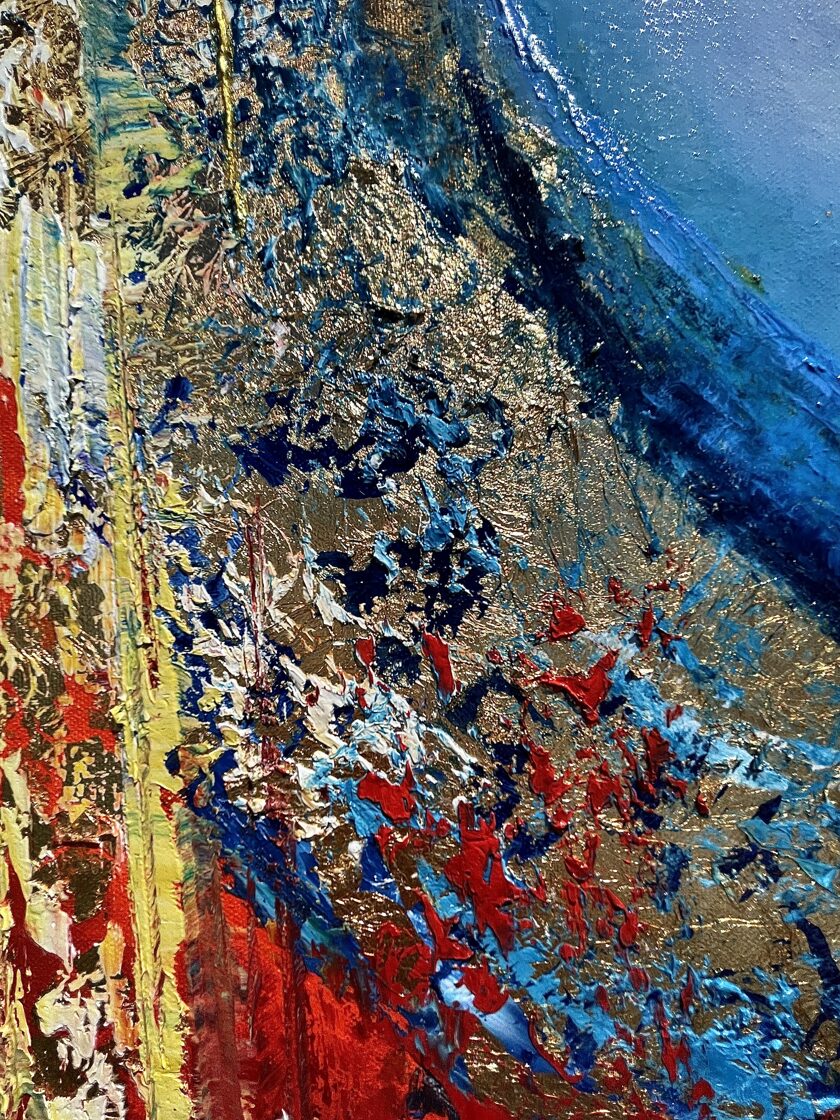
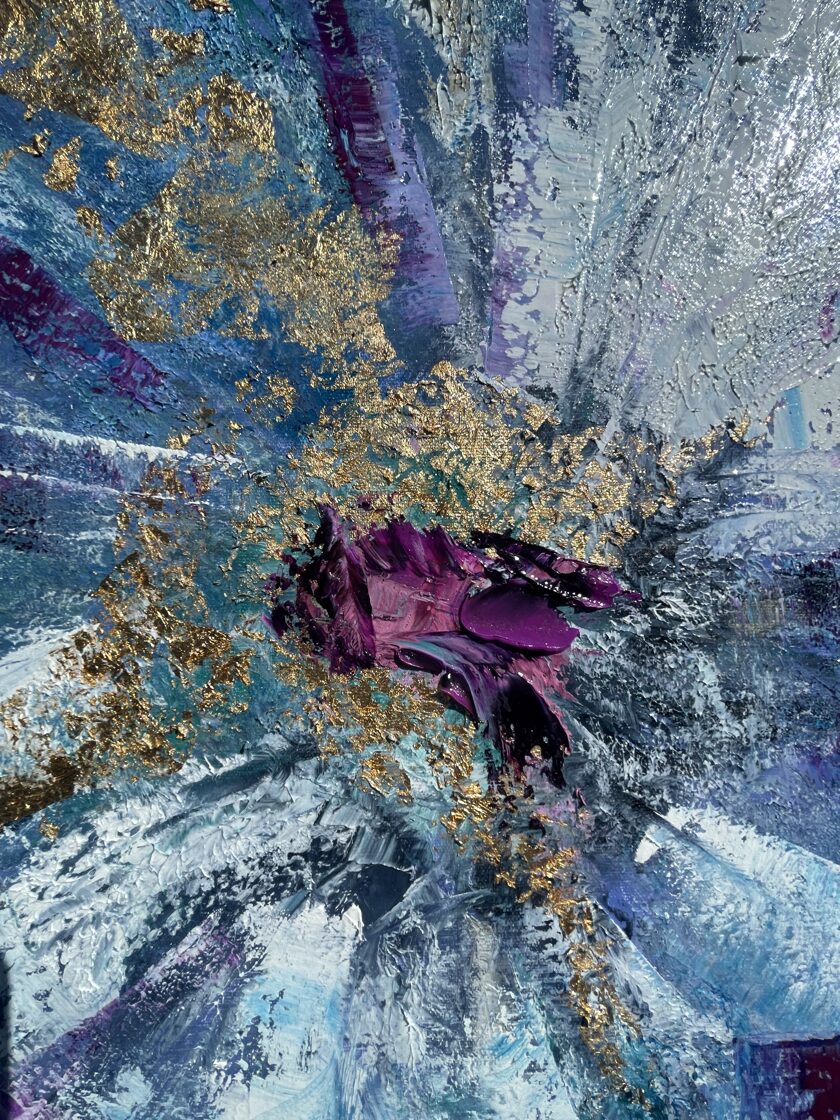
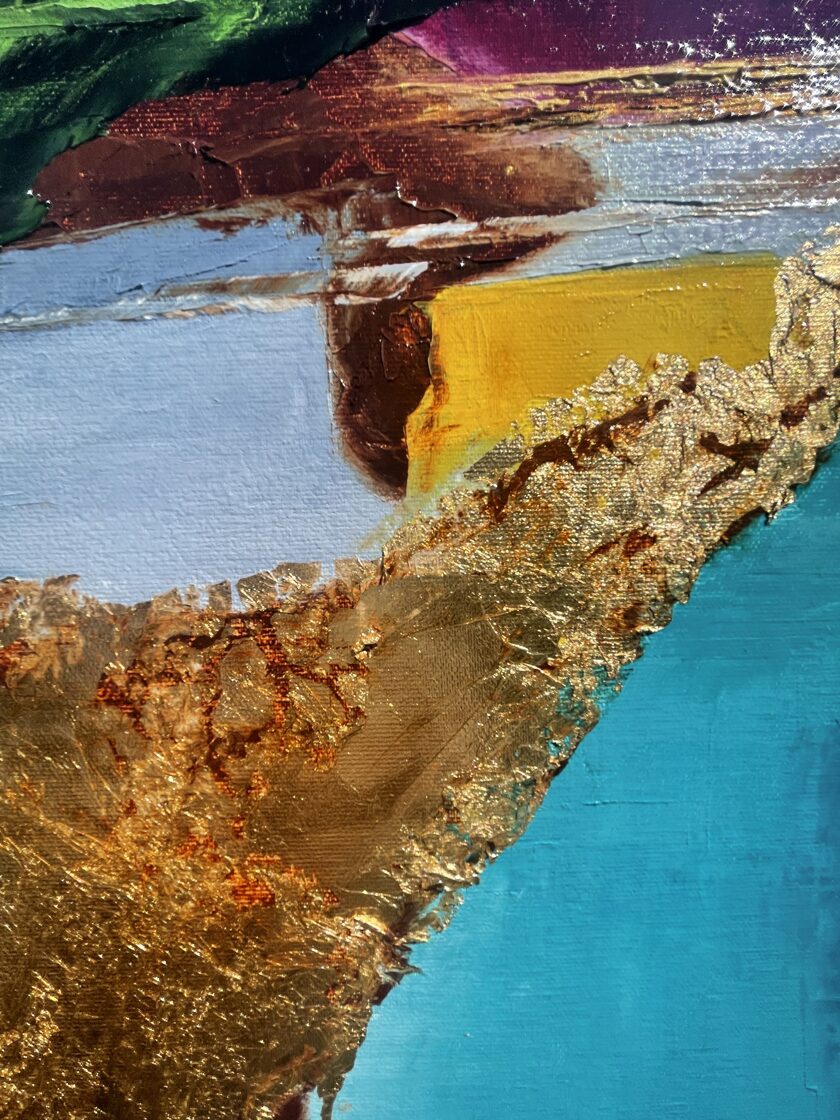
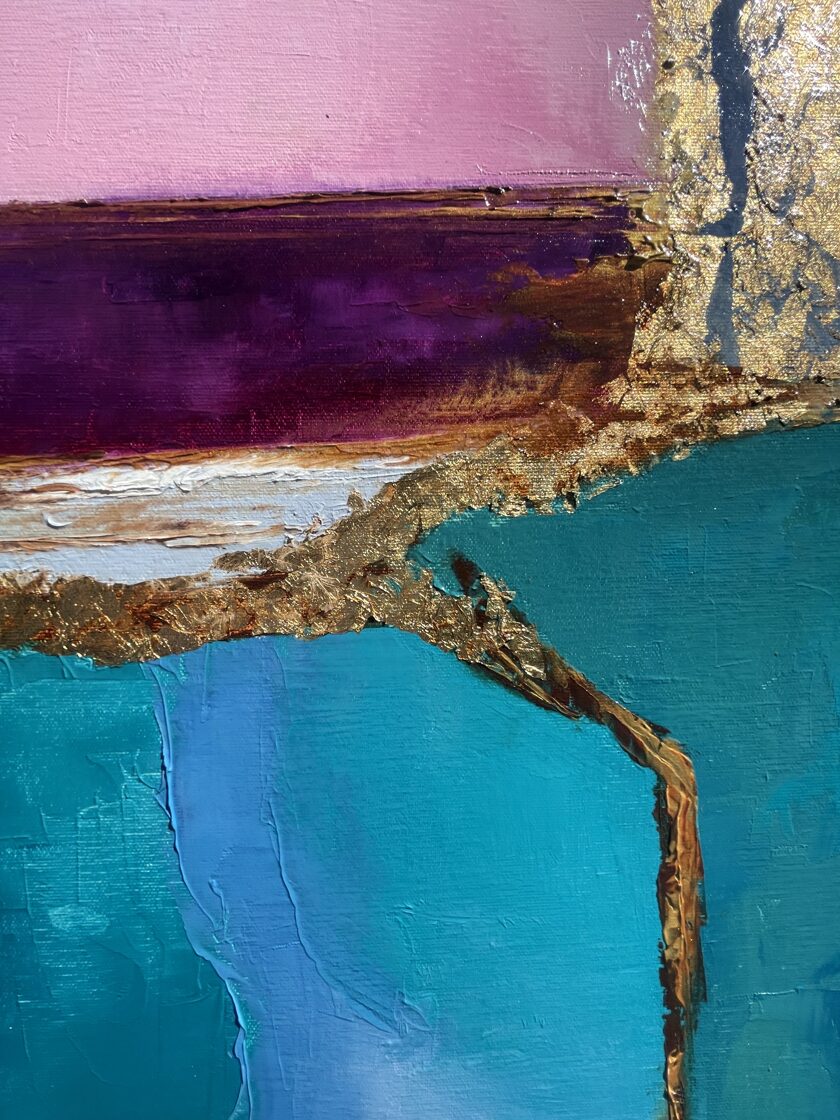
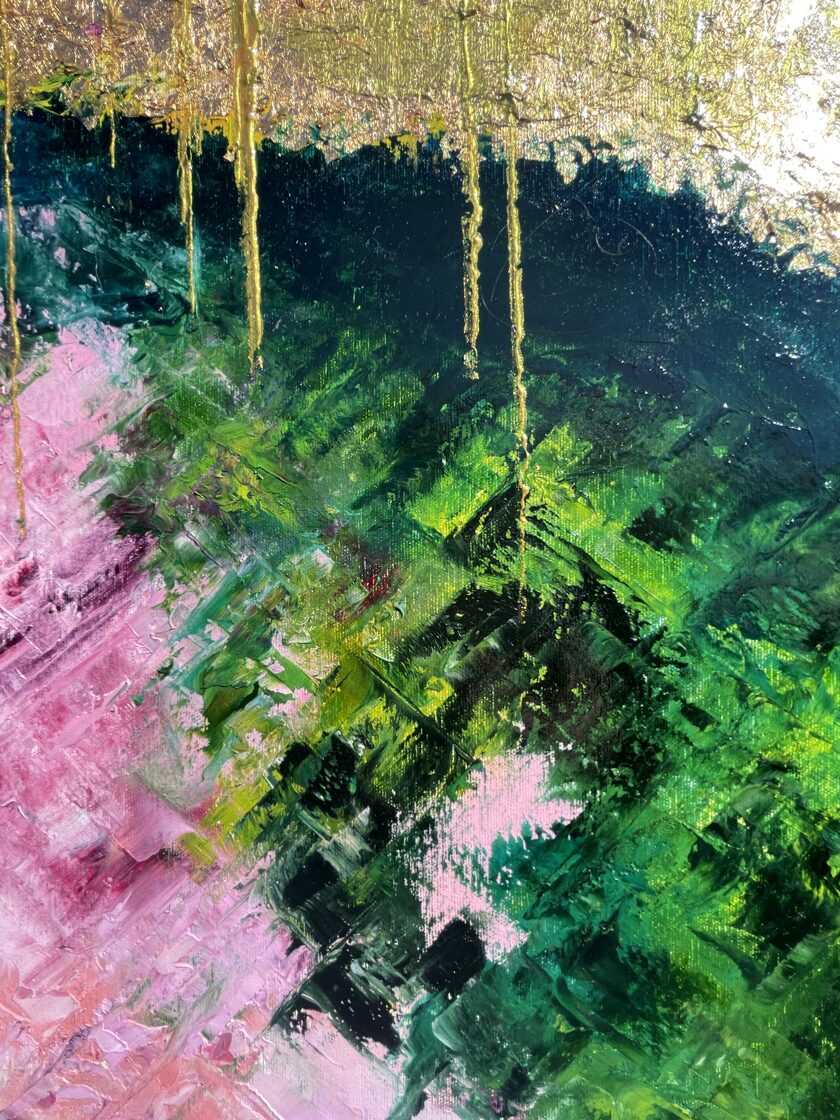
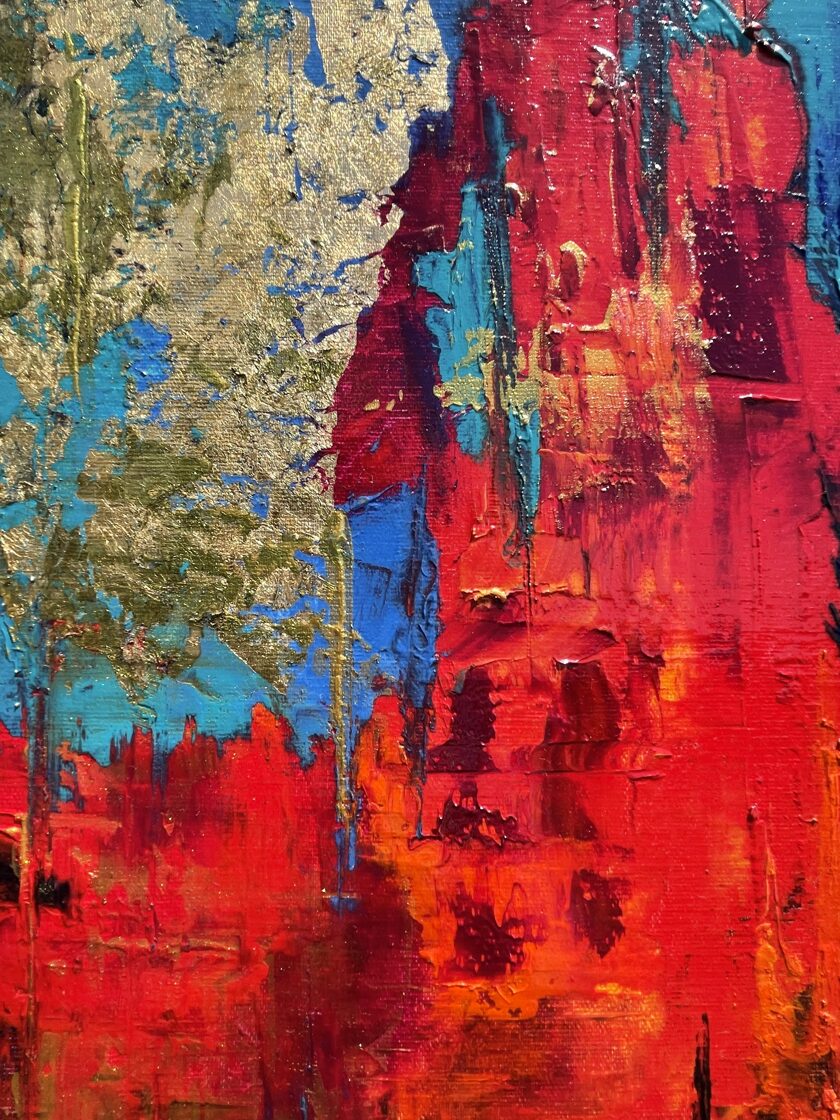
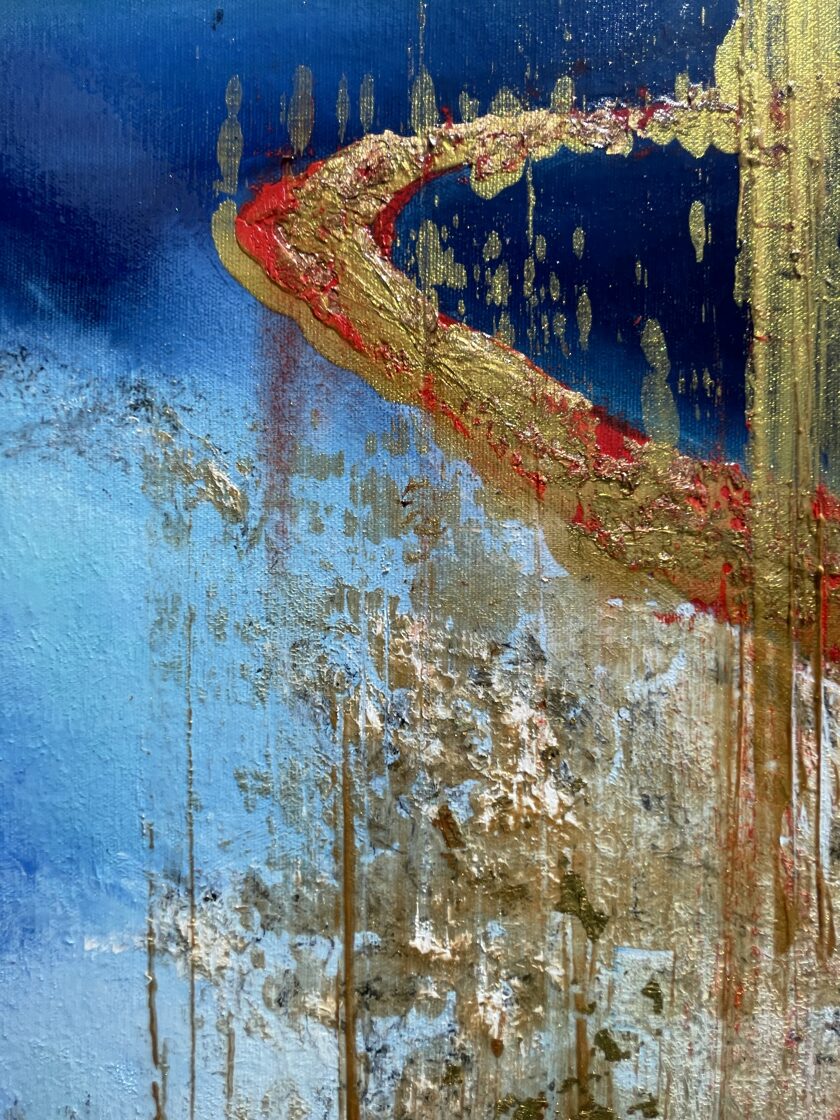
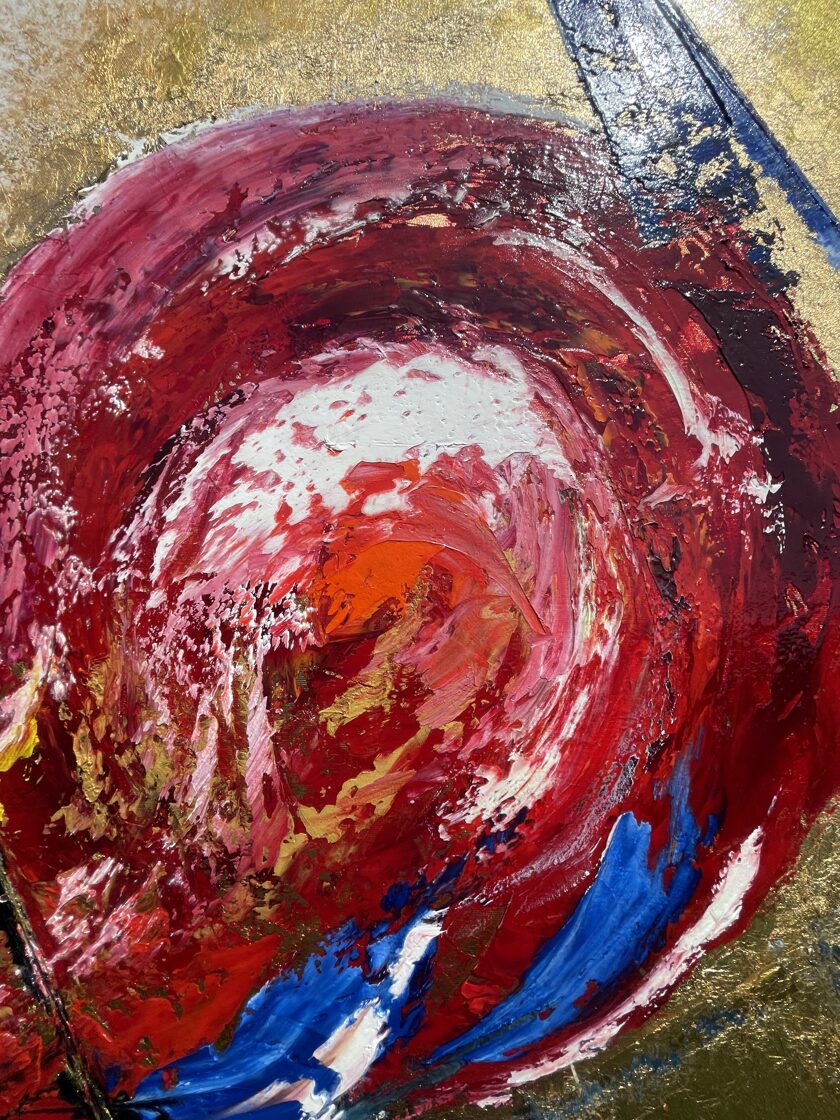
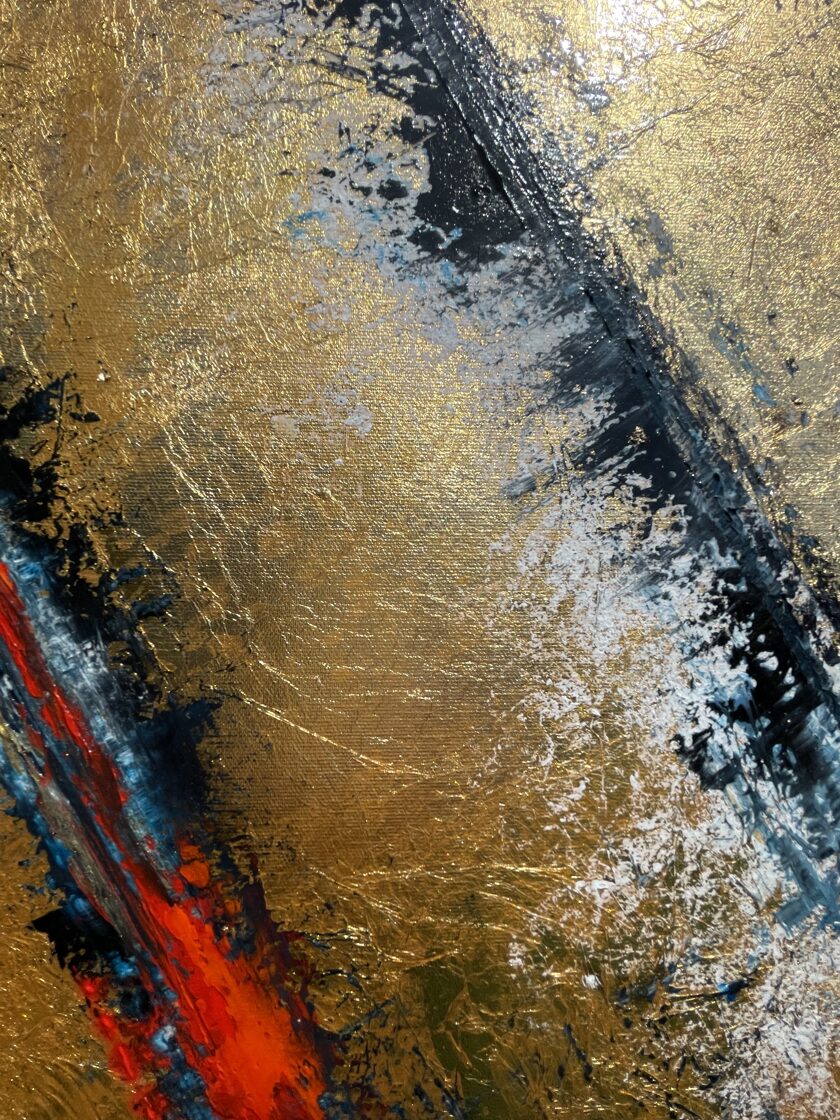
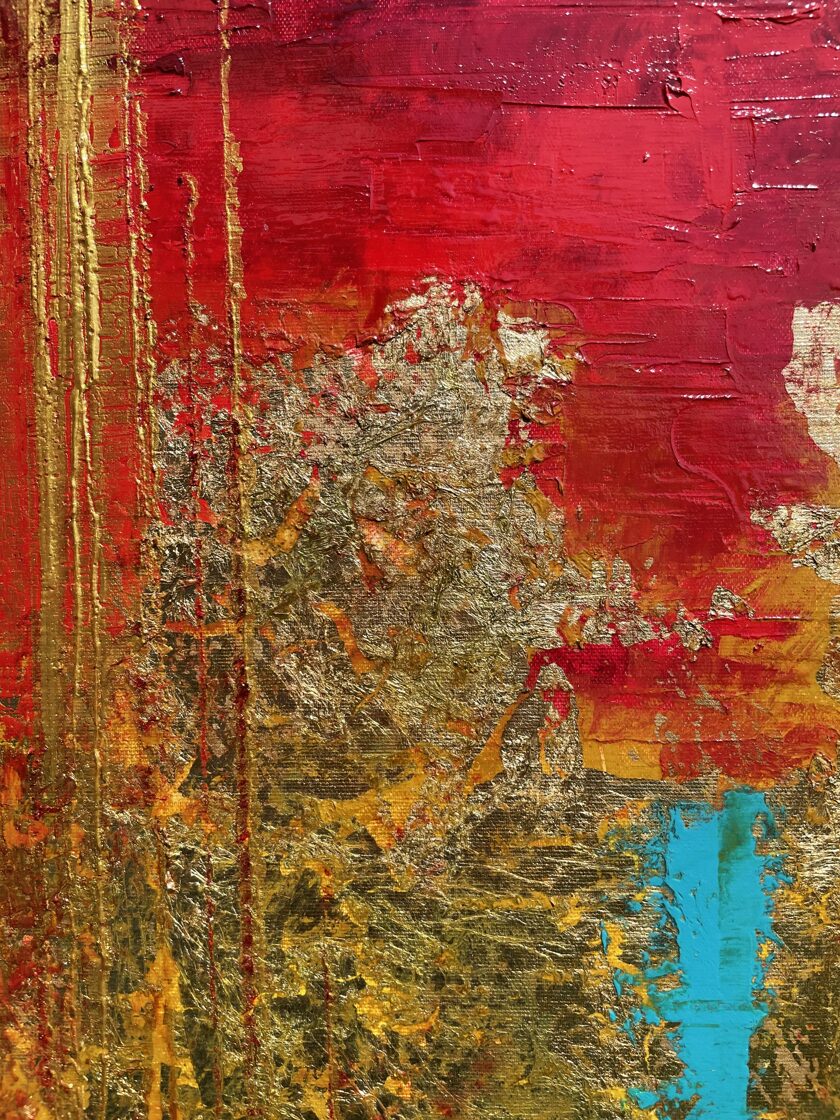
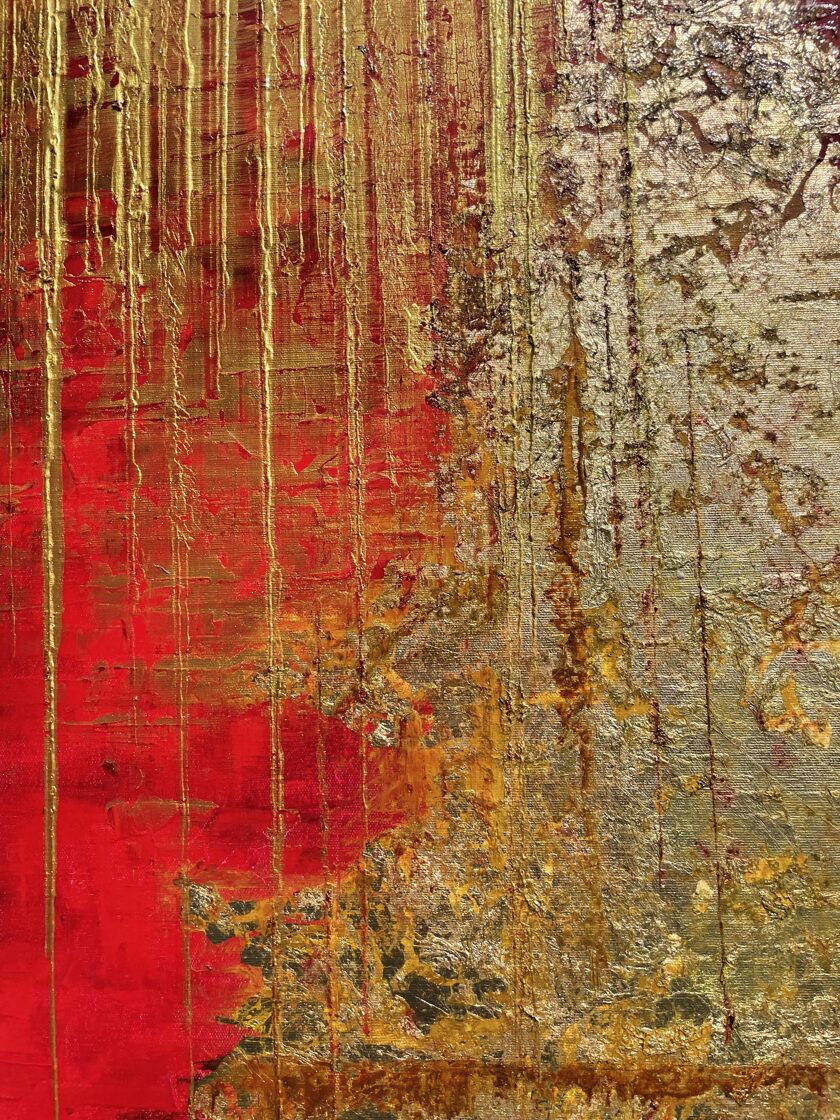
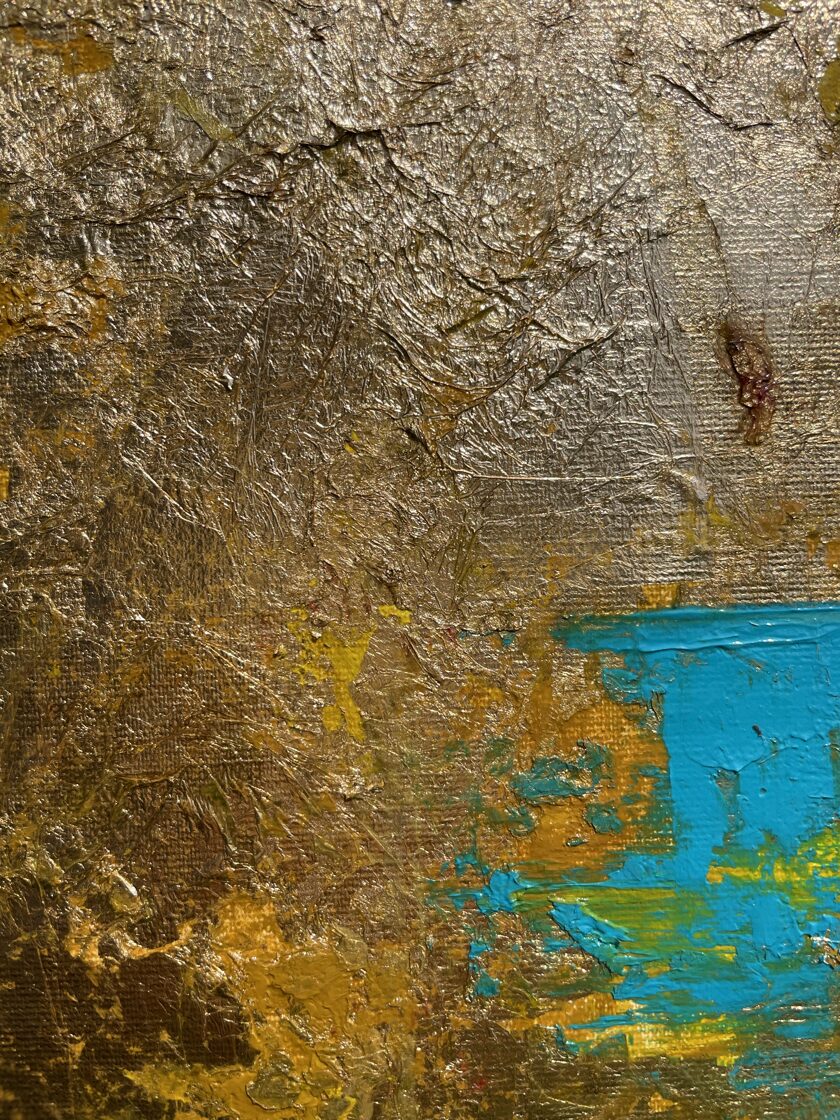
The monumental work shows not only the immensity of the sky and the waters, but also the infinity of time as a recurring stream. In the artist's symbolism, the golden earth, the only possibility of life, with the reddish but broken altar at its centre, with its crown, the ethereal blue diagonal lines running through it like divine blessings, show the power of the creative capacity of the human being, and the streams of sky-red water and blood rising from below symbolise the subversive human emotions over which even God has no power.

I.
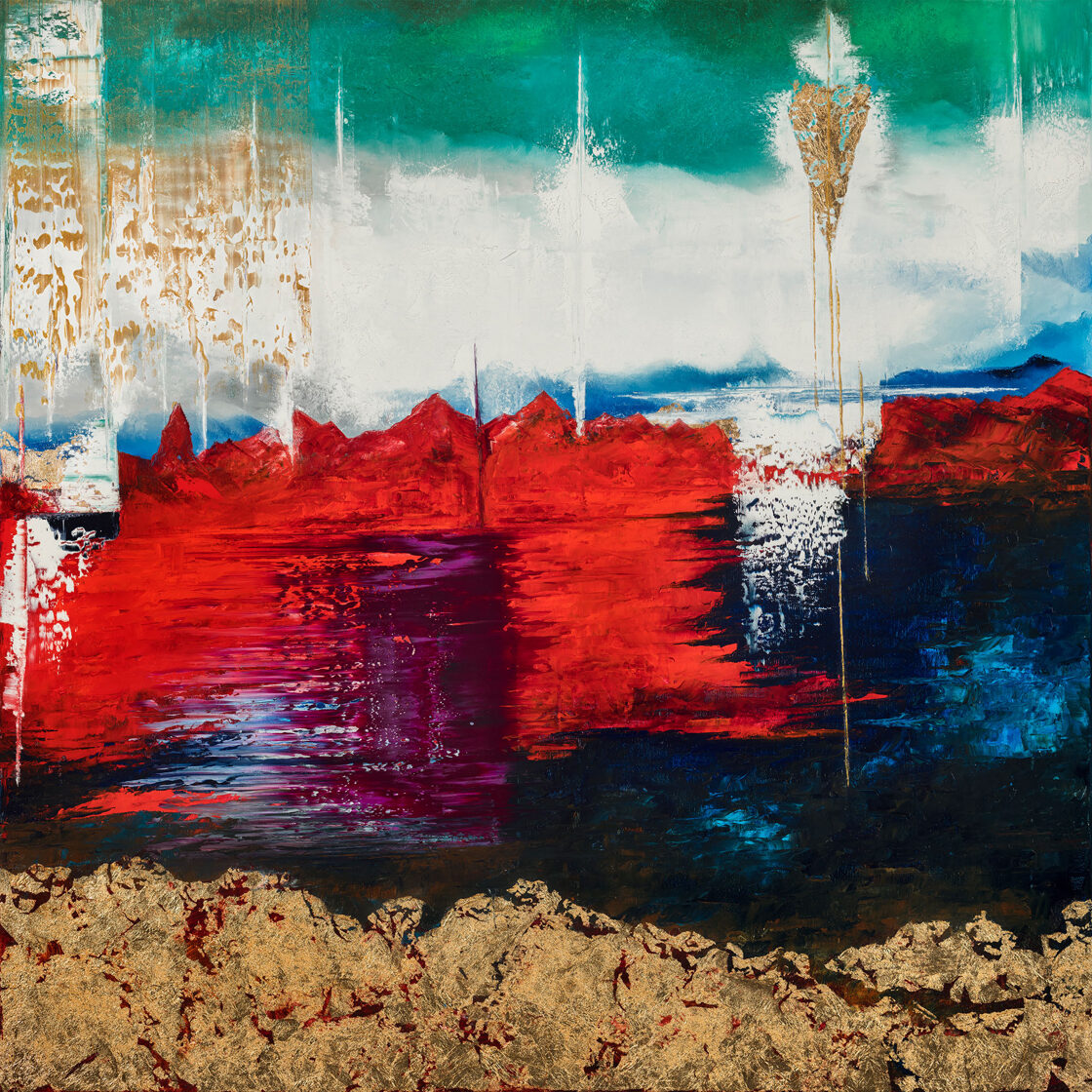
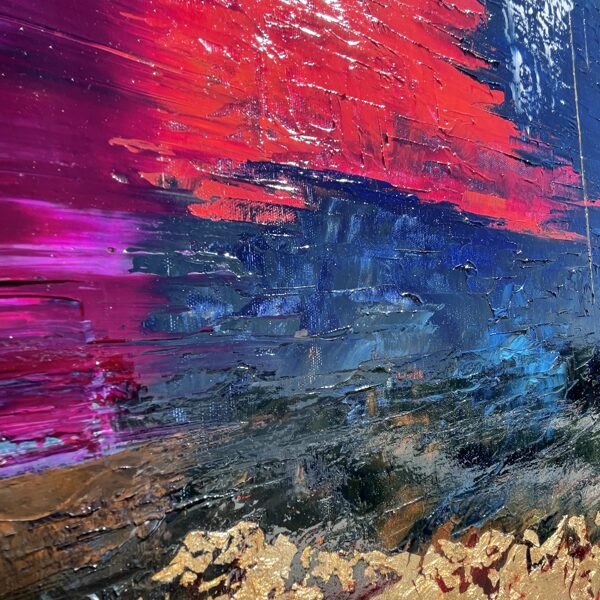
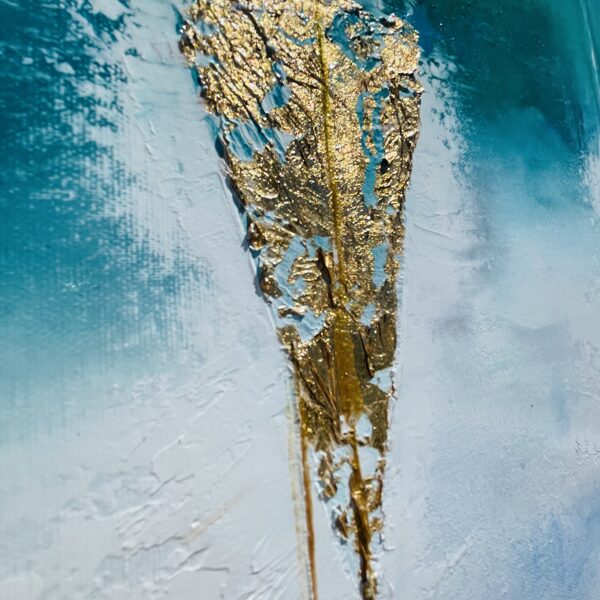
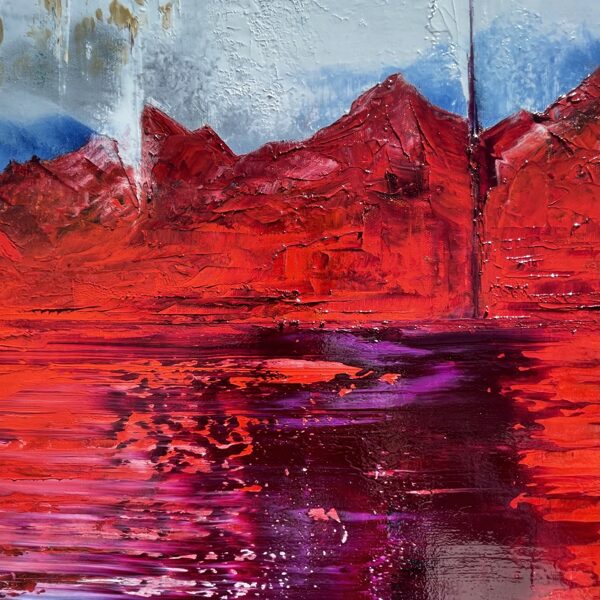
The Invincible Armada
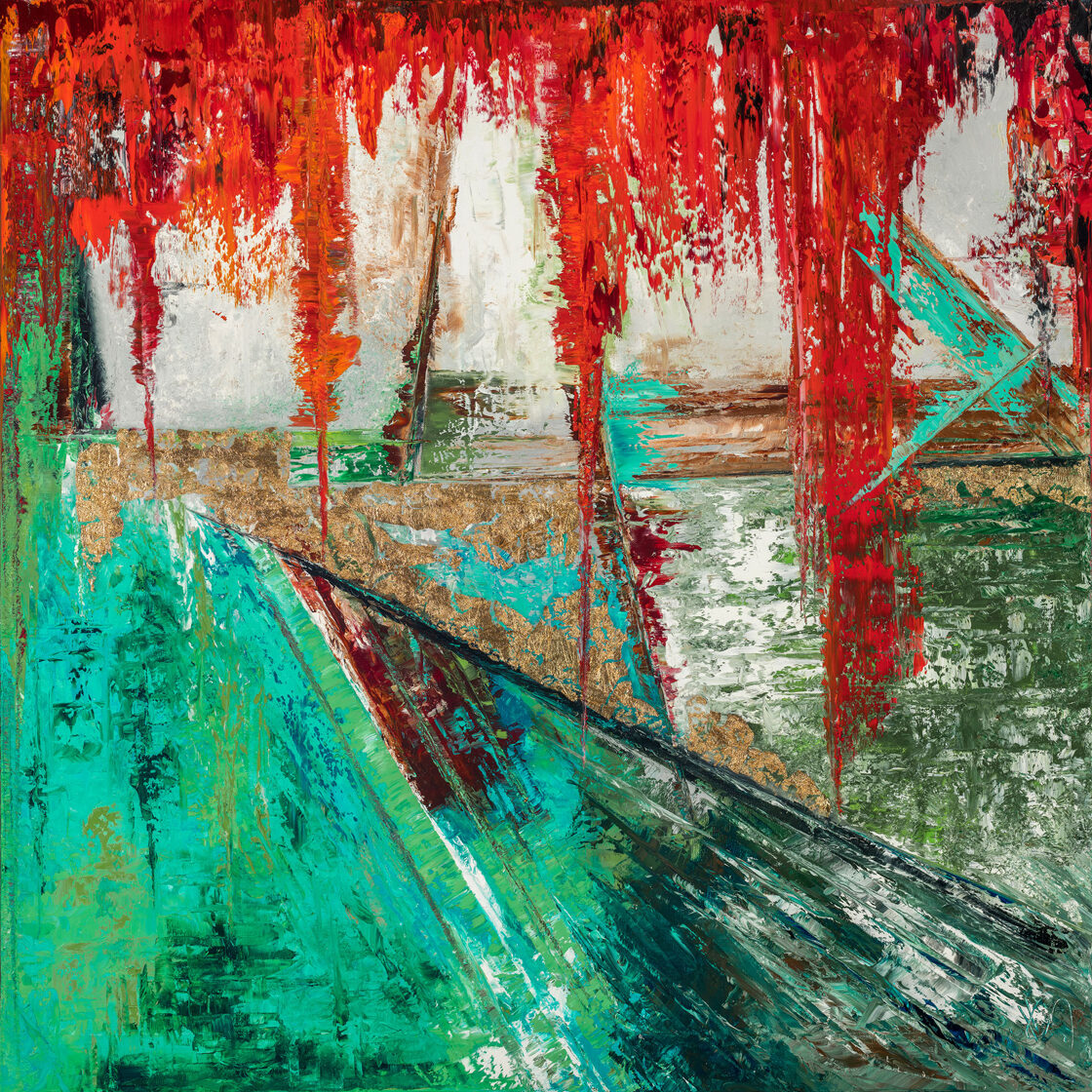

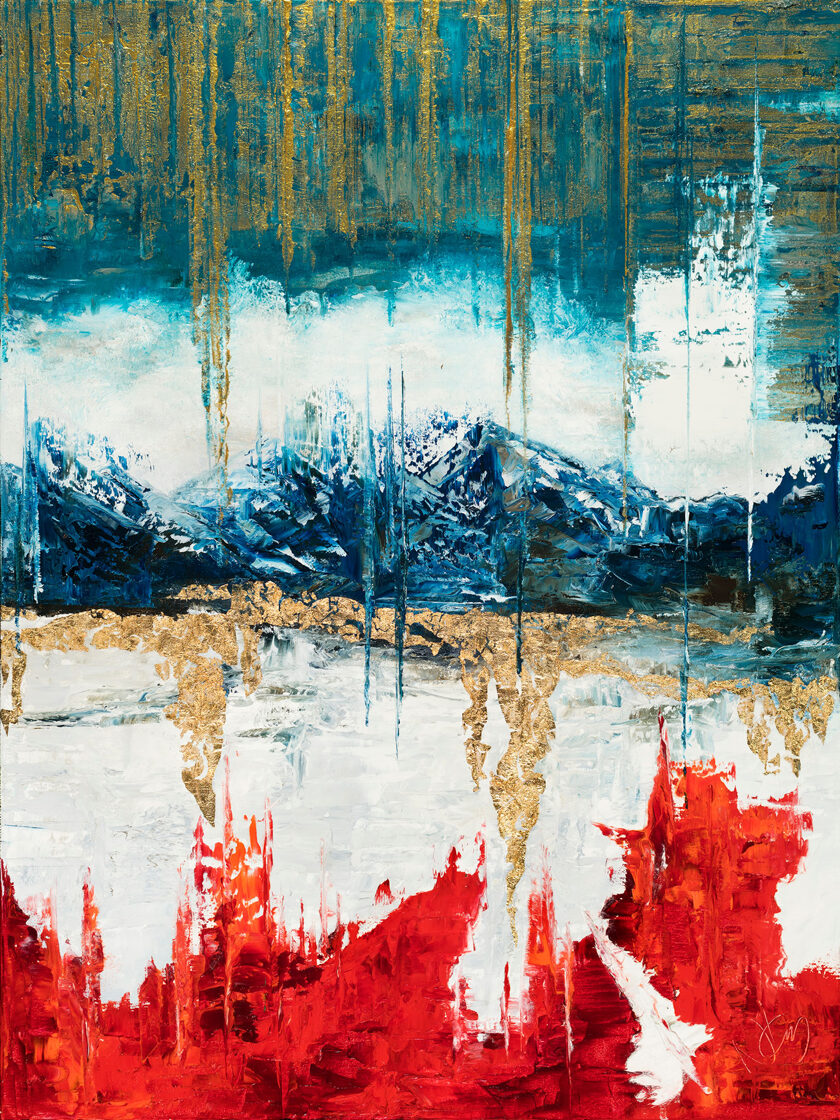

Over the Hebrides
100x100 cm, oil-gold-canvas, 2024 Sitges/Barcelona
SOLD
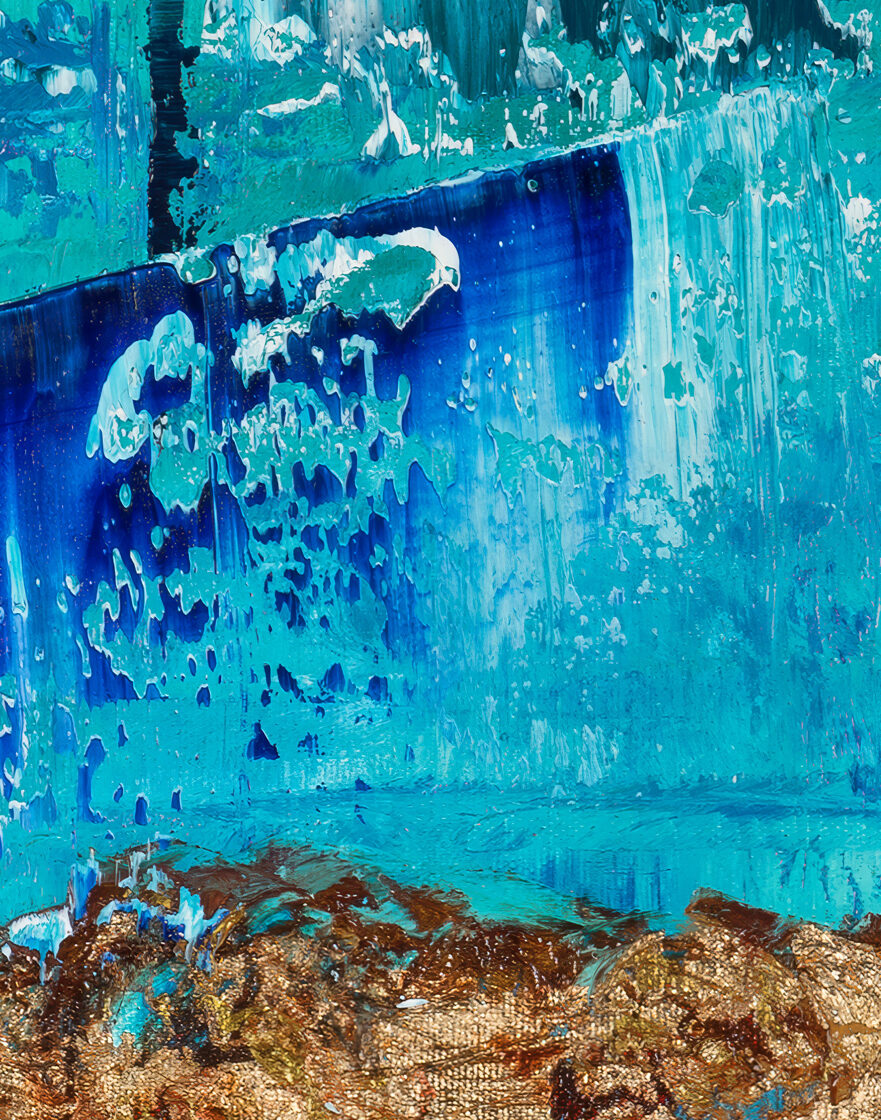
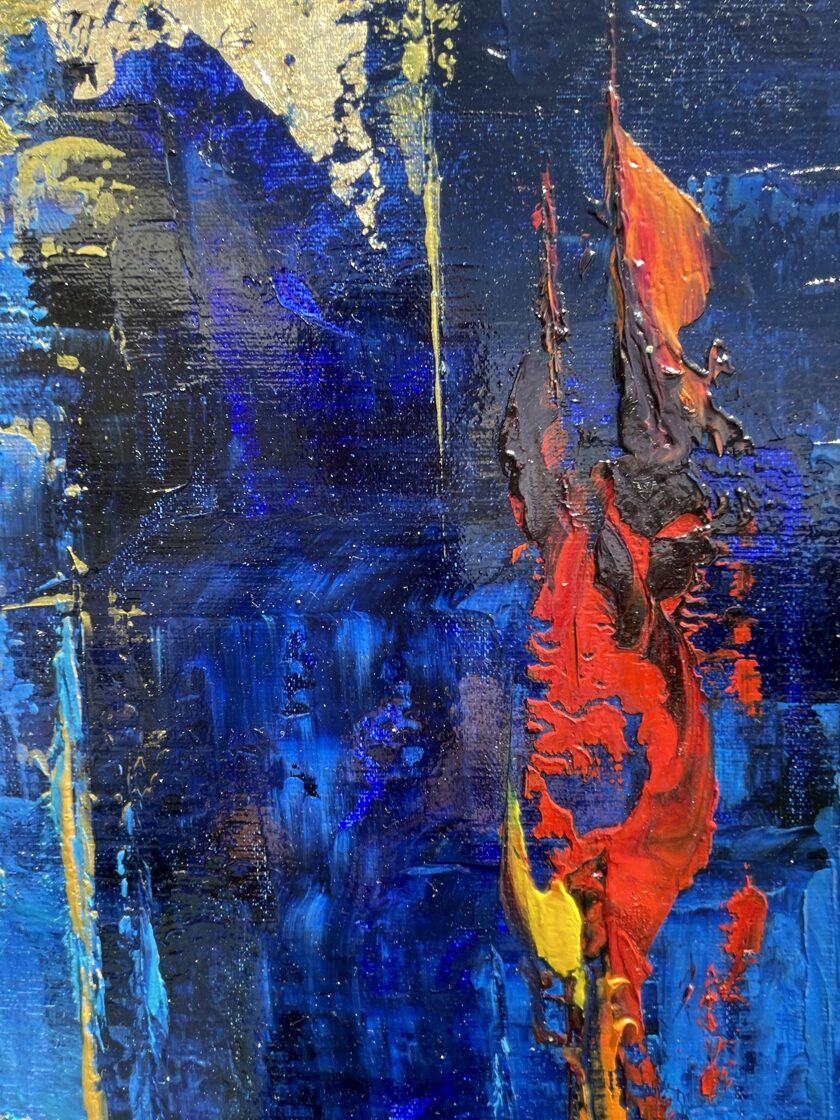
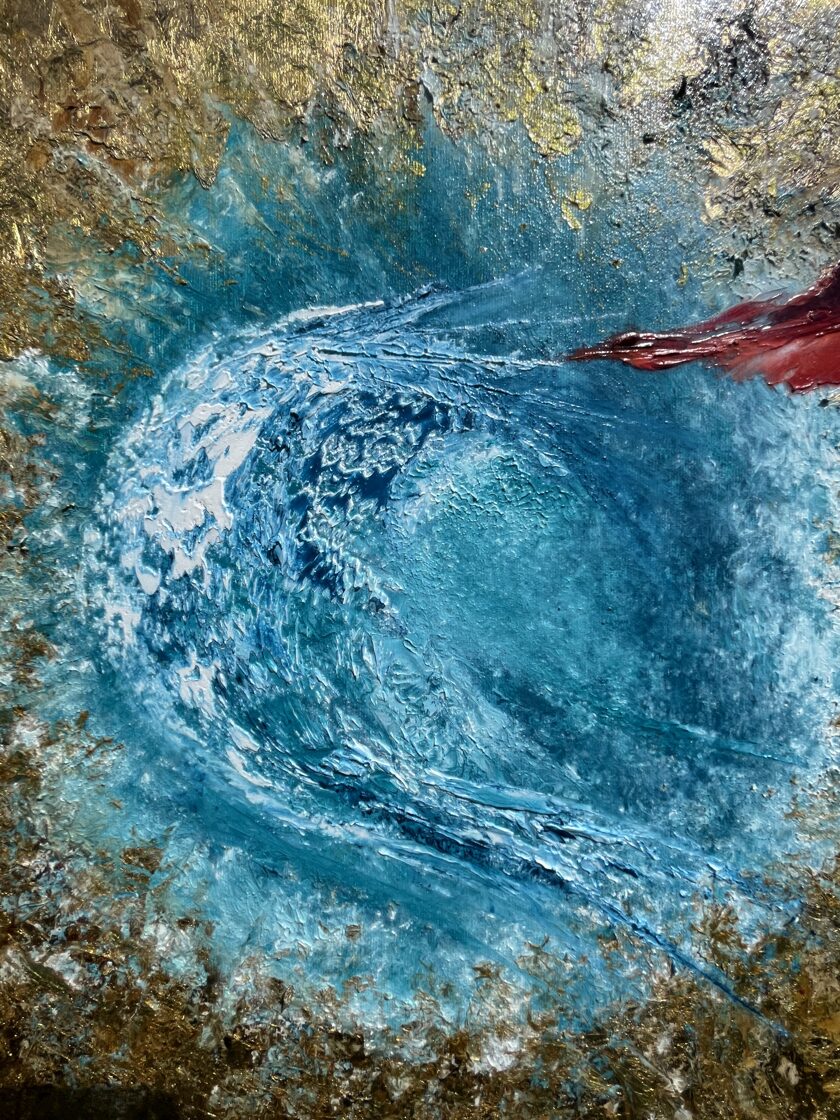
The British fleet follows the ships of the Invincible Armada to the northern tip of Scotland to prevent them from landing. With the destruction of one of the largest ships, the St John of Sicily, the decimated troops of a fleet built for the Mediterranean were forced into the icy waters of the Atlantic.

At the Gates of Lisbon
150x50 cm, oil-gold-canvas, 2024 Sitges/Barcelona
SOLD
The date is 30 May 1588. The Spanish Armada sets sail to defeat the Protestant England. From Lisbon, 150 ships and more than 30,000 people, led by the four-masted schooner San Martín, weigh anchor and set sail for the British Isles.

The Beginning
100x100 cm, oil-gold-canvas, 2024 Sitges/Barcelona
SOLD
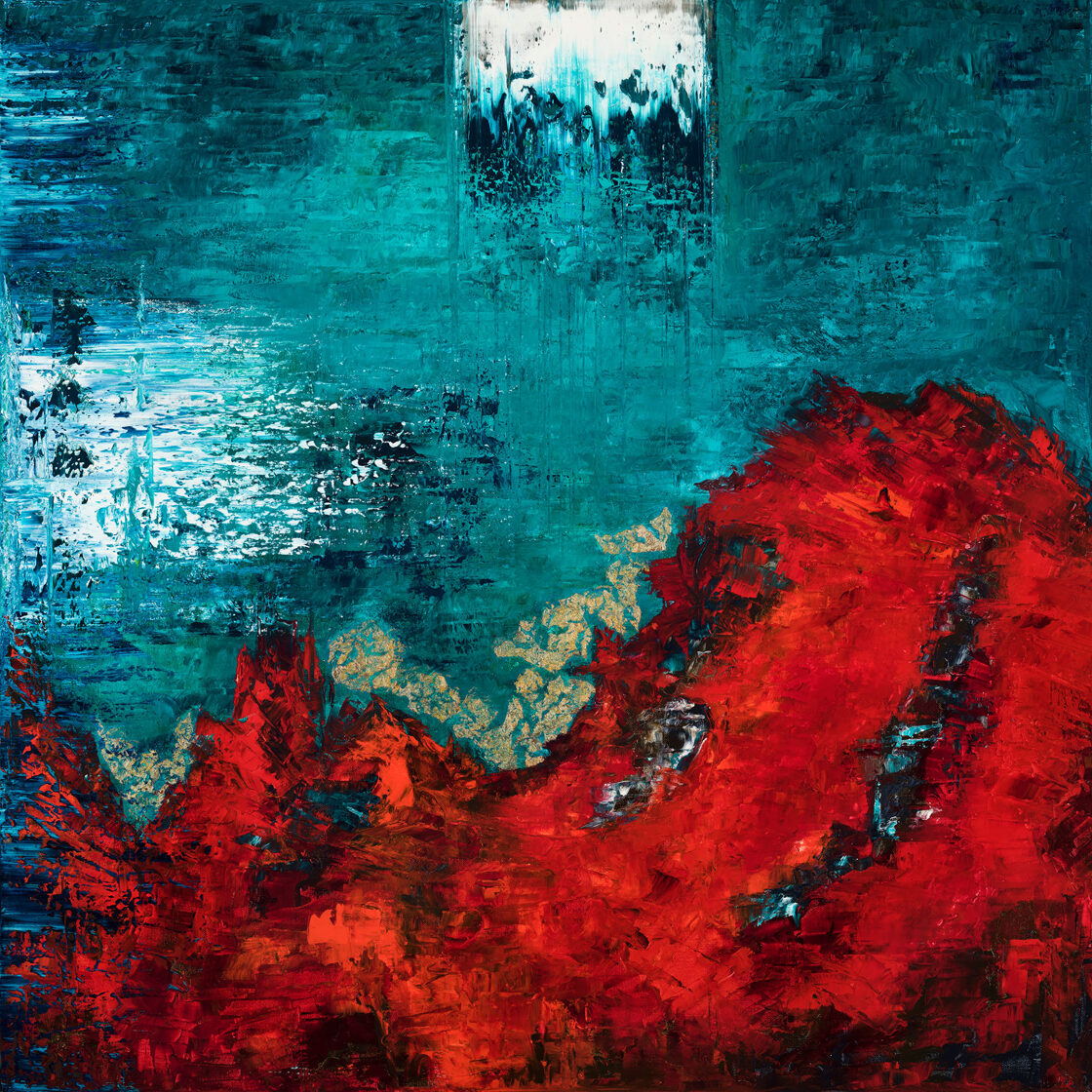
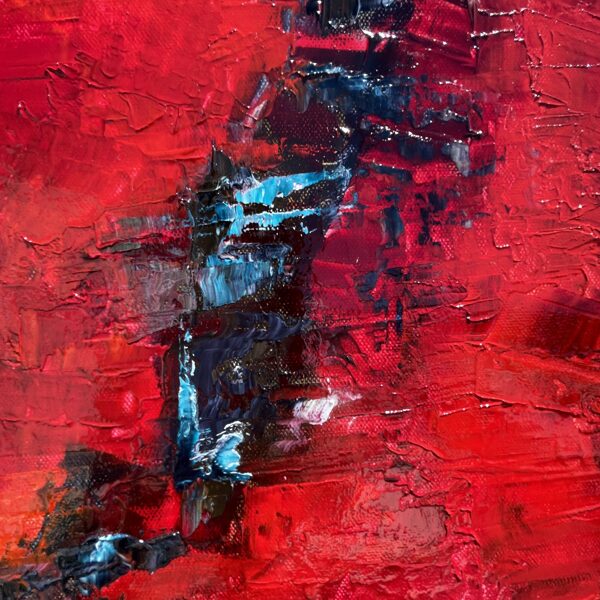
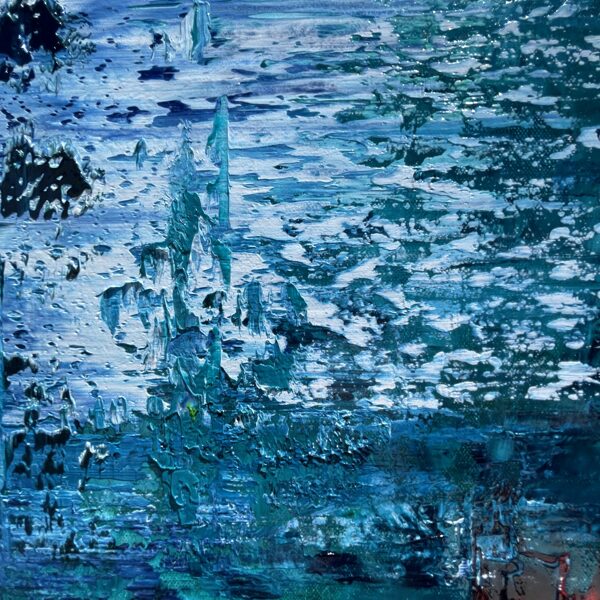
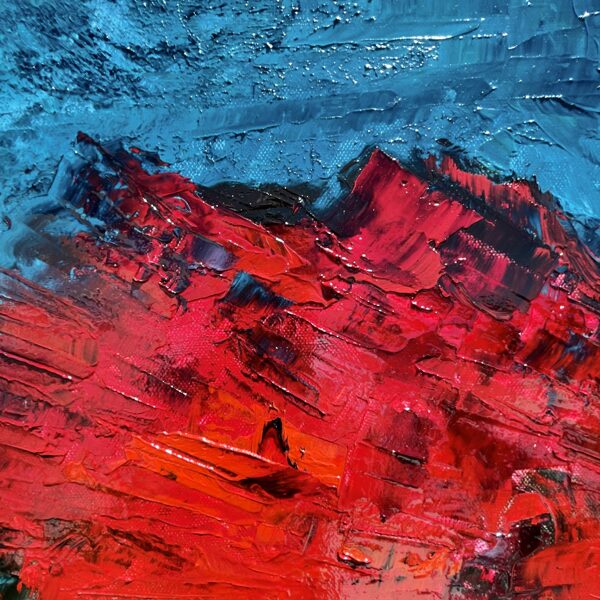
Don Juan of Austria defeated the Ottoman fleet at the Battle of Lepanto on 7 October 1571. Admiral Mehmed Suluk told the Venetian envoy of the defeat that "when we conquered Cyprus, we cut off your arm. When you defeated our fleet, you cut off our beard. But you should know: a cut off arm will never grow back but a trimmed beard will."

La Coruña
120x100 cm, oil-gold-canvas, 2024 Sitges/Barcelona
SOLD
"In war, God decides, so it doesn't matter who is in command", declared Philip II when he appointed the Duke of Medina Sidonia, who had little naval experience and was not the right man for the Invincible Armada project. In the storms of La Coruña, the Armada became untenable. The wind caught the high ramparts and blew them in different directions. They were unwilling to learn the lesson: the King wanted to win at all costs.

The Donation
120x100 cm, oil-gold-canvas, 2024 Sitges/Barcelona
SOLD
Pope Sixtus V had promised a million ducats for the defeat of Protestant England, which was never paid because Philip II never touched English territory during the Invincible Armada experience.
As early as 1585, the Pope mentioned to the Spanish ambassador in Rome that he wished for a 'great enterprise' for Christendom. Philip claims the English throne as he is entitled to it. Elizabeth I refuses, humiliating him and standing in the way of a peaceful settlement. Then comes the moment of the papal offer....

II.
The Secret Marriage
The Fear
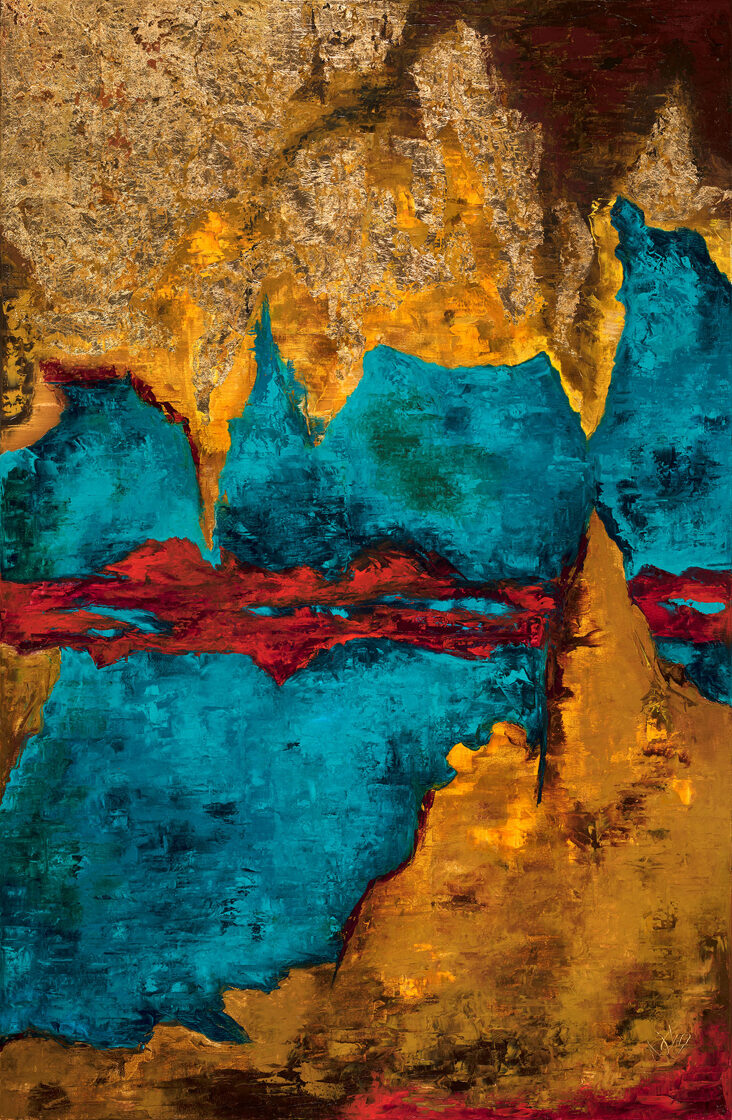
146x96 cm, oil-gold-canvas, 2024 Sitges/Barcelona
SOLD
It tells the story of the troubled life of King Henry IV. As the brother of Isabella of Castile, his life was plagued by constant worry about his sister, despite all the wealth and splendour, while hiding his own secrets behind the reason why no child was born in his marriage for a while and later whether Juana, the Beltraneja, was really his own daughter. Henry IV did everything in his power to get her sister married so as not to endanger his throne. However, Isabella persevered in her determination to give her hand to Ferdinand of Aragon and change the course of history.
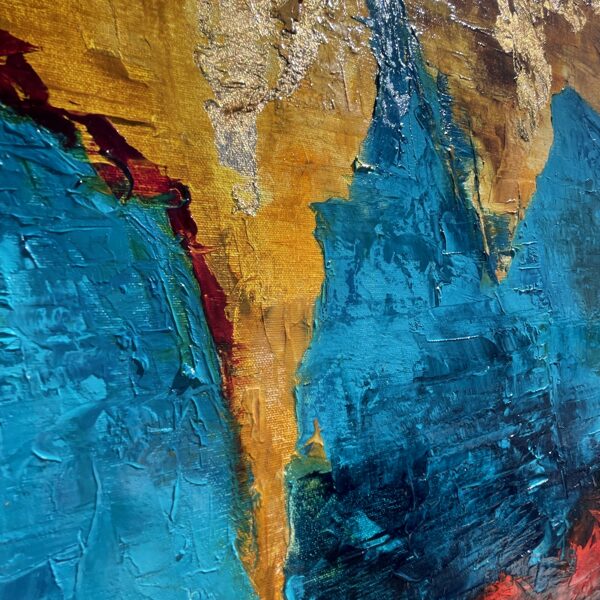
The Secret Promise
100x120 cm, oil-gold-canvas, 2024 Sitges/Barcelona
SOLD
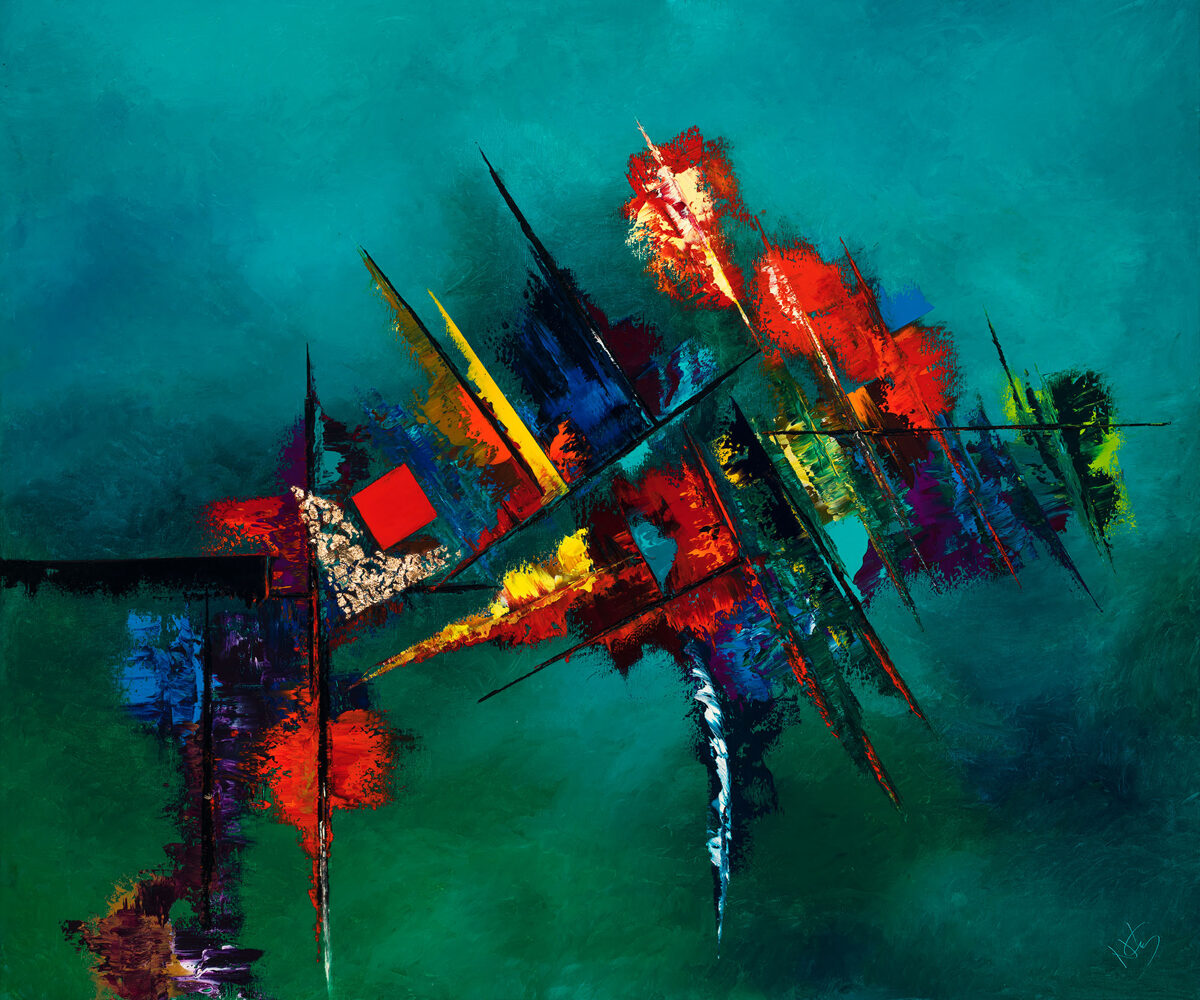
Isabella was only six years old when the idea arose that her husband should be Ferdinand II of Aragon, the youngest son of King John II of Aragon and Navarre and Juana Enriquez. However, events intervened: John II allied himself with a group of Castilian nobles who wanted to oust the less-than-virtuous Henry IV and replace him with his younger brother Alfonso V. The king tried desperately to marry off his sister to suitors from various royal houses, but Isabella rejected them all, declaring that she would only marry Ferdinand or no one else. She was determined and stubborn: she did not break her secret promise to Ferdinand, despite all the threats and wars.


The Permit
100x100 cm, oil-gold-canvas, 2024 Sitges/Barcelona
SOLD
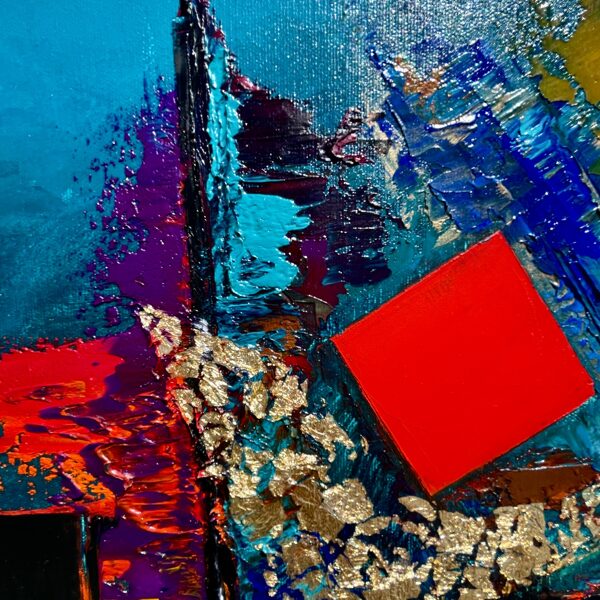
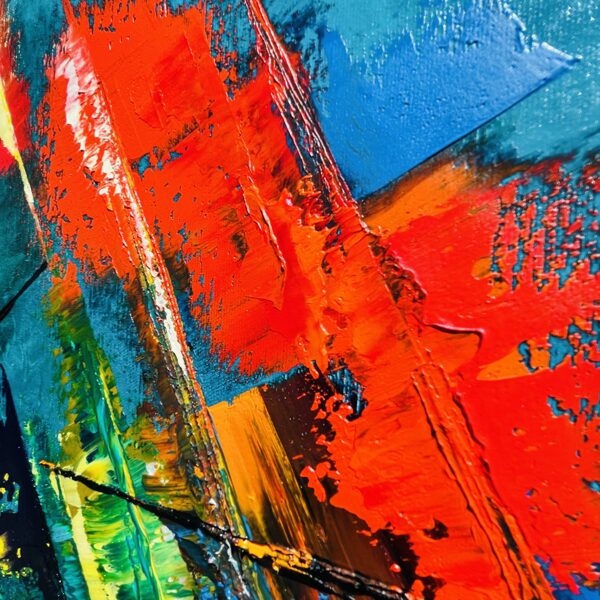
Isabella and Ferdinand were second cousins. Henry was confident that since the marriage required papal permission it could not take place without his consent. However, he was soon to be disappointed, for the astute Isabella mobilised her contacts and taking the risk, sought out a trusted friend of one of her supporters, Cardinal Rodrigo Borgia de Xàtiva. He laid siege to the Holy See until he obtained the permission from Pope Pius II and a bull was invented because the pope had died five years earlier. Thus the obstacle was removed. The cardinal, who was later elected as Pope Alexander VI, remained the main supporter of the catholic Queen Isabella and Ferdinand II of Aragon.

Visit in Avila
100x100 cm, oil-gold-canvas, 2024 Sitges/Barcelona
SOLD
Isabella feared that her half-brother Henry IV might forbid the marriage despite papal permission, so she had to resort to another stratagem. She took advantage of his trip to Andalusia to leave the court on the pretext of visiting the tomb of her other brother Alfonso, who had died in Ávila. However, Isabella was on her way to Valladolid via Avila.
Ferdinand, dressed as a servant, crossed Castile and went directly to the palace of Juan de Vivero in Valladolid on 19 October 1469, where Archbishop Carillo was waiting for him, accompanied by Isabella. The marriage was celebrated in front of God.

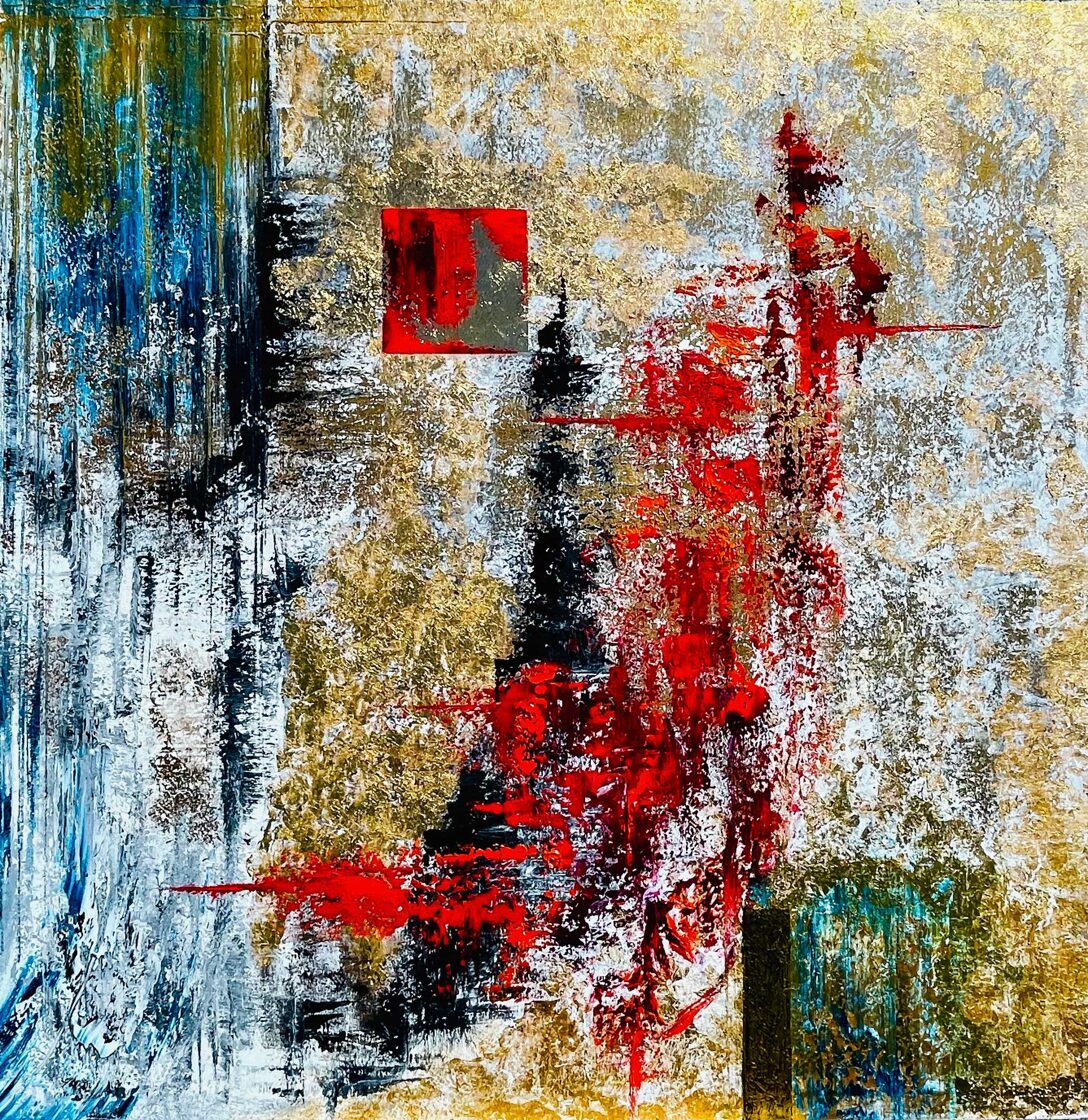
The History
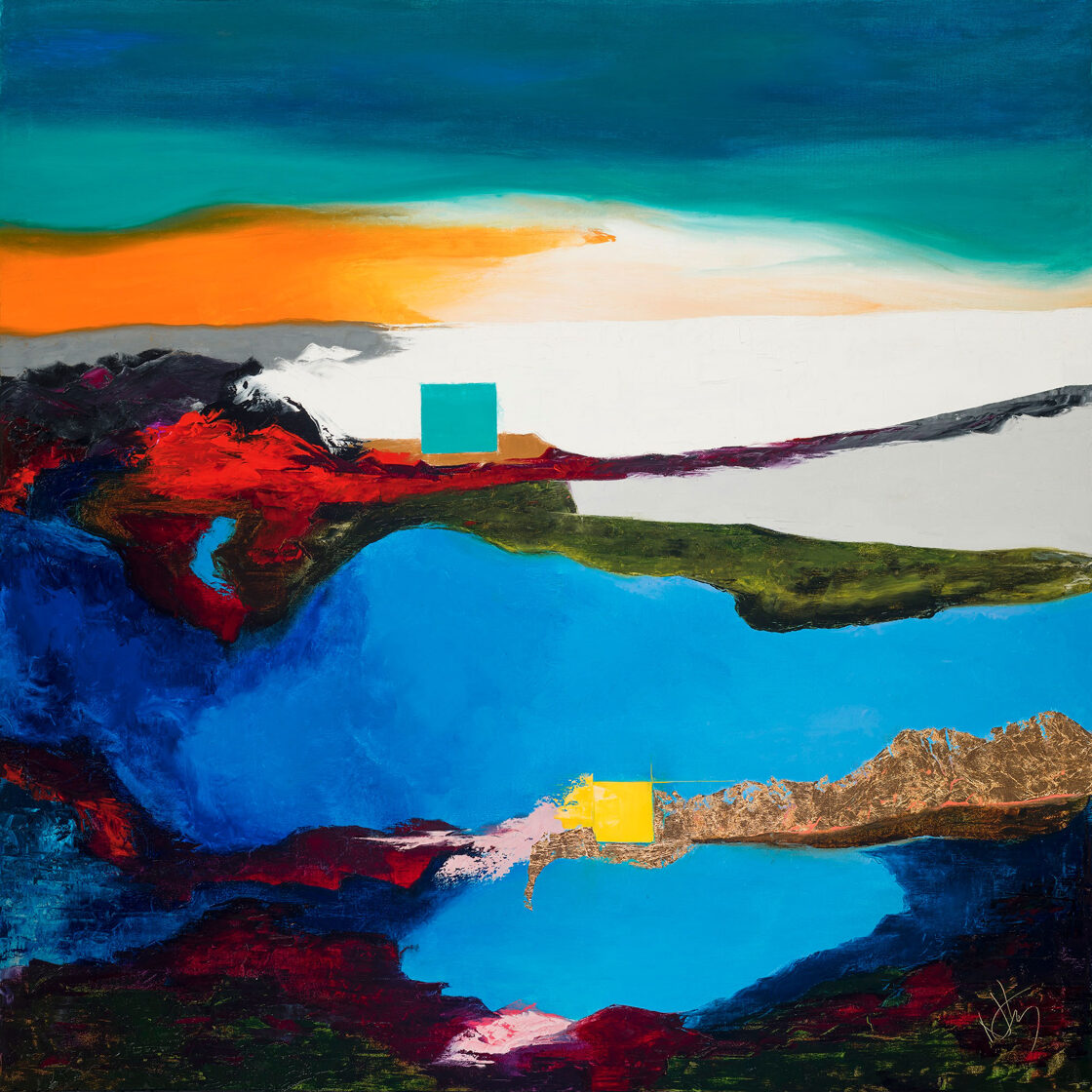
100x100 2024 Sitges/Barcelona
SOLD
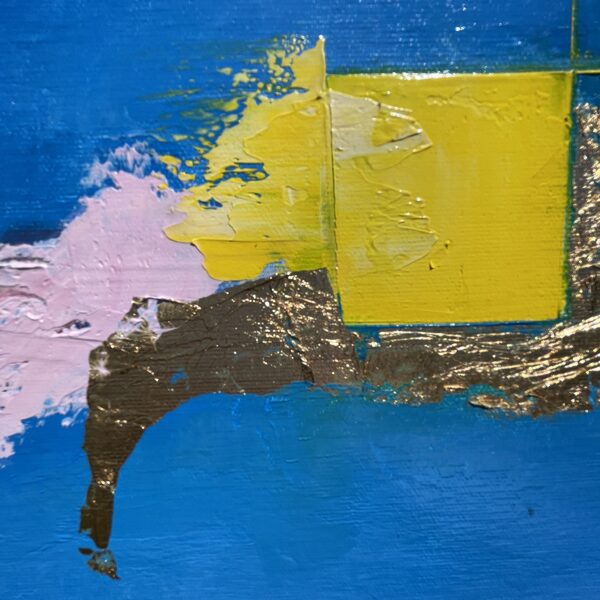
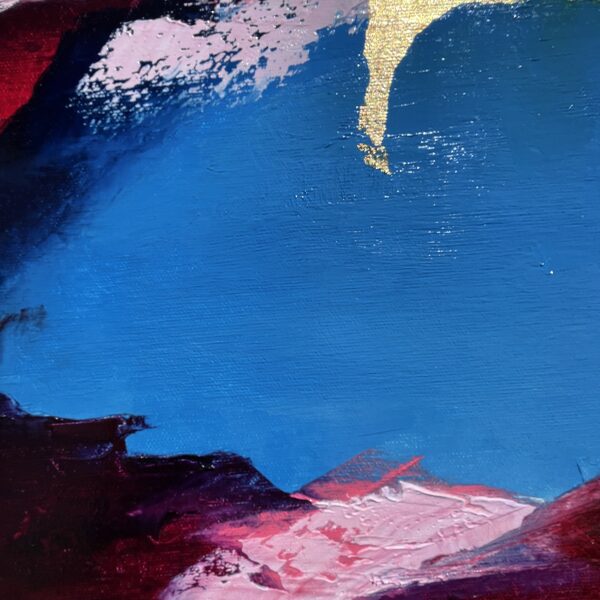
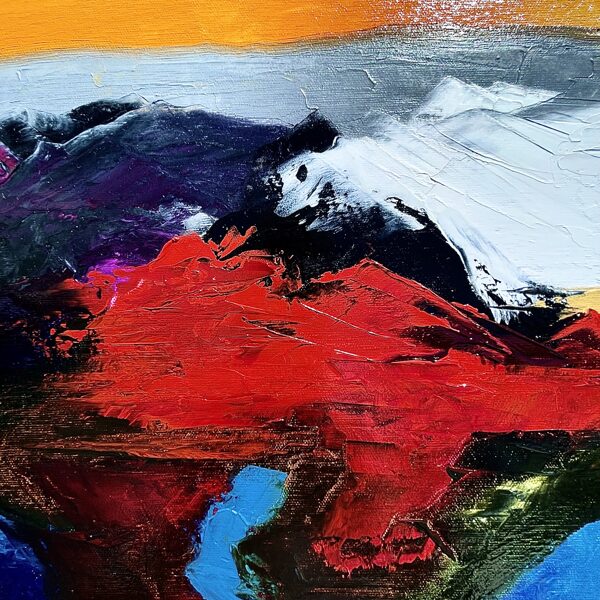
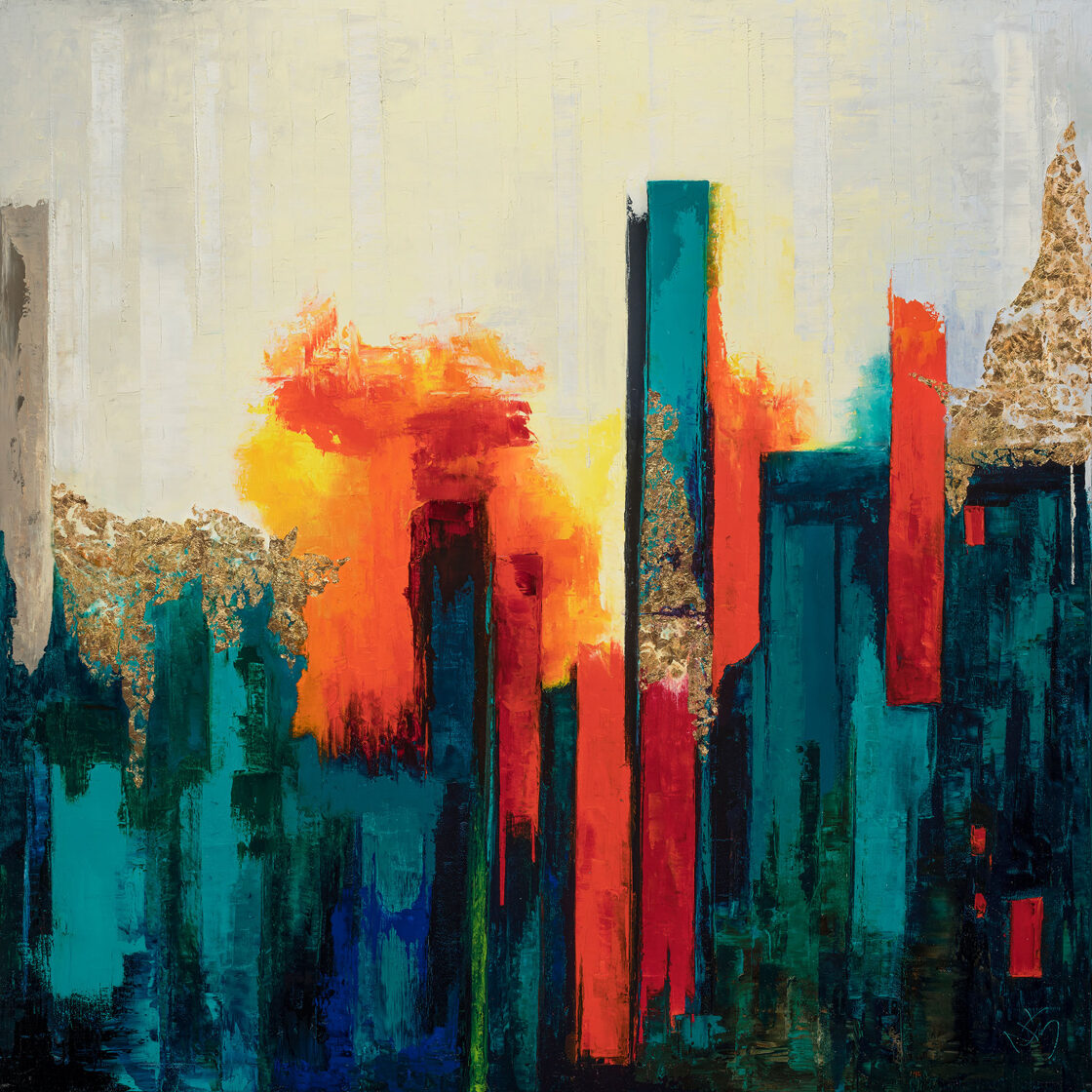
In 1469, without the consent of the ruling families of Aragon and Castile, Isabella of Castile and Ferdinand of Aragon secretly got married. With Isabella's support, voyages of discovery began and the Hispanic monarchy became a world empire. As the economy prospered, the arts flourished. Donations from the Church and the royal couple contributed to the development of culture and science alongside the massive construction projects that were undertaken in major cities. However, the drawbacks of Isabella and Ferdinand's reign soon became apparent. Beyond the establishment of the Inquisition, on 31 March 1492 , they ordered the expulsion of the Jews who did not convert to Christianity, and similarly on 14 February 1502 , ordered the expulsion of the Muslims not willing to be converted to Christianity.

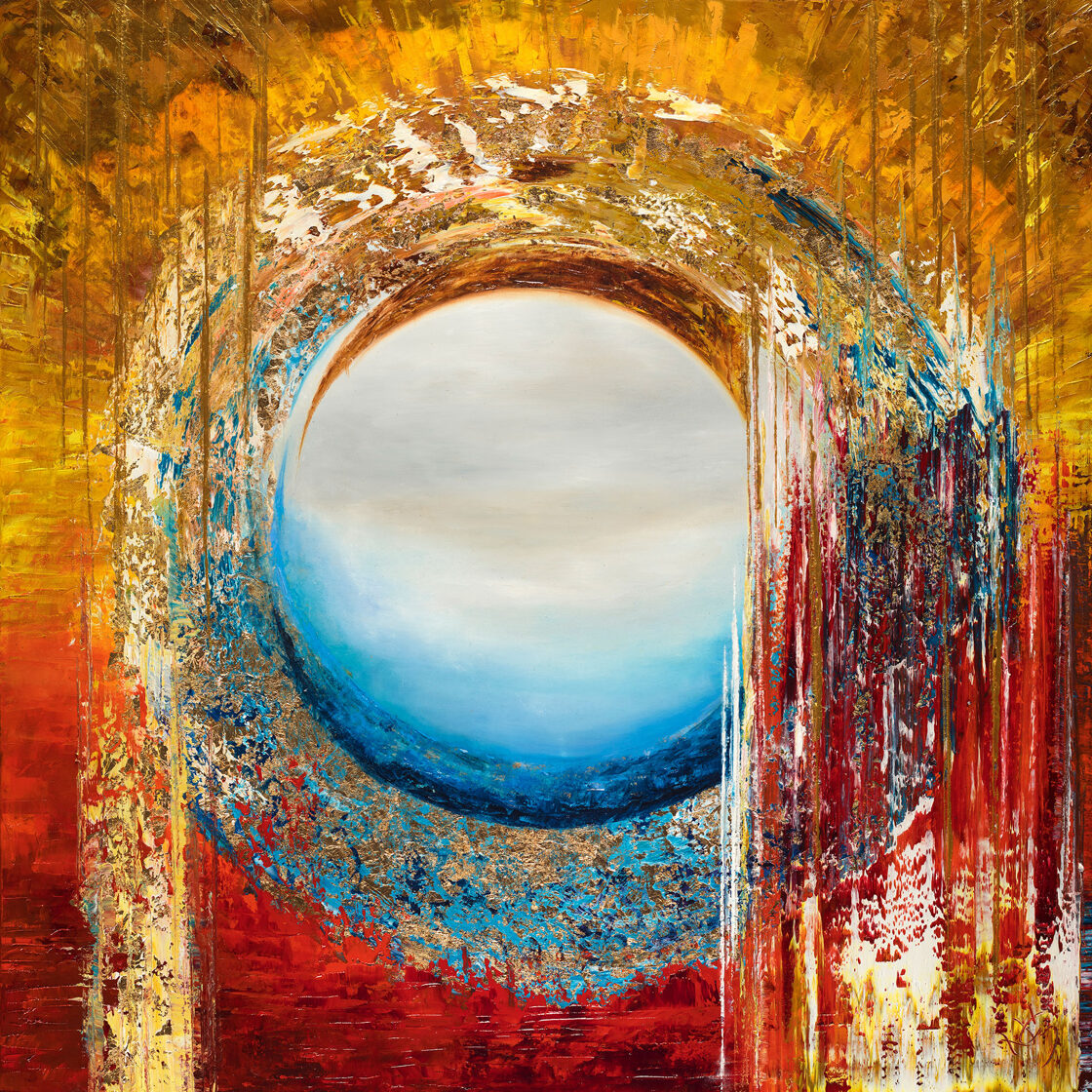
The Birth
100x100 cm, oil-gold-canvas, 2024 Sitges/Barcelona
SOLD
That night, the sky was illuminated by a special light, the horizon was almost visible in the darkness and the sky was bright blue. The first rays of the rising sun, after the painful two days of labor, painted the reddish horizon with a splash of golden light...
Isabella of Castile was born on 22 April 1451 on the Thursday of the Holy week in Madrigal de las Altas Torres. She was the daughter of the kings John II of Castile and Isabella of Portugal, and with her birth the Hispanic monarchy came into existence.

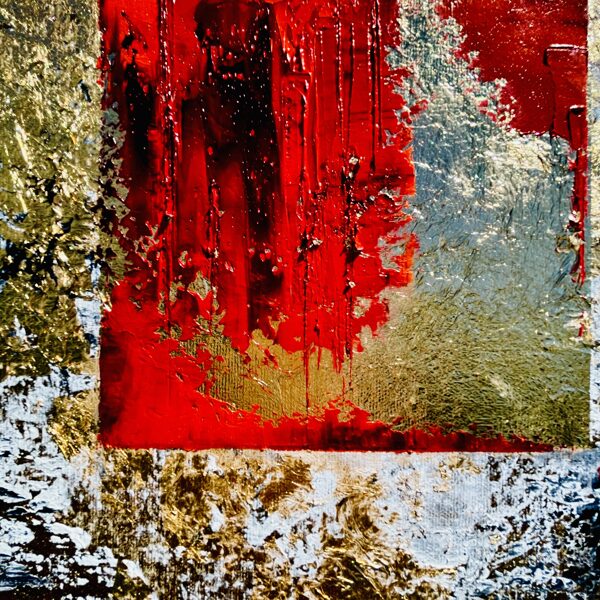
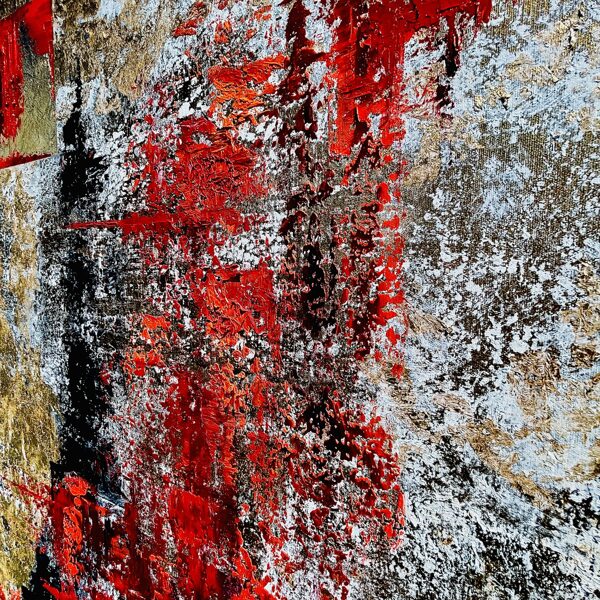
The Fruit
120x120 cm, oil-gold-canvas, 2024 Sitges/Barcelona
SOLD
It is safe to say that if Isabella had not kept her secret promise and Ferdinand had not been her husband, nothing of what we have come to know as the world, as planet Earth, would exist today. It was one of the most important marriages in history, or perhaps arguably one of the most life-changing. Where the sun shines, there are of course shadows as well. But the creation continued: Charles V further increased the splendour of the Hispanic Empire.

III.
The Infantes
Rondo - Johanna's Wedding
140x140 cm, oil-gold-canvas, 2024 Sitges/Barcelona
SOLD
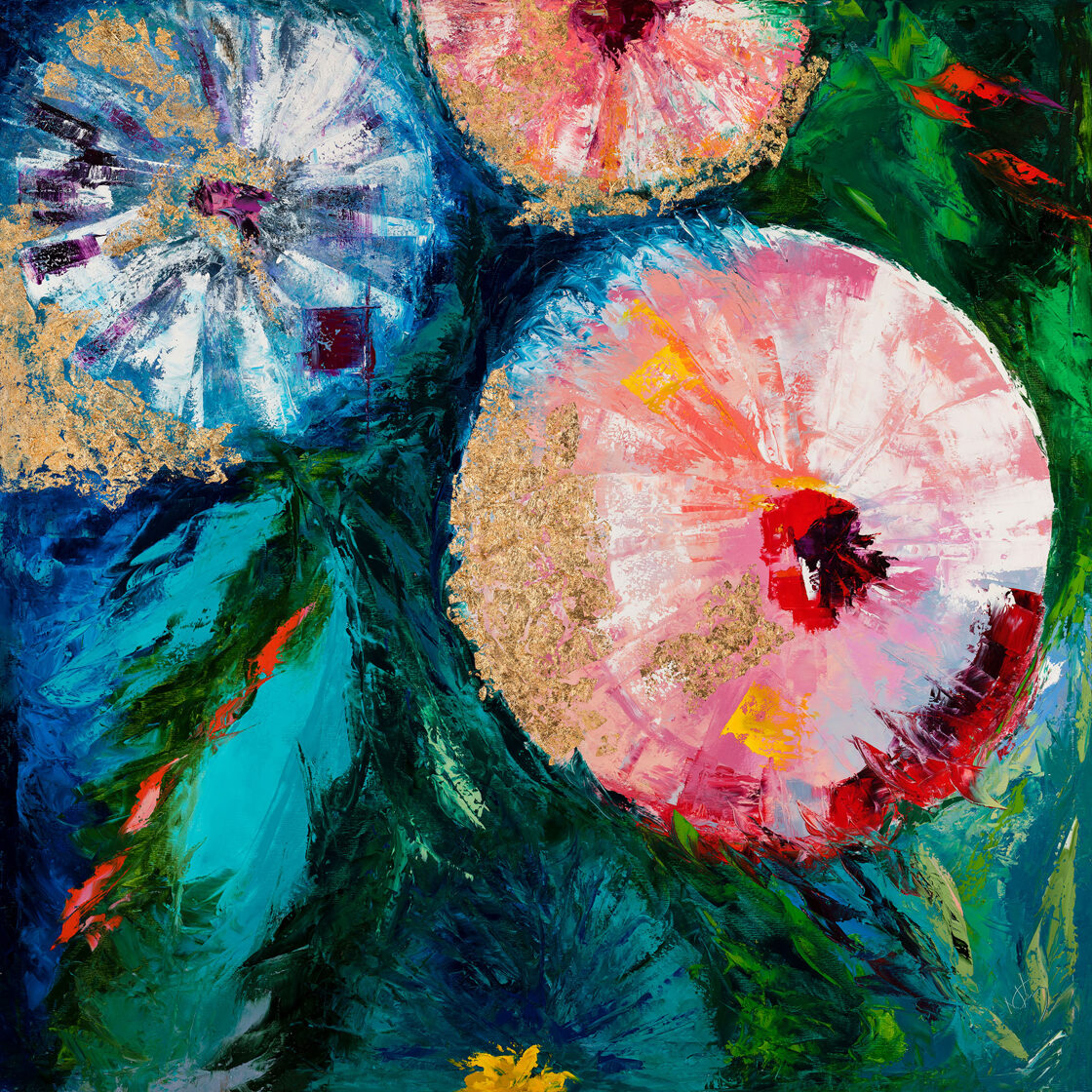
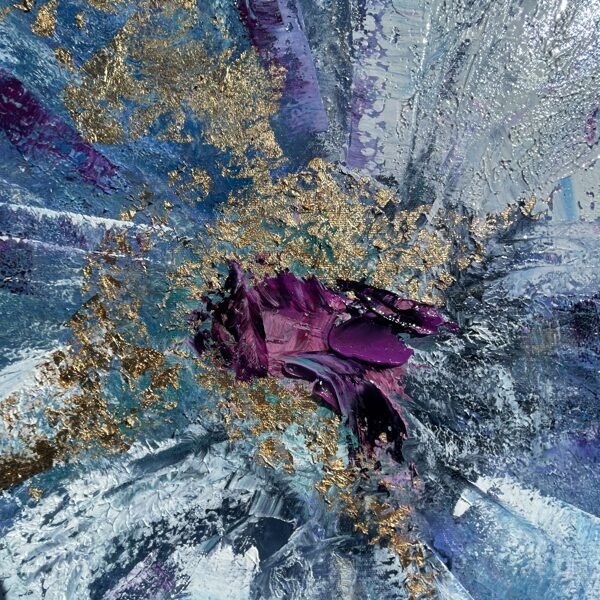
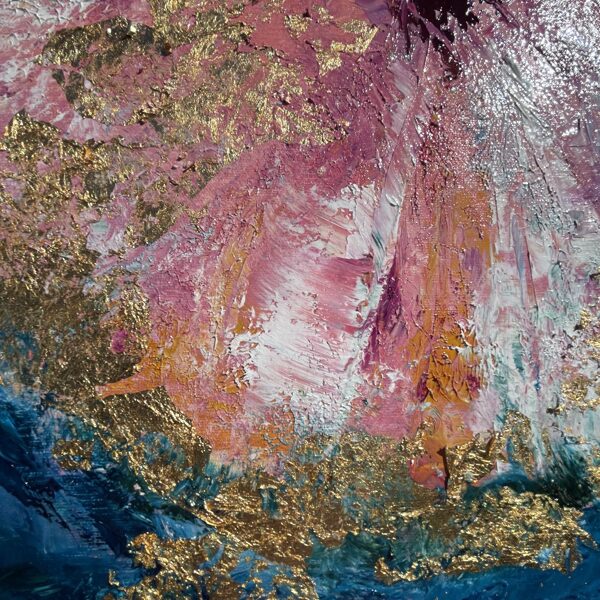
In August 1496, sixteen-year-old Juana of Castile and Aragon set sail from the port of Laredo for the German lowlands. The purpose of the visit was to meet her future husband, Prince Philip of Burgundy, son of the German-Roman Emperor Michael. The marriage was arranged to unite the House of Trastamara and the Habsburg dynasty. Juana and Philip the Handsome fell in love at their first meeting and within a few hours passion was ignited between them. According to chroniclers, the Infanta and the Prince could not wait for the wedding. Finally, the beautiful Juana appears at the altar in a pink dress with crimson lining...


The Peculiar Marriage
100x100 cm, oil-gold-canvas, 2024 Sitges/Barcelona
SOLD
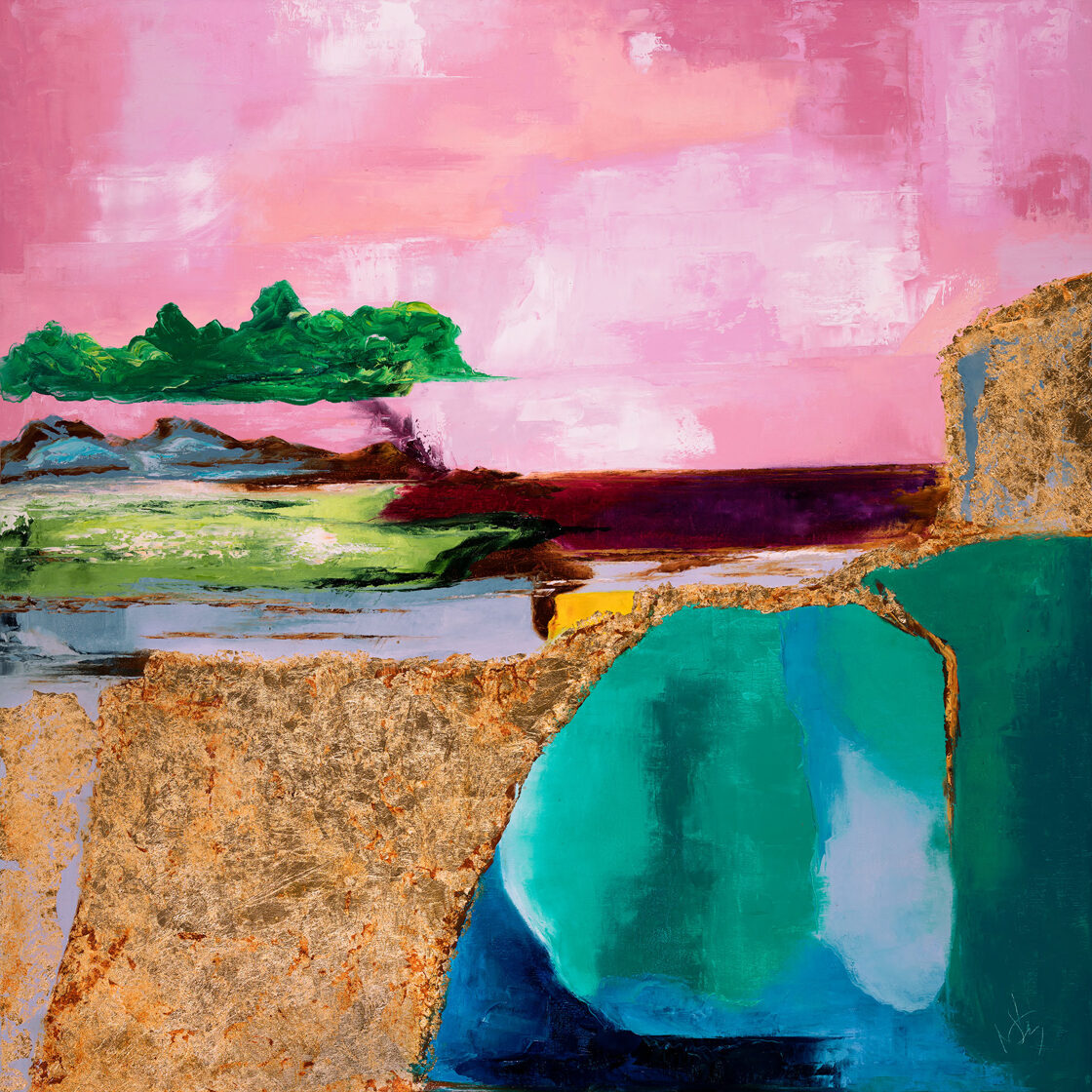
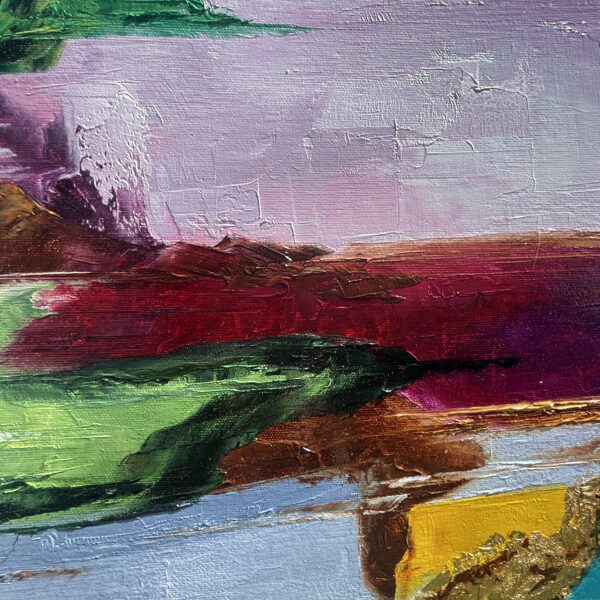
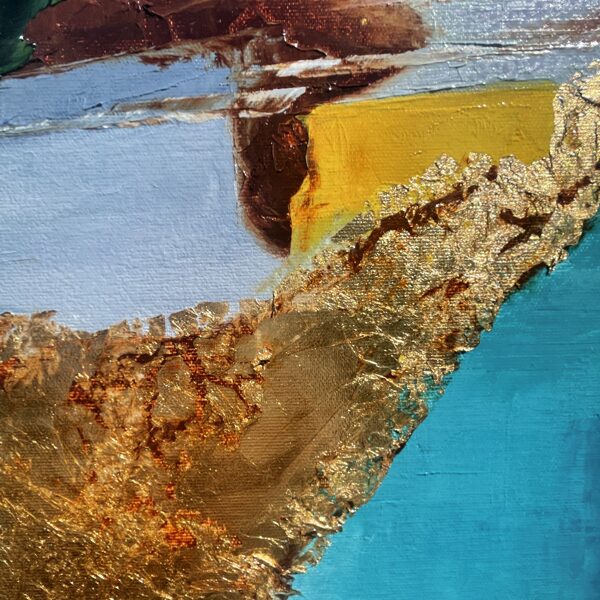
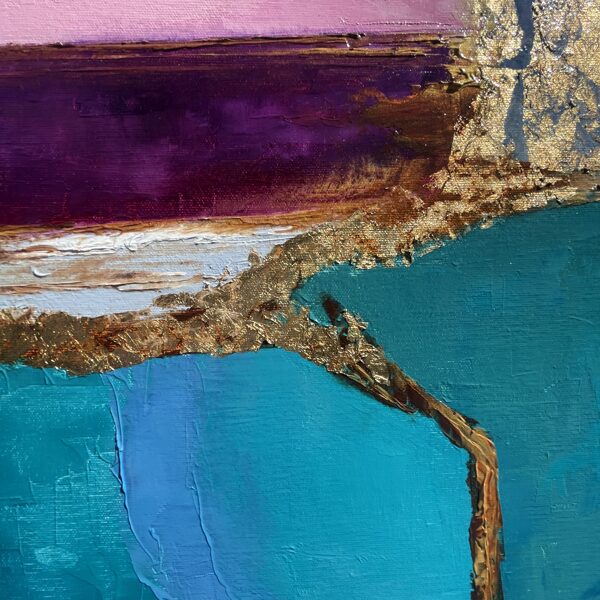
Margaret Theresa of Austria was only 15 years old when she married the Austrian Emperor Leopold I. It was a risky decision becasue if her parents failed to have an heir to the throne, the Spanish throne would pass to Austria by her marriage upon their death. Although Leopold was much older than his wife and his physical appearance was considered unfavourable, the chronicle describes their marriage as a happy one: both were fond of nature, music and loved fountains and bathing lakes. They had two children. According to the Empress, ever since she met Leopold I, she has been walking on clouds. However, during her third childbirth, she died with her child. The Emperor buried her in a golden coffin and he never ever married again.

The Wedding
120x100 cm, oil-gold-canvas, 2024 Sitges/Barcelona
SOLD
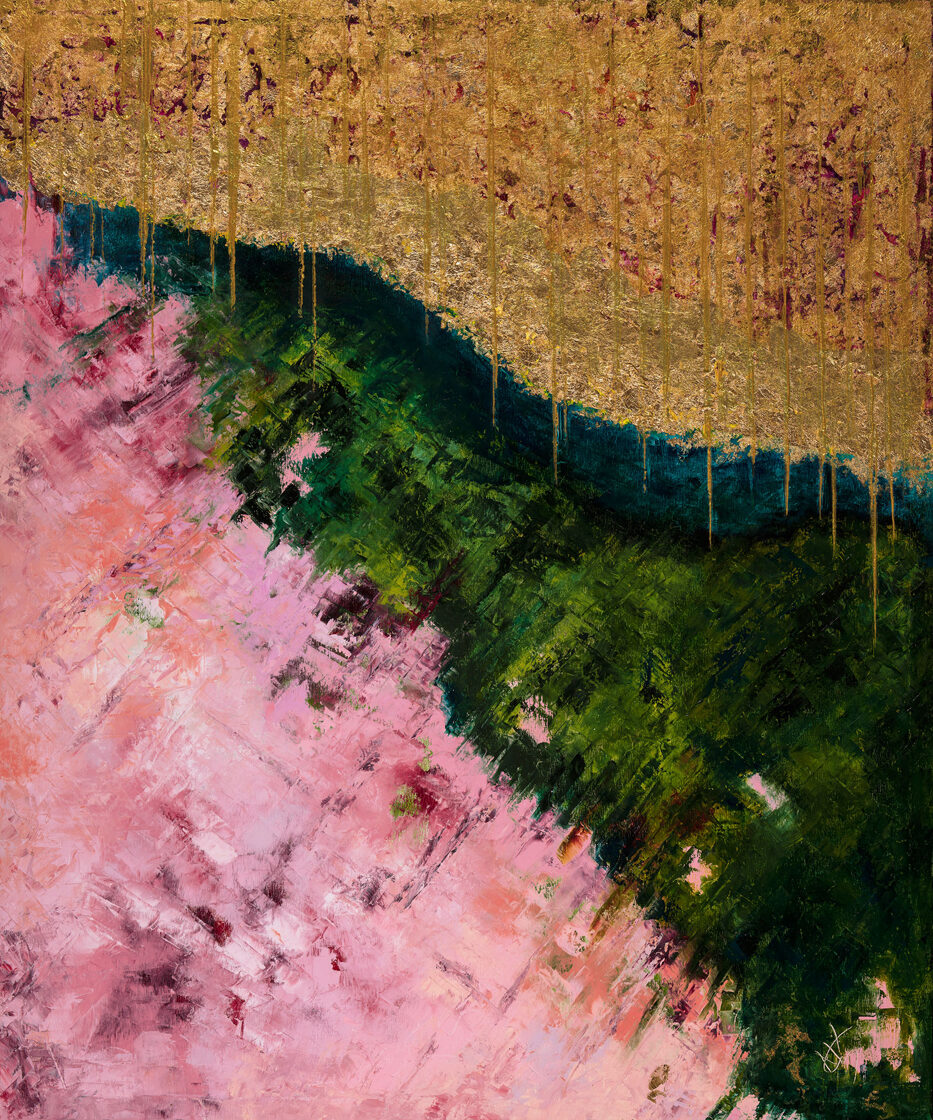
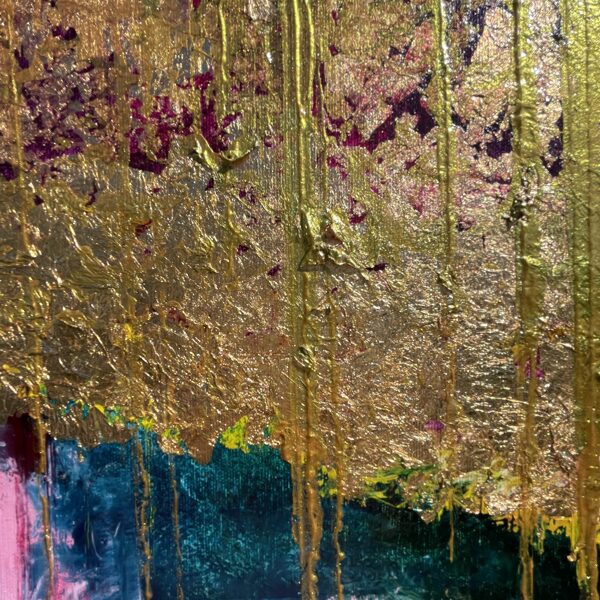
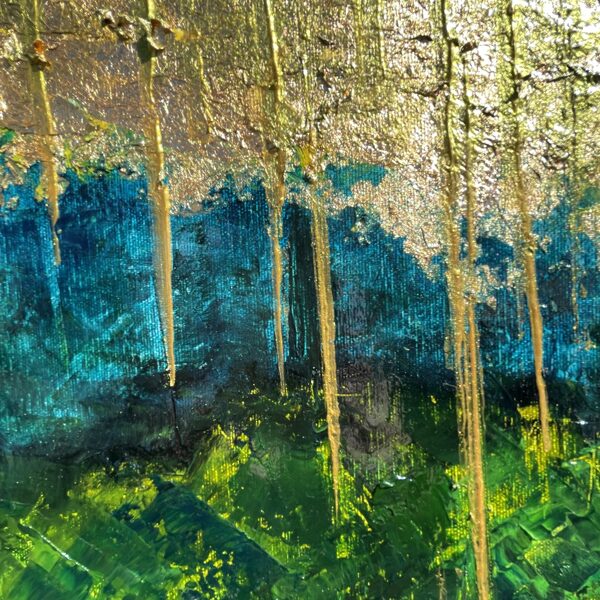
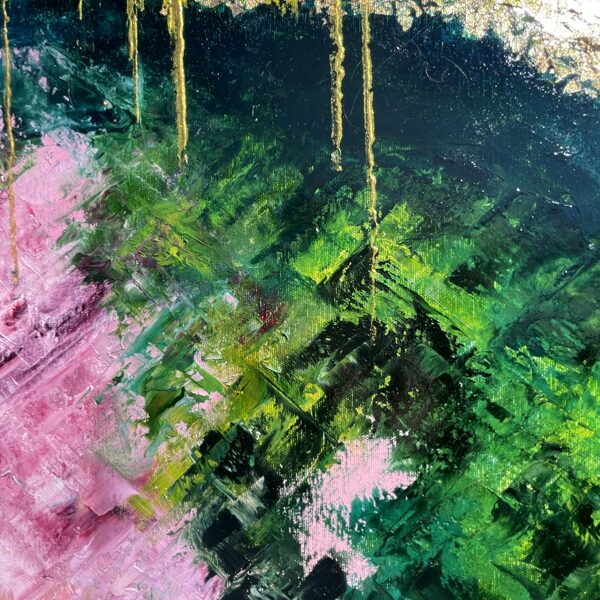
Maria Theresa Antonia Rafaella was a mature woman when she got married, but her husband Ferdinand Louis, only 16 years old, was clearly not ready for marriage. The young man was the subject of ironic comments from the French court. Ferdinand was rumoured to be impotent. The sensitive princess withdrew and spent most of her time away from court life. Two years later, however, they were reunited and continued their marriage, putting an end to the wicked court jokes. The couple's romantic relationship was rekindled and they spent a lot of time together. The couple openly demonstrated their great affection for each other.
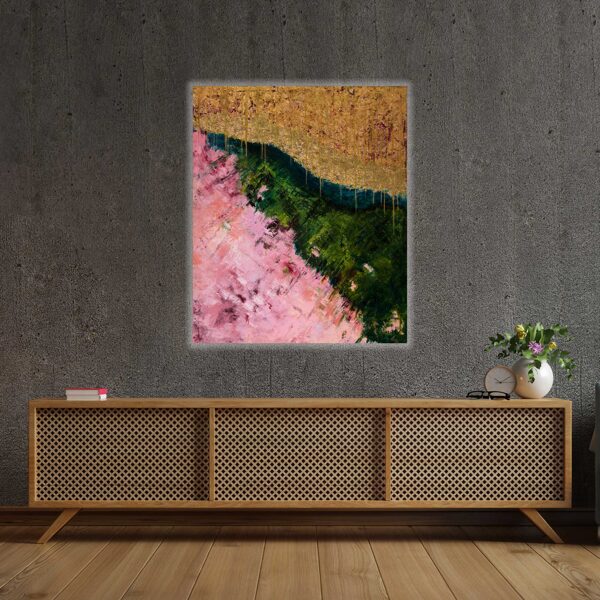
The Appeasement
100x100 cm, oil-gold-canvas, 2024 Sitges/Barcelona
SOLD
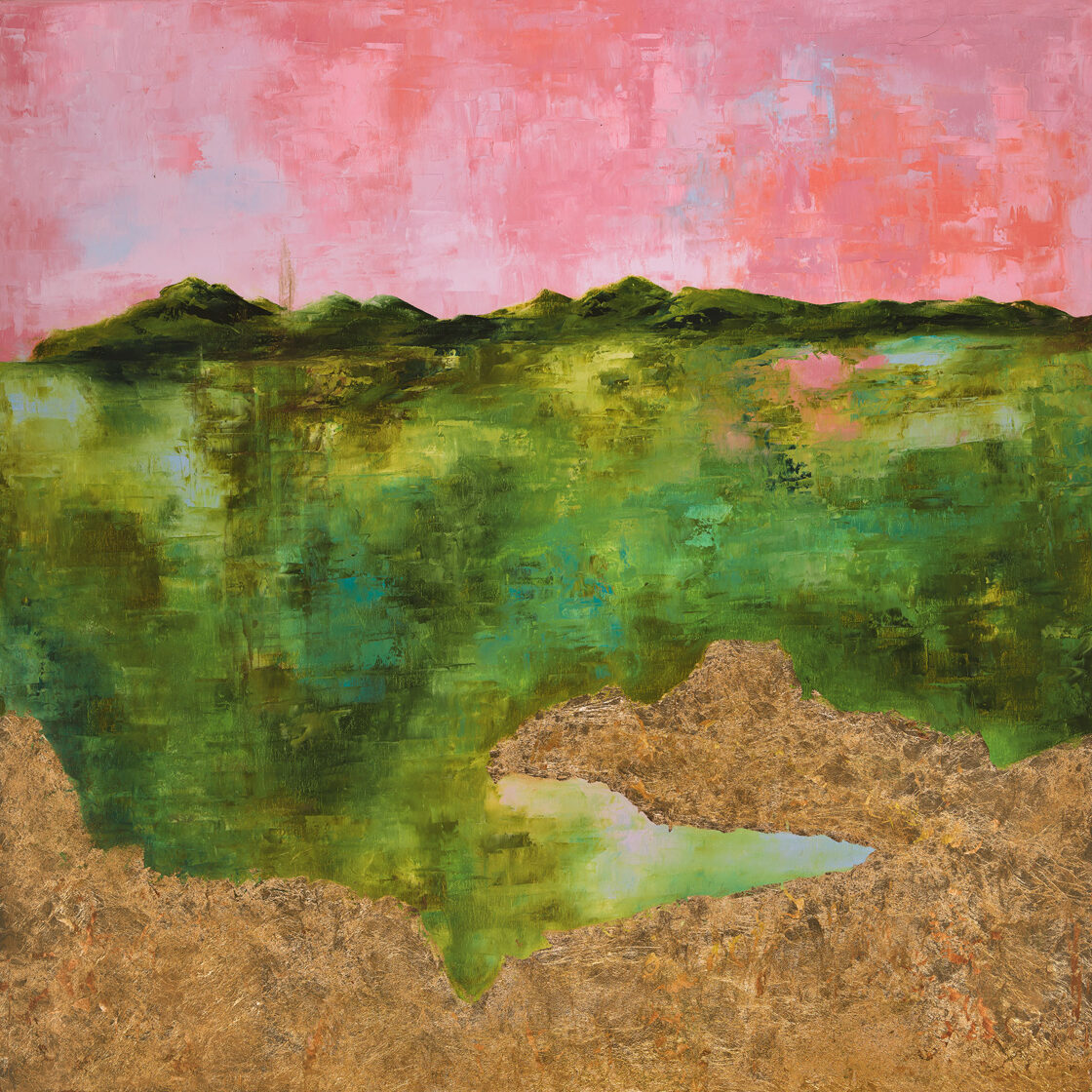
The work recounts the reign of the Infanta Elisabeth Clara Eugenie and Archduke Albert VII of Austria, considered the golden age of the Hispanic Netherlands. After four decades of war, peace and stability returned to the area and the couple did all they could to help restore the economy and society. Religious persecution was also ended and although Protestants were allowed to practice their religion freely, they were no longer threatened and . They are credited with spreading the Flemish Baroque style, and commissions for Rubens and Van Dyck are constant, but their patrons included Brueghel and Van Veen.

Garden of Jozefa
100x100 cm, oil-gold-canvas, 2024 Sitges/Barcelona
SOLD
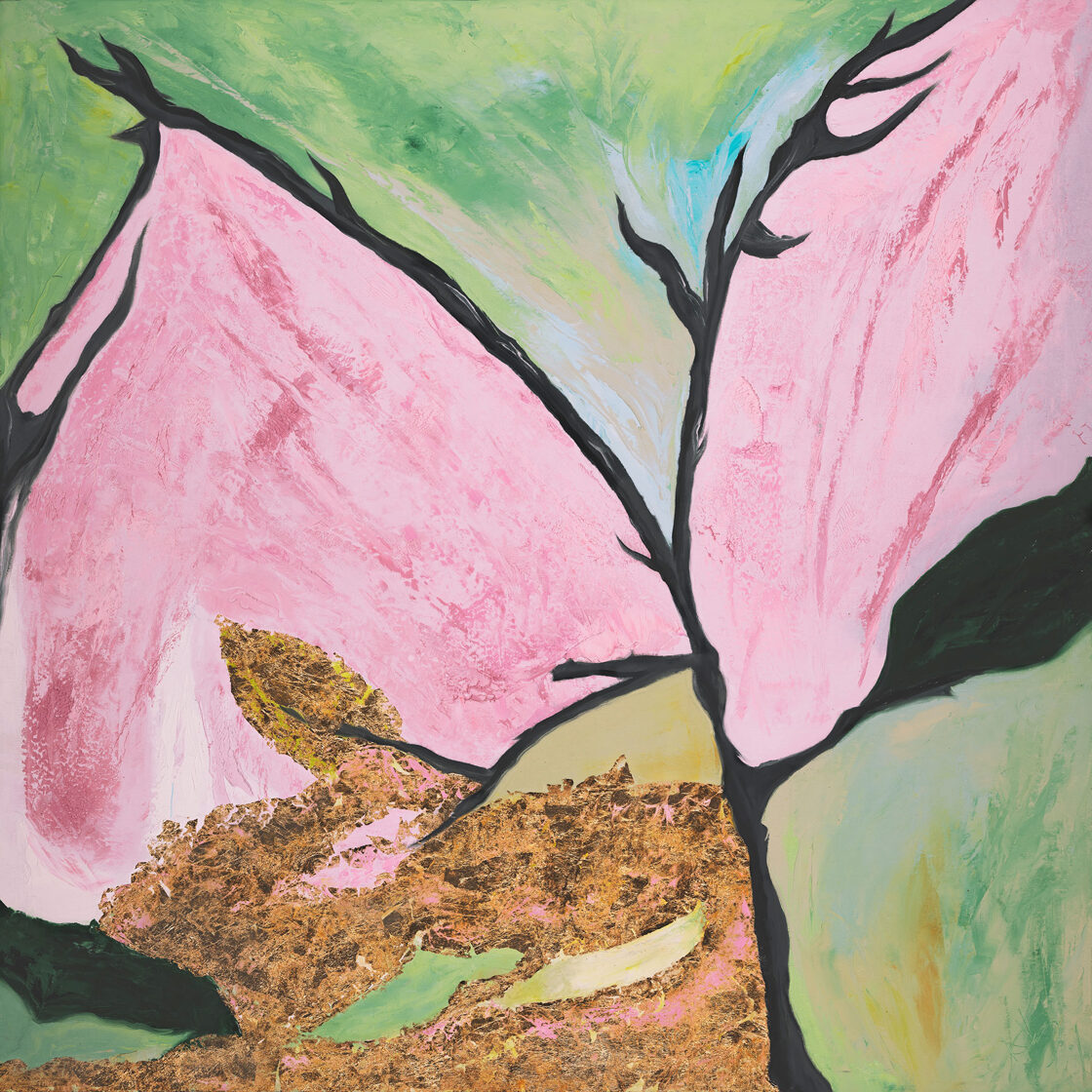
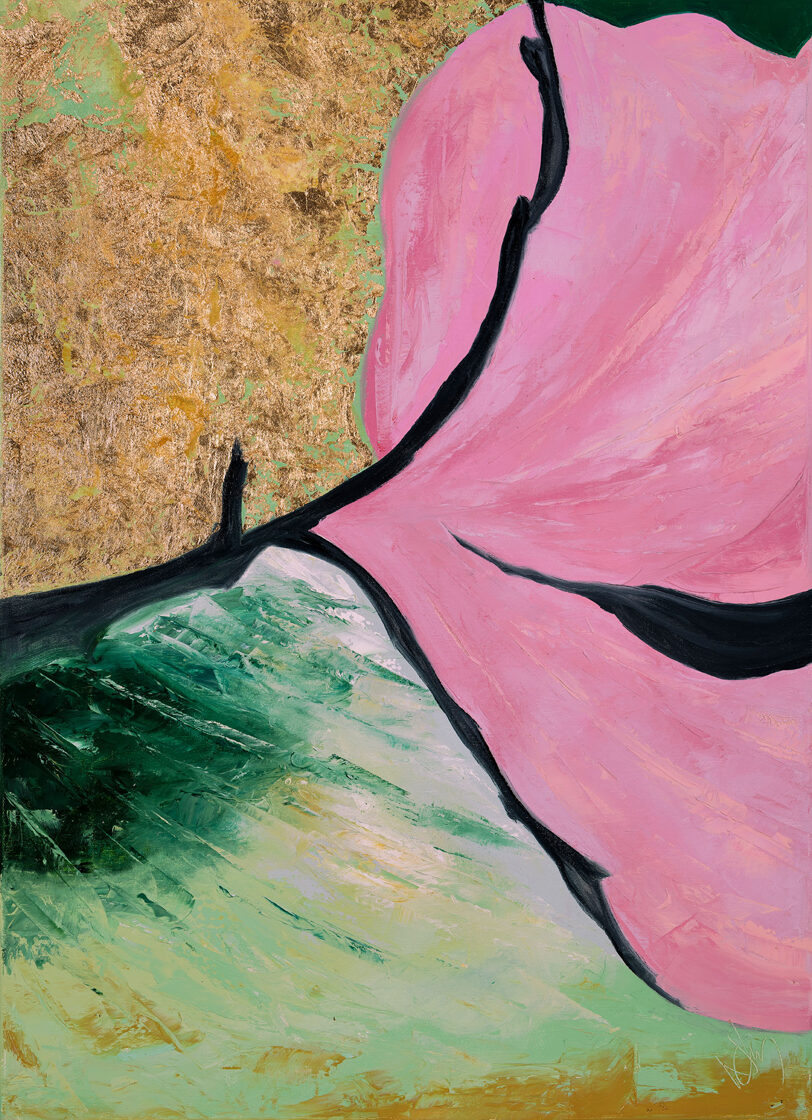
The painting tells the story of two hearts. The Infanta Josefa Fernanda de Borbón secretly married the writer and politician José Güell Renté in a loveless marriage. The affair led to her being stripped of her title of princess by the Queen and banished from the court. Josefina and her husband lived in seclusion on a small estate with their children, whose garden, according to legend, was a constant source of magnolias in bloom.



IV.
Hispania Romana
200 Years
120x120 oil-gold-canvas, 2024 Sitges/Barcelona
SOLD
The vast territory of the Iberian Peninsula was conquered by the Romans - compared to the speed with which they conquered other parts of their empire - rather slowly, in 200 years to be exact: they set foot in Emporion (Ampurias) in 218 BC, and Emperor Augustus put an end to the Cantabrian War in 19 BC. Livius records it cum grano salis (with a "pinch of salt"):
"Hispania was the first where the Romans came to conquer, and the last they conquered" (XXVIII. 12.12).
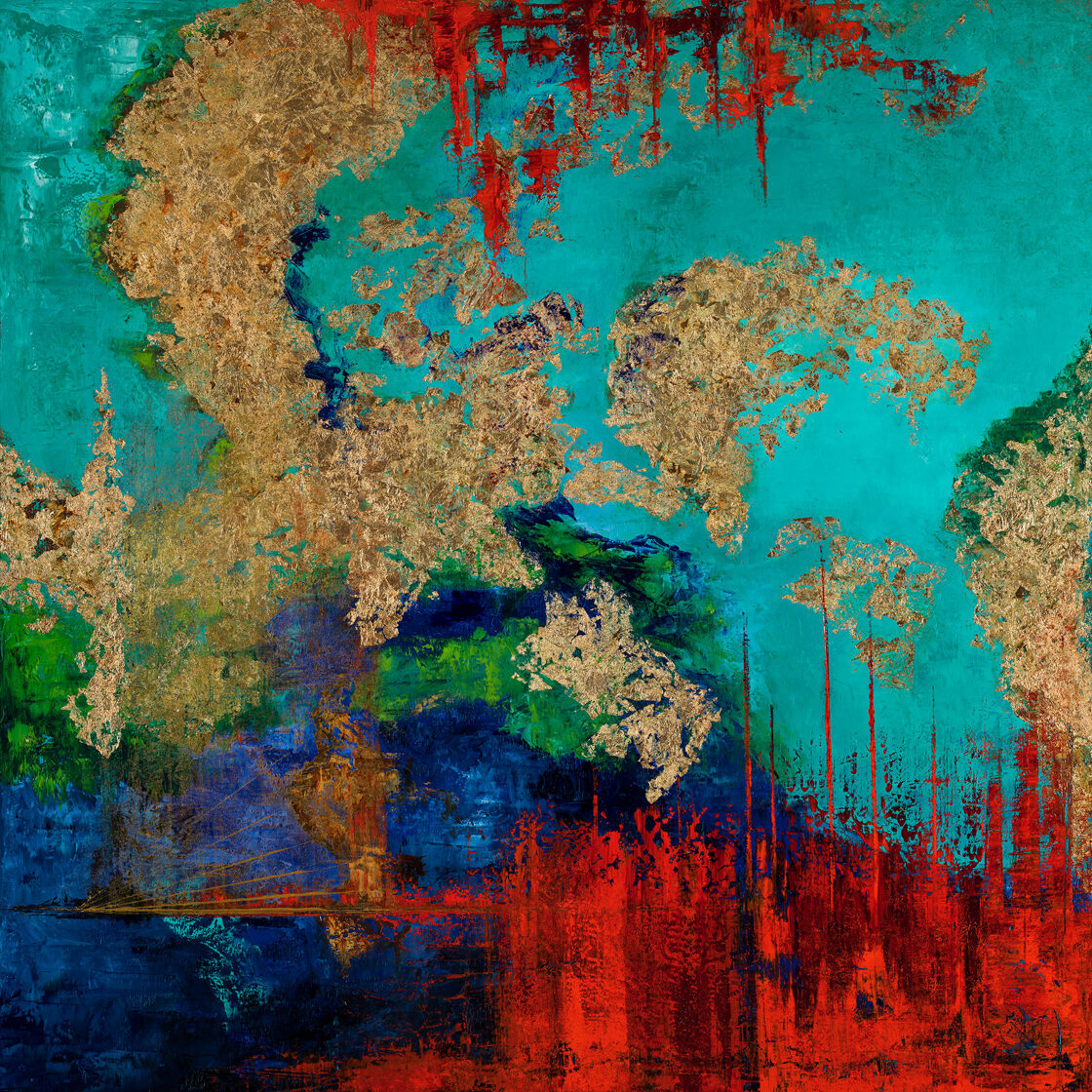

The Empire of Fire
80x220 cm, oil-gold-canvas, 2024 Sitges/Barcelona
SOLD
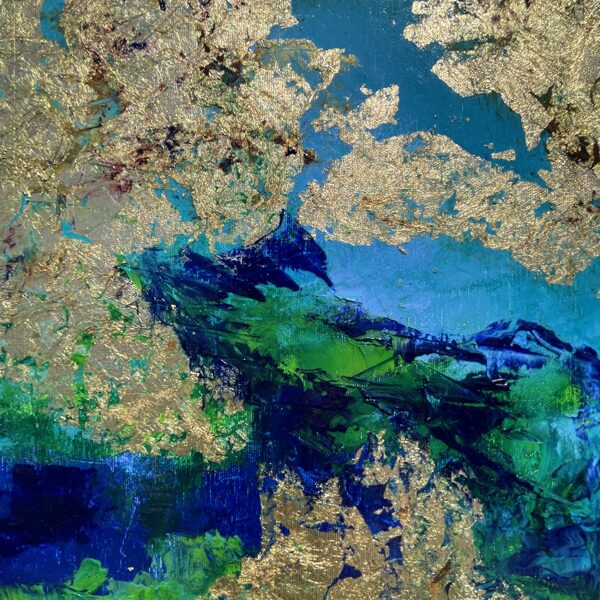
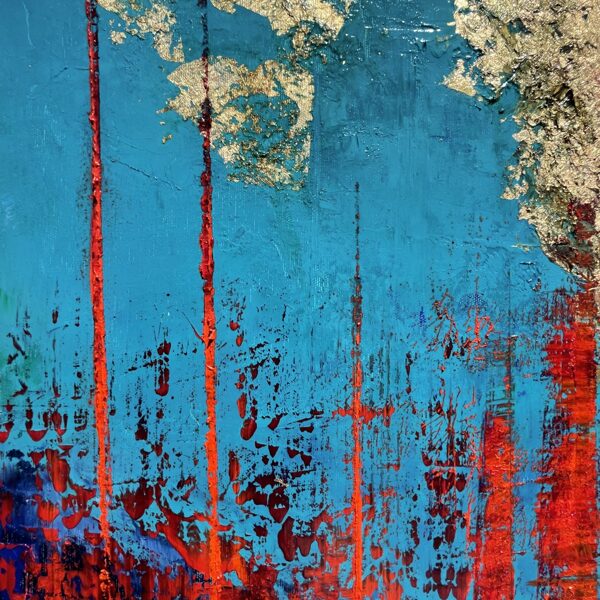
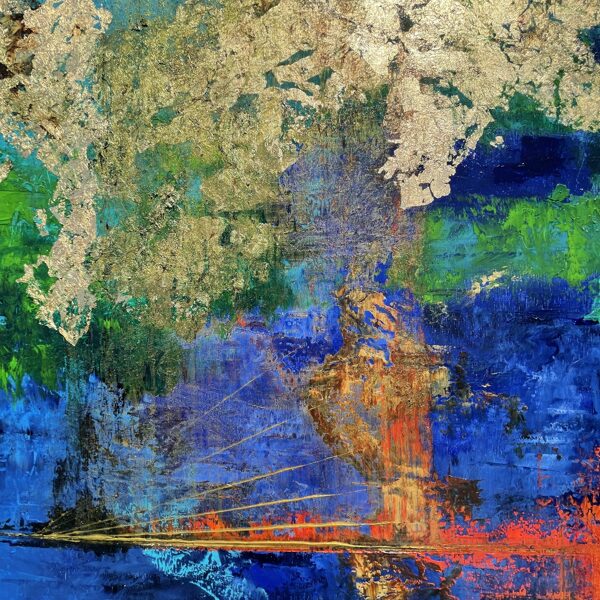
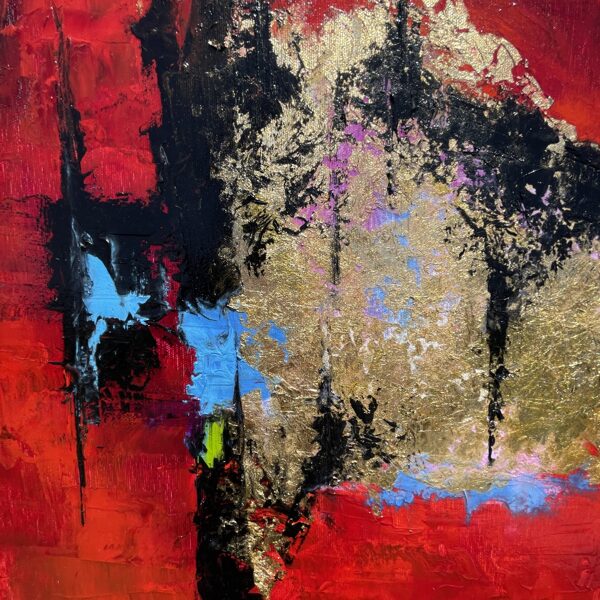
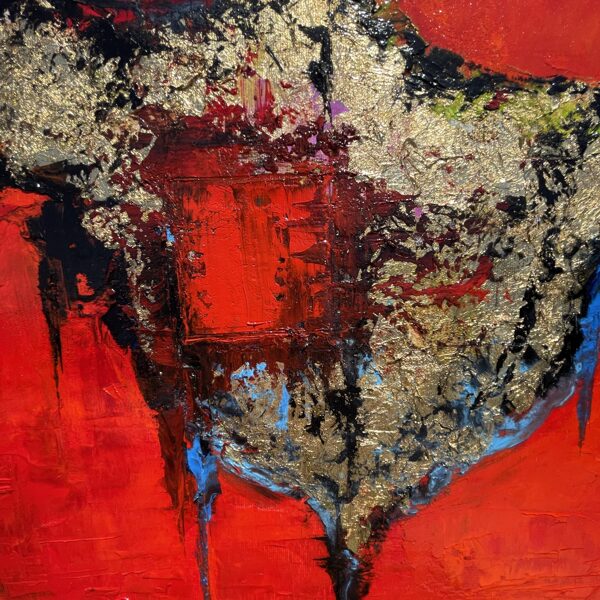
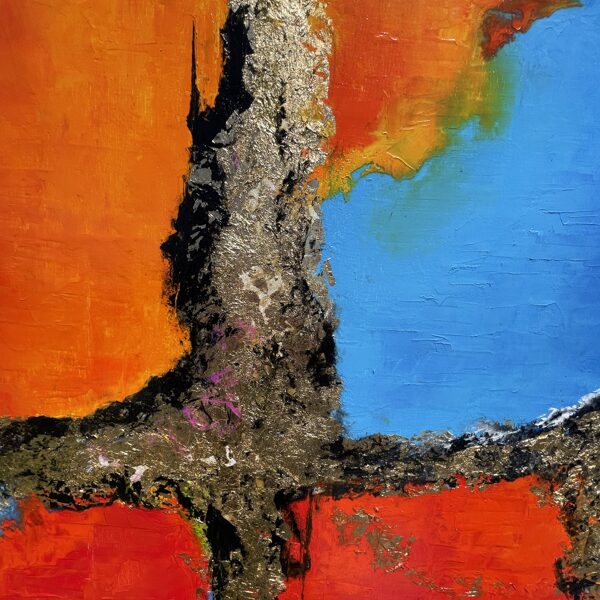
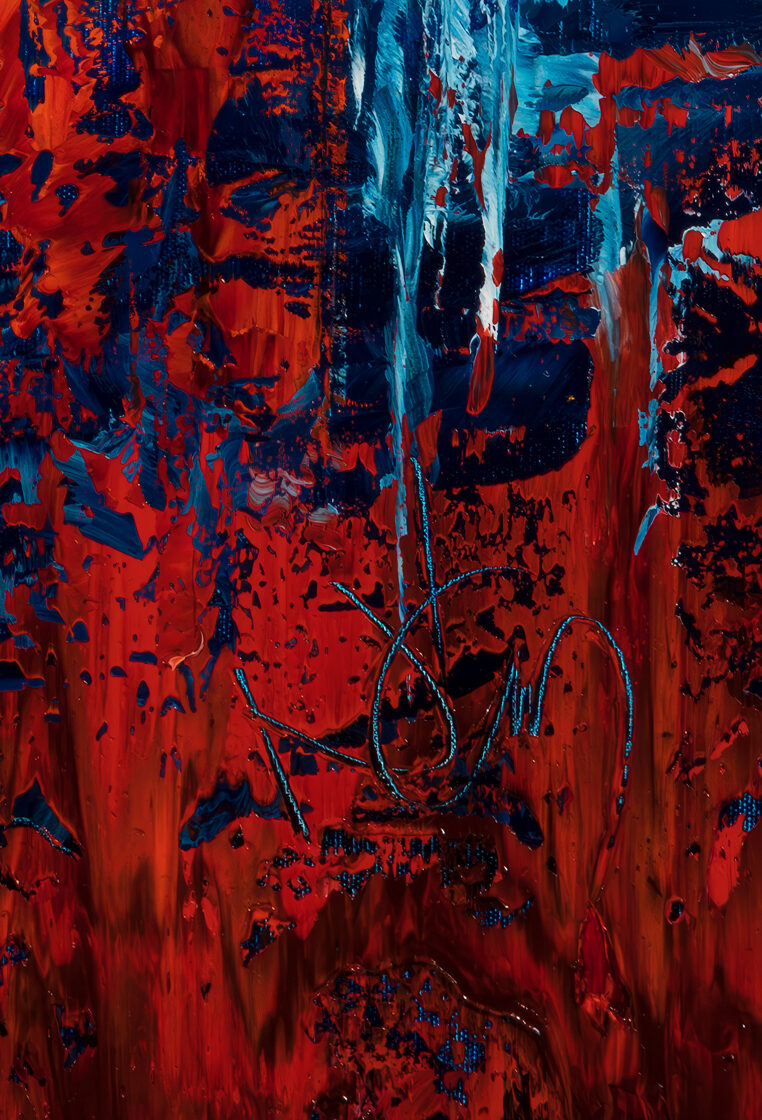
The province of Hispania was not only considered important and noble to the Romans for economic reasons. They believed that the peninsula was a kingdom of flame and fire, where those destined for great things were born. Trajan, Hadrian and Theosodius I were all born here, but it was also the birthplace of Seneca, Martialis and Qiuntianus.

Betis
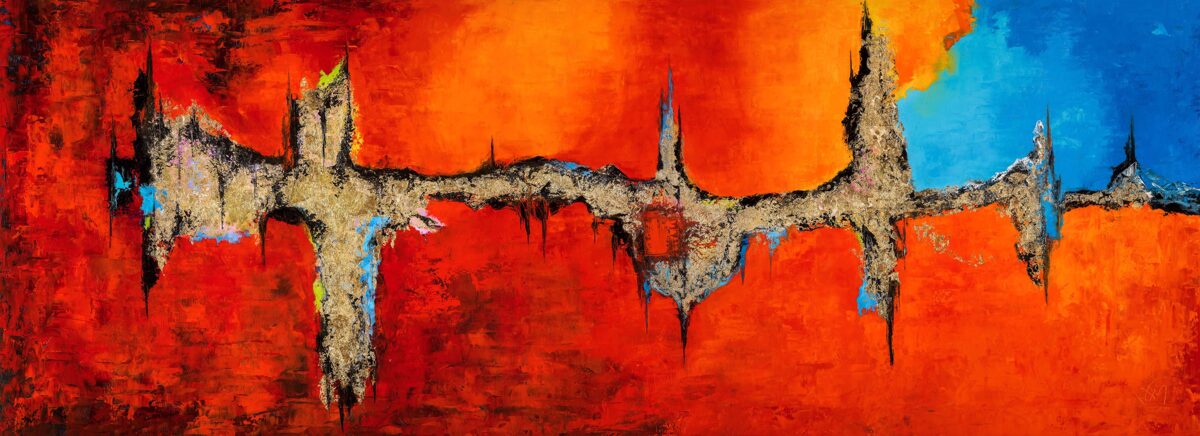
150x50 cm, oil-gold-canvas, 2024 Sitges/Barcelona
SOLD
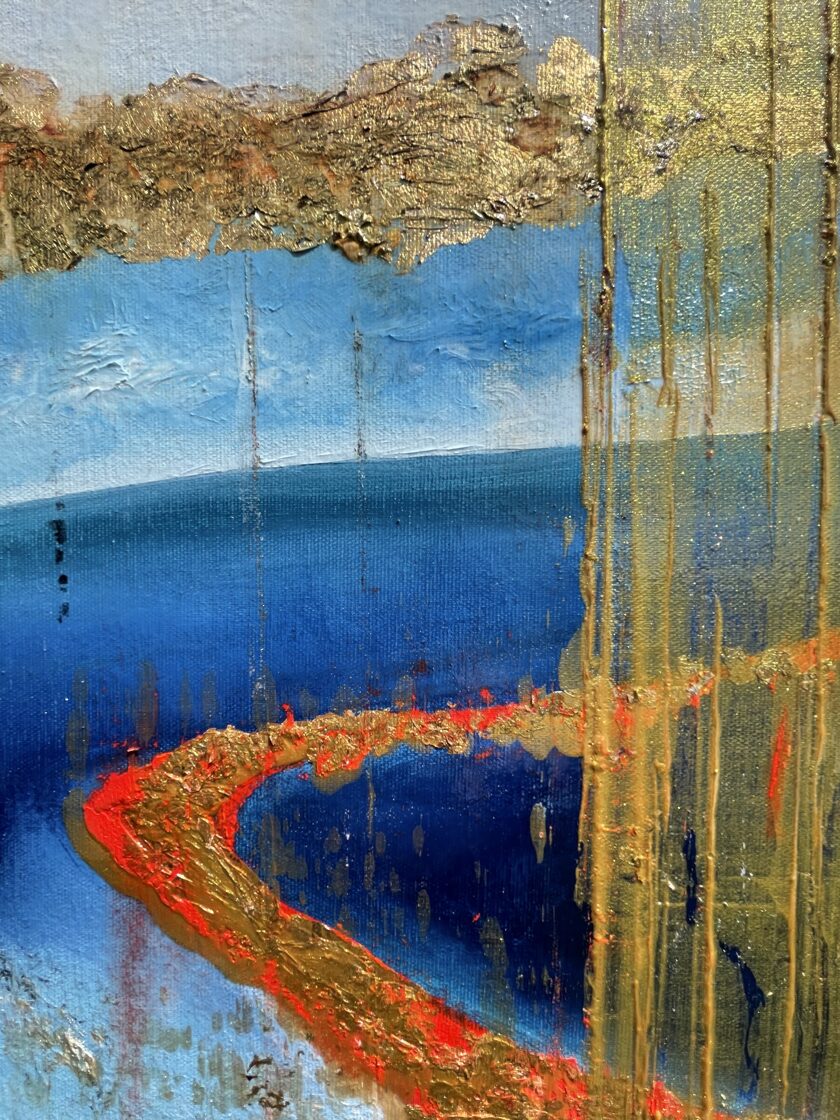
The Betis, now known as the Guadalquivir River, whose floods created a fertile valley where the cultivation of olives and wineries was important in ancient times, was the lifeblood of the province. The river was easily navigable by boat to the city of Hispalis (Seville), which was the centre of the region. The river's importance was reinforced by the fact that it was used to transport the rich mineral resources of the Sierra Nevada to the port of Gades (Cadiz) and from there to other parts of the Roman Empire.

Nomen Est Omen
80x80 cm, oil-gold-canvas, 2024 Sitges/Barcelona
SOLD
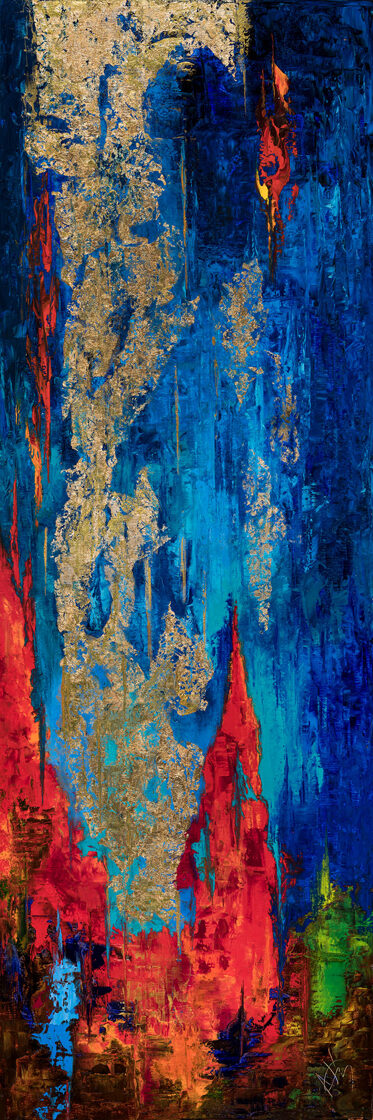
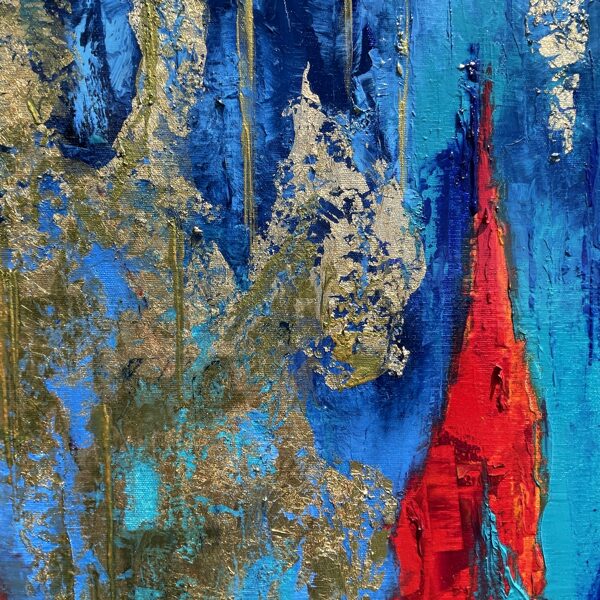
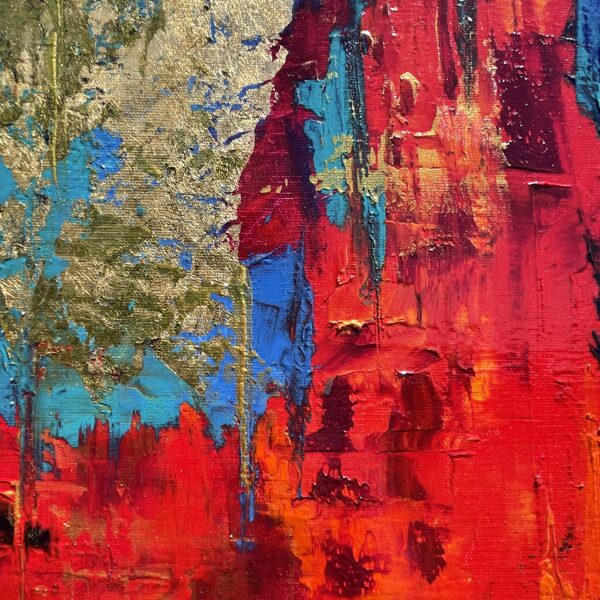
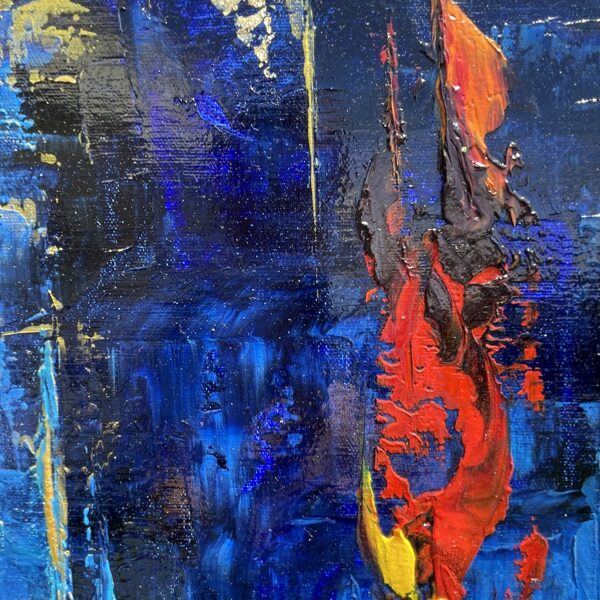
The flourishing New Carthage, which also stood out among the cities of the empire's provinces and lasted until the mid-7th century AD, met a terrible fate, rivalling Rome in prosperity: the Arabs burned the city and destroyed it in 647.

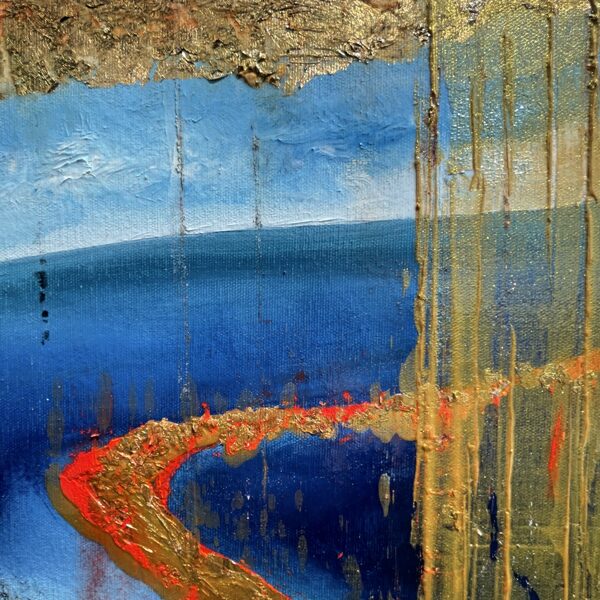
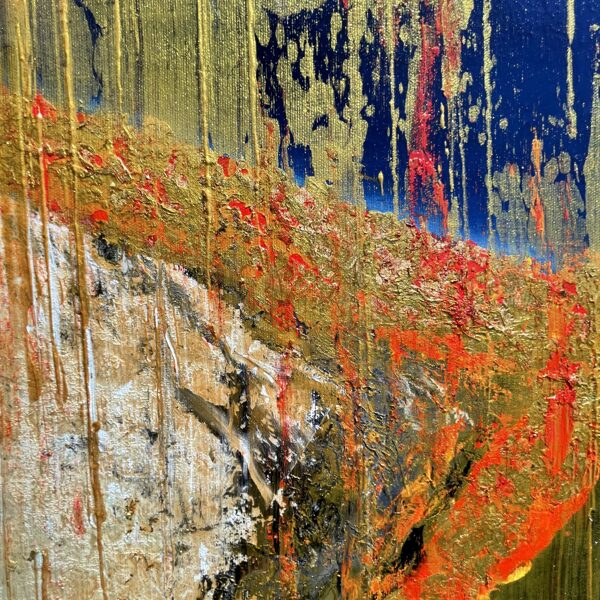
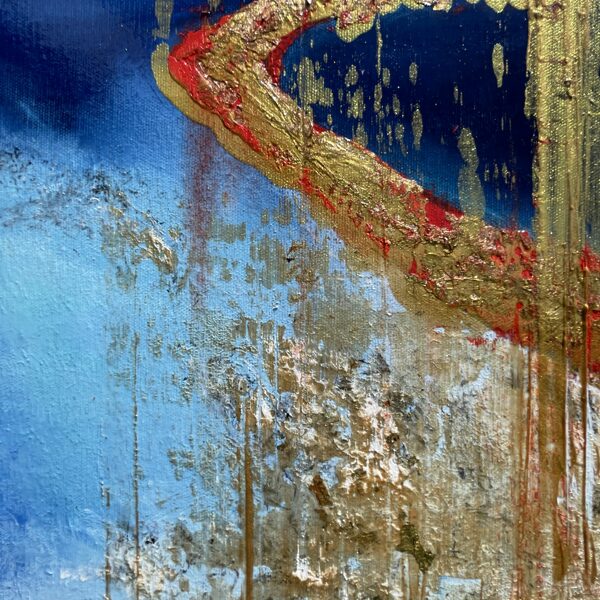
Las Médulas
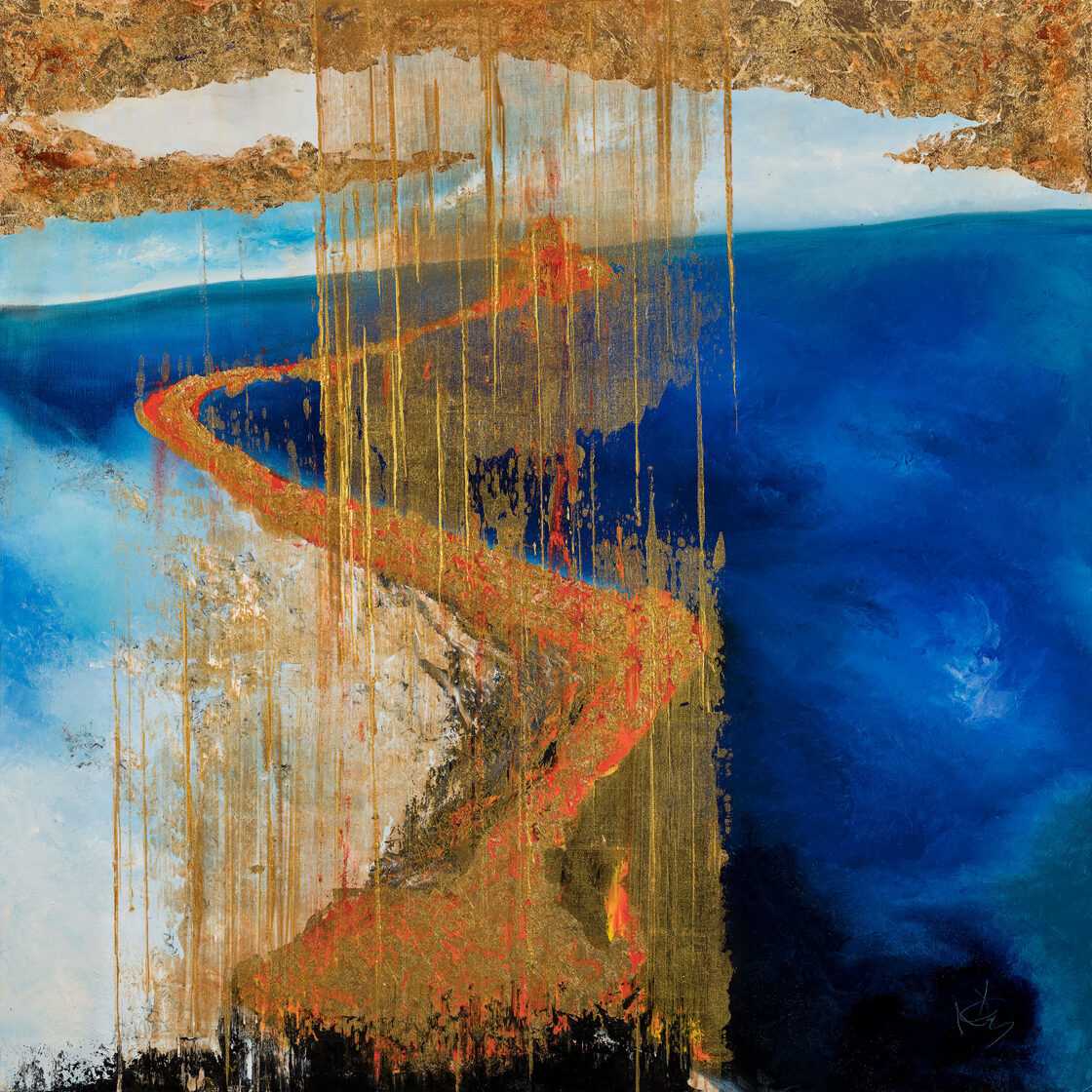
120x100 cm, oil-gold-canvas, 2024 Sitges/Barcelona
SOLD
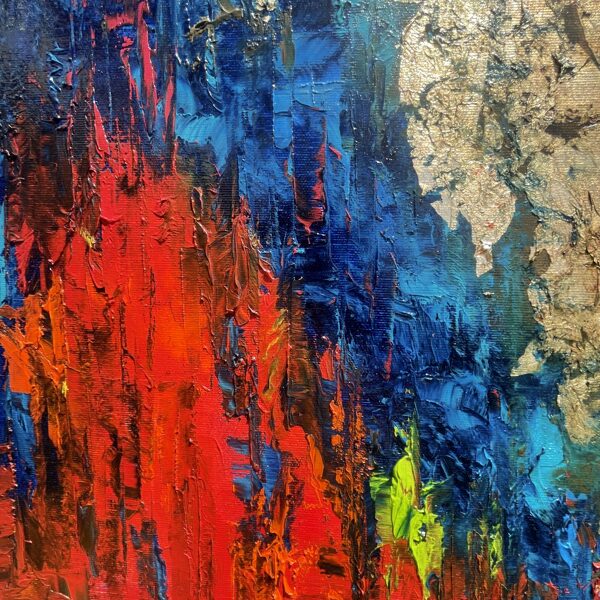
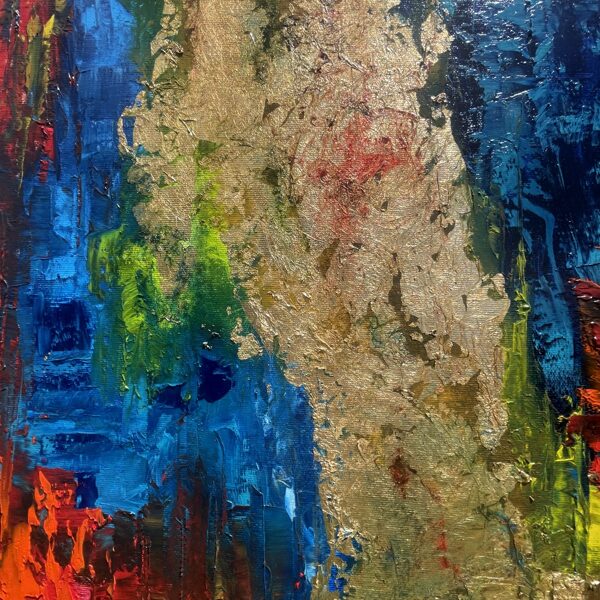
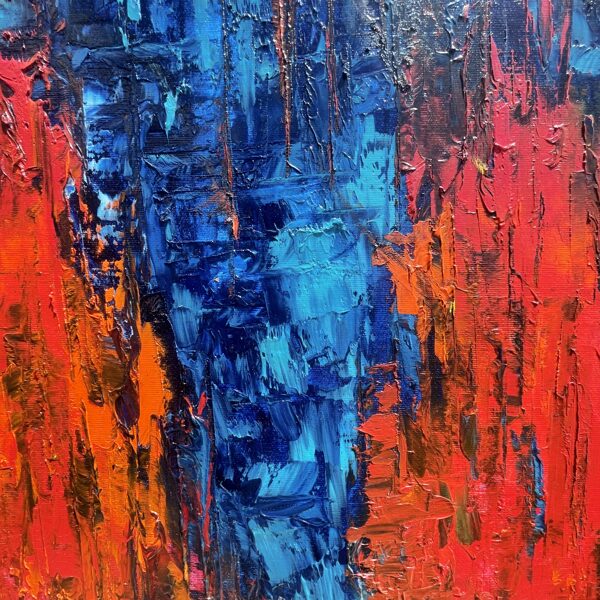
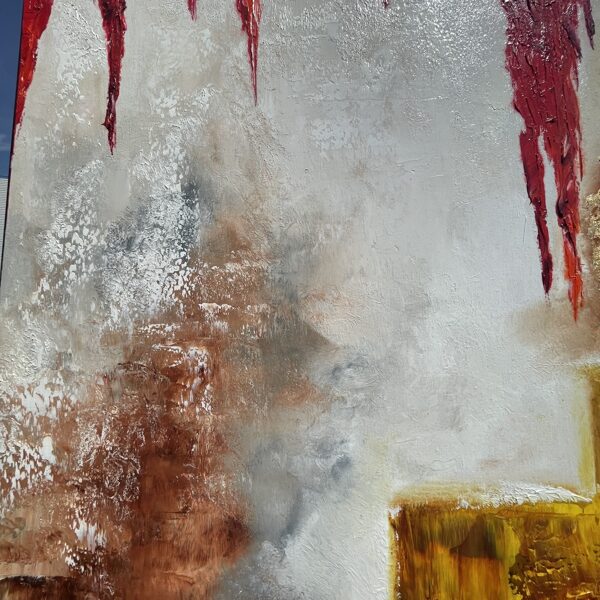
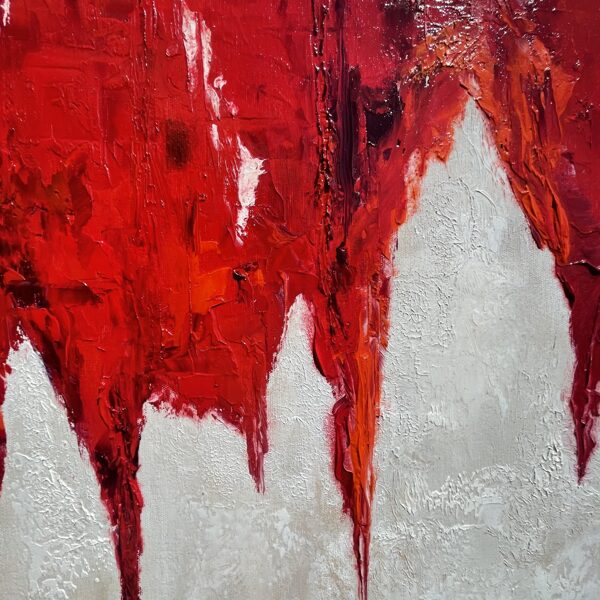
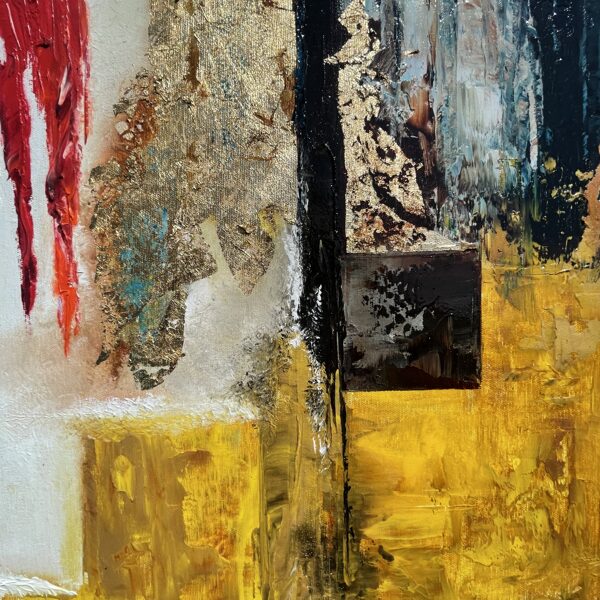
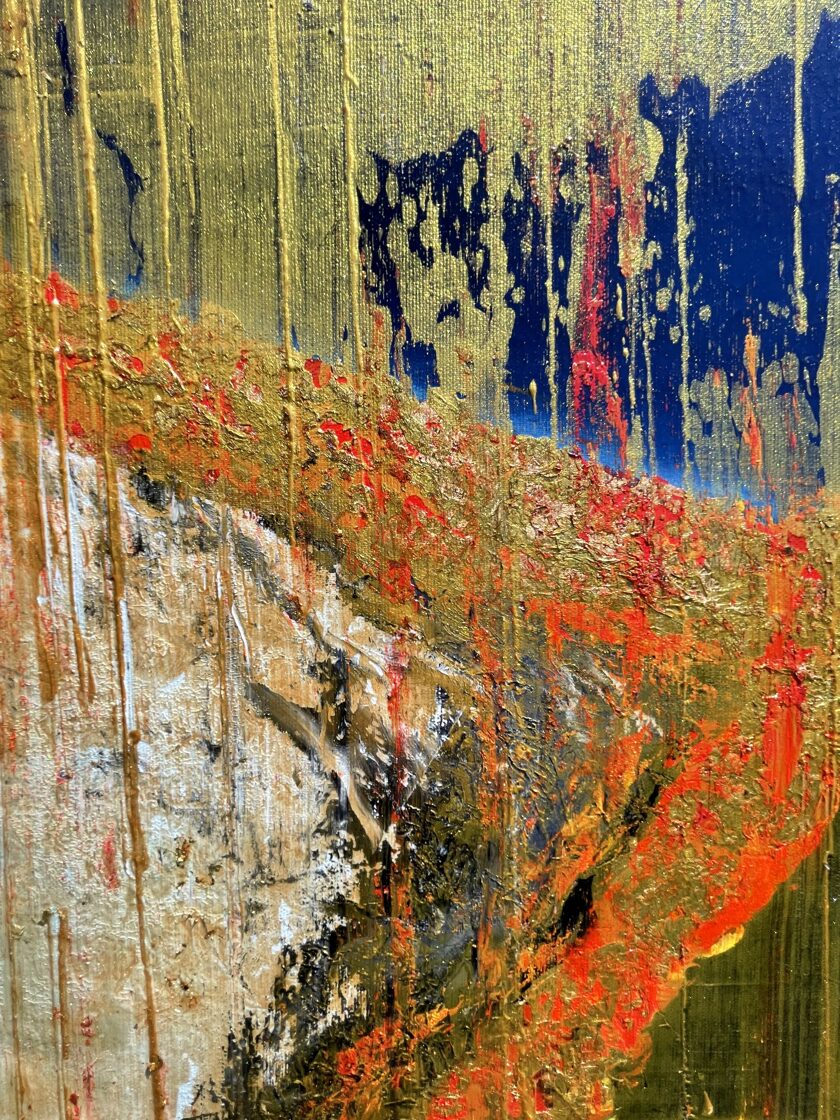
It was once the most important gold mine in the Roman Empire and was exploited for two hundred years from the 1st century B.C. The ruina montium, a Roman mining method, created a landscape of incomparable beauty. Tunnels were dug into the mountains and then flooded with large quantities of water. This literally caused the top of the mountain to collapse. The large quantities of water needed for the operation were brought there from the Sierra de la Cabera via a 100-kilometre-long canal.
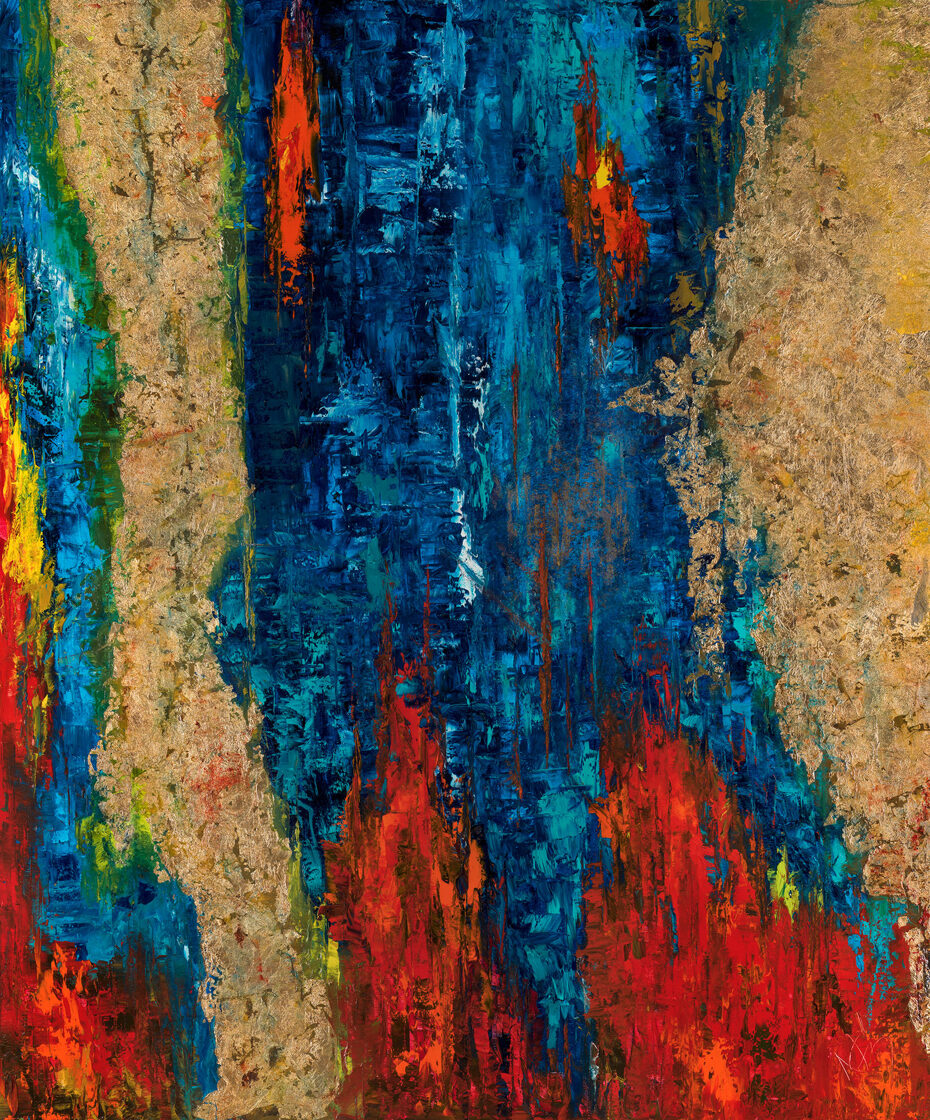

The Day
96x146 cm, oil-gold-canvas, 2024 Sitges/Barcelona
SOLD
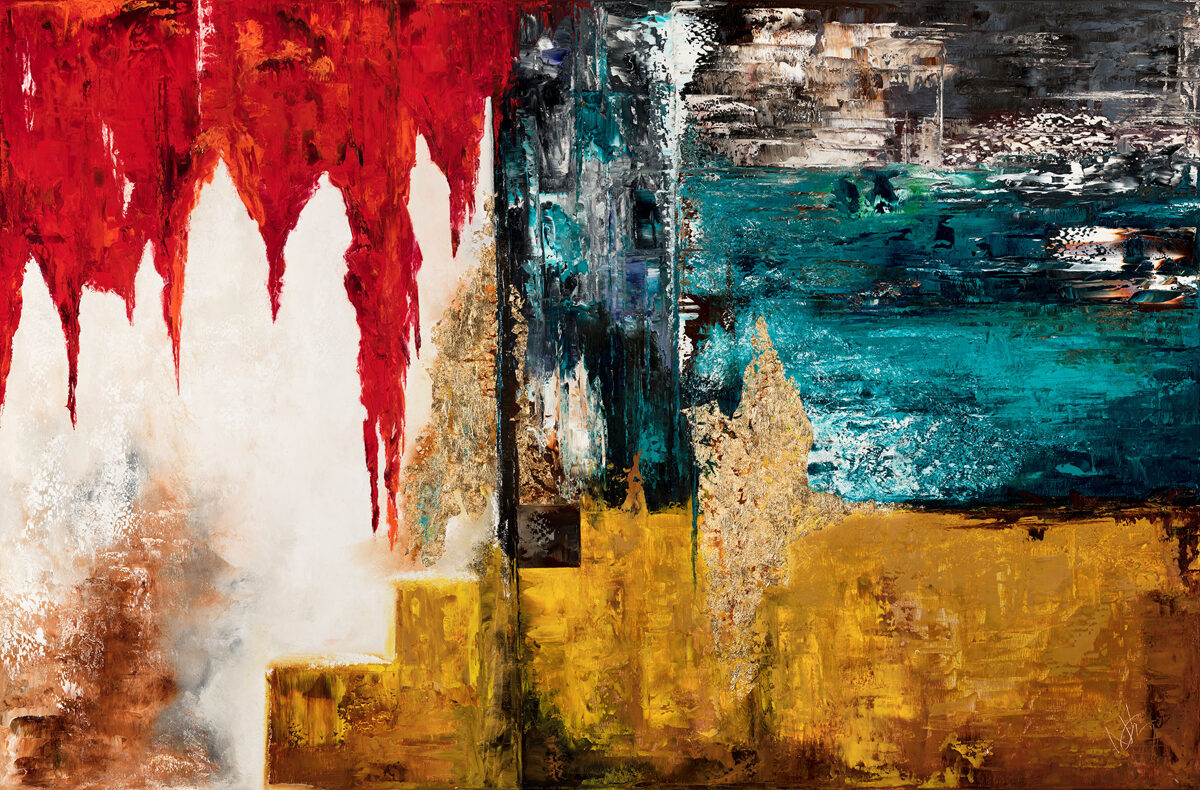
The territory of the Muslim Nasrids, with Granada at its centre, stretched as far as the foothills of the Sierra Nevada. They took their advantage of the fall of the Almohads to seize power, but their rule did not last long. Mohammed XII was unable to repel the onslaught of the allied forces of Castile and Aragon, which had flourished under Isabella I and Ferdinand II, and on 2 January 1492 he surrendered the besieged Granada, resulting in a unified, Catholic kingdom.

V.
The Empire Where the Sun Never Sets
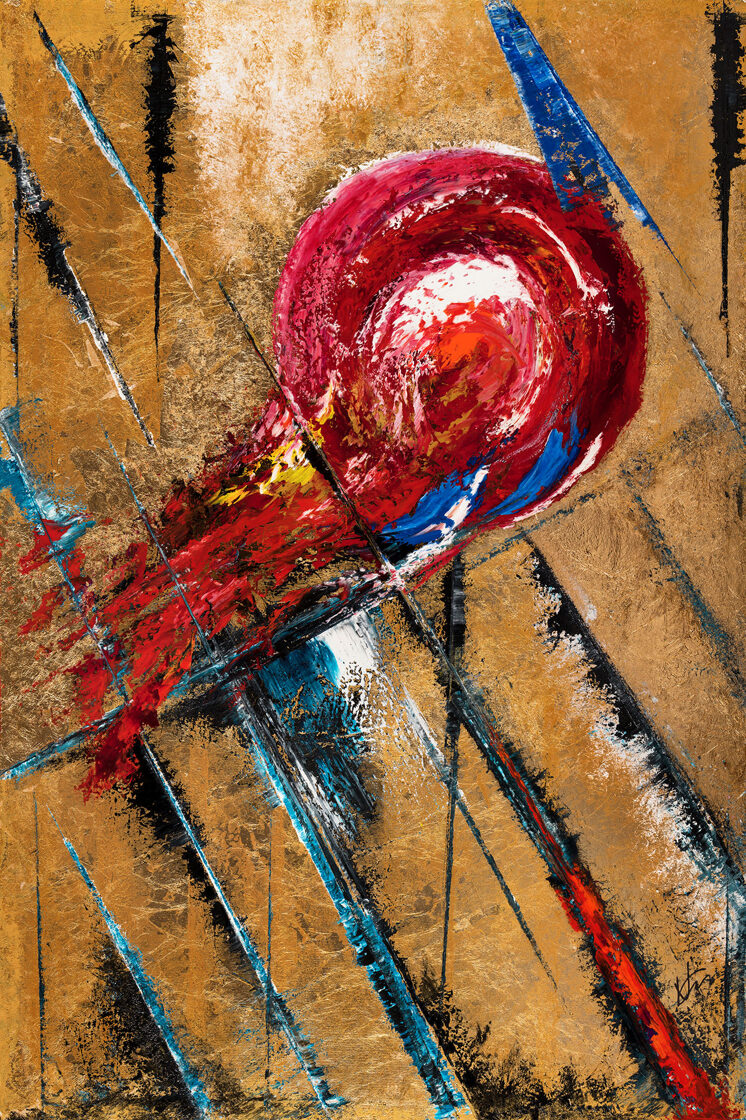
The Offer
150x100 cm, oil-gold-canvas, 2024 Sitges/Barcelona
SOLD
In 1492, Spain expelled the last Muslim ruler of Granada. After their victory, the Catholic rulers got in contact with Christopher Columbus, a Genoese sailor who was trying to reach Japan by ship. Castile had long been in competition with Portugal to reach the Far East by sea, so when Columbus made his bold offer to Queen Isabella of Castile, the court pledged its support without hesitation. Columbus then "accidentally" discovered what came to be called America, rather than the Far East, and changed the world and its history.

The Treaty
100x100 cm, oil-gold-canvas, 2024 Sitges/Barcelona
SOLD
The Treaty of Tordesillas, signed in 1494 in Tordesillas, Spain, divided the newly discovered territories outside Europe between Spain and Portugal. The treaty, which excluded all other European powers from the exploration, was ratified also by Pope Alexander VI.
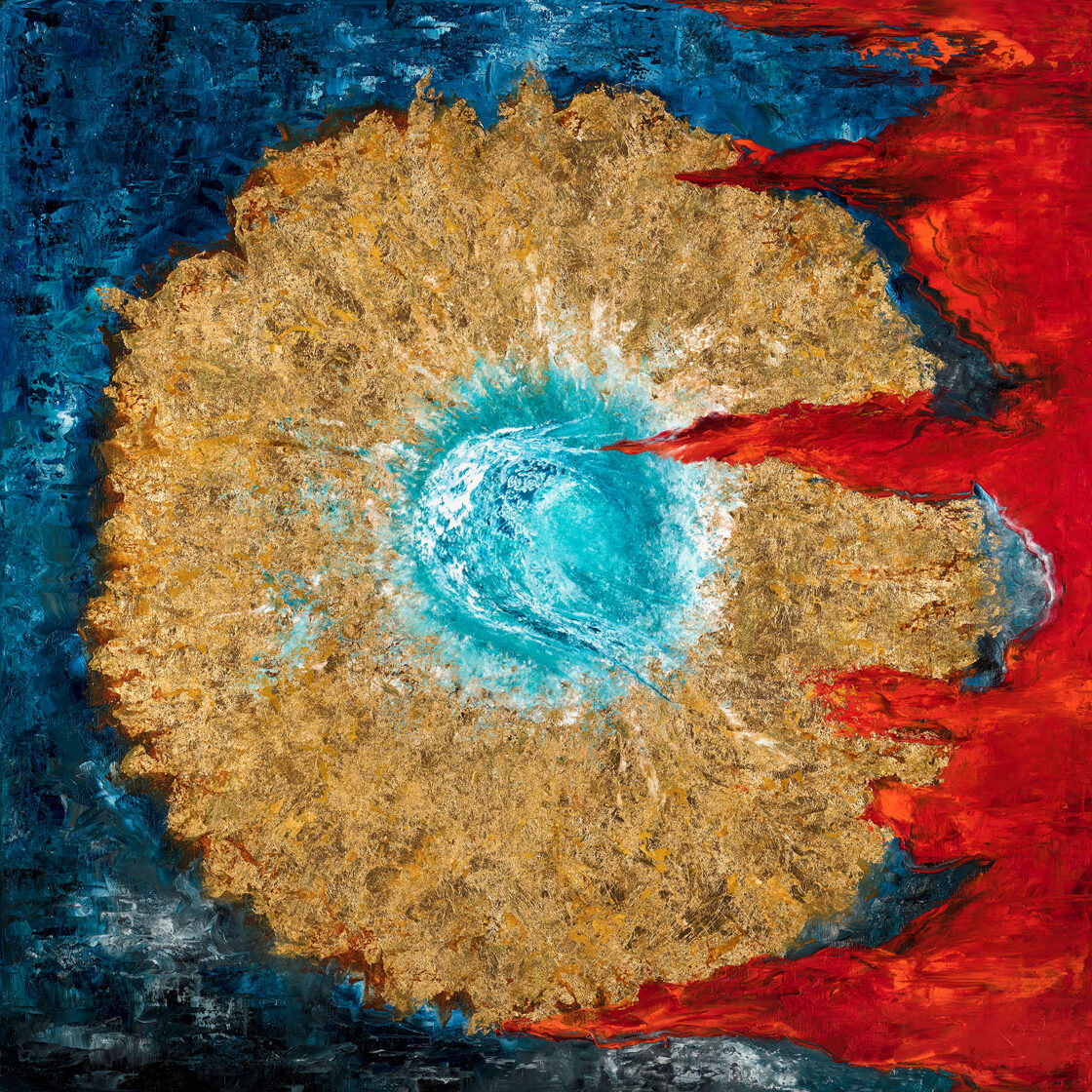
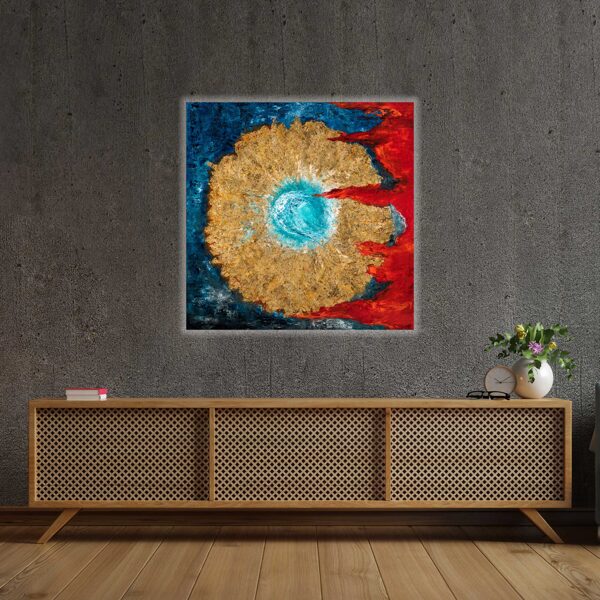
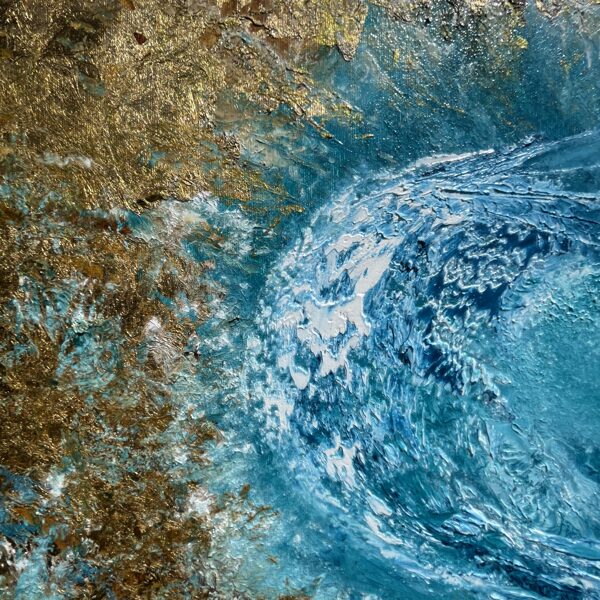
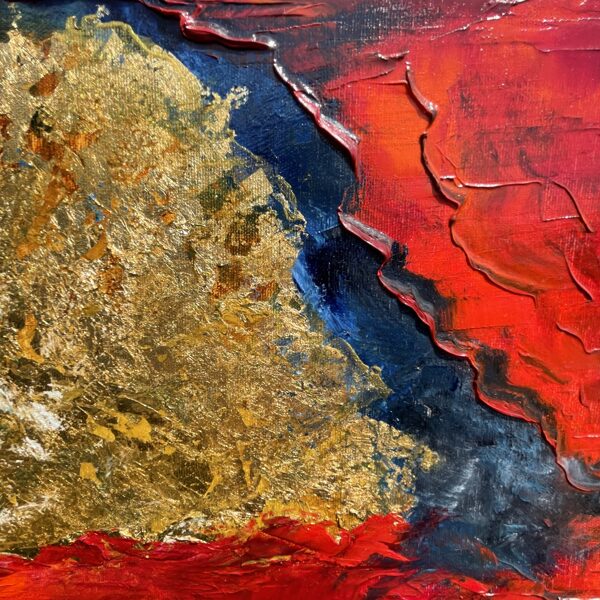
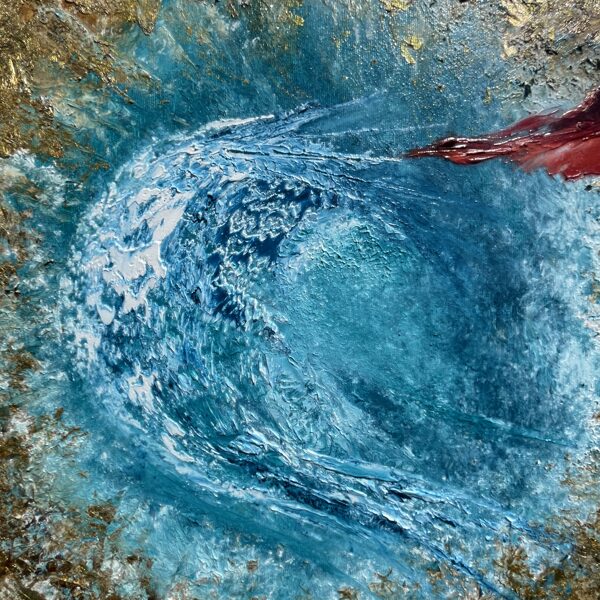
Origins - From Altamira to the Bourbons
100x100 cm, oil-gold-canvas, 2024 Sitges/Barcelona
SOLD
The history of the Iberian Peninsula goes back 1.4 million years. After the Iberians, Turdetans and Celts, the Romans, the Visigoths, the Arabs and then the Berbers divided up the unique territory up until Castile and Aragon entered into a personal union at the end of the 15th century. After the extinction of the Hispanic branch of the Habsburg dynasty, the French Bourbon dynasty provided the kings of the empire. From the 17,000-year-old wall paintings in the cave of Altamira, through the Greek colony of Empúries and the tragic Guernica, this lasting journey til the 21st century created the last bastion of freedom, i.e. today's Spain.
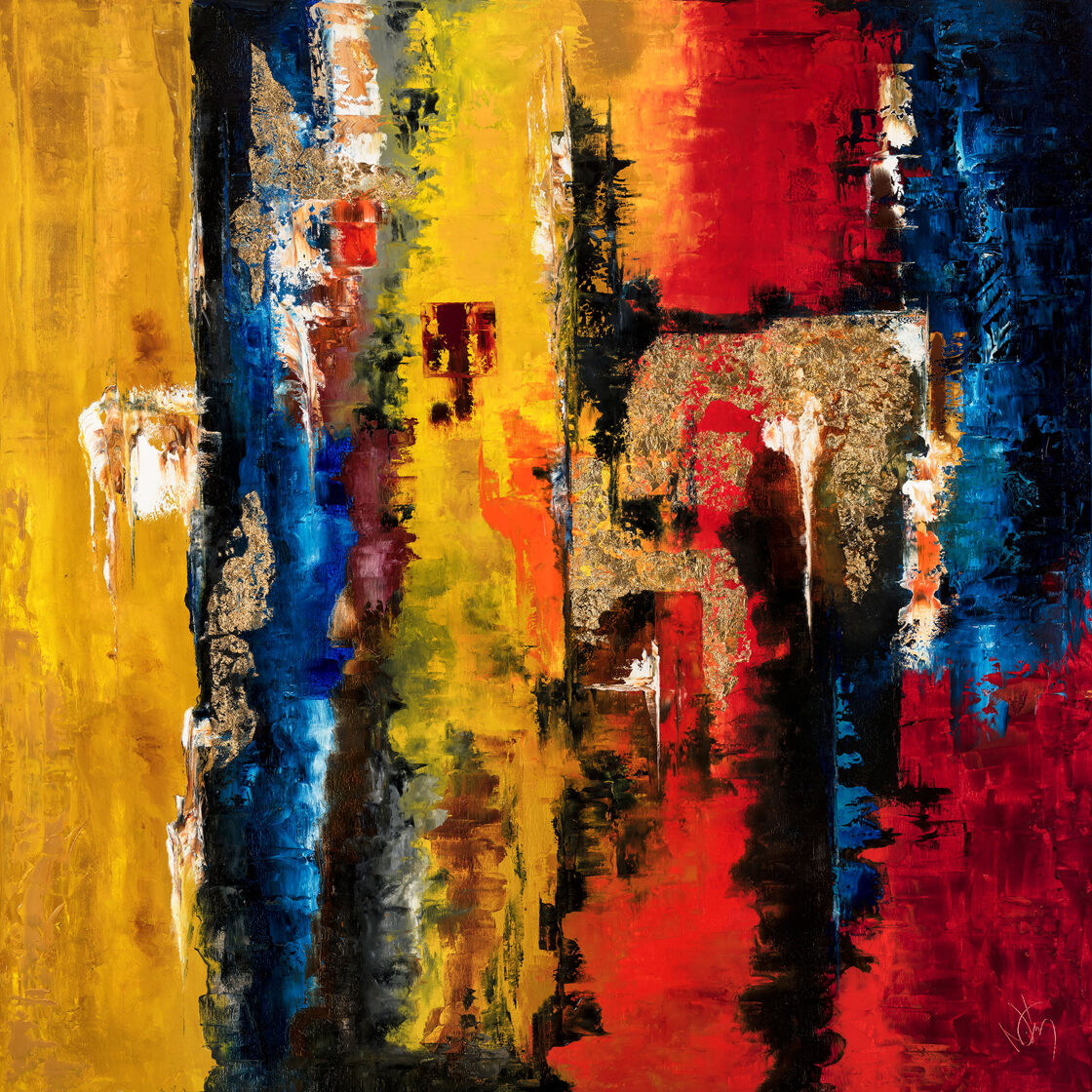

The Golden Era
140x140 cm, oil-gold-canvas, 2024 Sitges/Barcelona
SOLD
The glory of the Hispanic crown reached its peak in the reign of Charles V who was considered then the most powerful monarch in the world and who wielded his power from Seville rather than Madrid. The stories of the golden cities were not just legends, just as it was true that the Hispanic kingdom possessed the largest reserves of silver in the world. The empire lasted more than five centuries and changed not only the history of the world, but also the culture, language, religion and the demography of the territories it ruled.


































Cart
Cart is empty.