TAMÁS NÁRAY
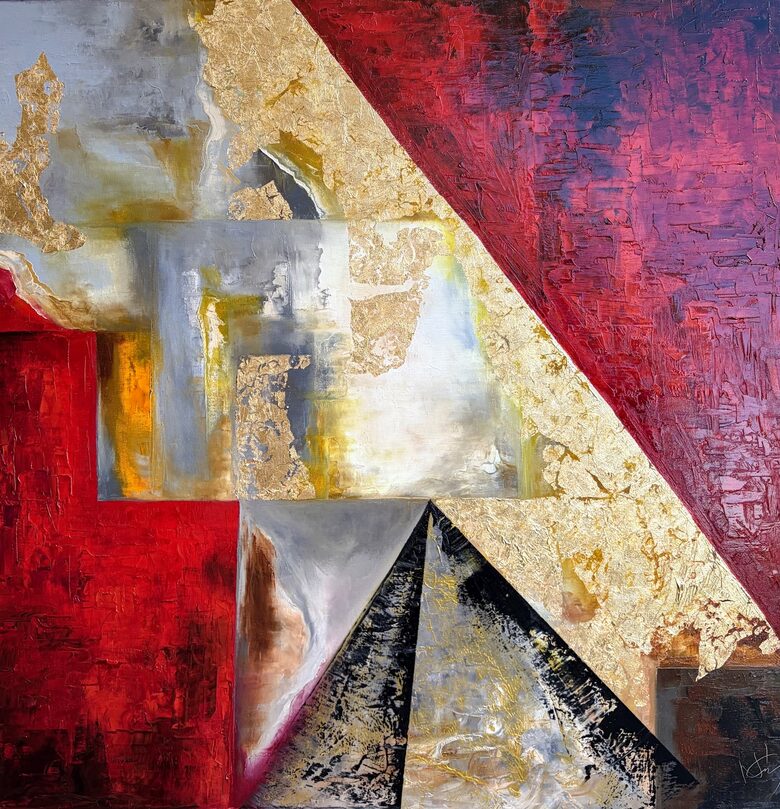
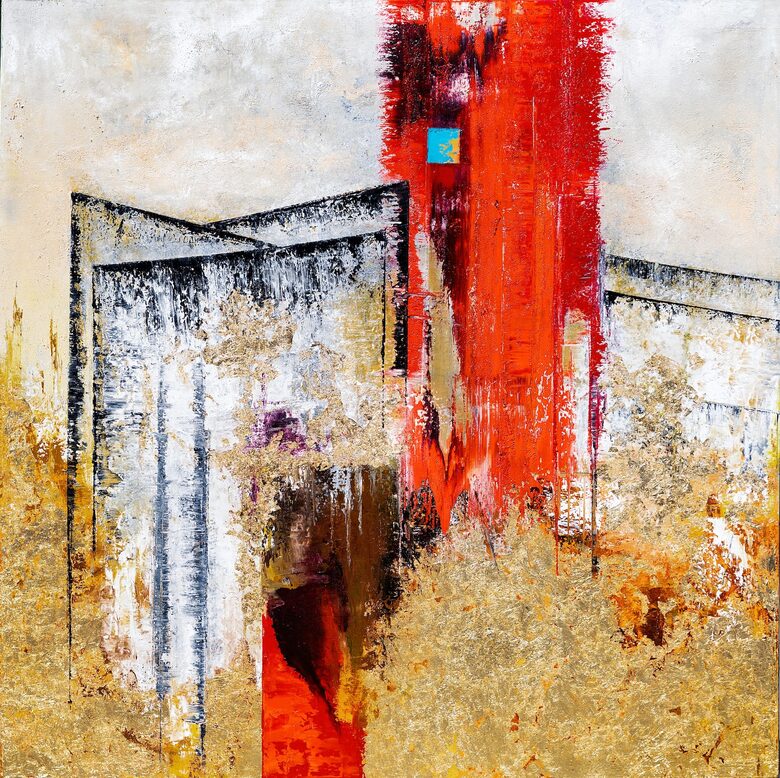
The oeuvre of Tamás Náray may be defined as a distinctive synthesis of contemporary Hungarian Abstract Expressionism and neo-modern lyrical abstraction.
Although those who followed his career for many years tended to associate his name with other artistic fields - including the applied arts - the international exhibition practice of the past decade, together with his Spanish period, has made it increasingly clear that his autonomous painterly discourse constitutes a unique visual universe grounded in profoundly intellectual and conceptual foundations, establishing him as a recognised contemporary visual artist.
Key characteristics of Tamás Náray’s artistic style:
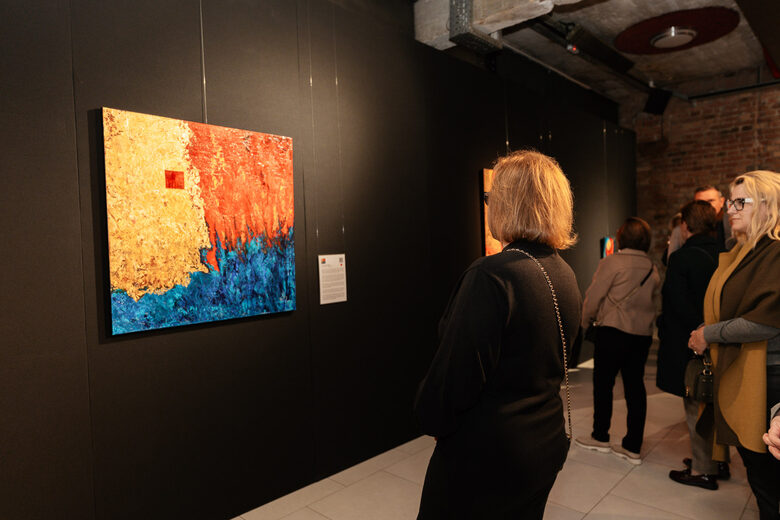
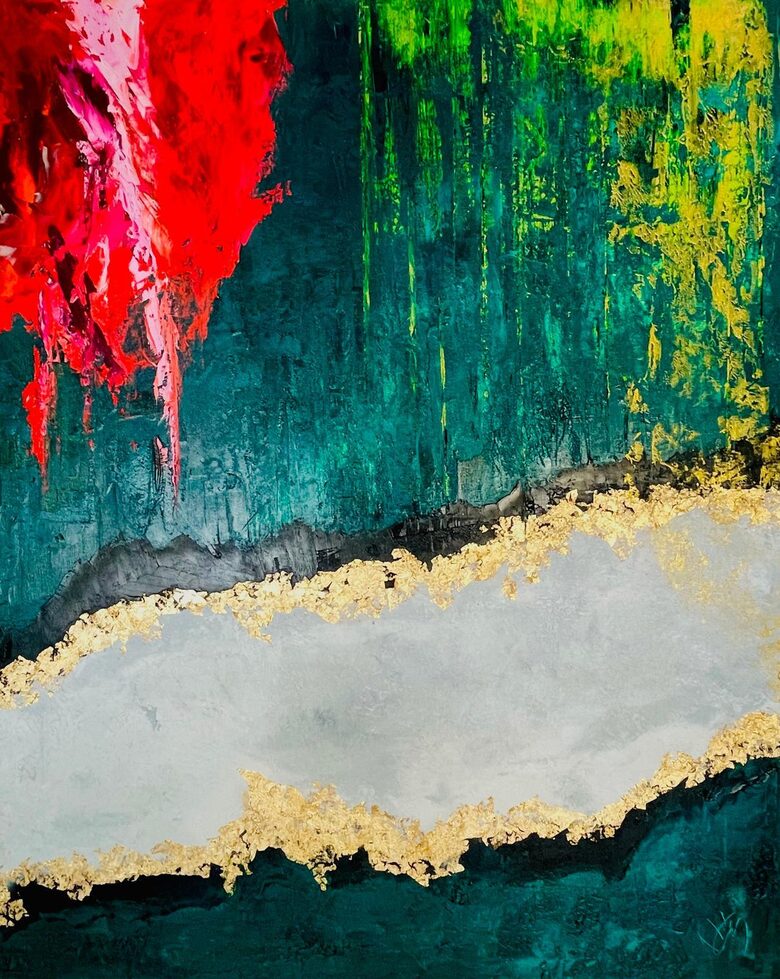
- Transcendental abstraction: Náray’s painting breaks with descriptive and figurative representation. Rather than reproducing visible reality, it seeks to capture transcendental experiences, the collective unconscious, and cultural archetypes in visual form. The compositional structure of his works pushes against the boundaries between Action Painting and Color Field Painting.
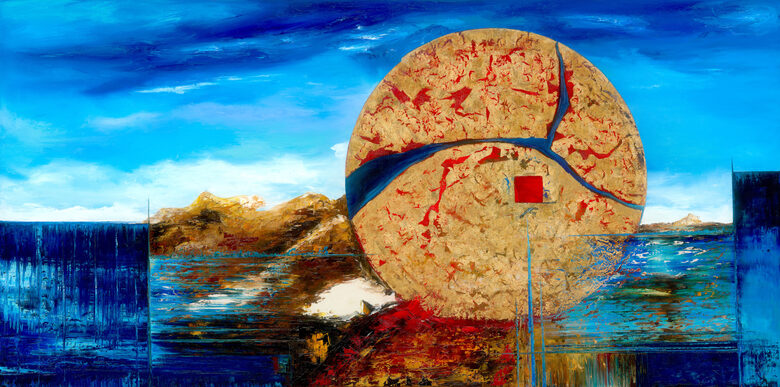
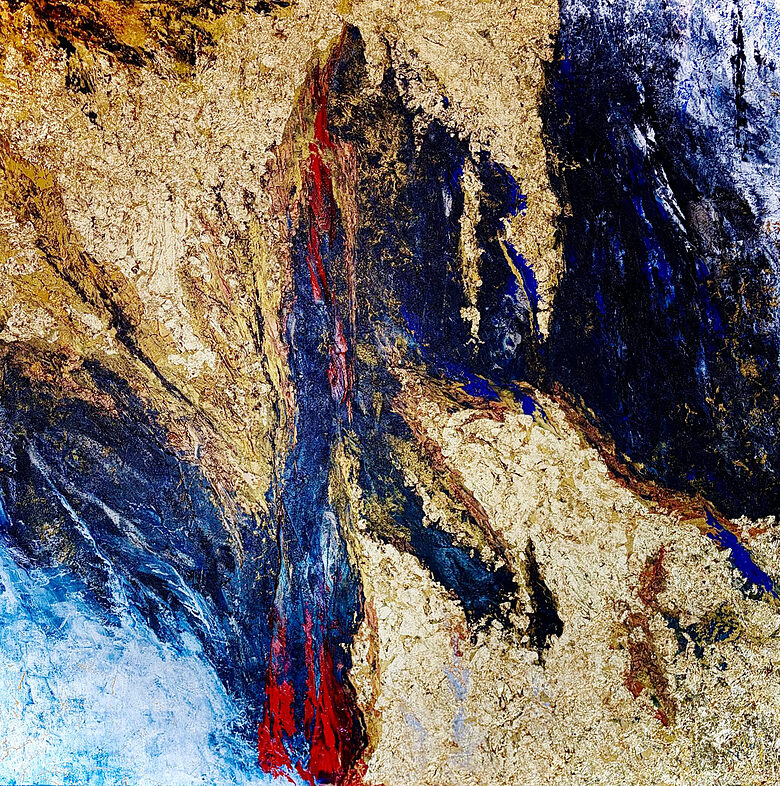
- Structural treatment of material and colorism: His handling of paint is fundamentally material-driven. Through the layering of oil paint with semi-precious stone and precious-metal pigments - gold, bronze and silver - the surface of the canvas is transformed into a sculptural, three-dimensional texture. The contrast between reflective surfaces and deep, absorptive tones may be interpreted both as a modern, non-figurative reinterpretation of the gilding techniques employed during the Renaissance and of the chiaroscuro effects of light and shadow characteristic of the Baroque.
- Cyclical vision and private mythology: The structure of Náray’s oeuvre is divided into historical (Mesopotamia - the legend of the ancient world; Lost Gods - a journey into ancient Greek mythology; The Roman Empire - following the traces of history and myth; Byzantium - the cradle of immortality; Hispania - the centuries of the crown; Alexander the Great - the sensitive human being behind the heroic arcana) and sacred cycles (Old Testament I-II - the biblical story of Creation, or the prophecies of the past; followed by Part III, In Search of the Secrets of Eternity; The Cradle; 1825 Days - the second Golden Age; and The Story of Light).
This consistency demonstrates that the artist does not create isolated aesthetic objects, but rather constructs a coherent, self-reflexive conceptual narrative - a visual mythology of his own.
Tamás Náray is a Hungarian colorist painter whose work aligns with abstract expressionism. He began his career in the field of international art trade before moving to Paris on a scholarship, where he pursued classical art studies under the auspices of the ACADÉMIE DE L’ART DE PARIS.
Although his dedication to painting spans nearly three decades, it was in 2016 that he made his public debut with the exhibition titled 'Koridor'. Since then, each year has been defined by new, large-scale exhibitions that faithfully demonstrate his compelling artistic evolution, transitioning from early figurative compositions to his current, mature abstract expressionist works.
Until 2020, his artistic development and early exhibitions were guided and curated by Krisztina Jerger, one of the most influential art historians and legendary exhibition designers of the contemporary Hungarian art scene, and a recipient of the prestigious Noémi Ferenczy Prize.
Náray’s art is characterized by densely layered surfaces, a rich use of materials (specifically the oil and gold on canvas technique), and dramatic chiaroscuro effects, where structured geometric and organic forms, alongside vibrant color fields, generate intense internal tension. The backbone of his creative method consists of monumental painting cycles inspired by history, mythology, and spirituality. His major comprehensive collections include Mesopotamia (2019), The Old Testament (2020), Lost Gods (2021), The Era of the Roman Empire (2022), Byzantium (2023), Hispania (2024), Alexander the Great 'Imperator Ultimus' (2025), and his most recent cycle initiated this year, Light - The Old Testament III.
His relocation to Spain brought about his full artistic fulfillment, establishing his creative and exhibition base between Barcelona and Sitges. Marking a milestone in this new international chapter, he opened his own space in 2019, the TamIstArte Fine Art Gallery, which has since become a prominent meeting point for contemporary Spanish and Hungarian art.