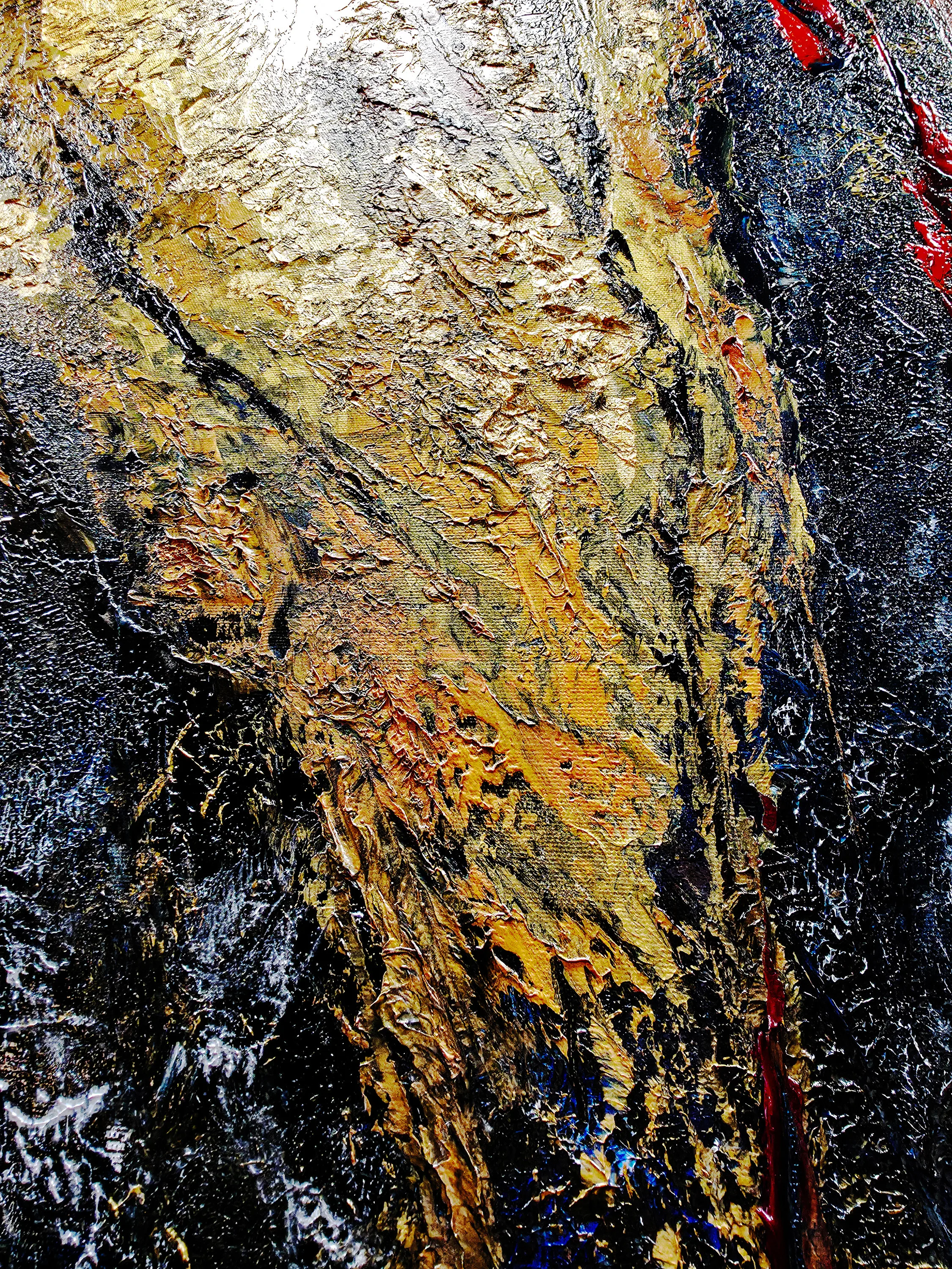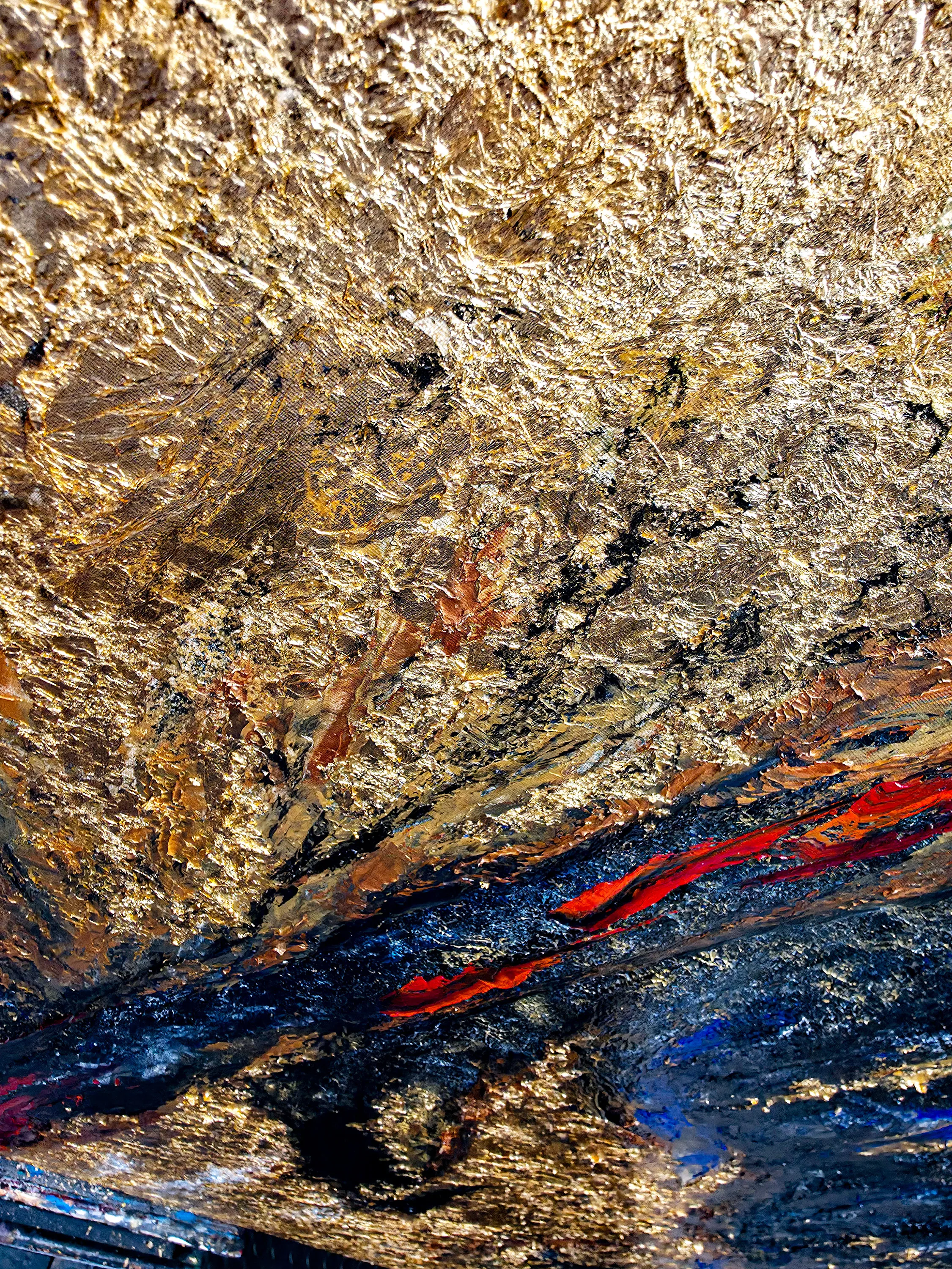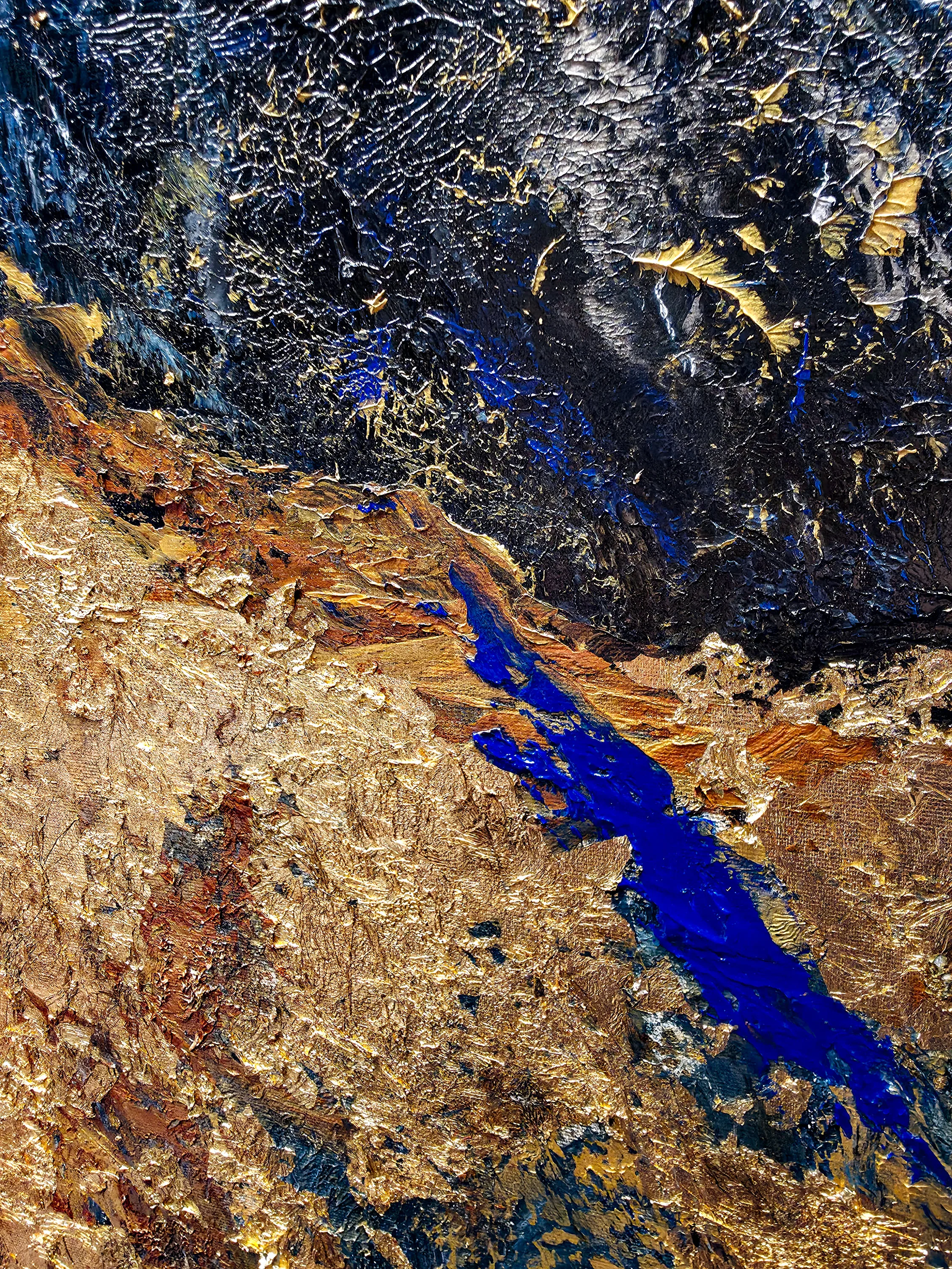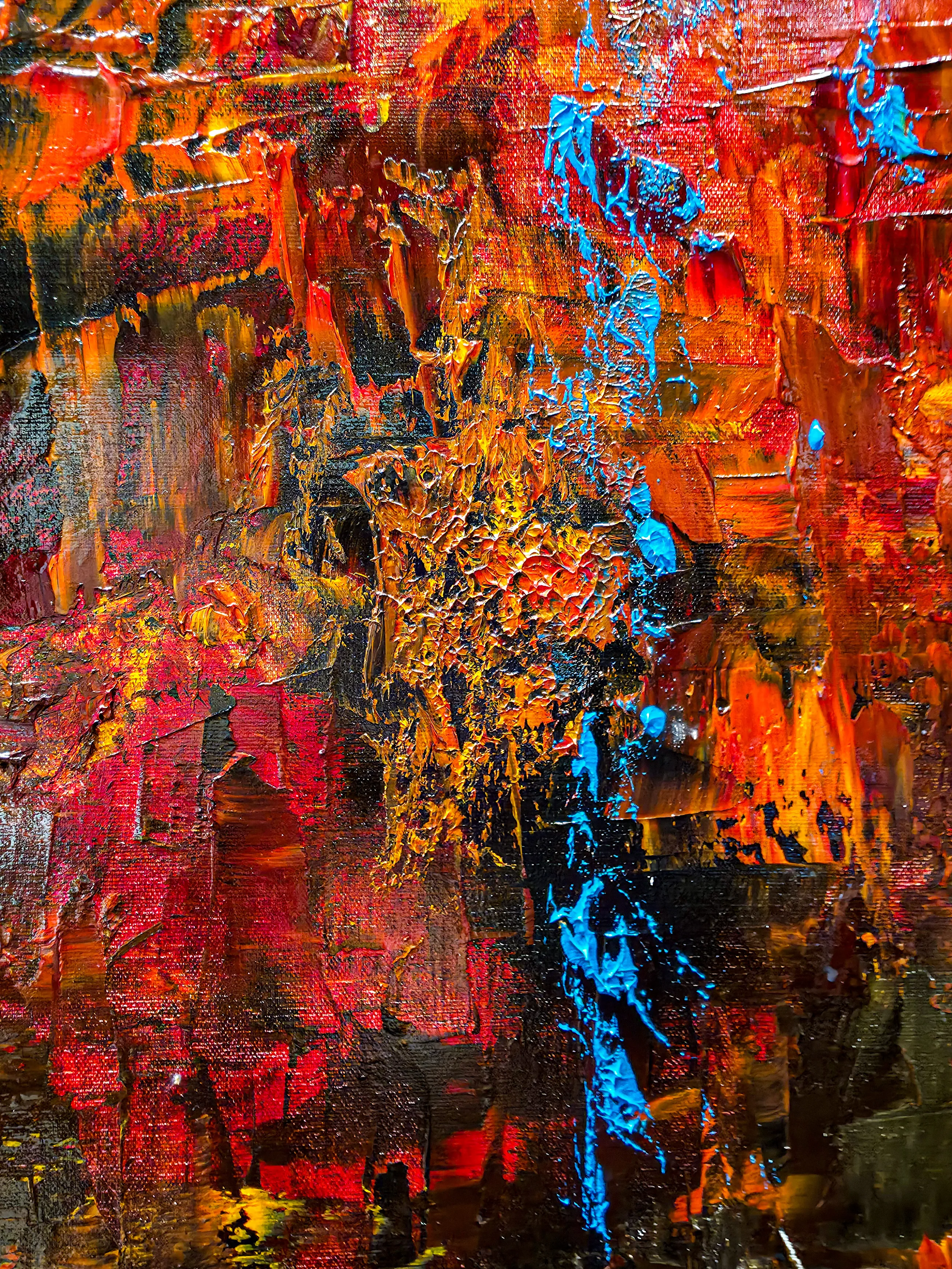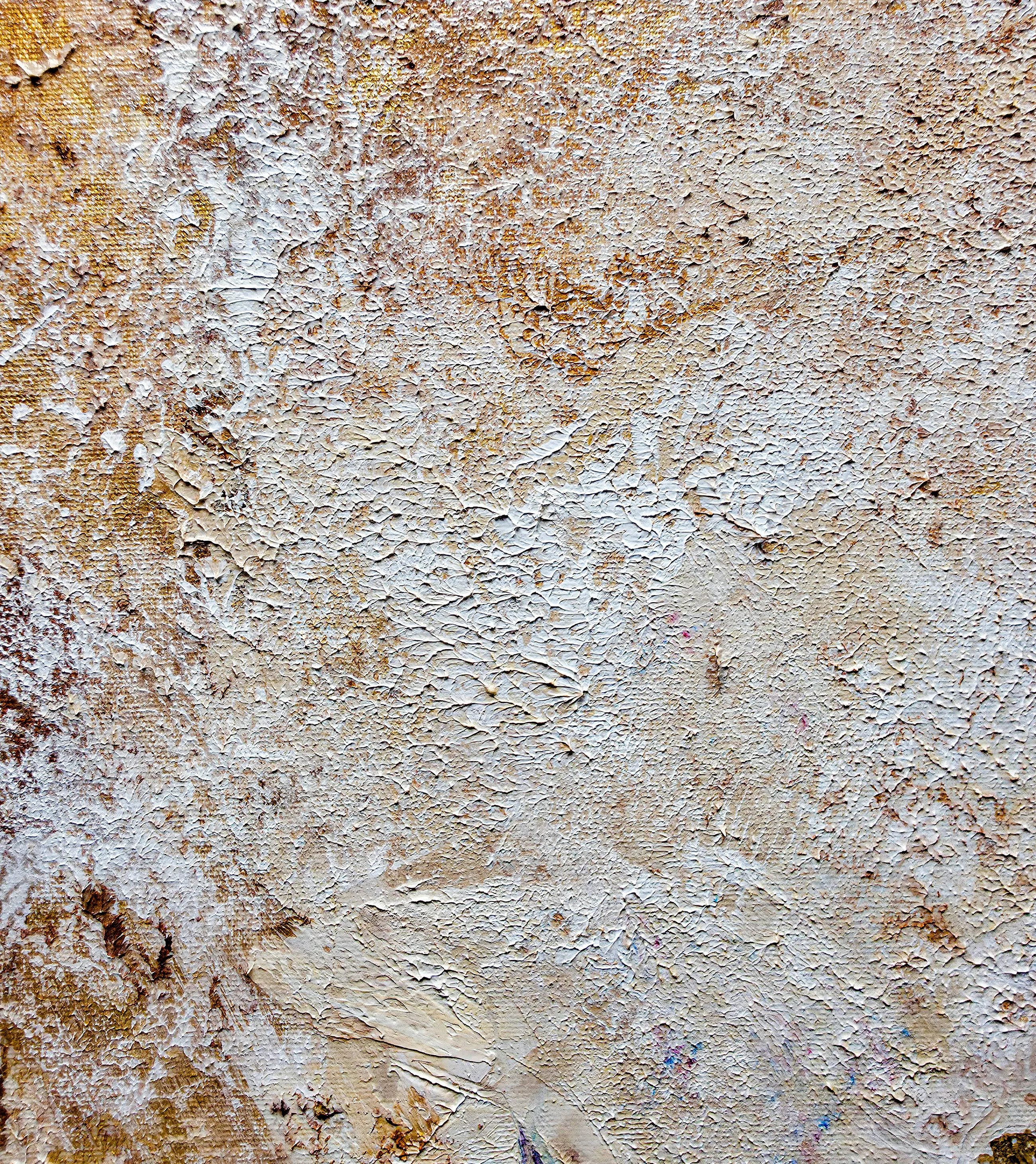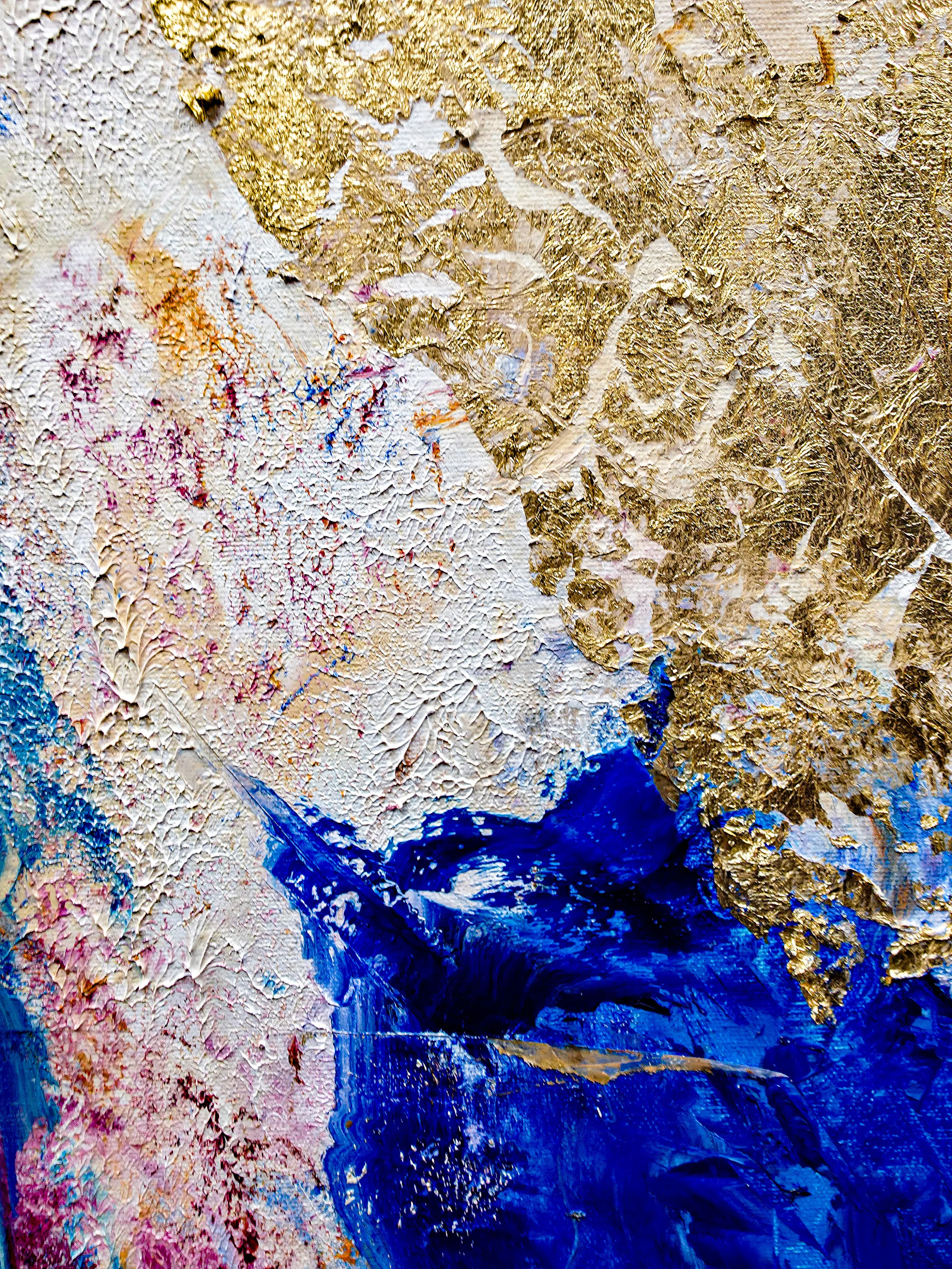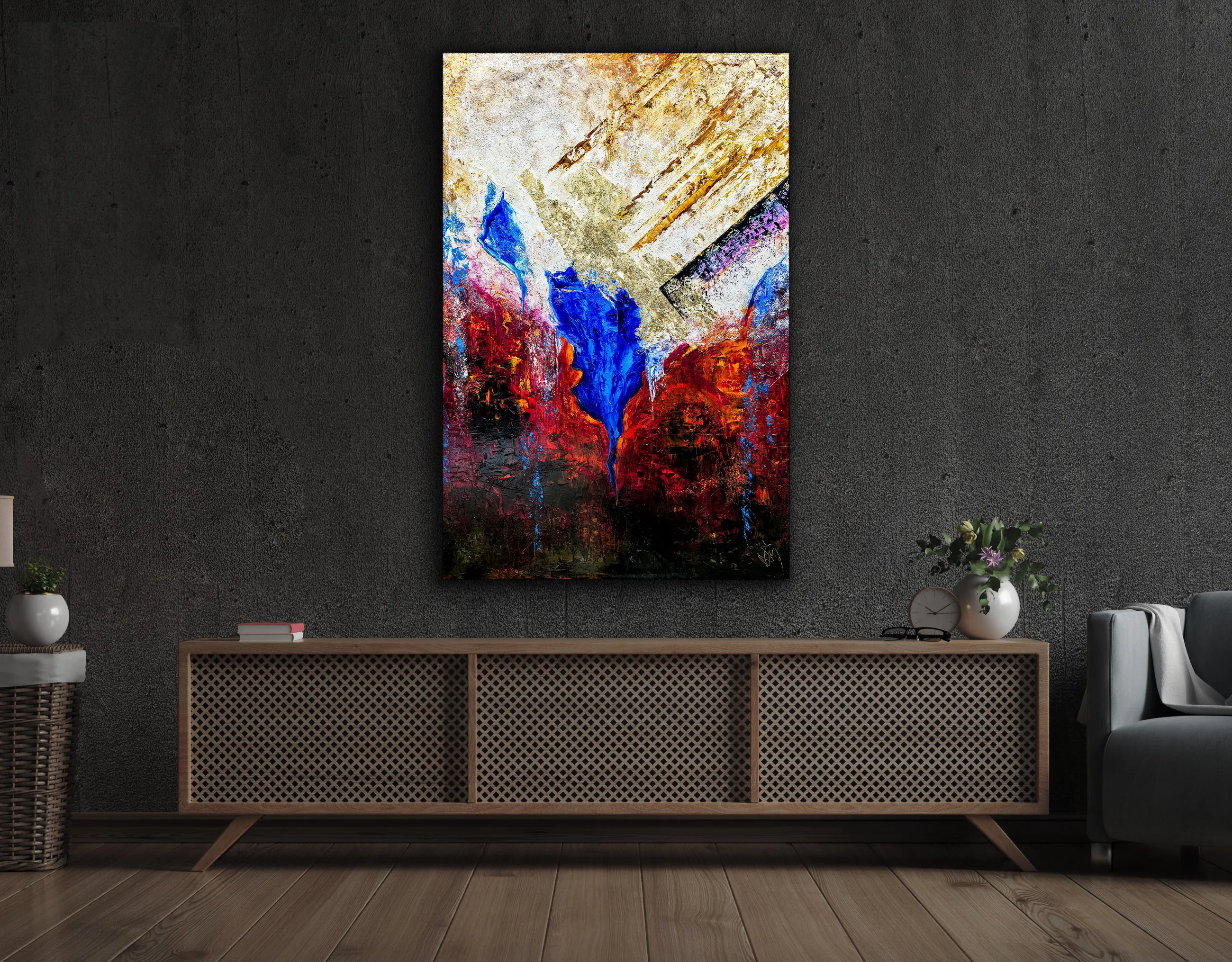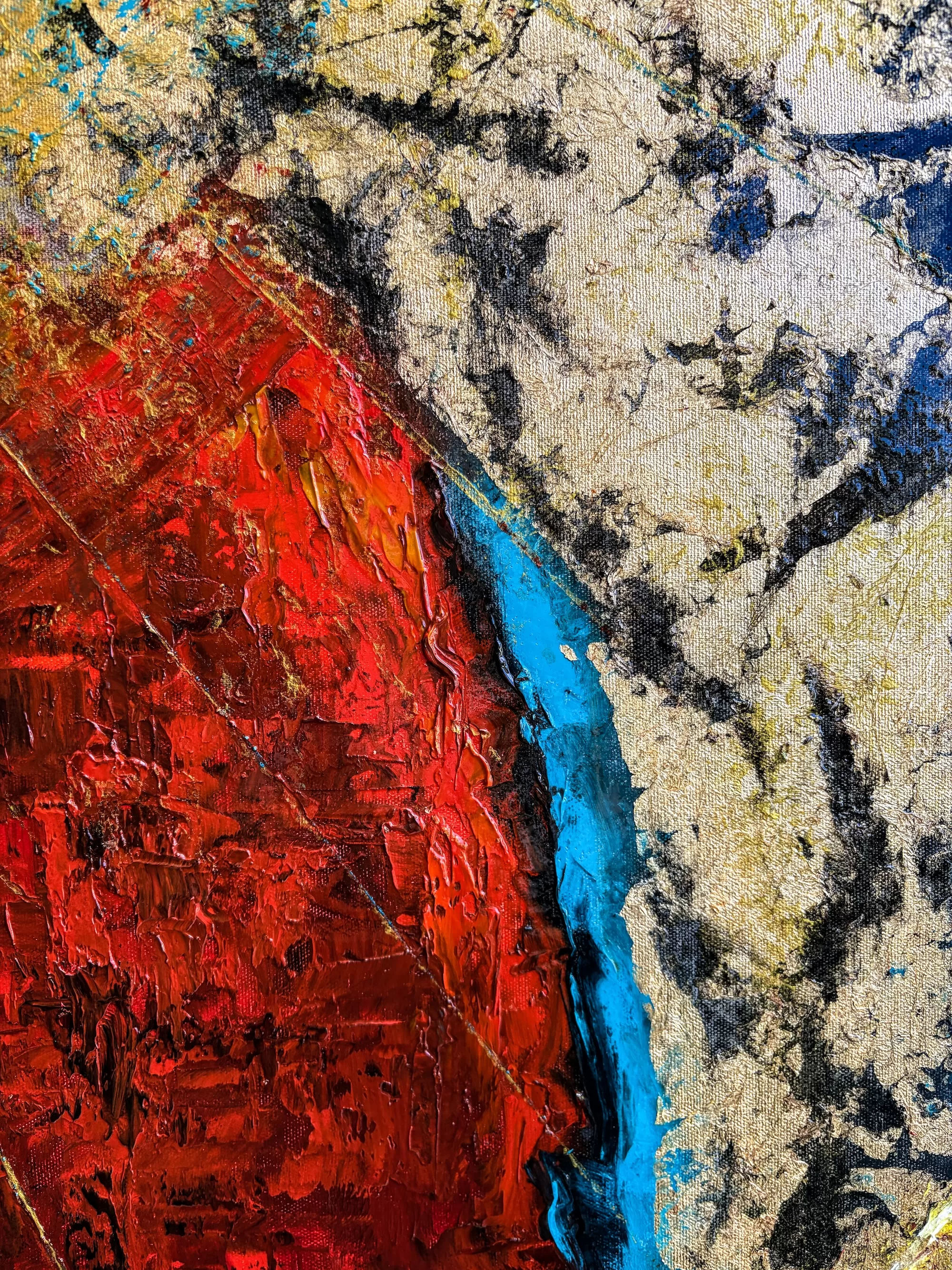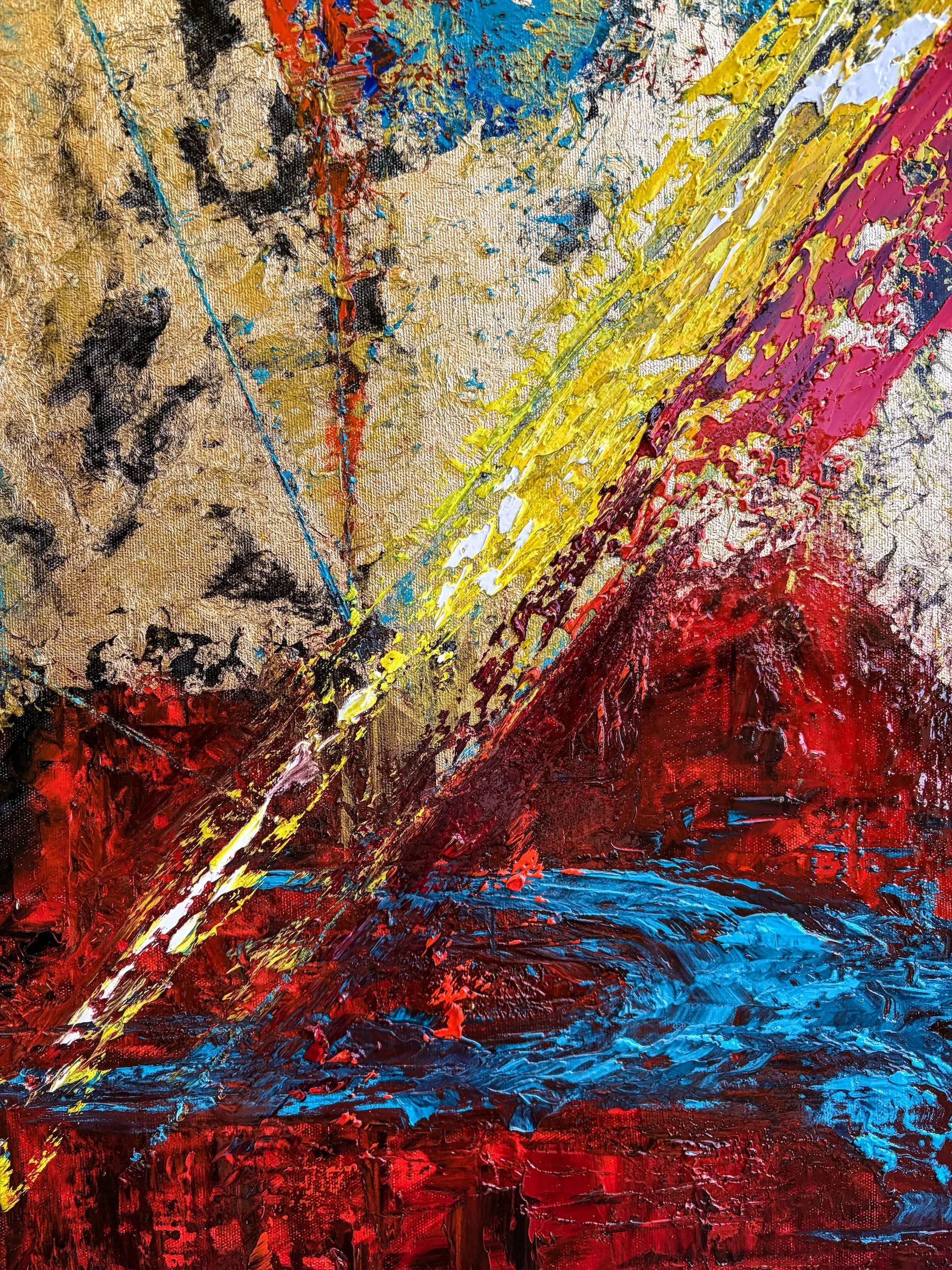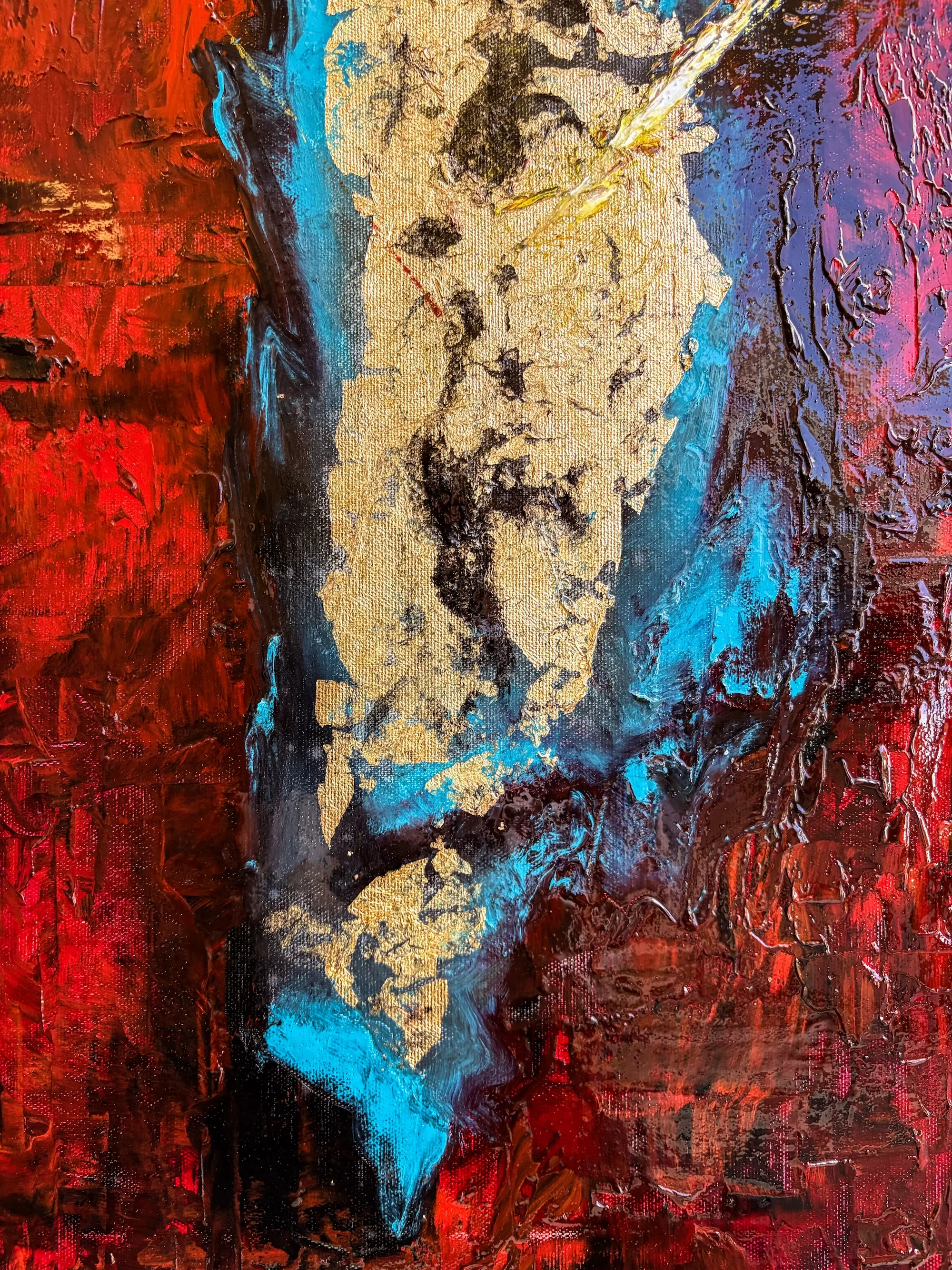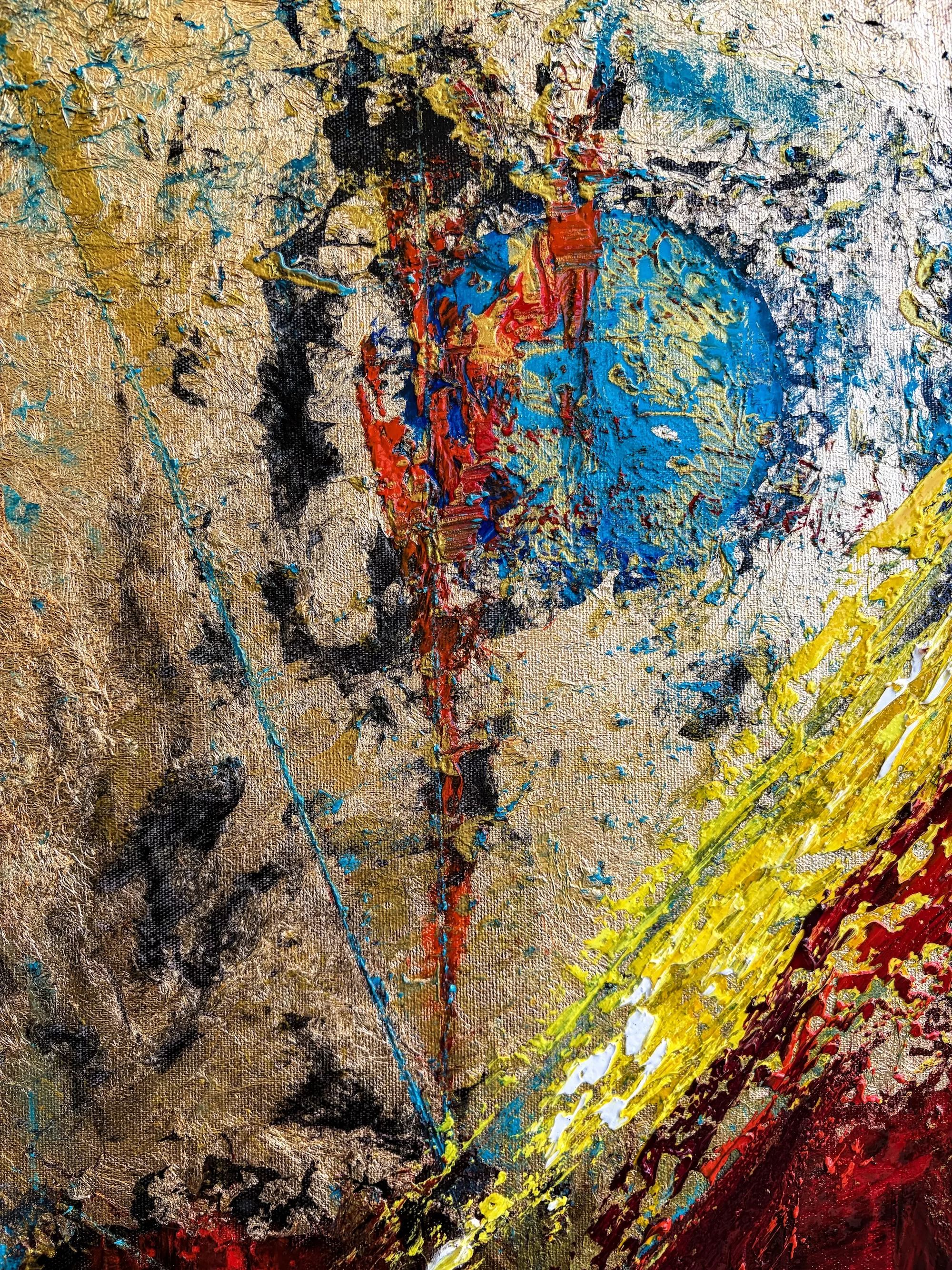
PAINTINGS BY TAMÁS NÁRAY AVAILABLE FOR PURCHASE
The colors displayed on screen may differ from the actual shades of the artworks and prints due to differences in display and graphics card specifications/settings!
Save your favorite painting on Pinterest:

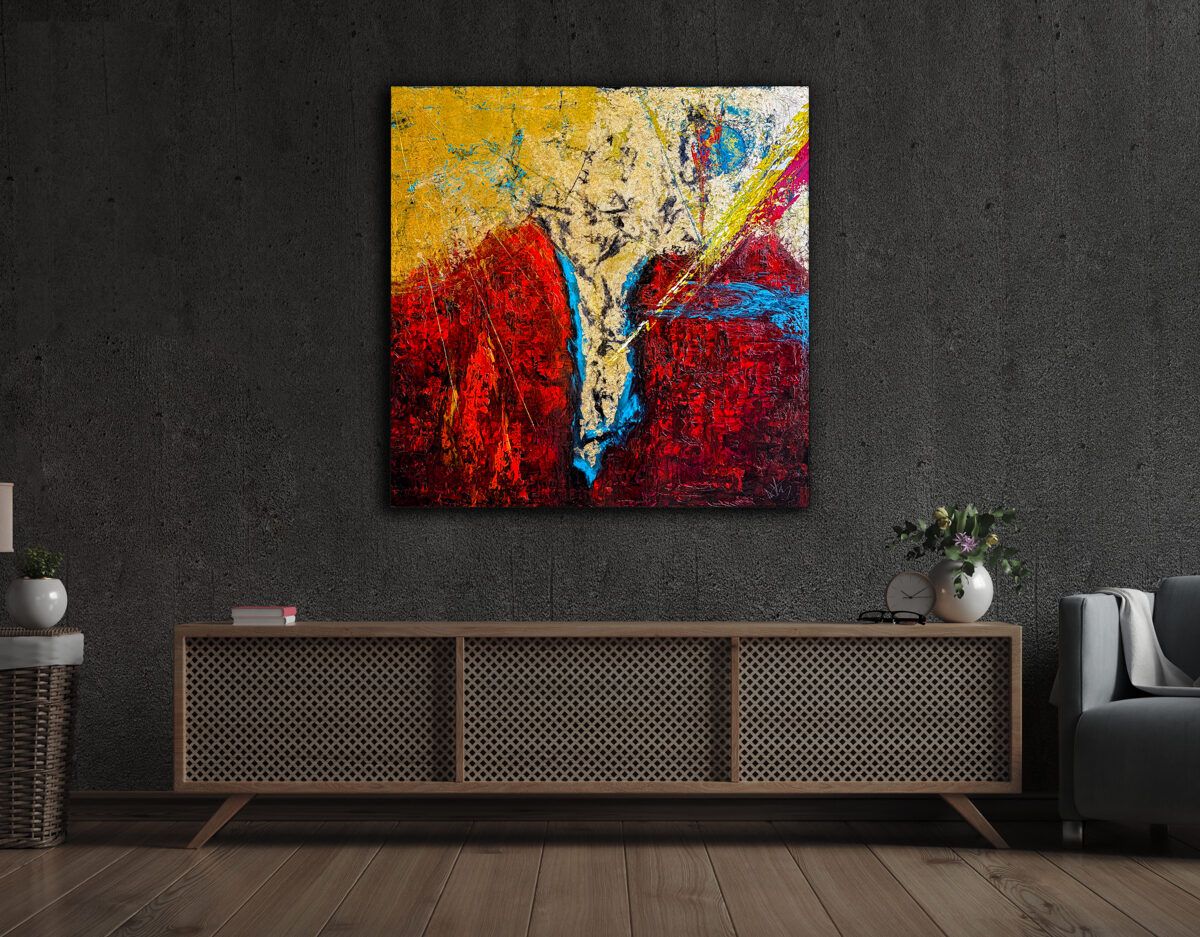
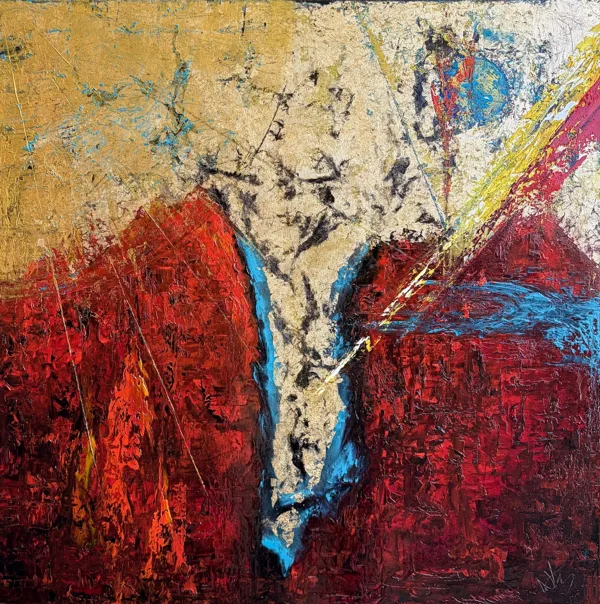
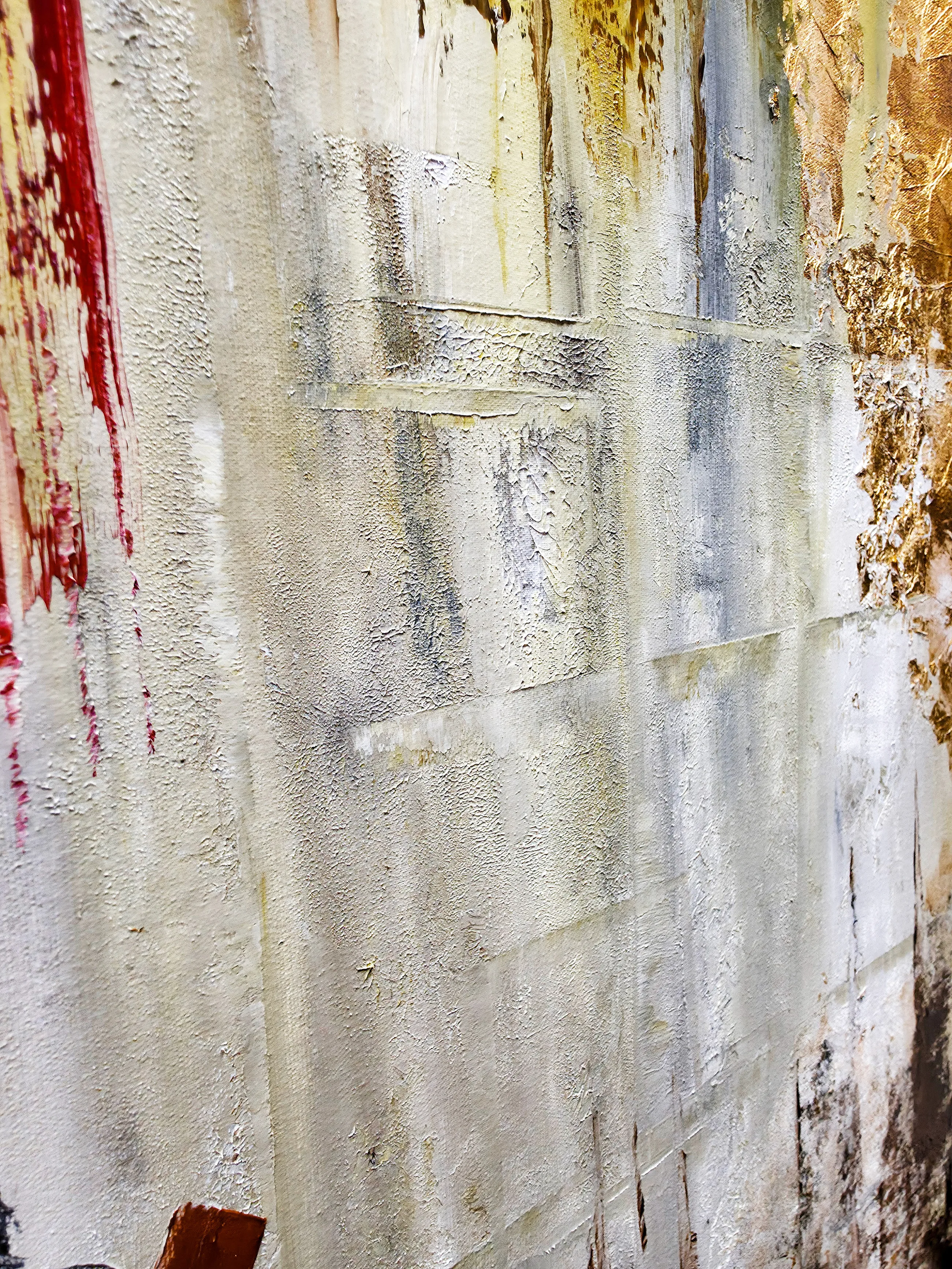
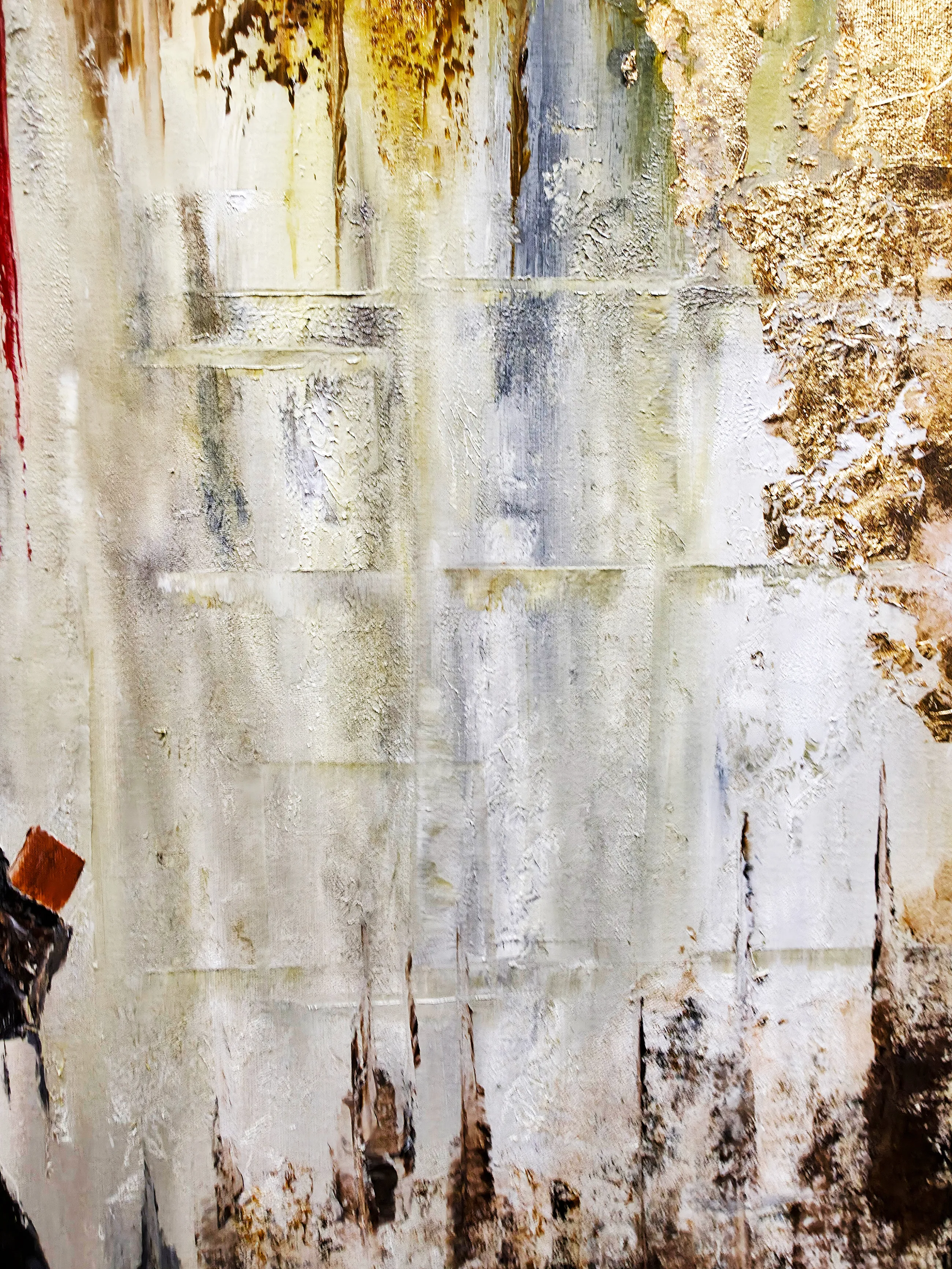
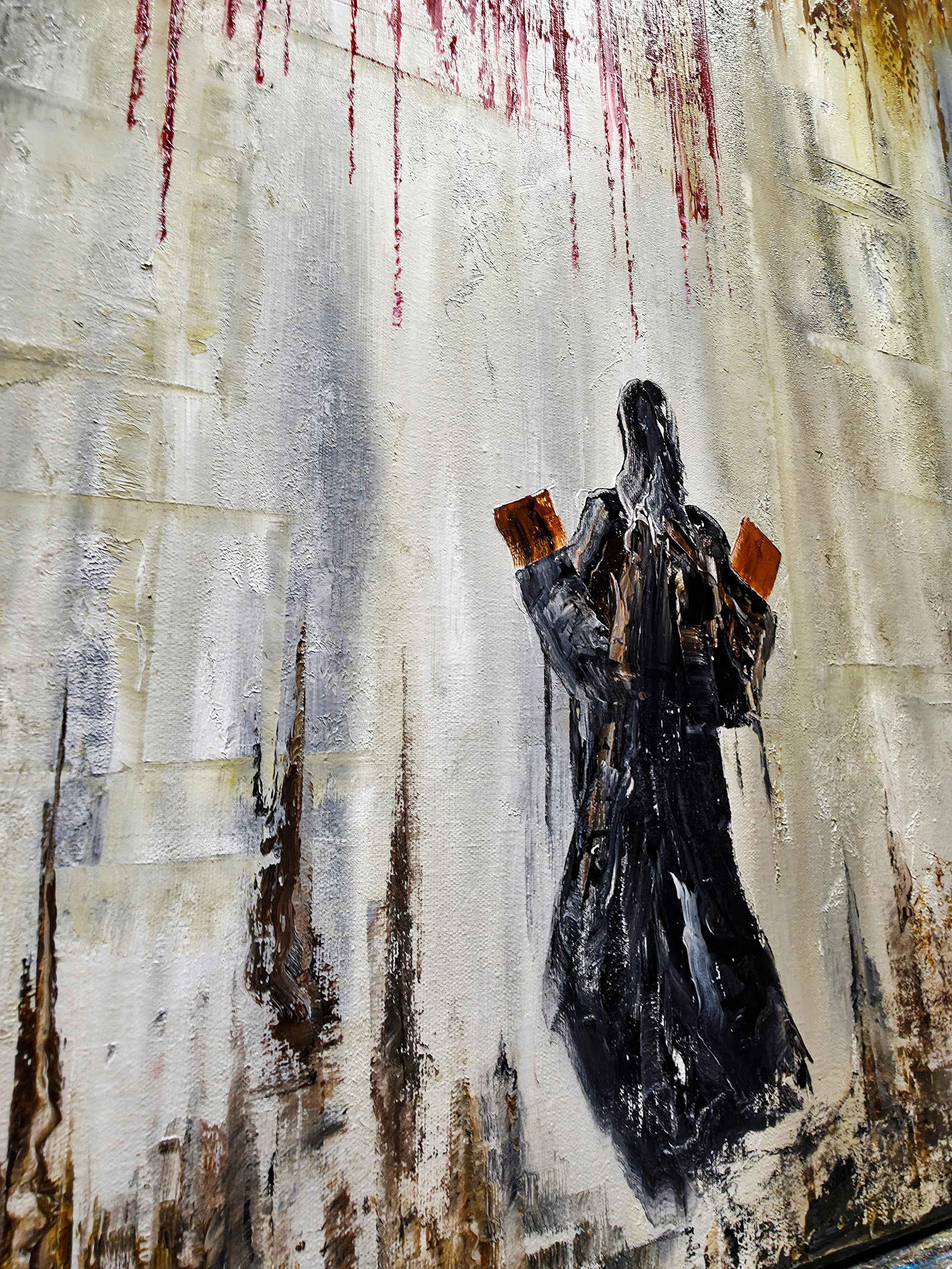
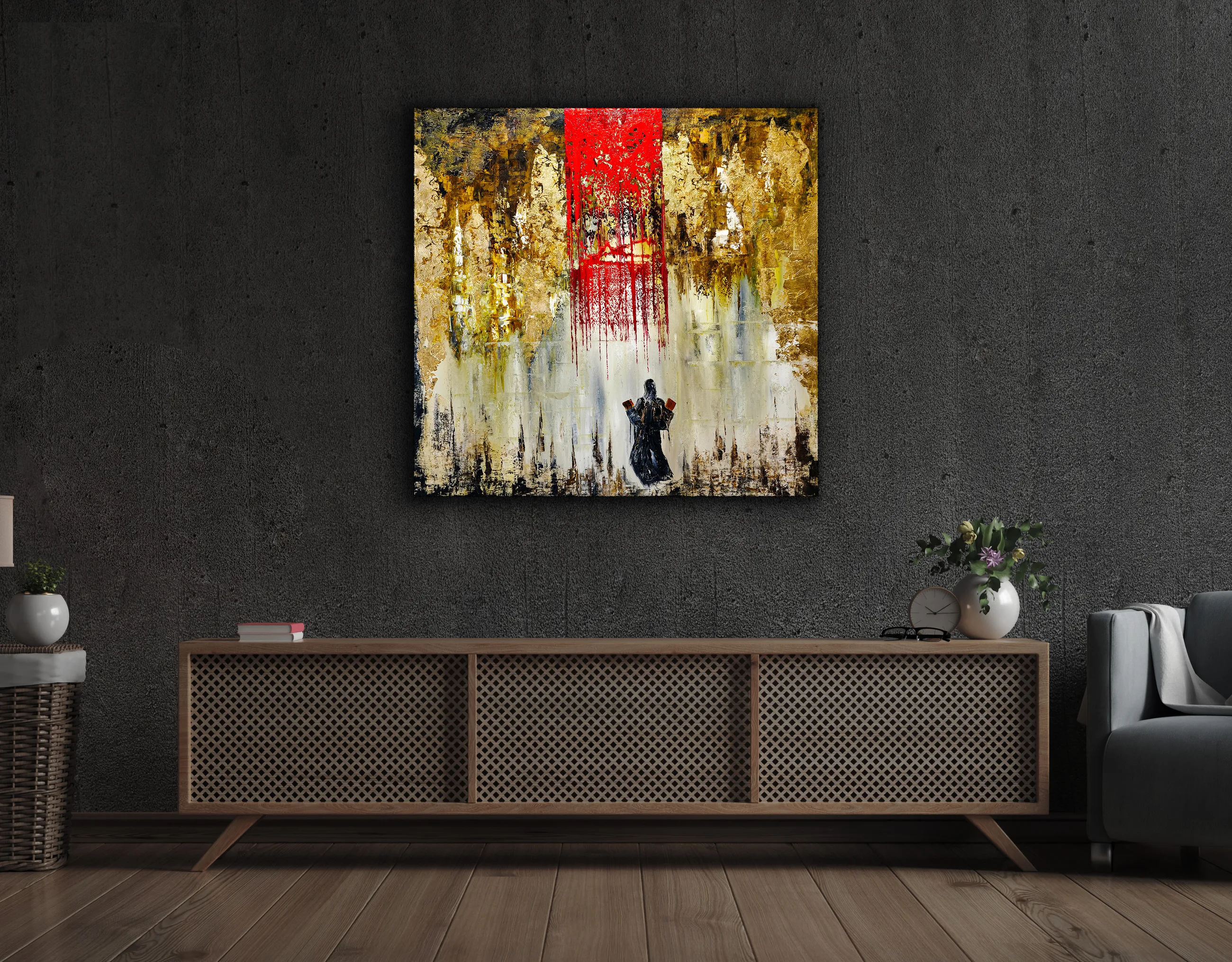
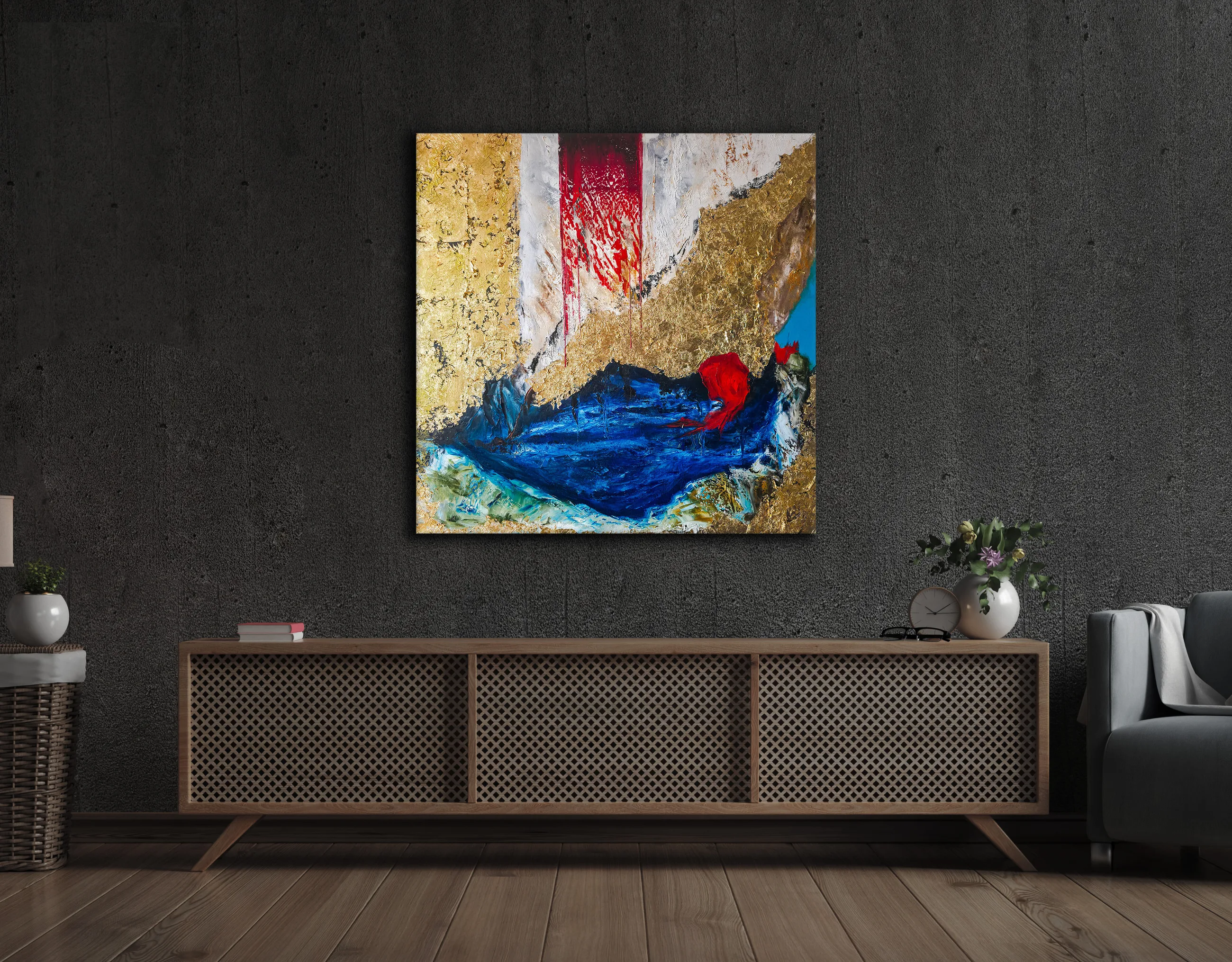
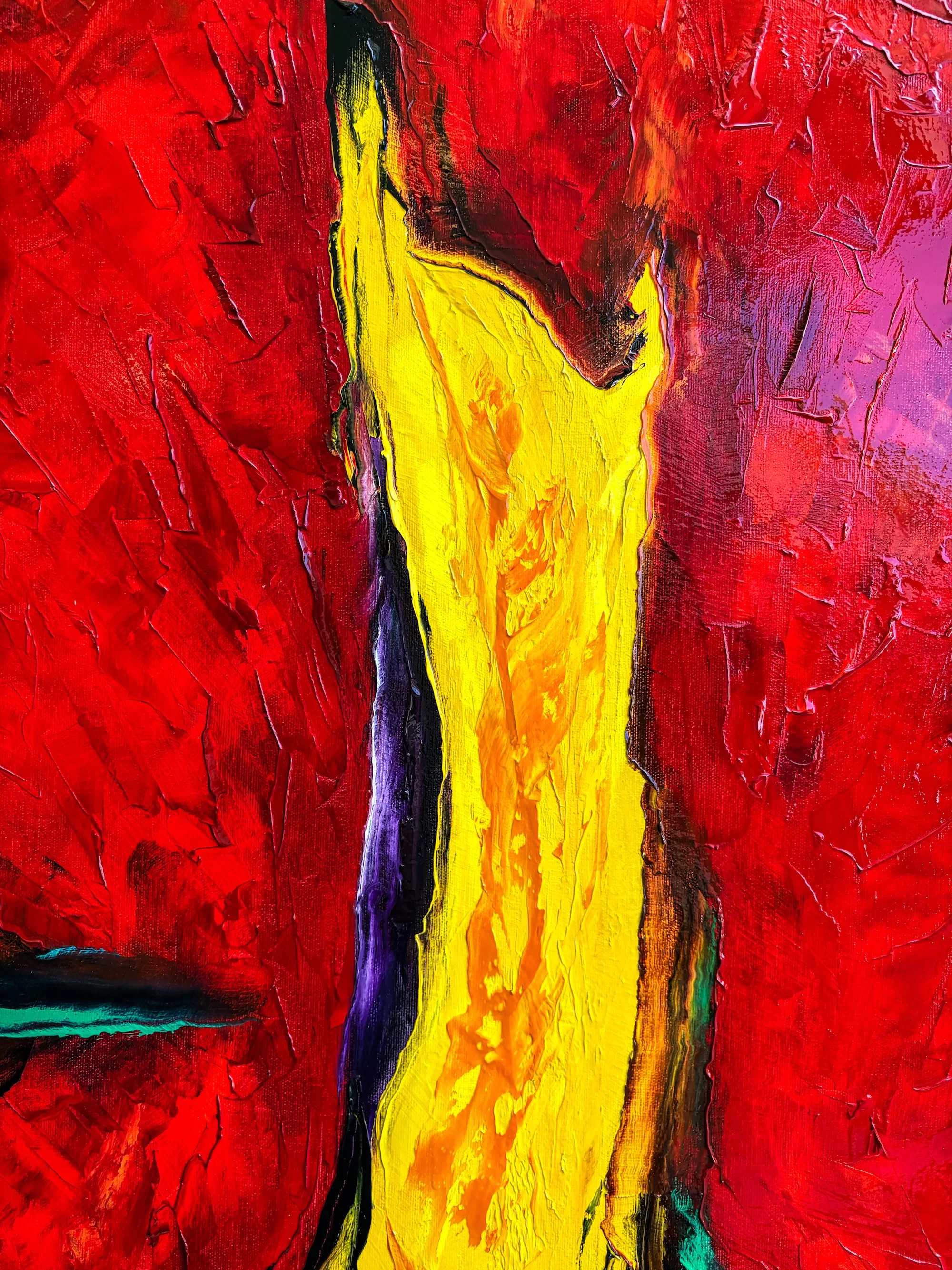
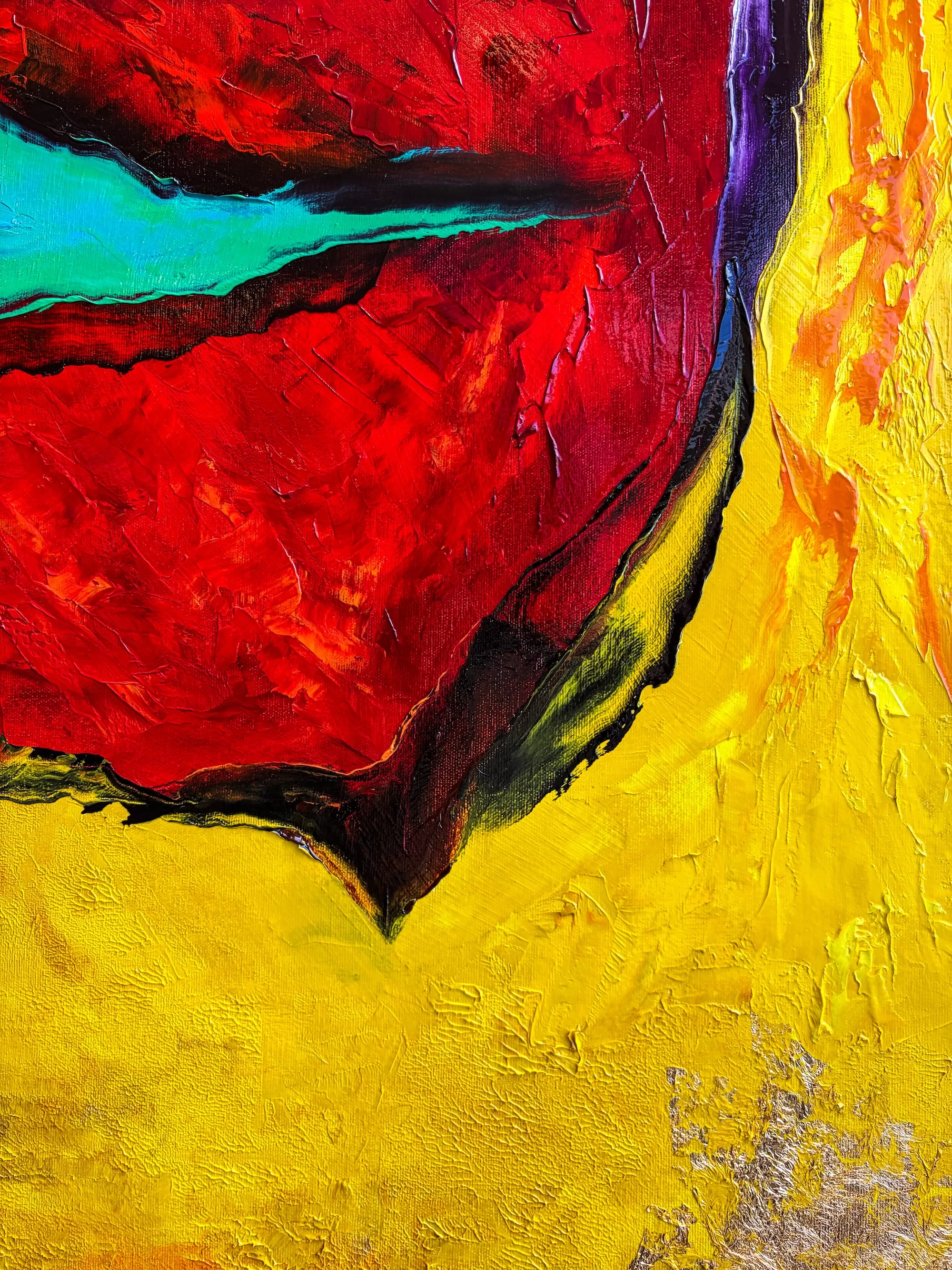
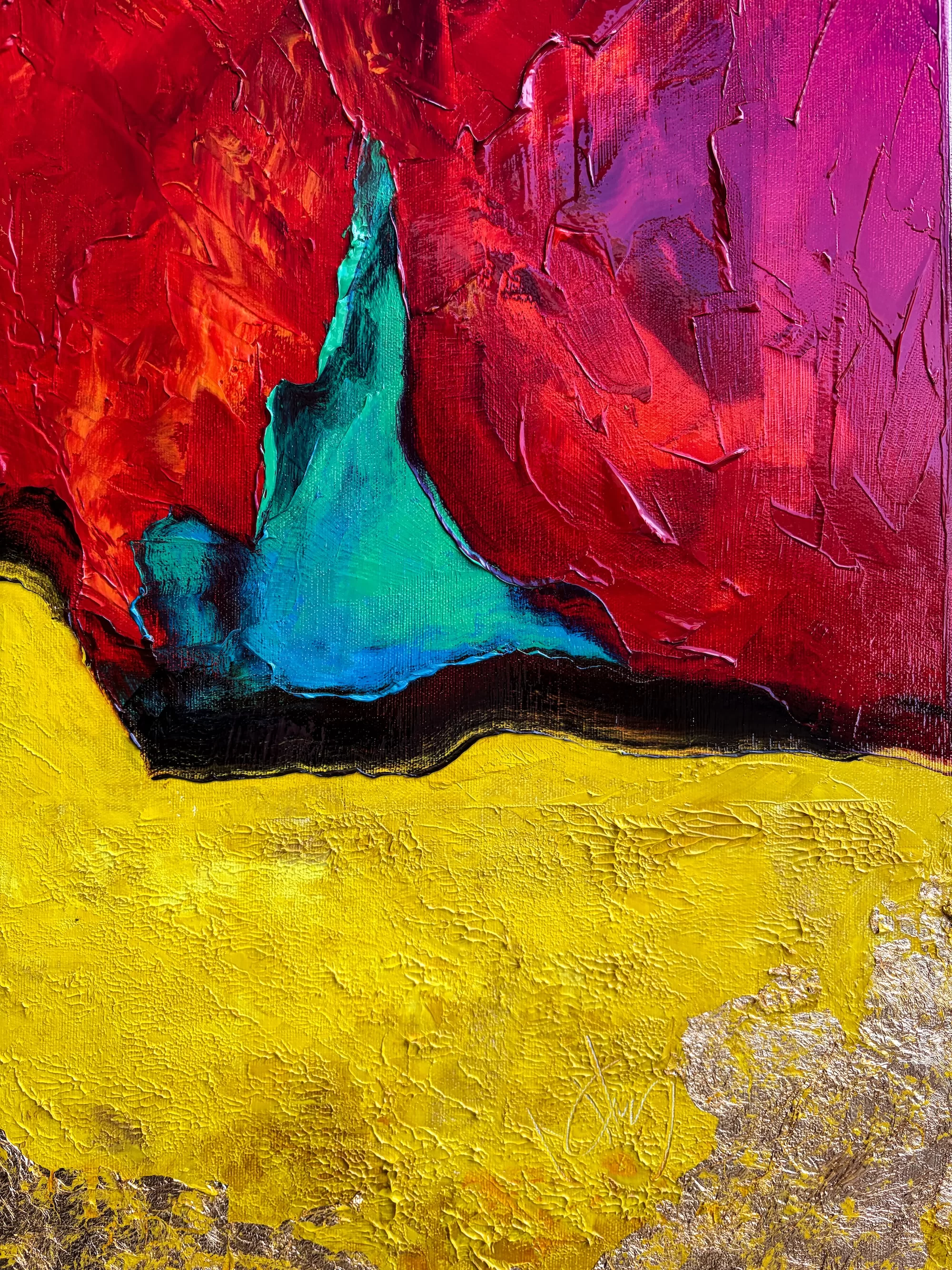
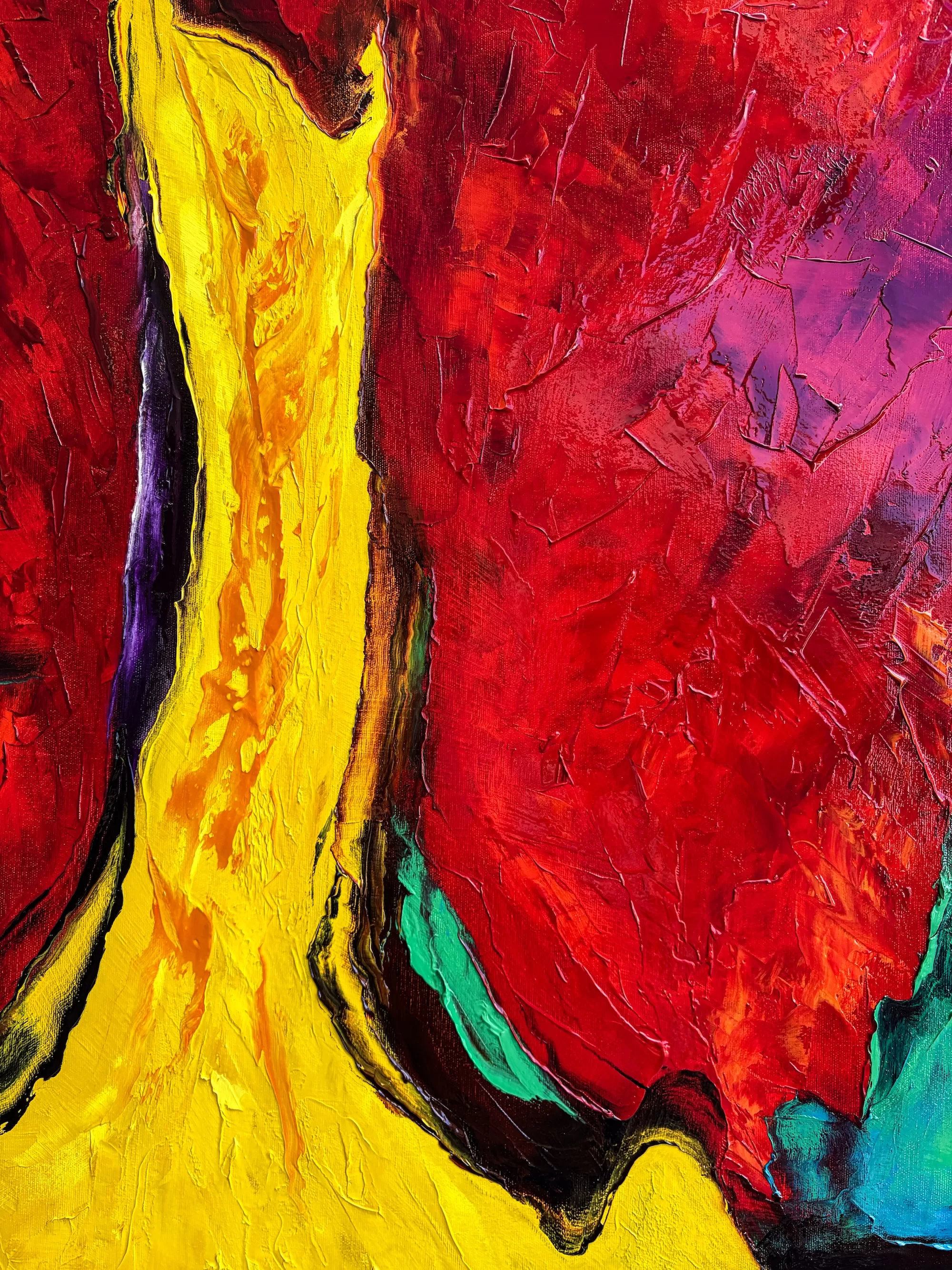
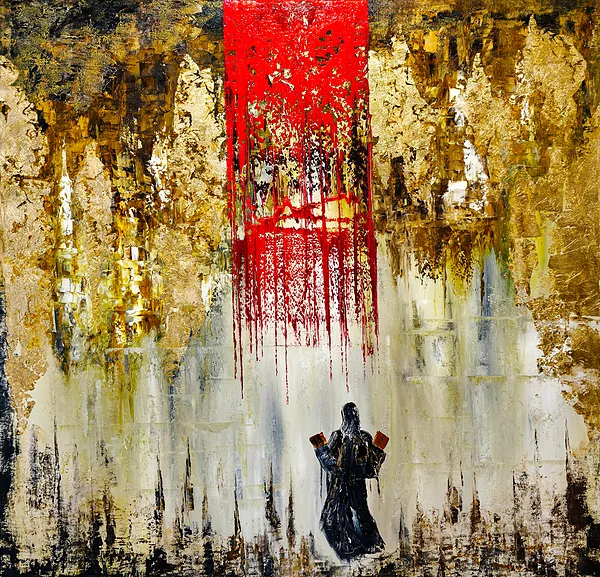
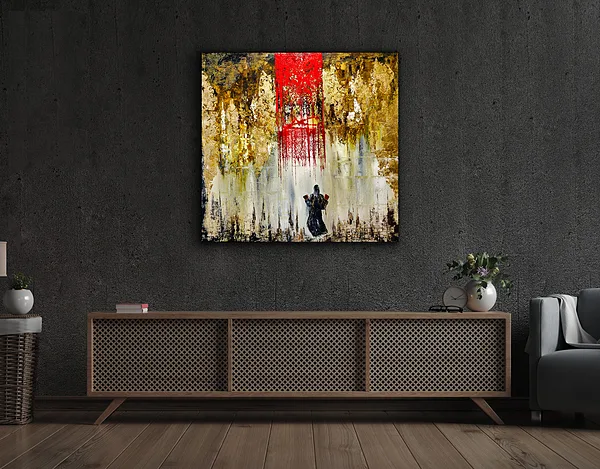
The Story of the First Betrayal
- 100 x 100 cm
- Oil and gold on canvas
- Place and year of creation: Sitges, 2026
- The work is part of the 'Old Testament III - In Search of the Secrets of Eternity' series
- AVAILABLE FOR PURCHASE
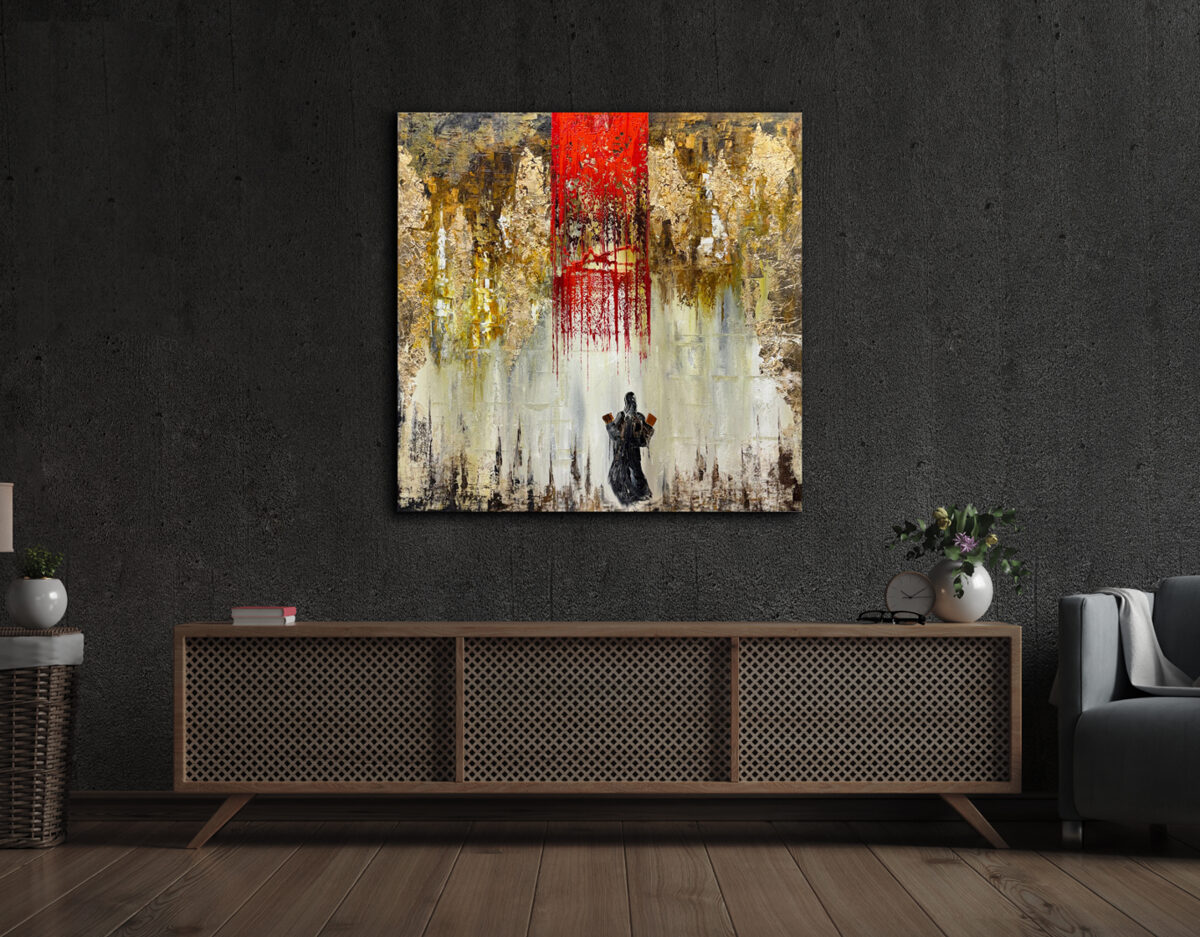
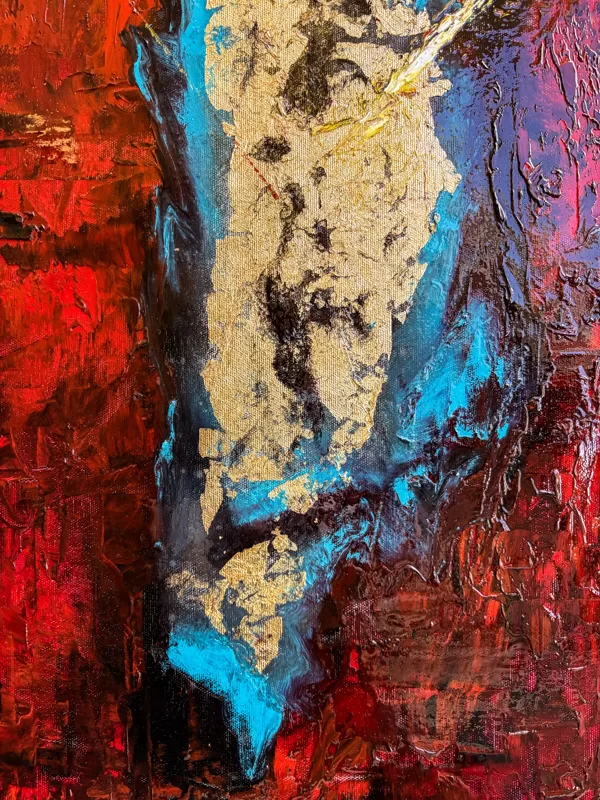
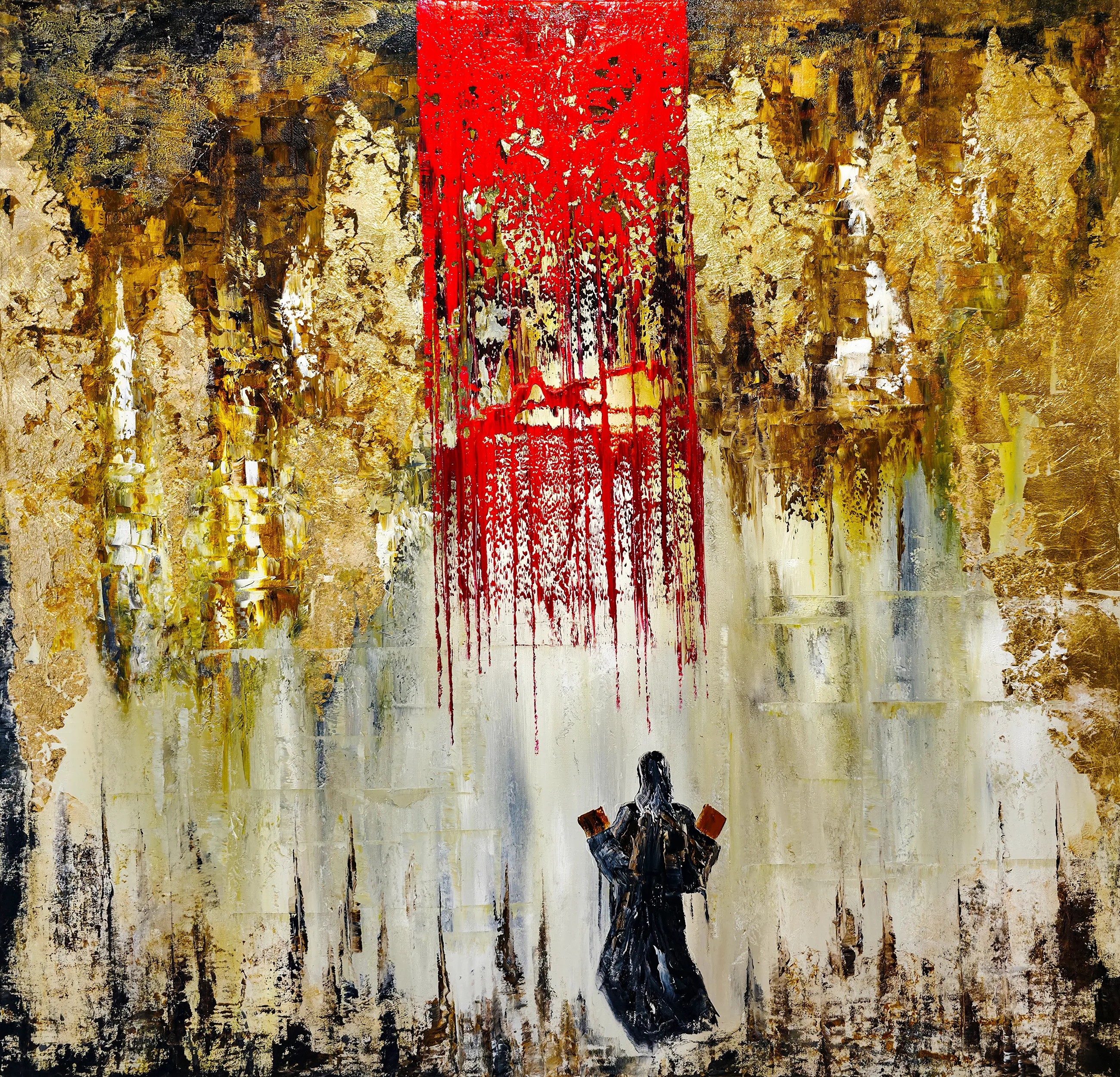
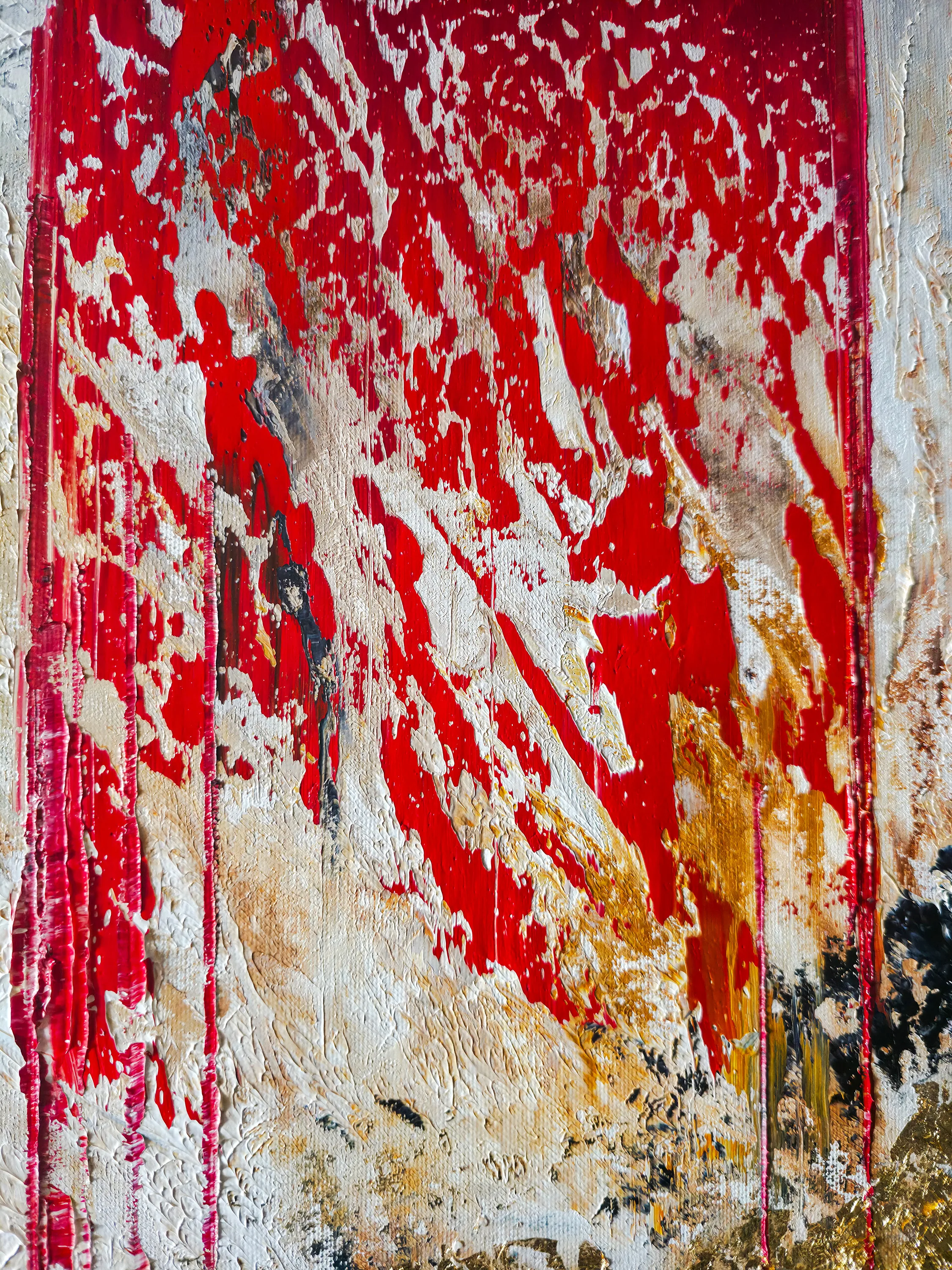
Immersed in a pictorial world pulsating with the life of sacred space, we witness one of the most dramatic events of the Old Testament: the shattering of the covenant between humankind and the Eternal One.
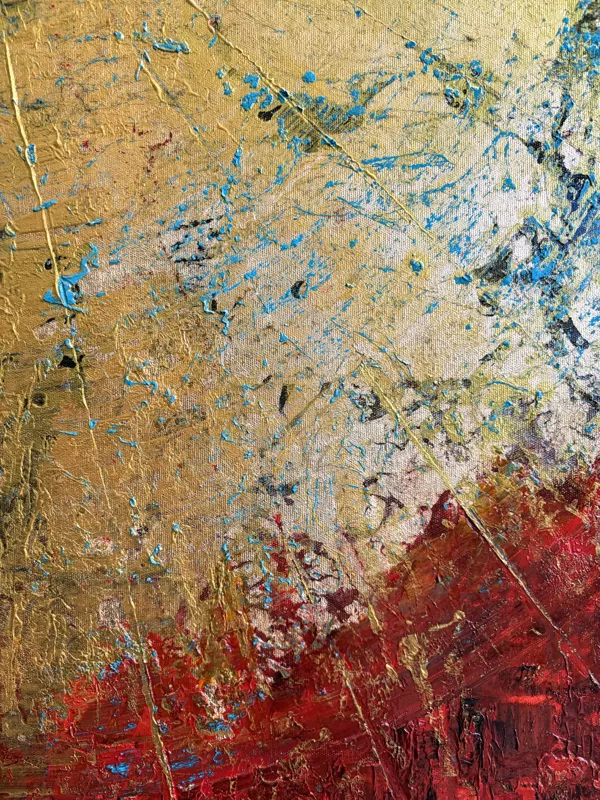
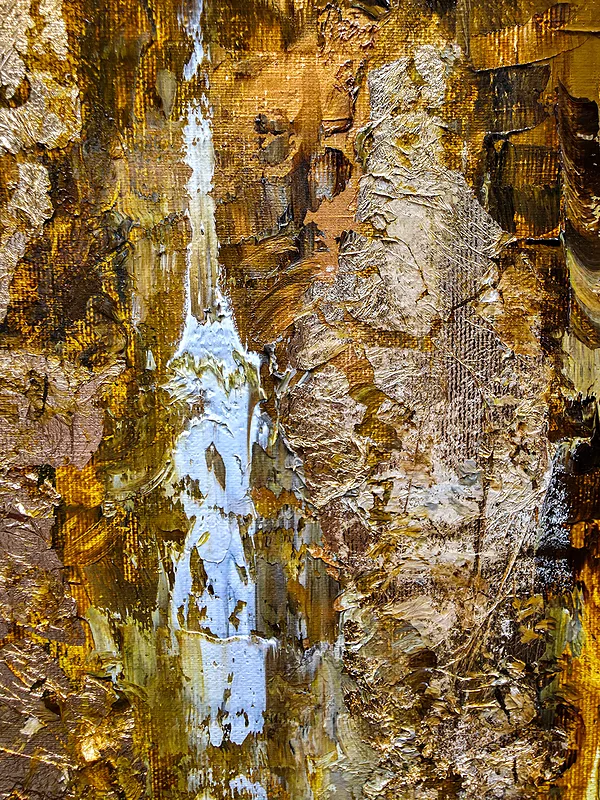
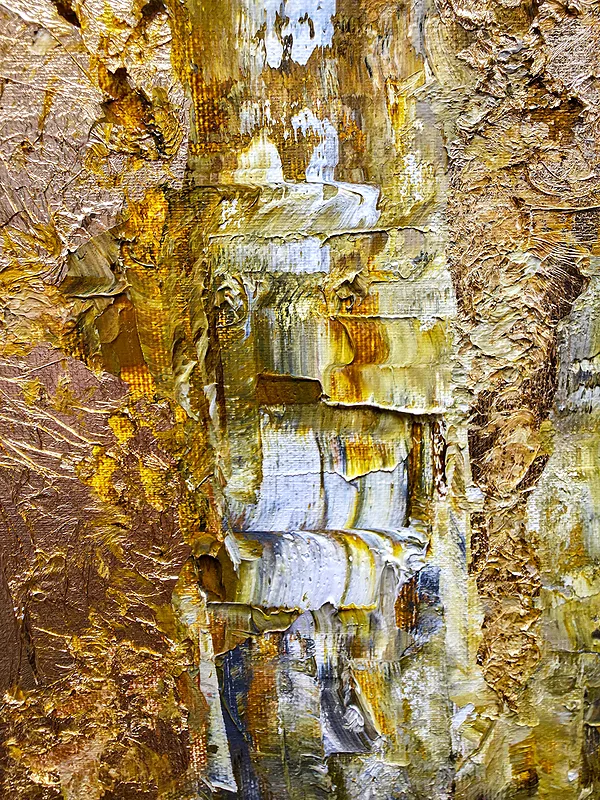
Moses has spent forty days upon Mount Sinai, where the word of the invisible God takes enduring form upon tablets of stone. Yet the impatience of the people waiting at the foot of the mountain turns to infidelity, and they demand that Aaron make them a god of their own. The gold of the canvas preserves the memory of heavenly light, yet, touched by earthly desire, it becomes the false radiance of an idol.
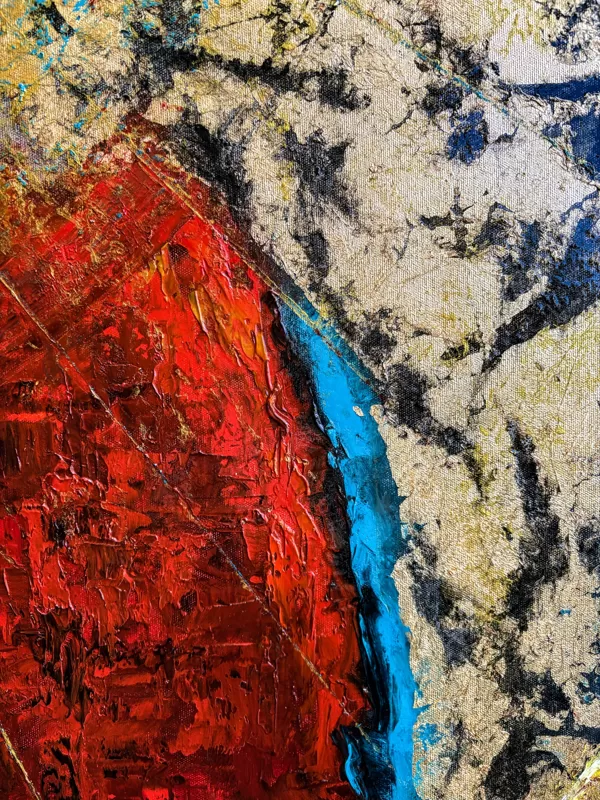
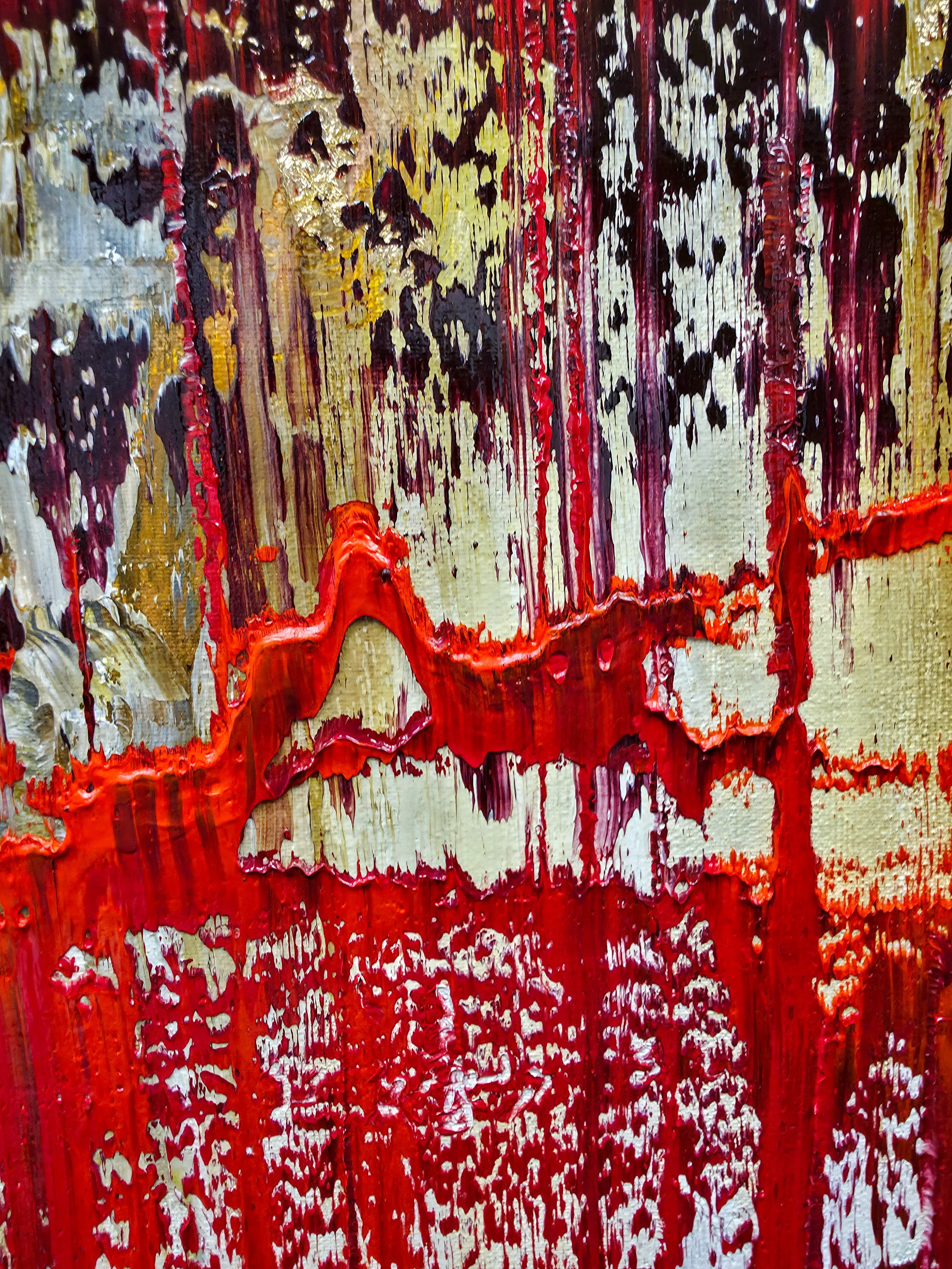
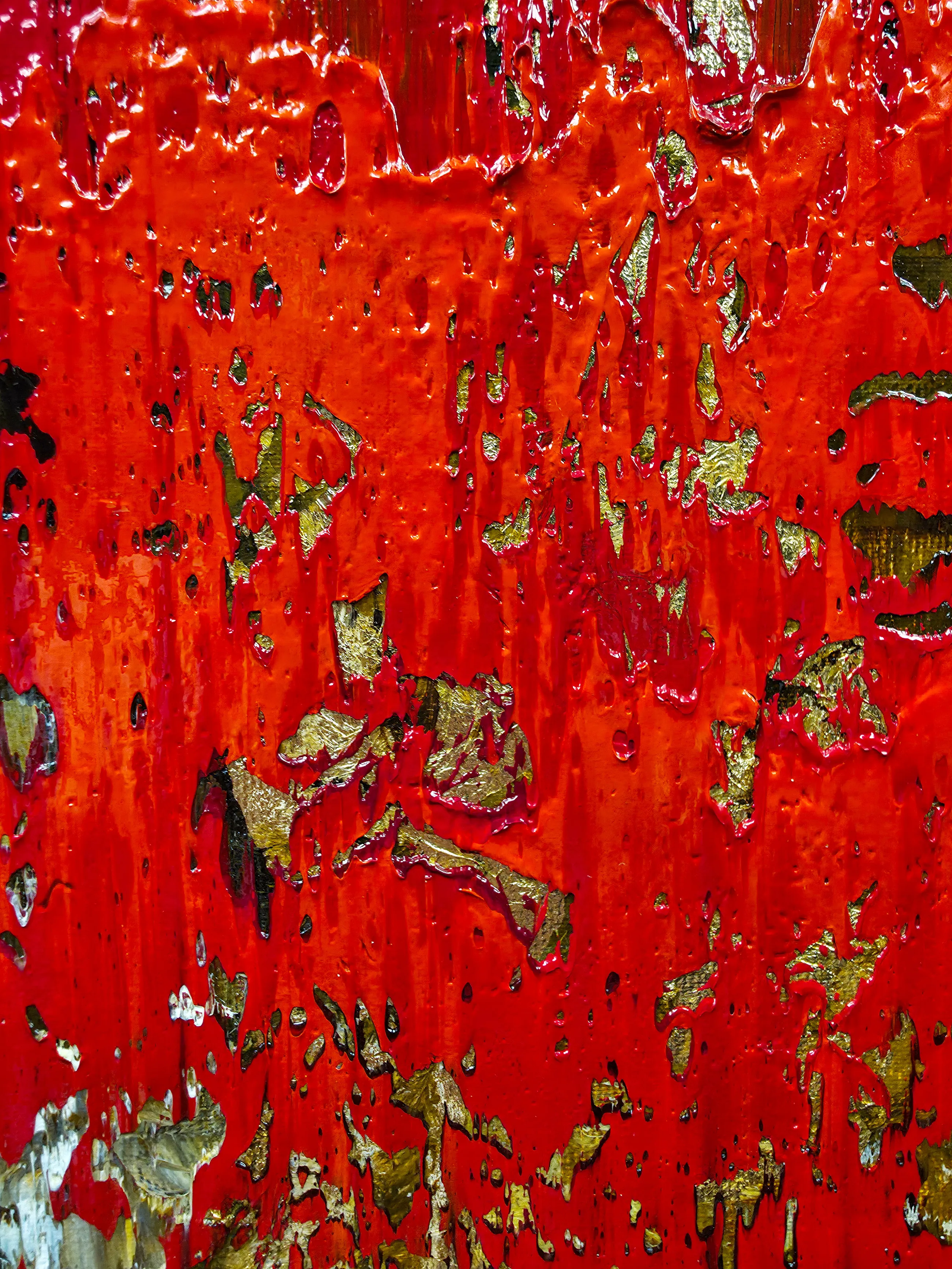
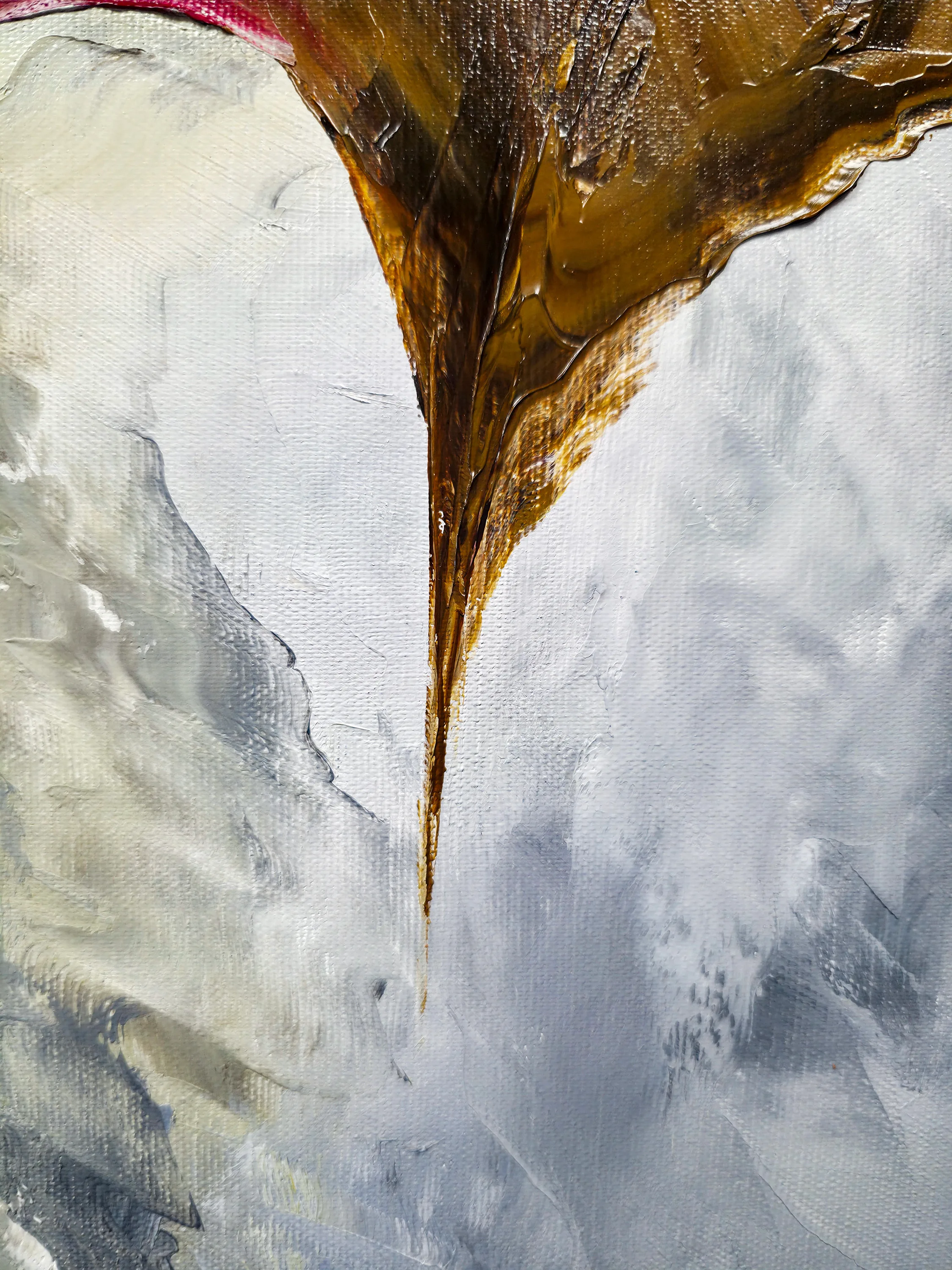
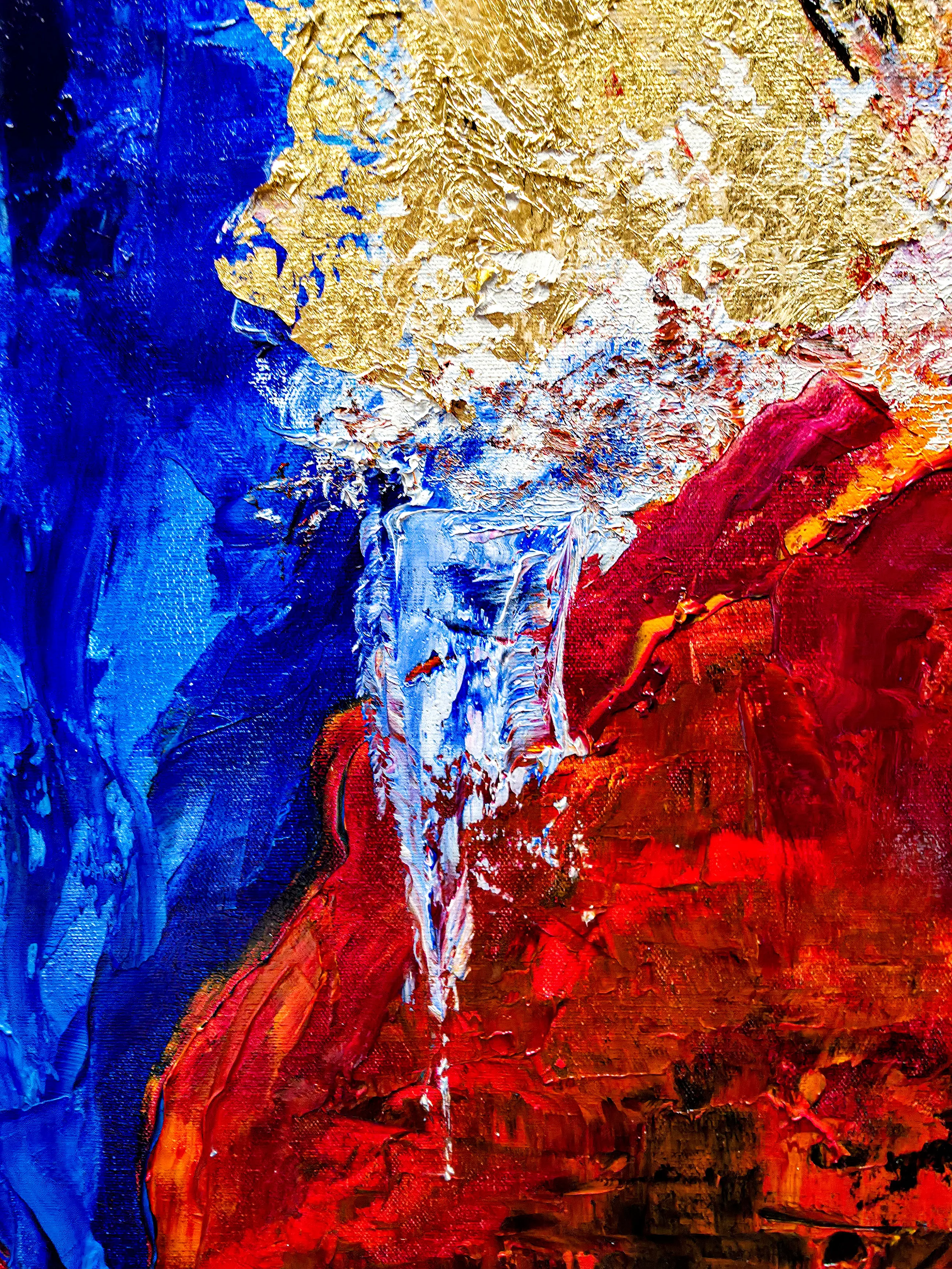
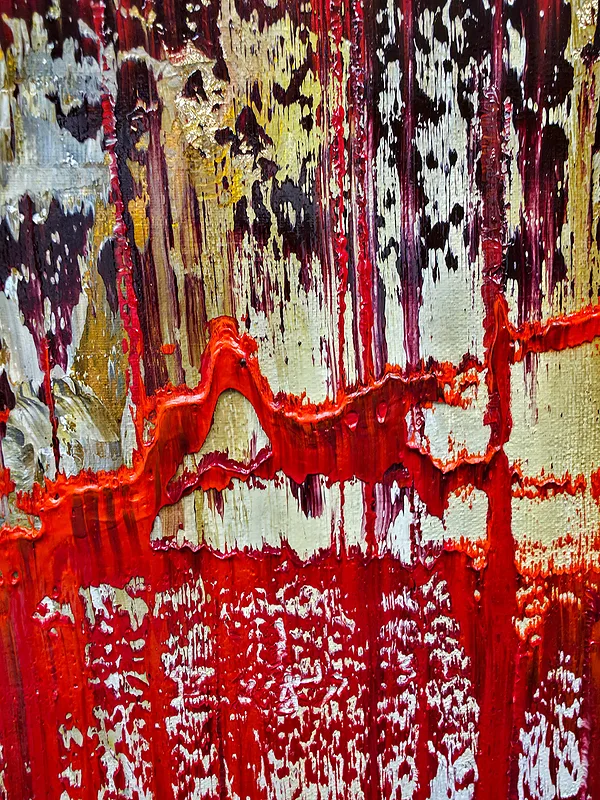
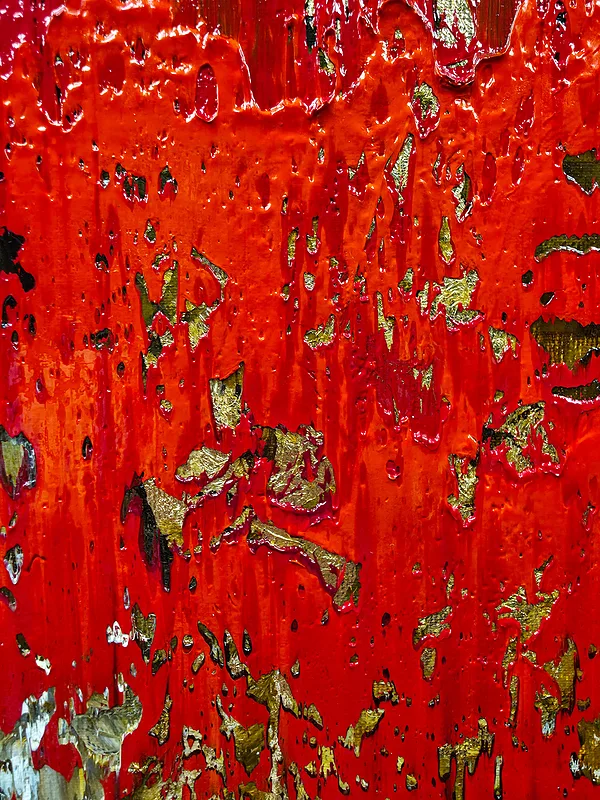
From this mineral world, the vast red field of the composition tears itself free. The recurring altar motif of the cycle is transformed here into a fragmented form that breaks apart and streams downwards.
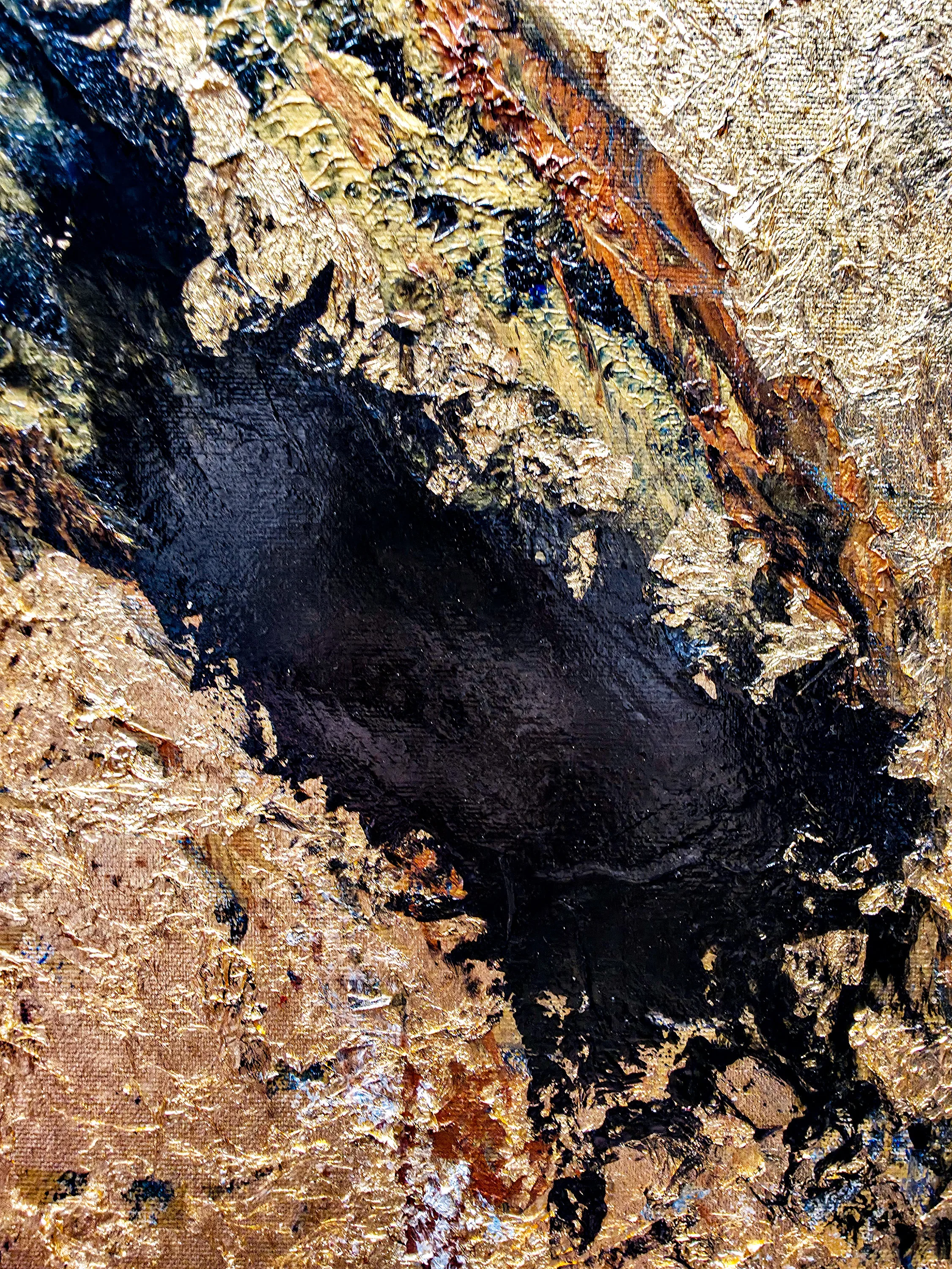
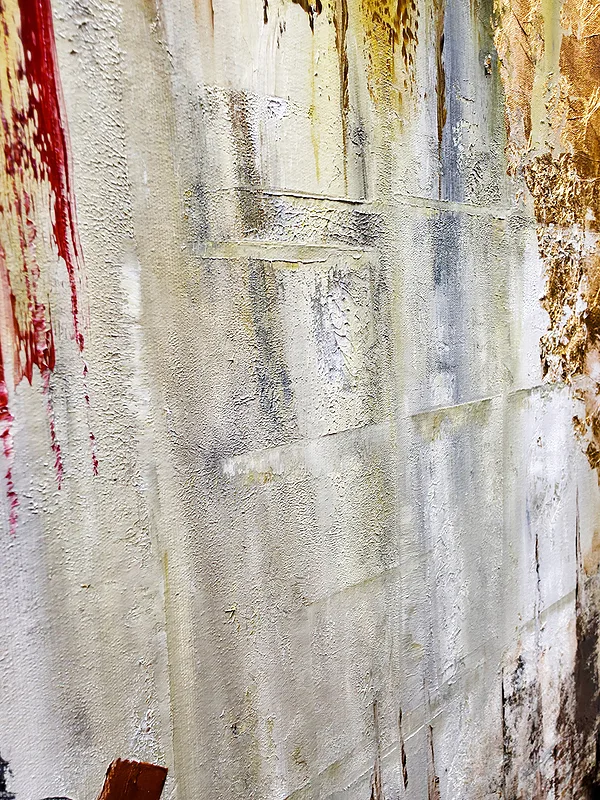
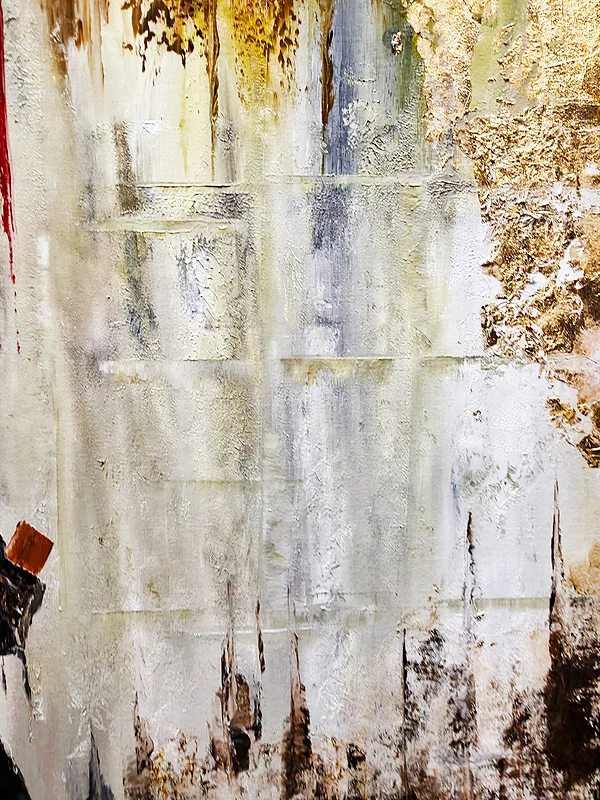
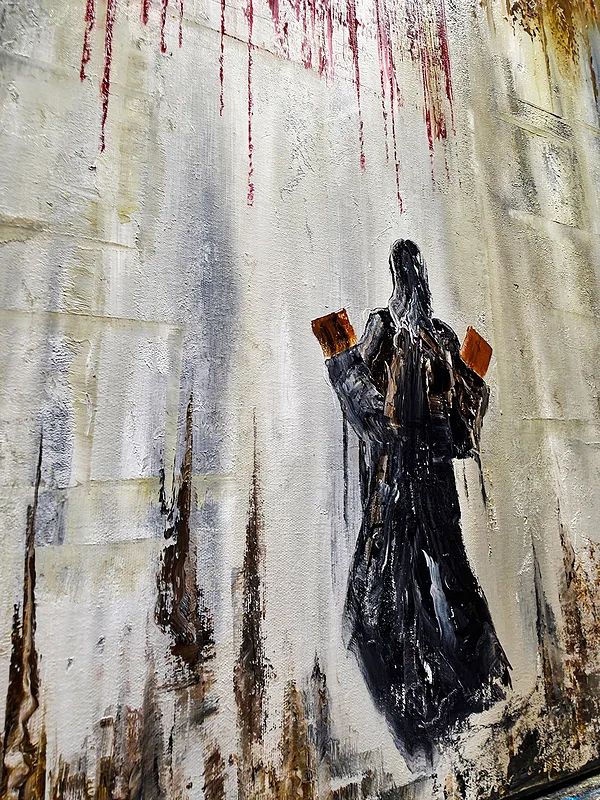
Beneath the red, a space of ivory, pearl grey, and chalk white opens up, evoking the majestic silence of Sinai and the purity of the Law. Emerging from this radiance in the lower part of the painting stands a dark figure with his back turned towards us: Moses.
In his hands, the two tablets of stone form a reddish-brown rectangle. Above him, the red of the broken covenant pours down, while all around him stretches an immense, soundless whiteness. One solitary human figure bears the weight of the encounter between two worlds.
In his anger, Moses shatters the tablets, yet later returns to the Eternal One and pleads for his sinful people. His raised arms thus embody the weight of the Law, the anguish of wrath, and the gesture of intercession. At the heart of the story lies the possibility of renewal, along with the promise of grace: what hangs above humankind here as a shattered altar may, in later paintings of the cycle, once again take shape as a solid, assured red square - the sustaining altar of the divine presence.
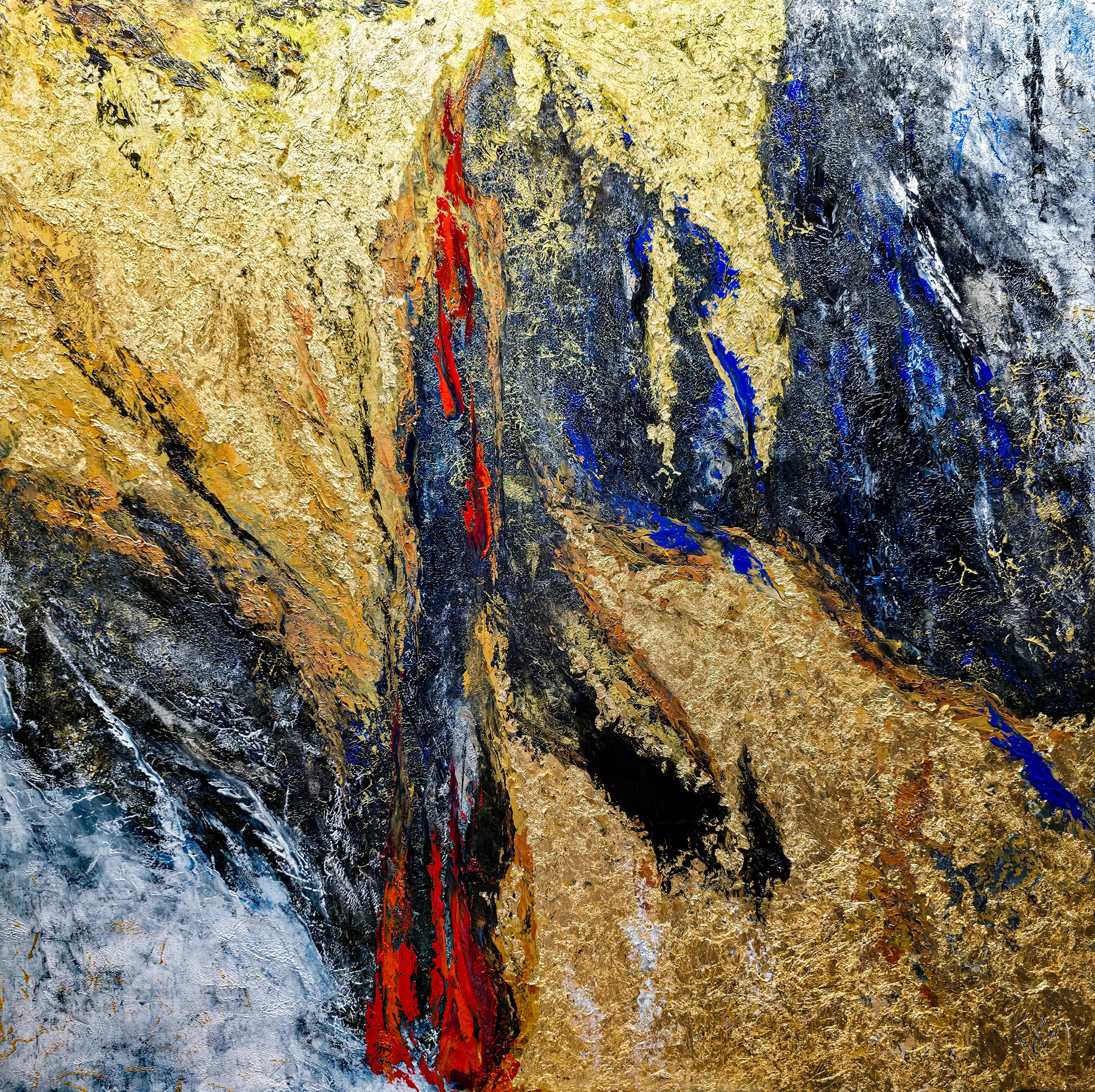
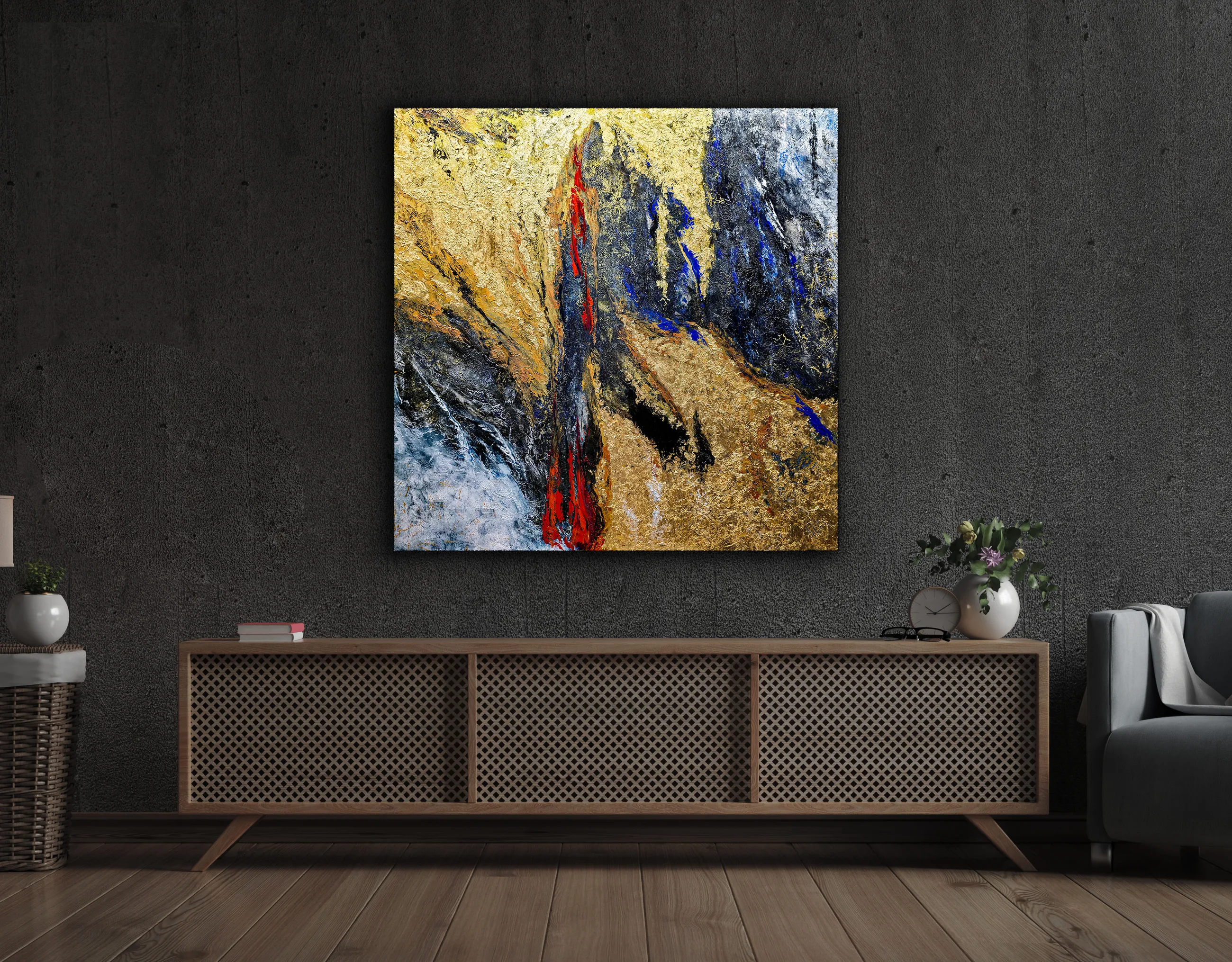
The Purification of the Temple
- 120 x 120 cm
- Oil and gold on canvas
- Place and year of creation: Sitges, 2026
- The work is part of the series 'Old Testament III - In Search of the Mysteries of Eternity'
- AVAILABLE FOR PURCHASE
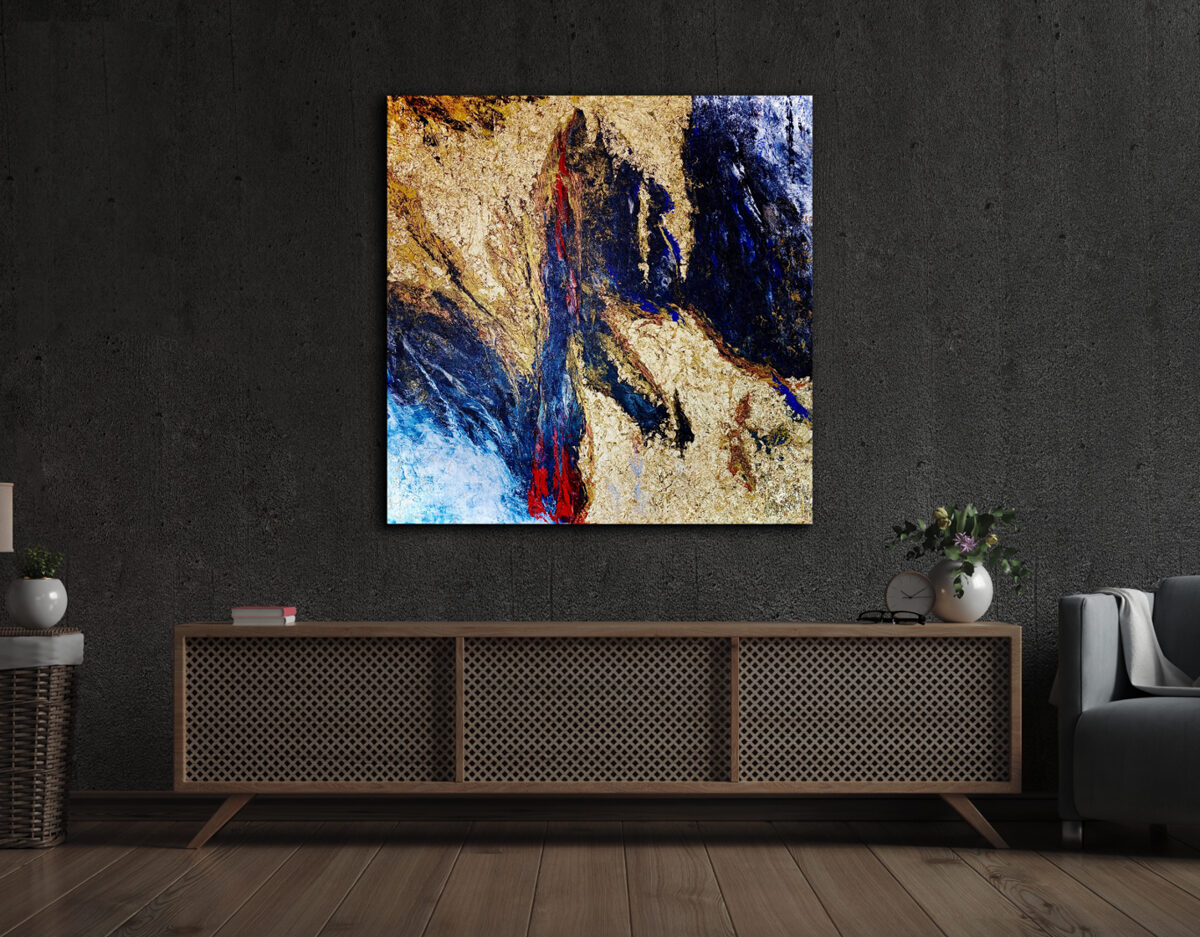
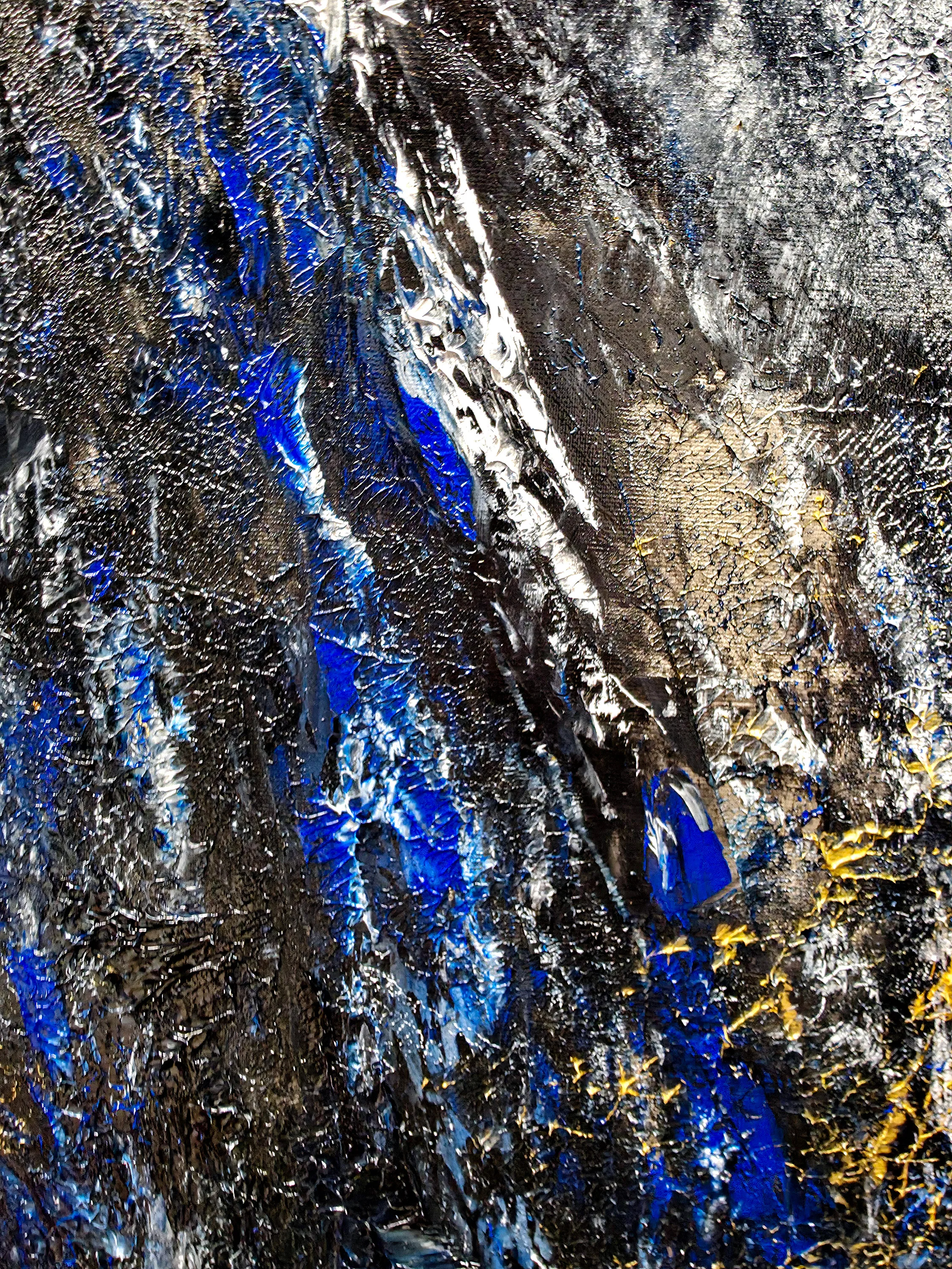
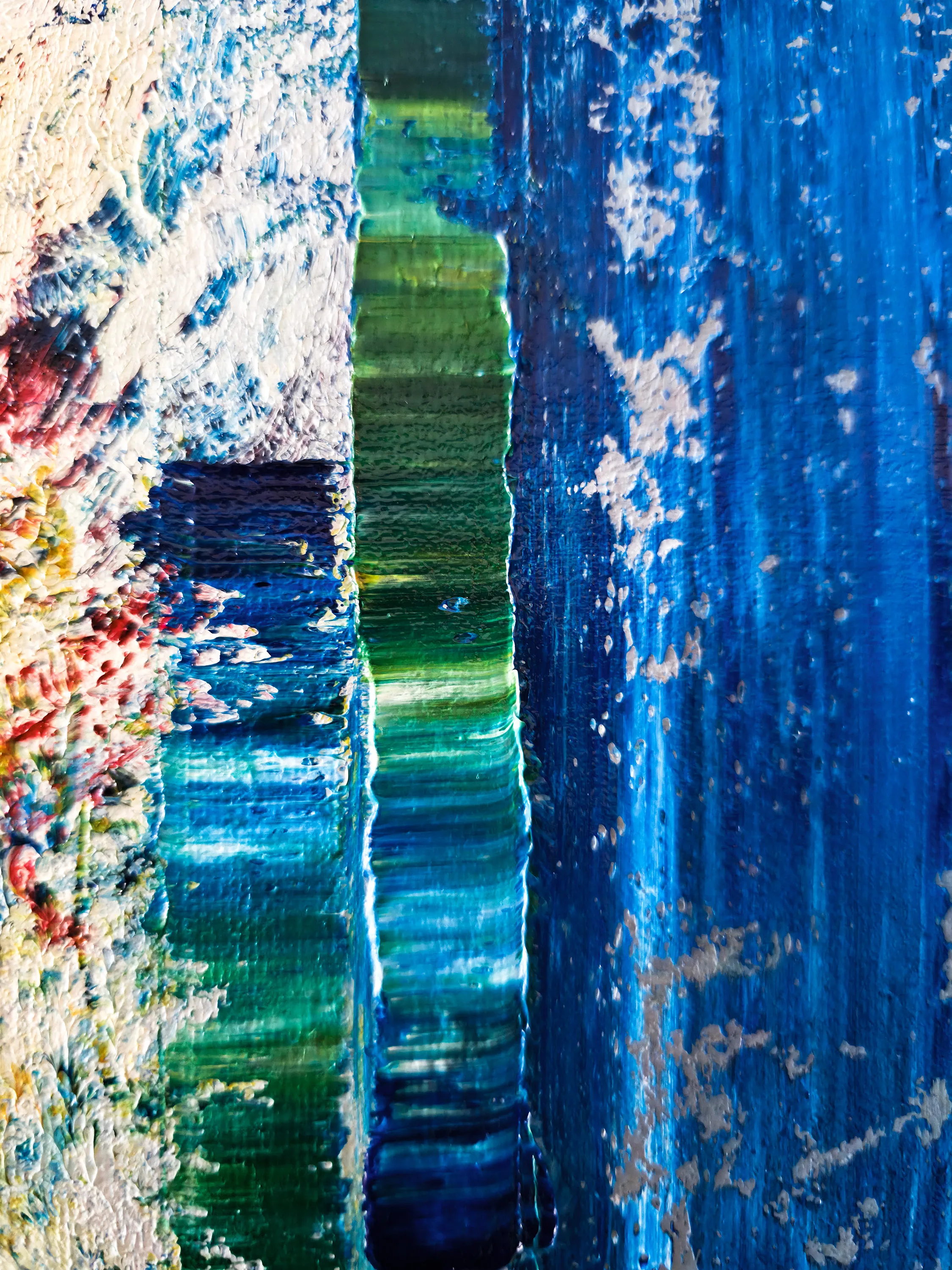
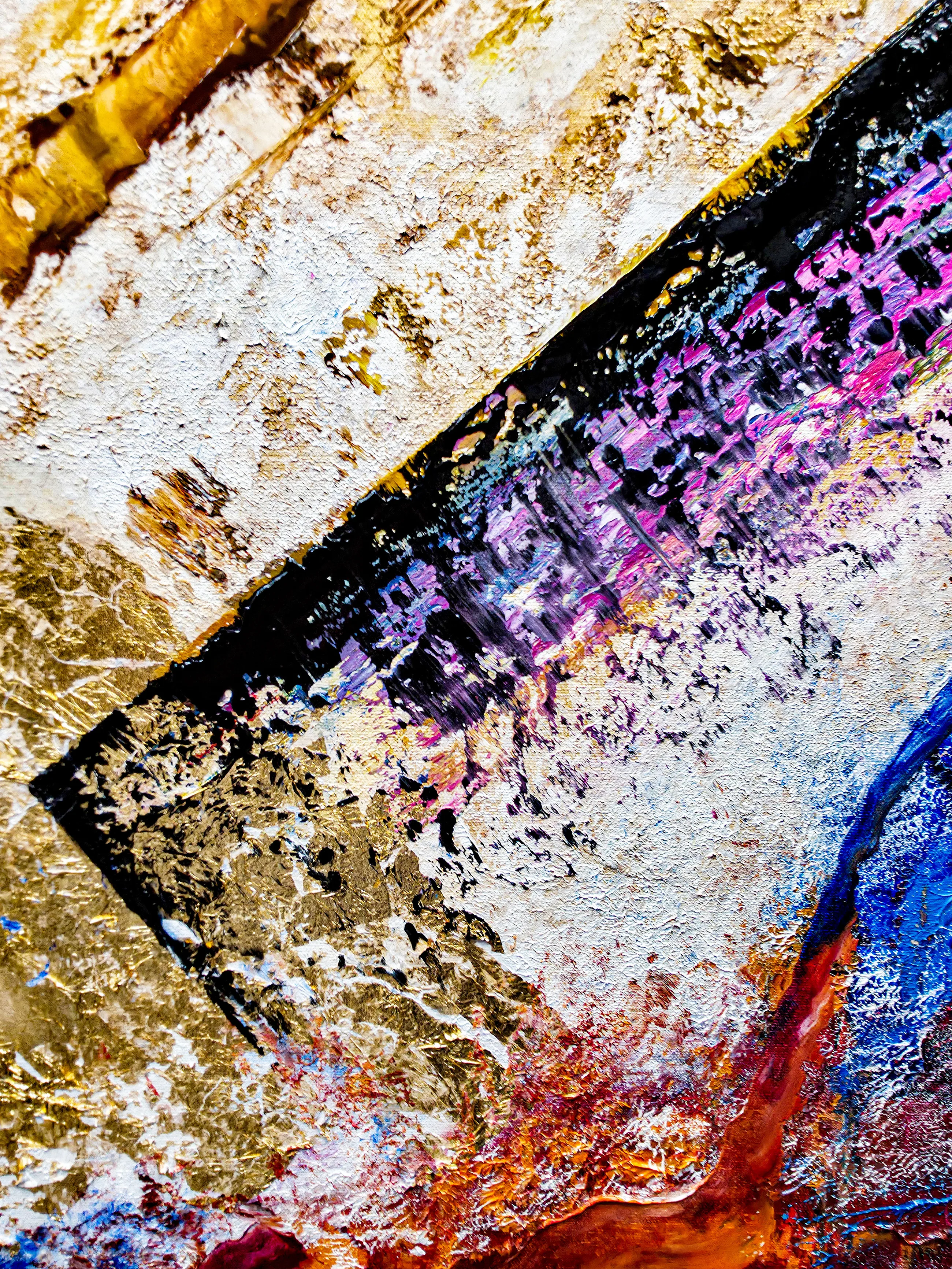
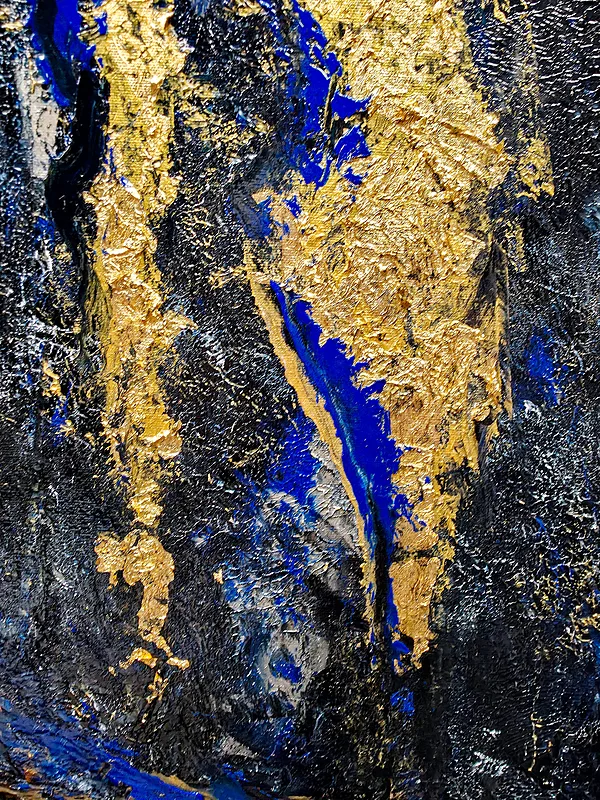
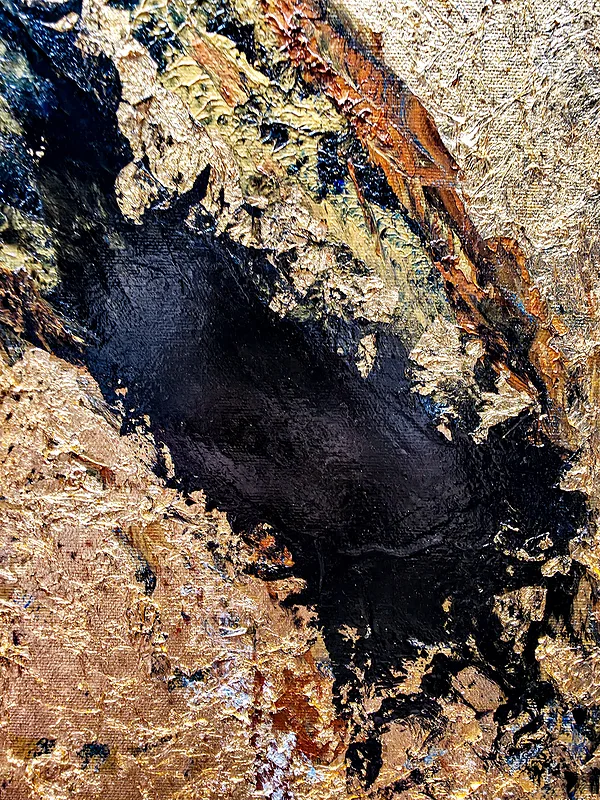
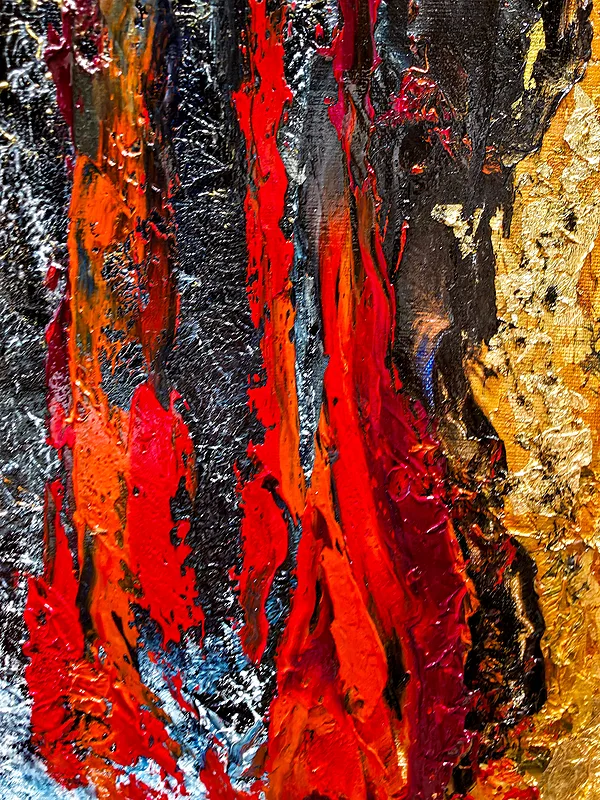
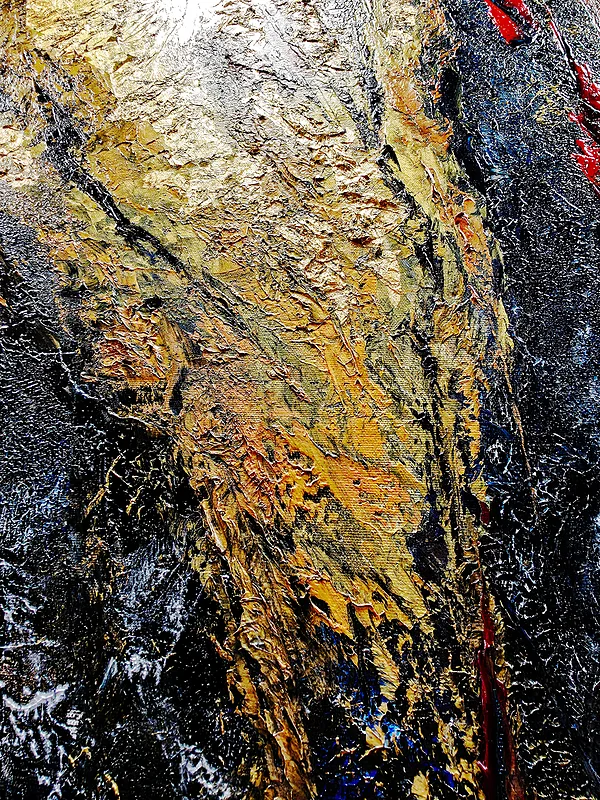
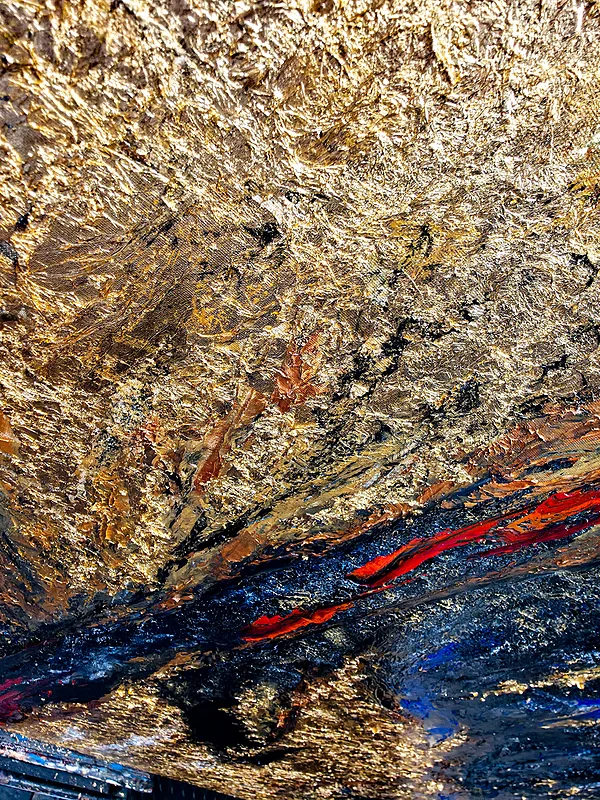
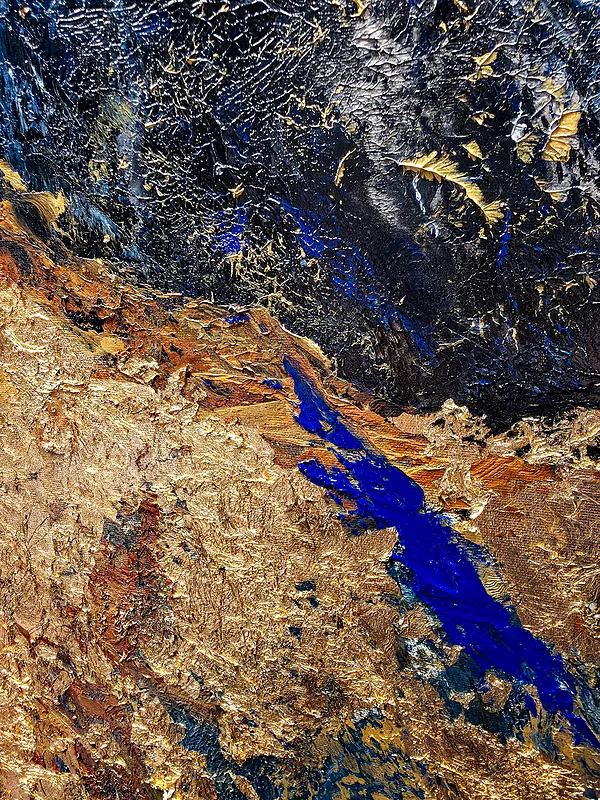
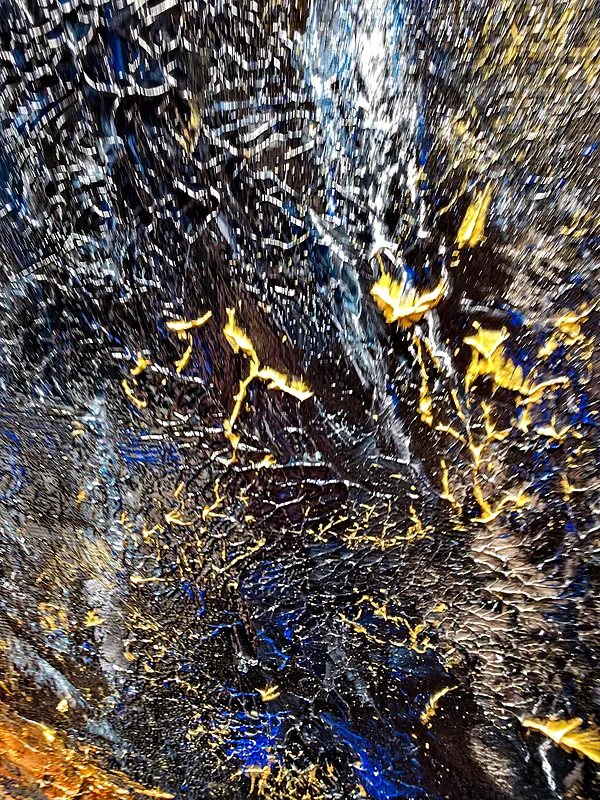
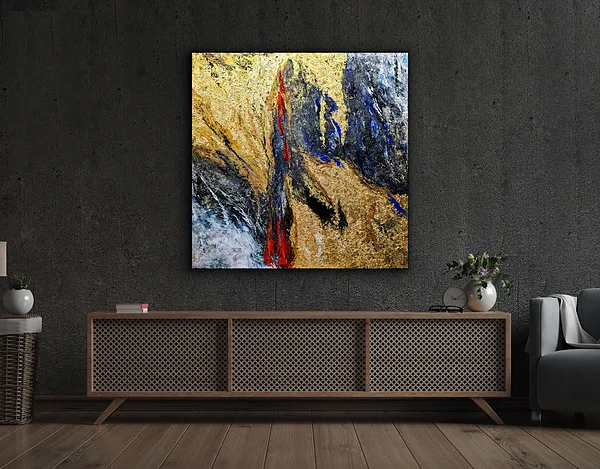
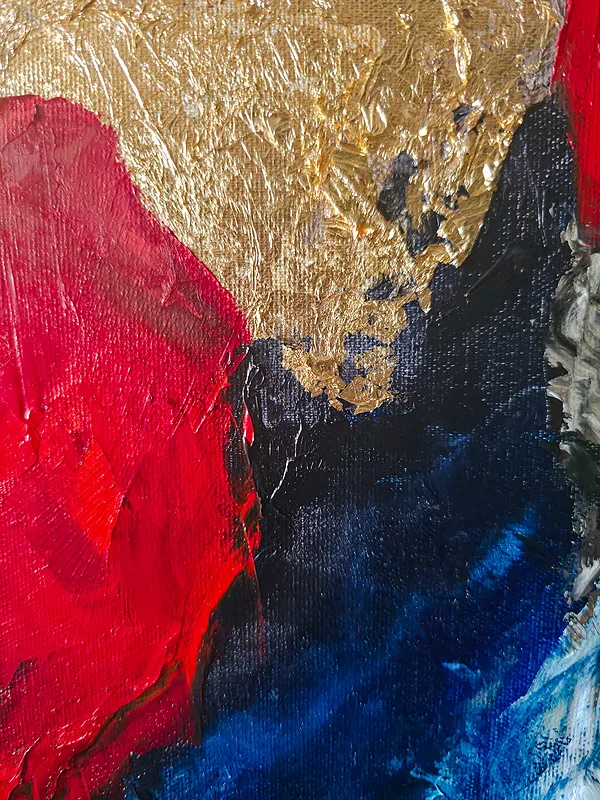
The solemn interplay of gold-clad surfaces, sooty midnight blacks, deep ultramarines, blood-red brushstrokes flaring like flames, and icy, luminous blue-whites unfolds before us like the sudden rekindling of a sanctuary that has lain silent for ages.
The painting evokes the gloria aeterna, the everlasting glory of Judas Maccabeus’s victory.
The cleansing of the Temple meant more than the restoration of its stones and sacred vessels; it also signified the renewal of a violated covenant. The canvas’s rough, heavily layered surface resembles, in places, the walls of a temple, elsewhere a rocky outcrop or a blackened altar stone.
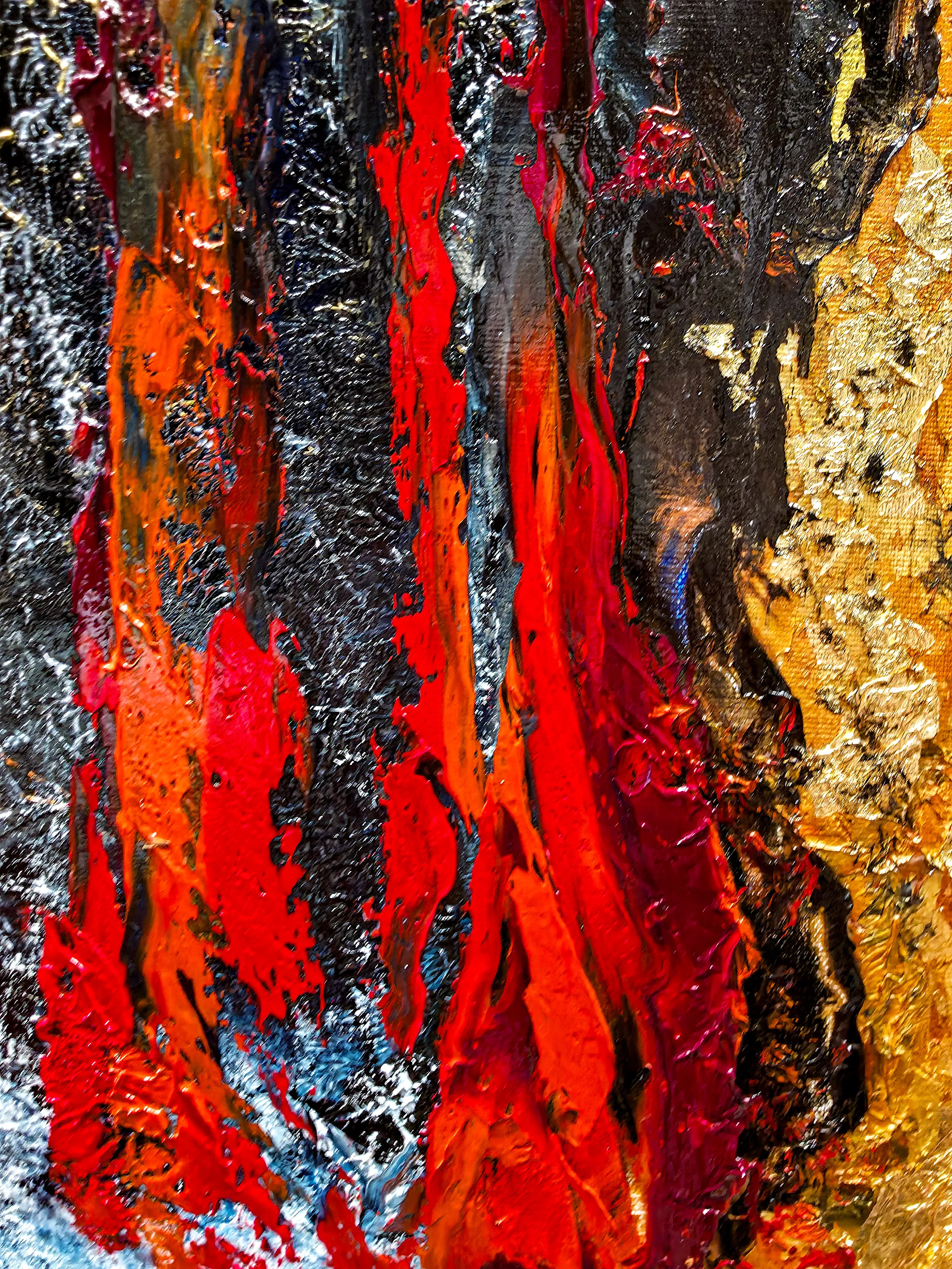
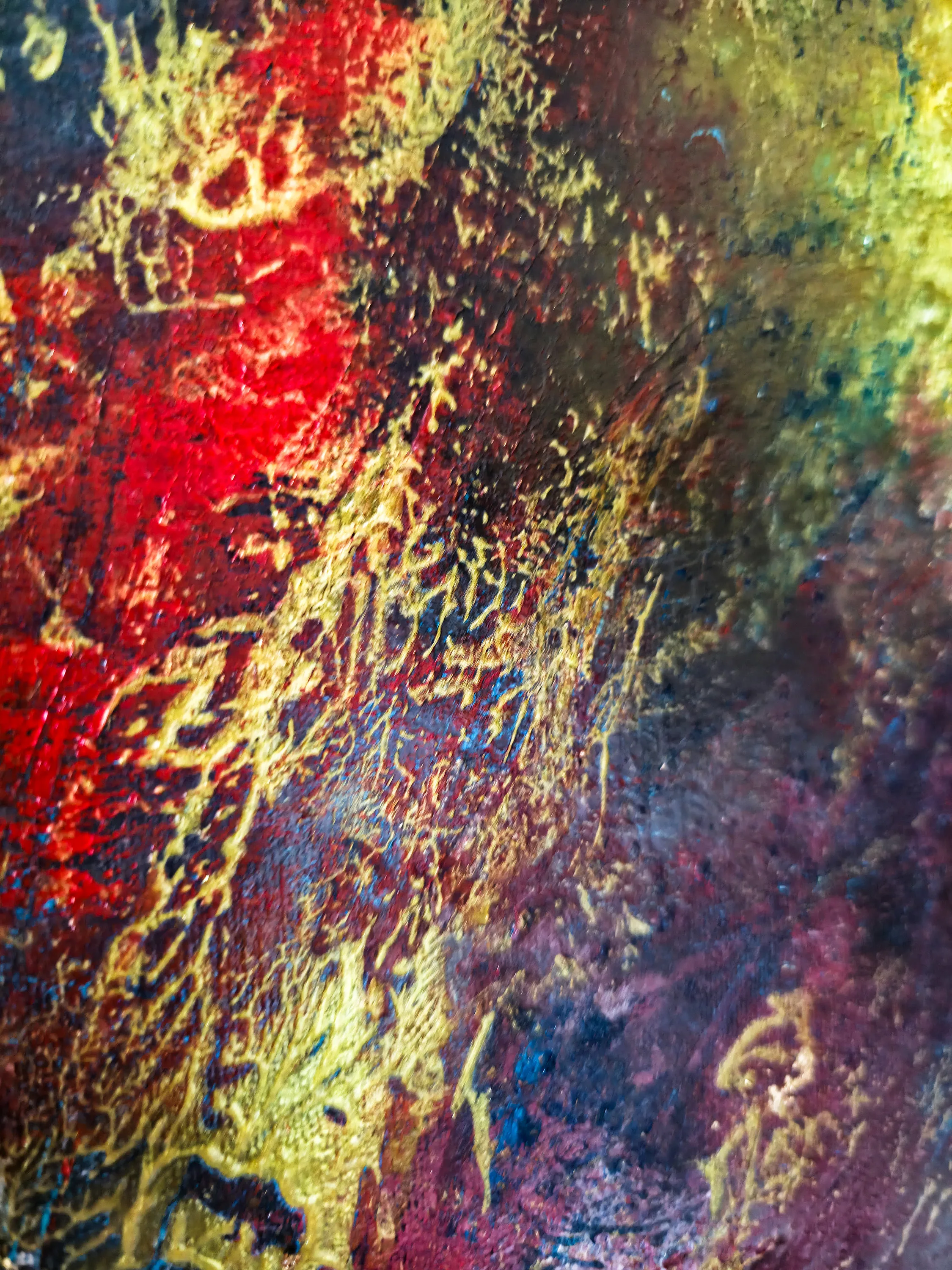
From the depths of the composition, two monumental, incandescent forms emerge. Their indistinct contours evoke the heads of sacrificial animals facing one another. Between them, a deep vertical cleft takes on the form of an altar, from which a red flame rises like a burnt offering even as it streams downwards like blood shed in atonement.
The crimson paint courses through the composition like a deep, living vein, recalling an ember preserved beneath the ruins - one that neither the winds of time nor the shadow of idols could ever wholly extinguish.
The cool radiance of the blues evokes ritual purity, the cleansing power of water, and the protective presence of the heavens. As the depths of cobalt blue meet the solemn splendour of gold, it is as though heaven bends down towards the earth, reuniting faithfulness with earthly service.
“And the glory of the LORD filled the house of the LORD.” (1 Kings 8:11)
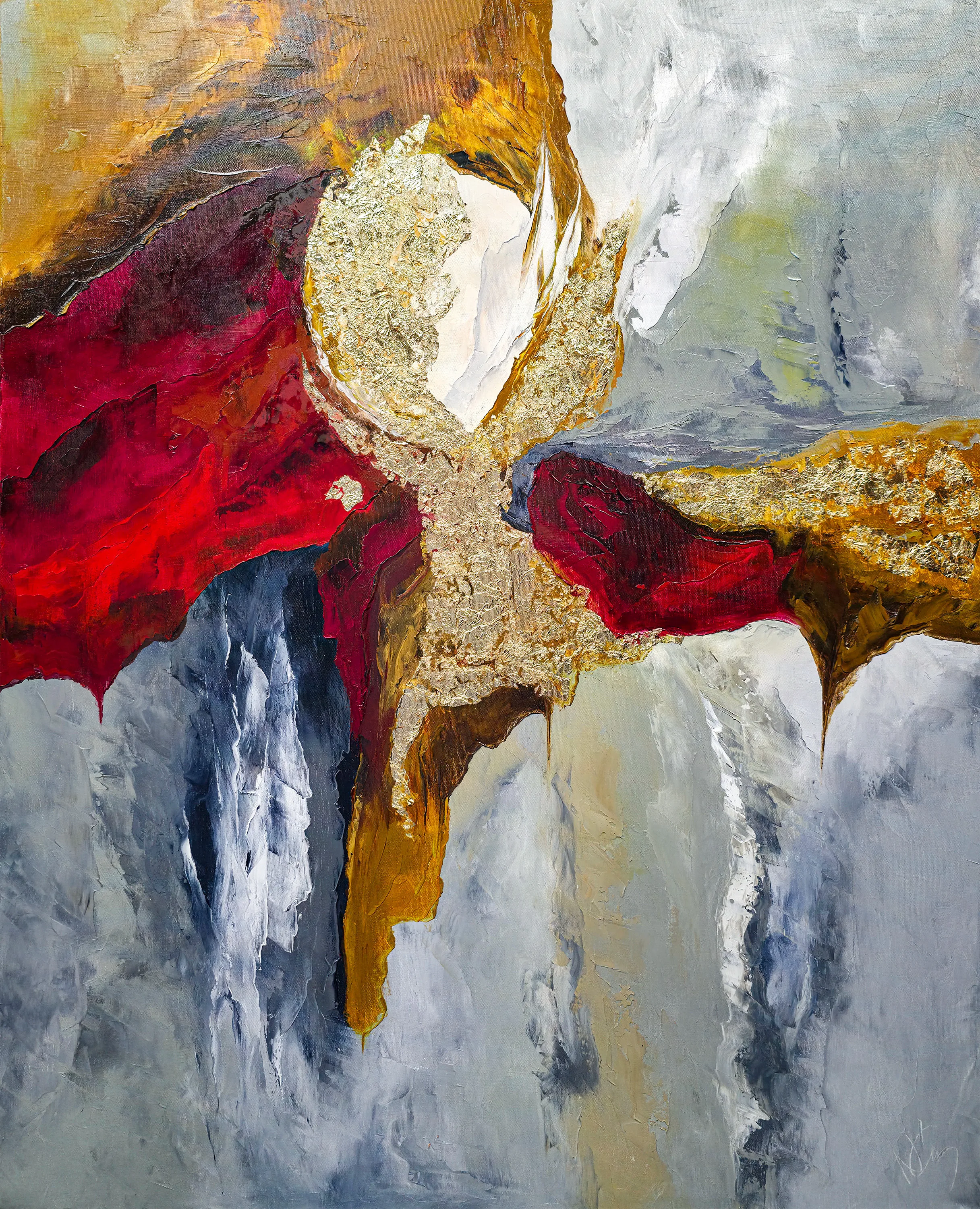
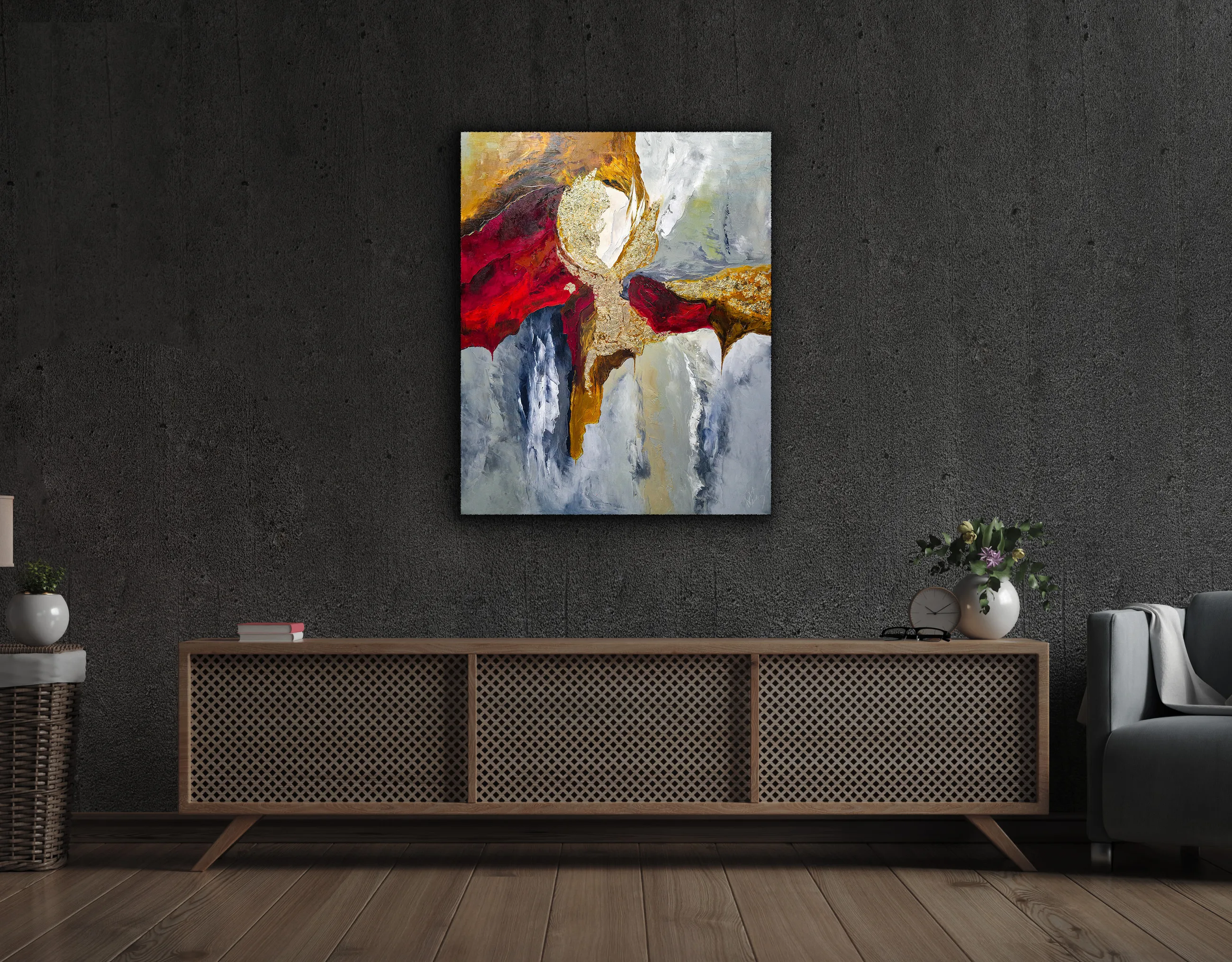
The Prophecy
- 100 x 81 cm
- Oil and gold on canvas
- Place and date of creation: Sitges, 2026
- The work is part of the 'Old Testament III - Exploring the Mysteries of Eternity' series
- AVAILABLE FOR PURCHASE
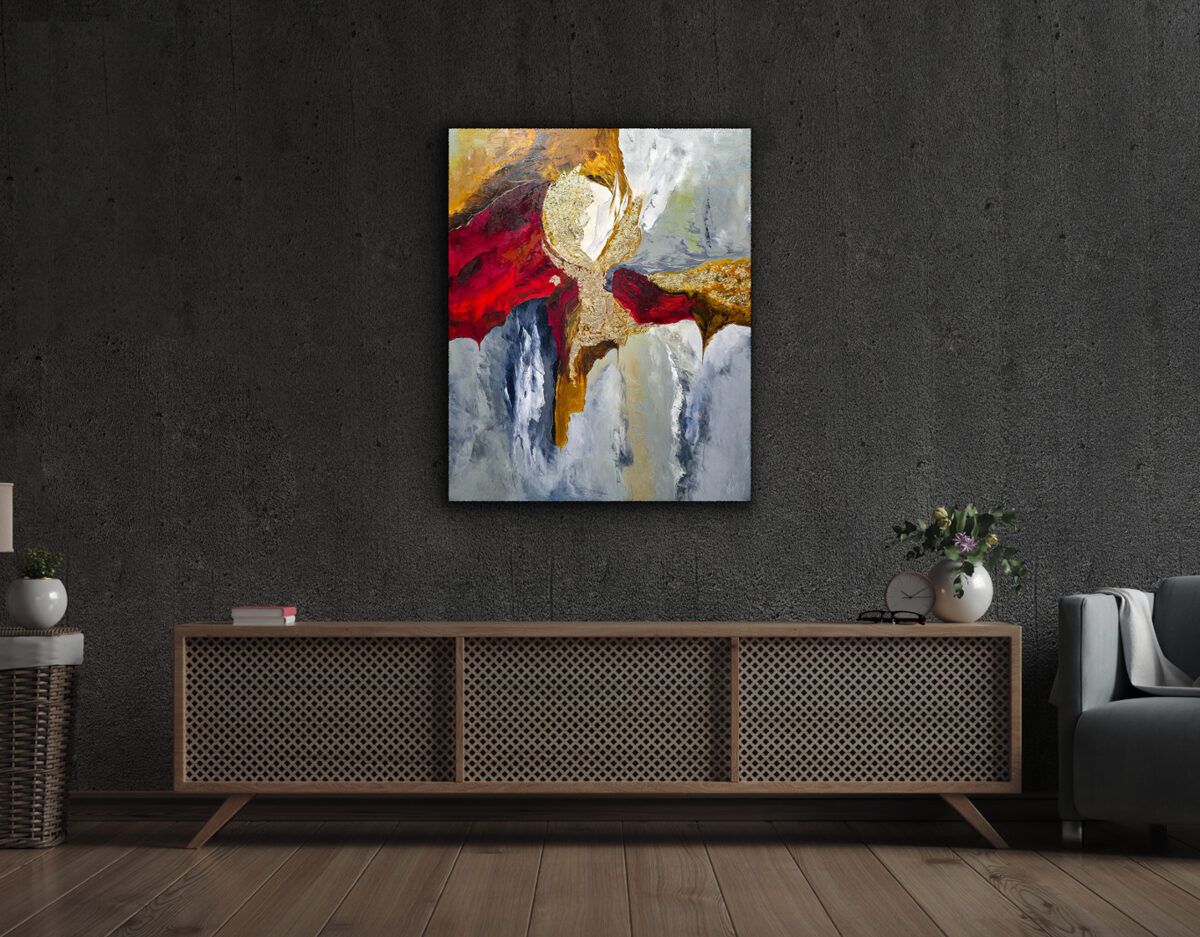
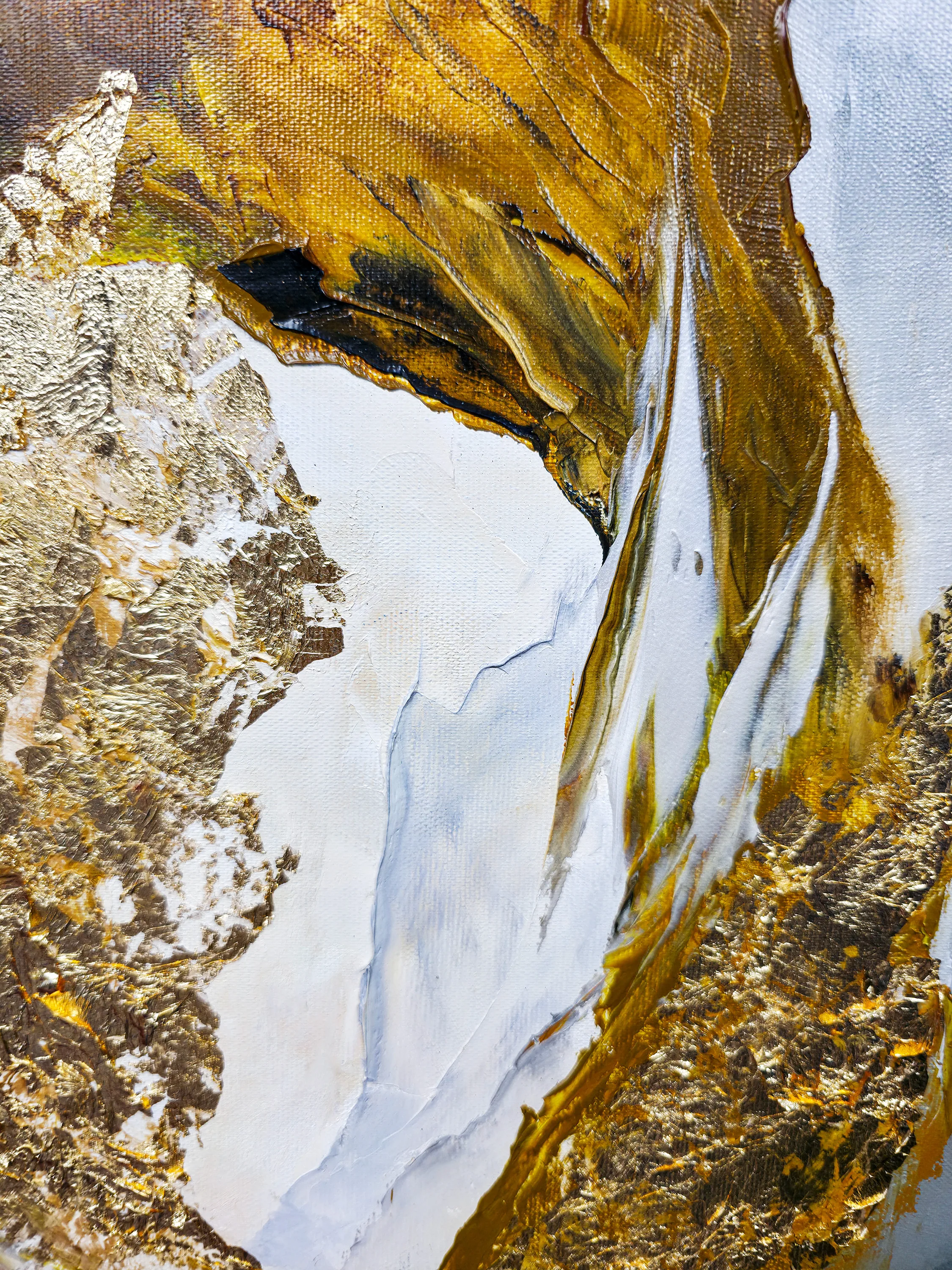
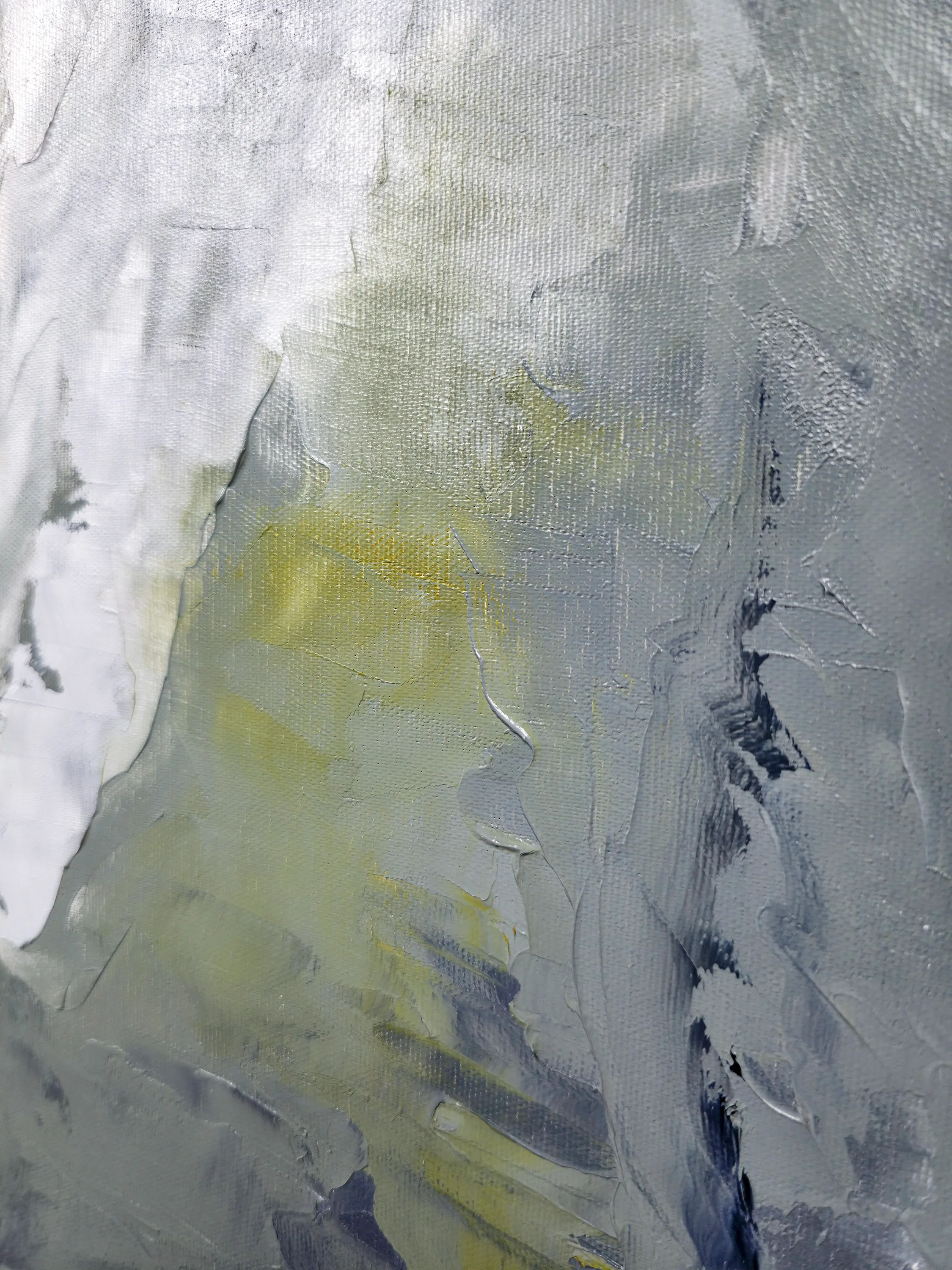
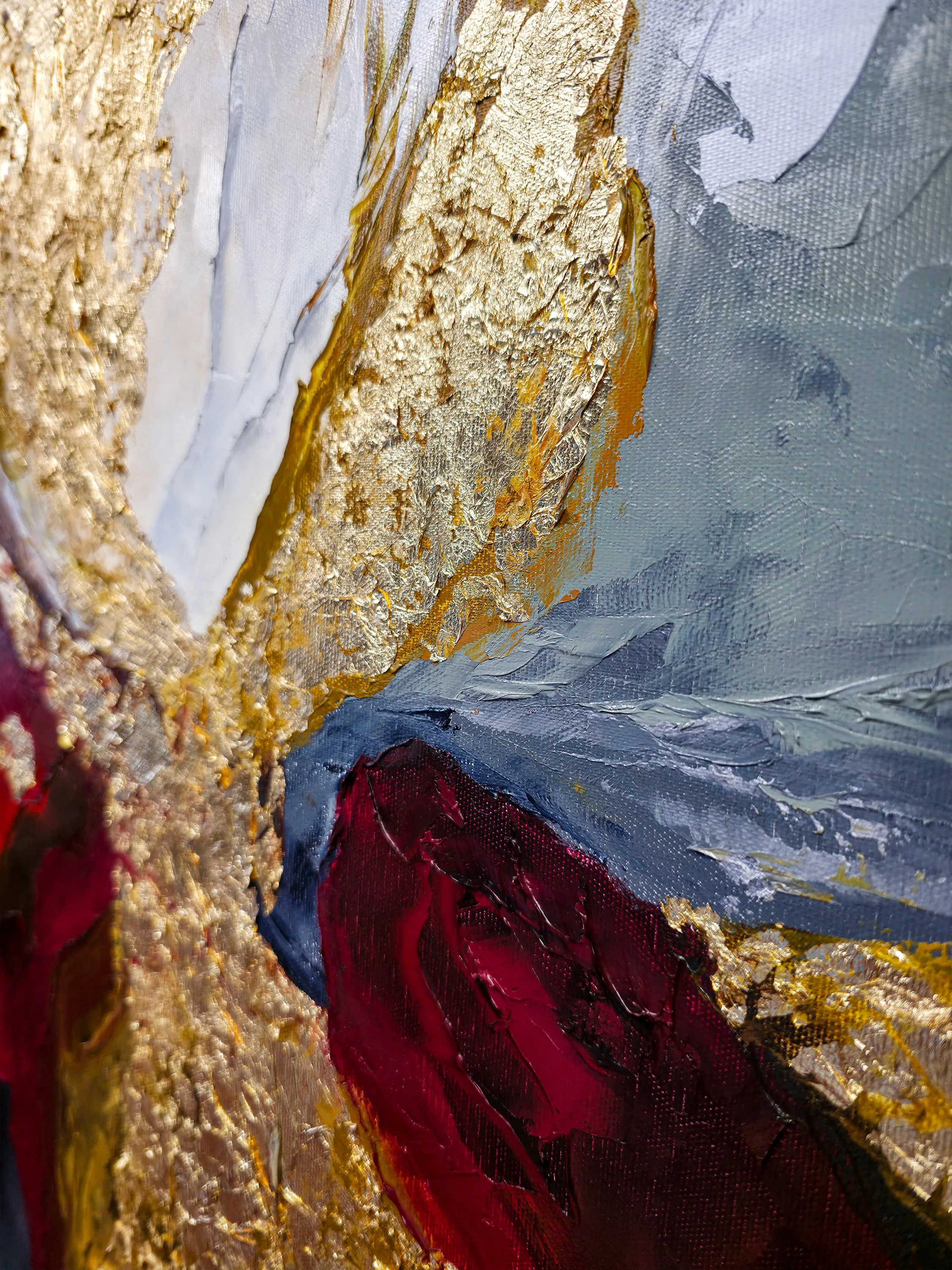
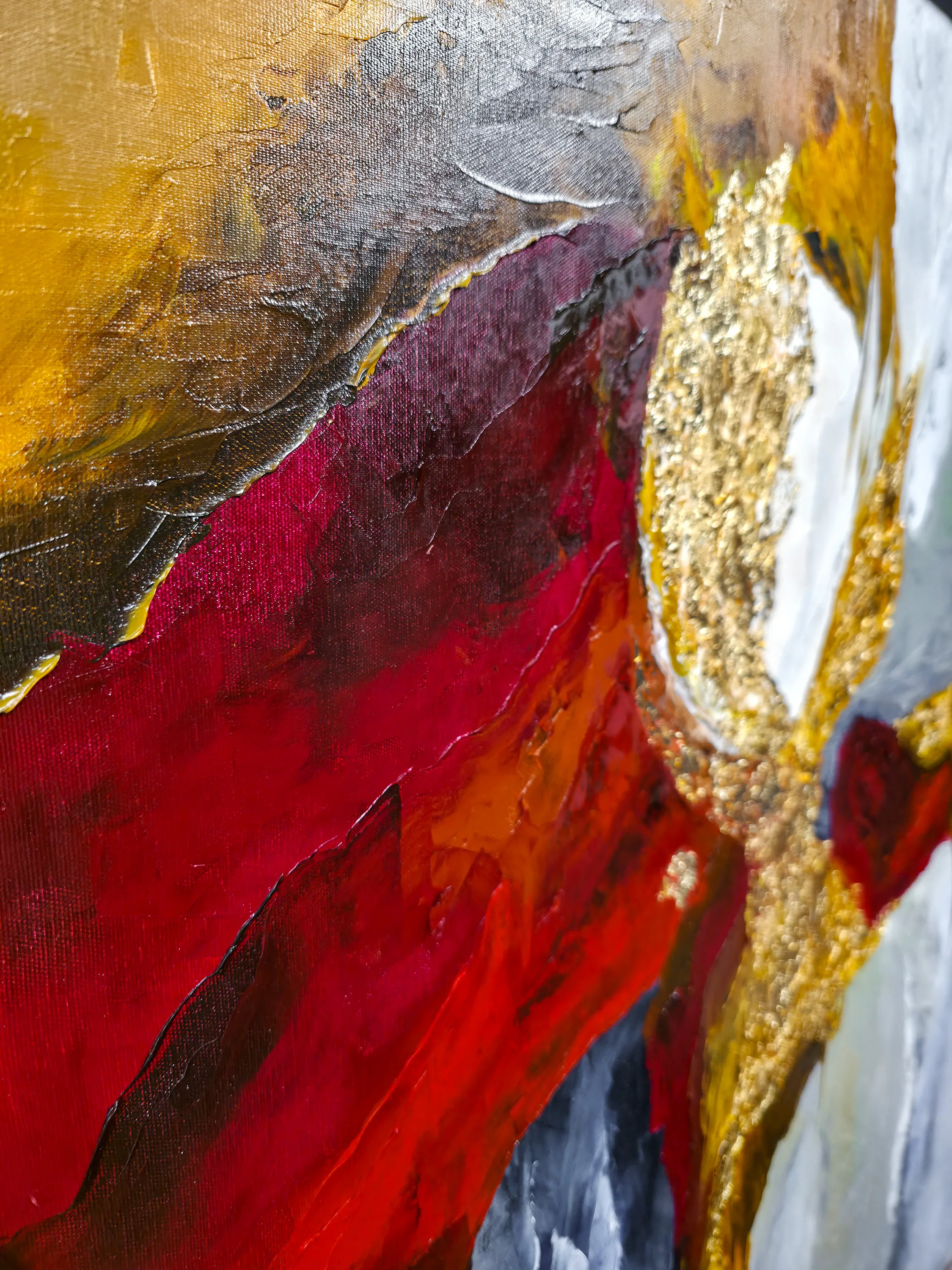
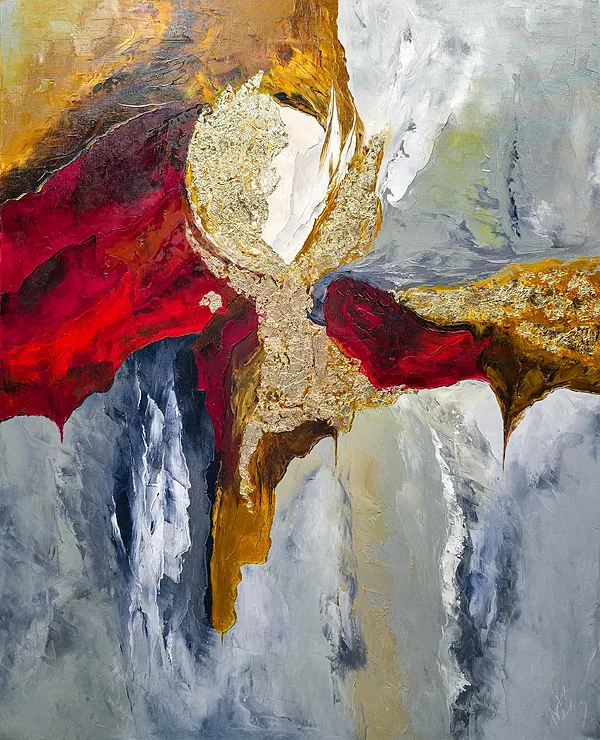
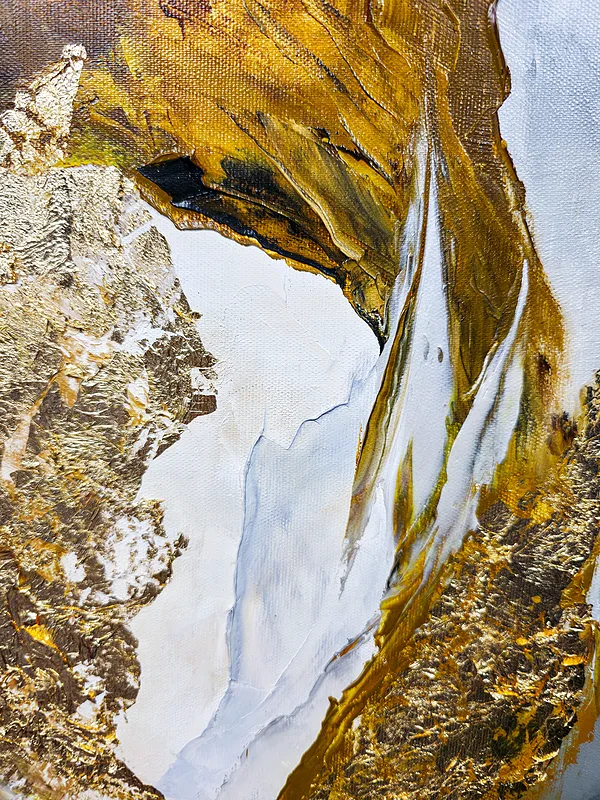
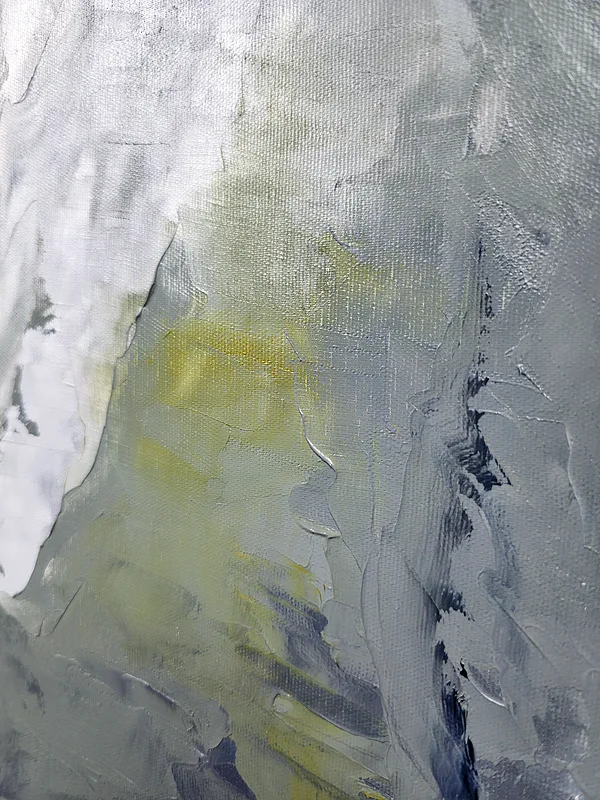
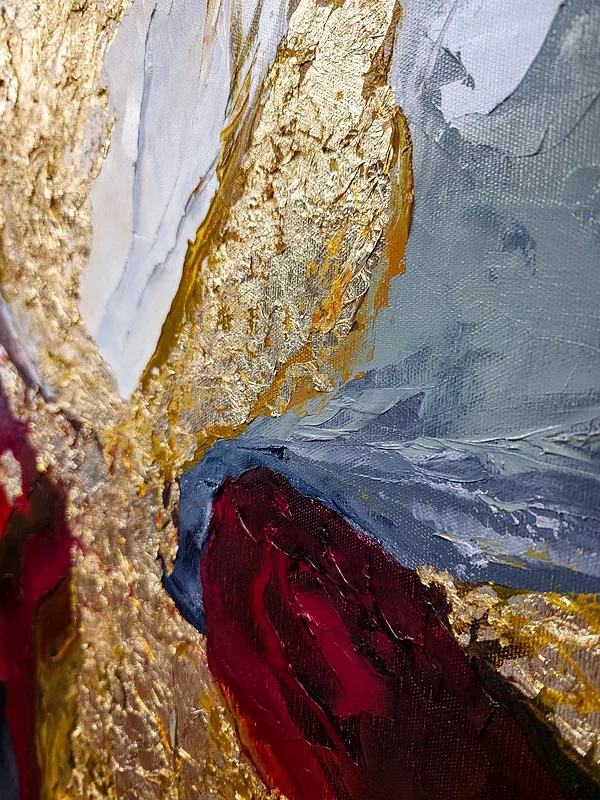
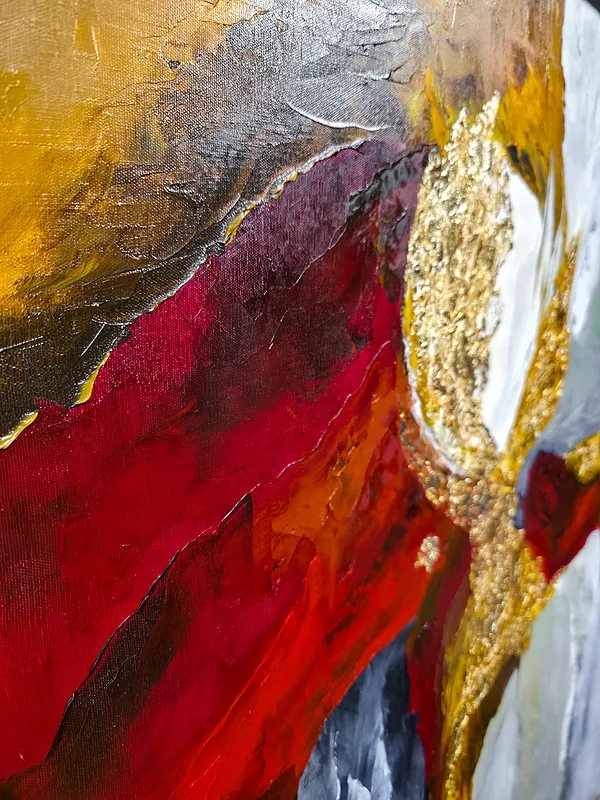
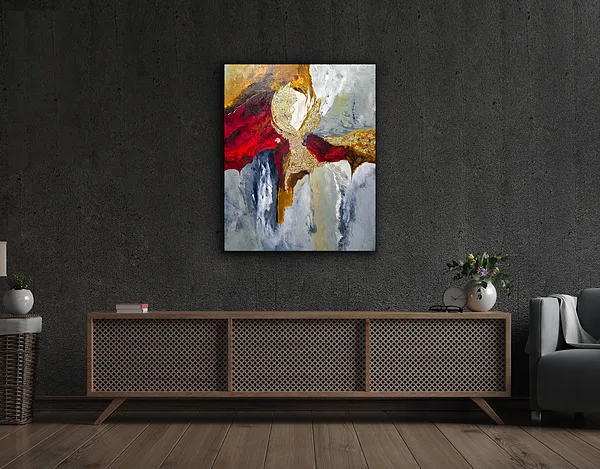
At the centre of the composition, a golden-white form unfolds, evoking a flame, a wing spreading wide, and a radiant apparition enveloped in light. Around it, sweeping forms of crimson and carmine unfurl like wings. The movement from the red, wing-like expanse towards the golden centre becomes a painterly echo of the seraph’s approach, while the colour of the flame embodies the power of a purifying touch. In the upper region, a space of white and silvery grey opens out beside the gold, arching above the central apparition like a celestial vault.
The painting’s biblical resonance lies in the prophetic calling of Isaiah, when the heavenly vision becomes a divine commission.
“Whom shall I send, and who will go for us?” comes the divine question, to which Isaiah replies: “Here am I; send me.” (Isaiah 6:8, KJV)
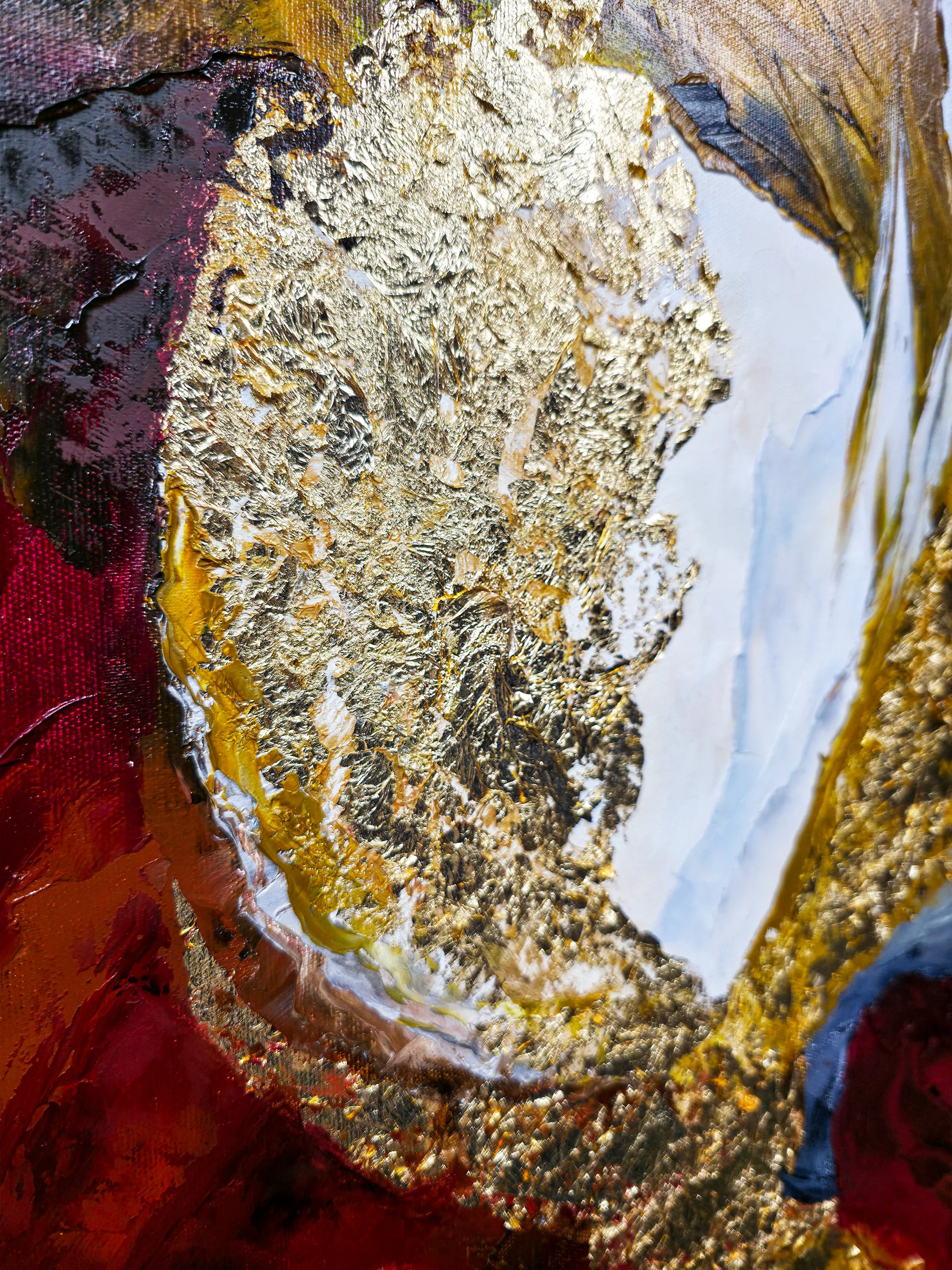
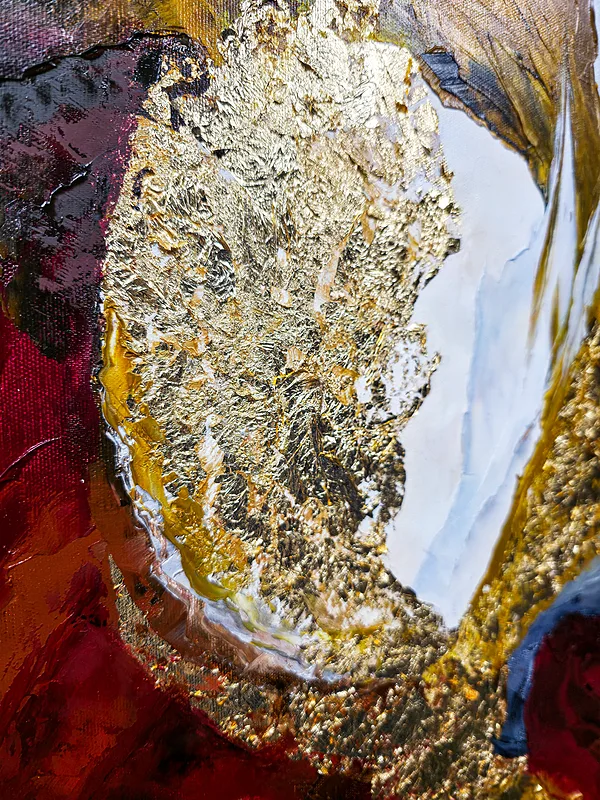
Nestled within the radiant centre rests a white seed, its softly curved shape almost embryonic. Around it, the granular gold closes like a protective sheath enclosing life: at once seed coat, womb, and sanctuary, guarding the mystery taking shape within. The white form has already come into being in the invisible realm and is now poised to unfold towards the light. It is as though the Word itself were being conceived in the heart of the painting.
The stream of light descending from the gold symbolises the earthly journey of the divine Word, while the blue-grey depths evoke the weight of the human world. Crimson and carmine embody the force of prophetic fire, gold the glory of heaven, and white the purity of the Word coming into being. The prophecy thus becomes an image of a calling born of vision: the divine message touches the human being, takes shape within, and then sets forth into the world through the spoken word.
The Book of Isaiah
- 100 x 100 cm
- Oil and gold on canvas
- Place and date of creation: Sitges, 2026
- The work is part of the 'Old Testament III - Exploring the Mysteries of Eternity' series
- AVAILABLE FOR PURCHASE
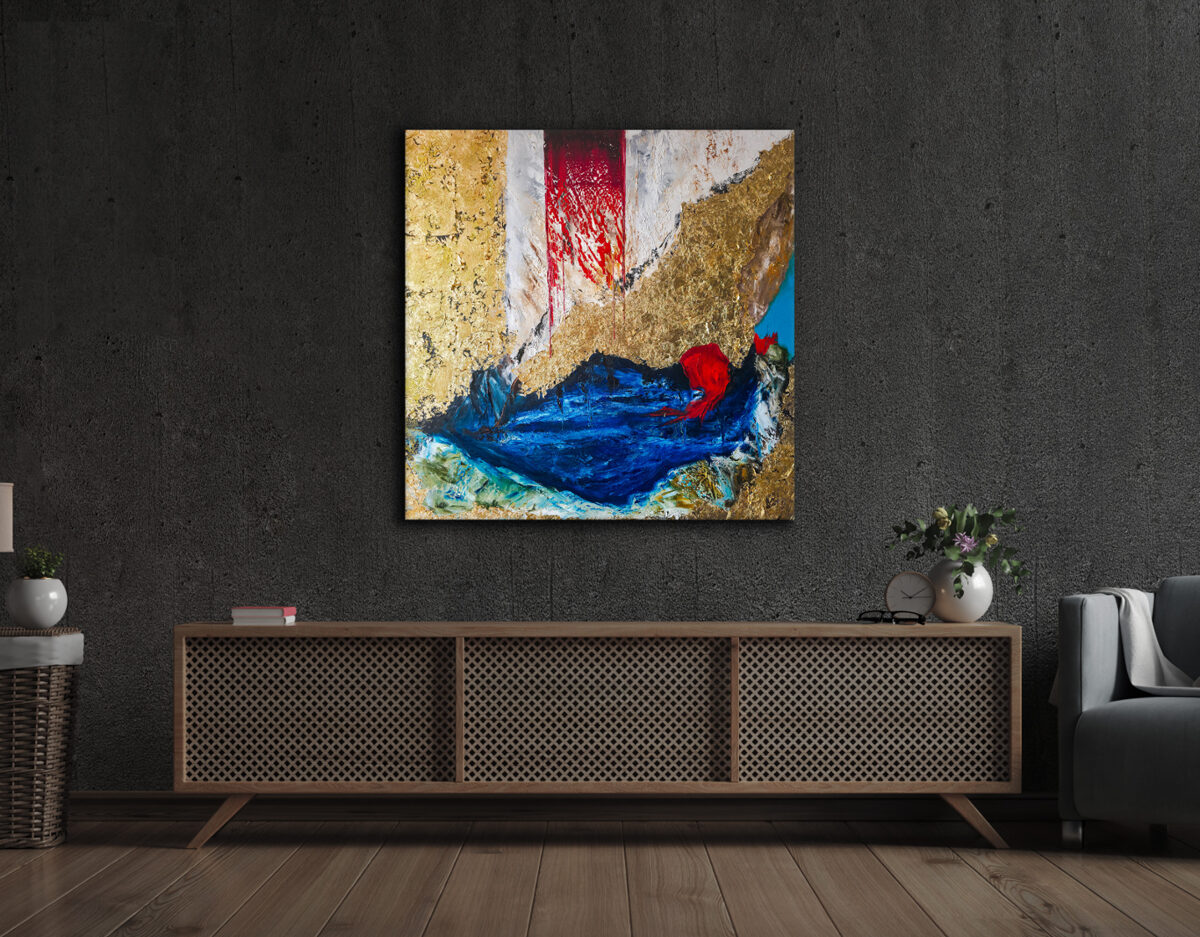
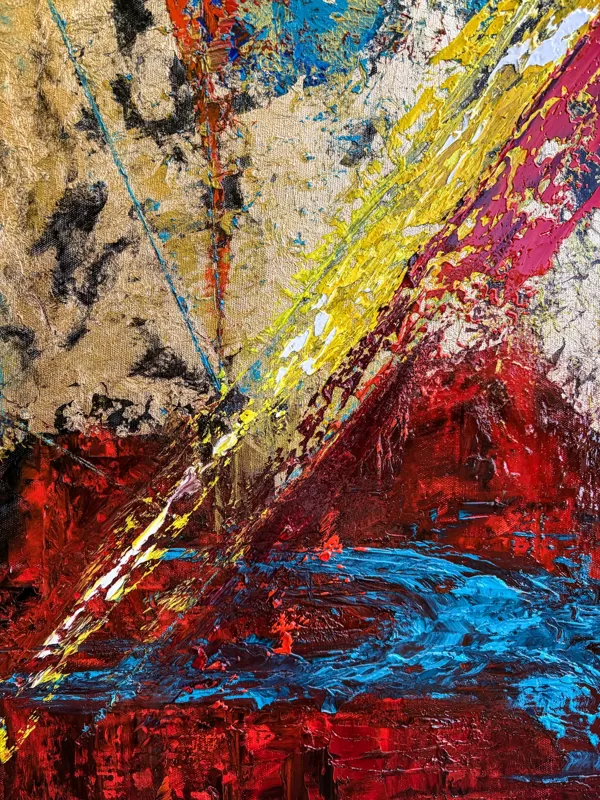
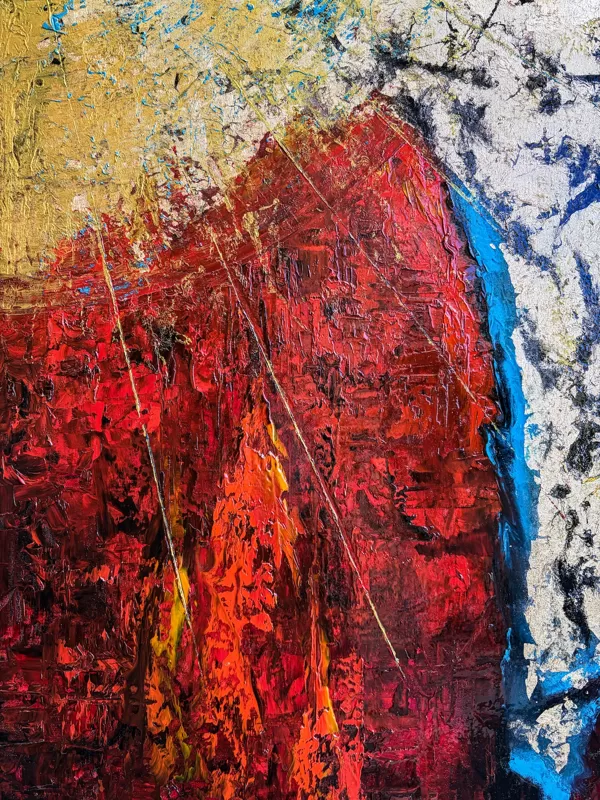
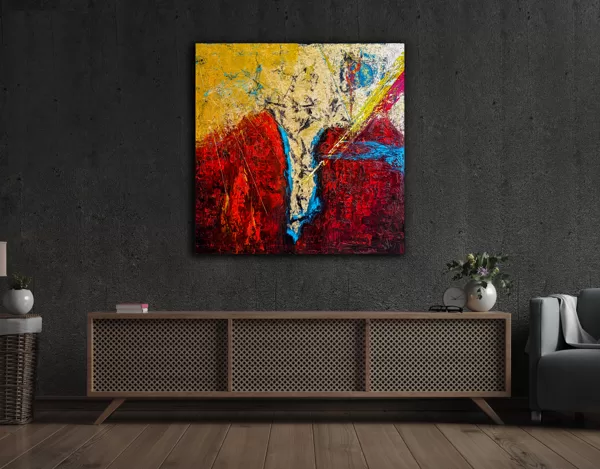
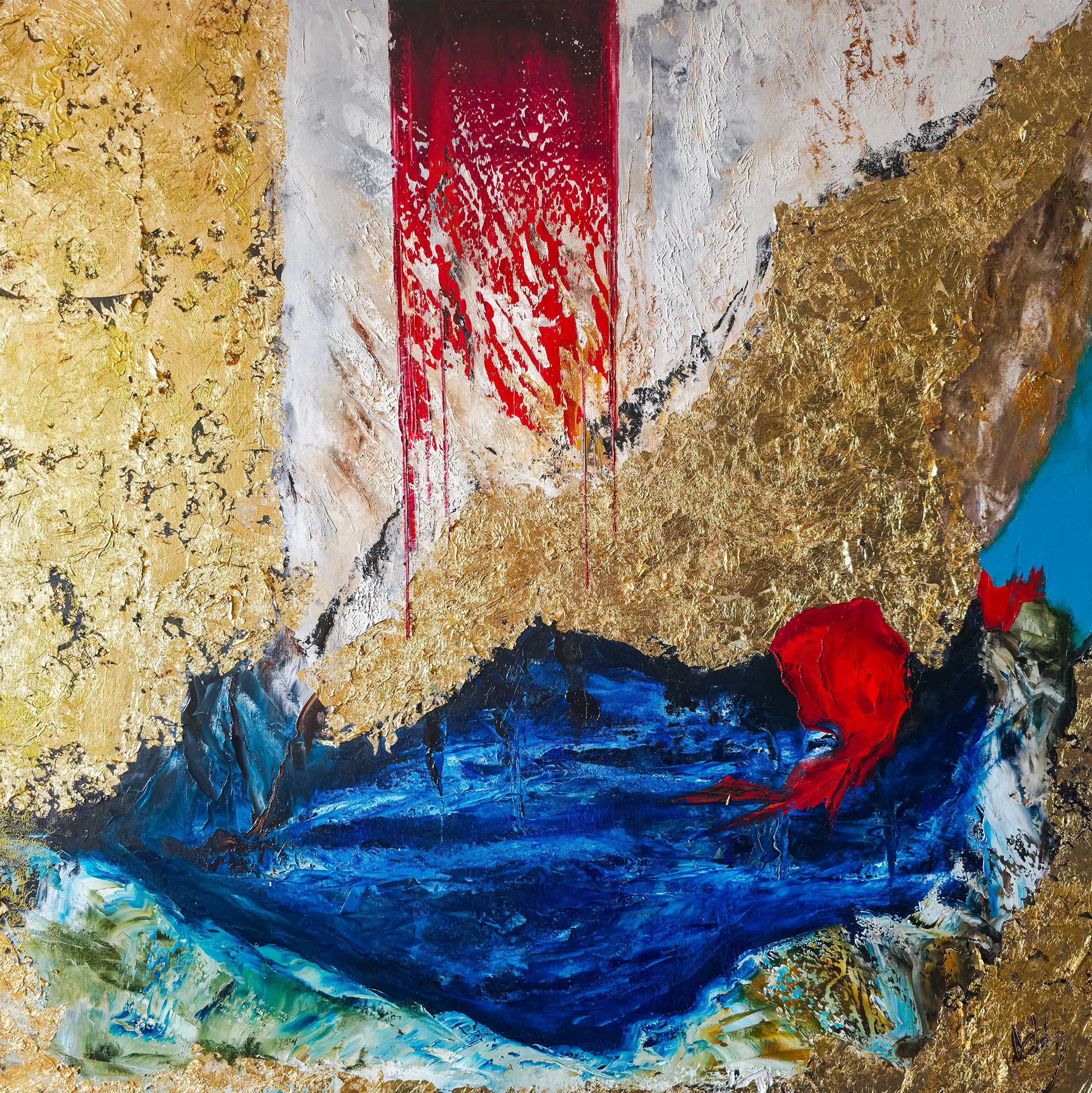
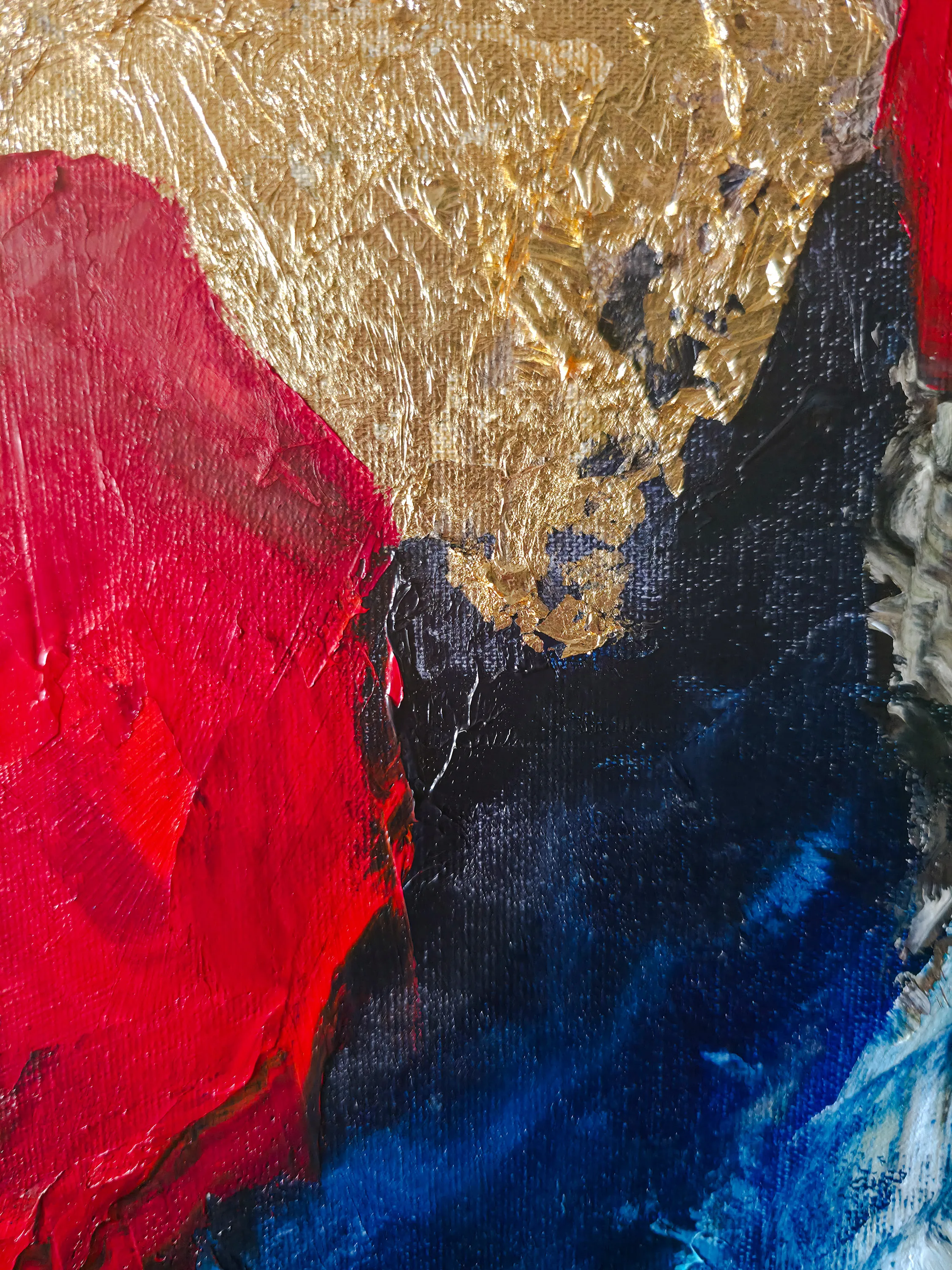
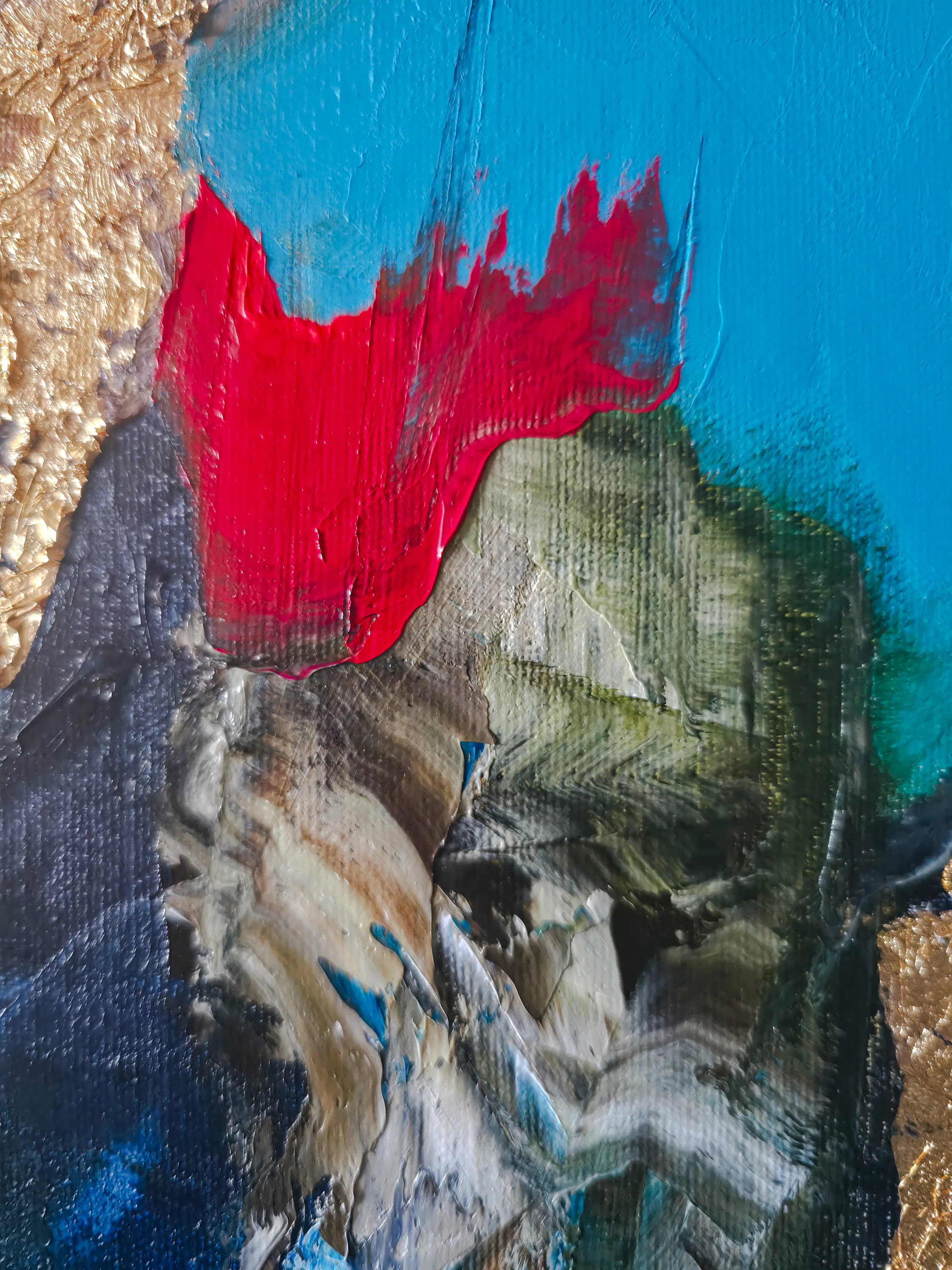
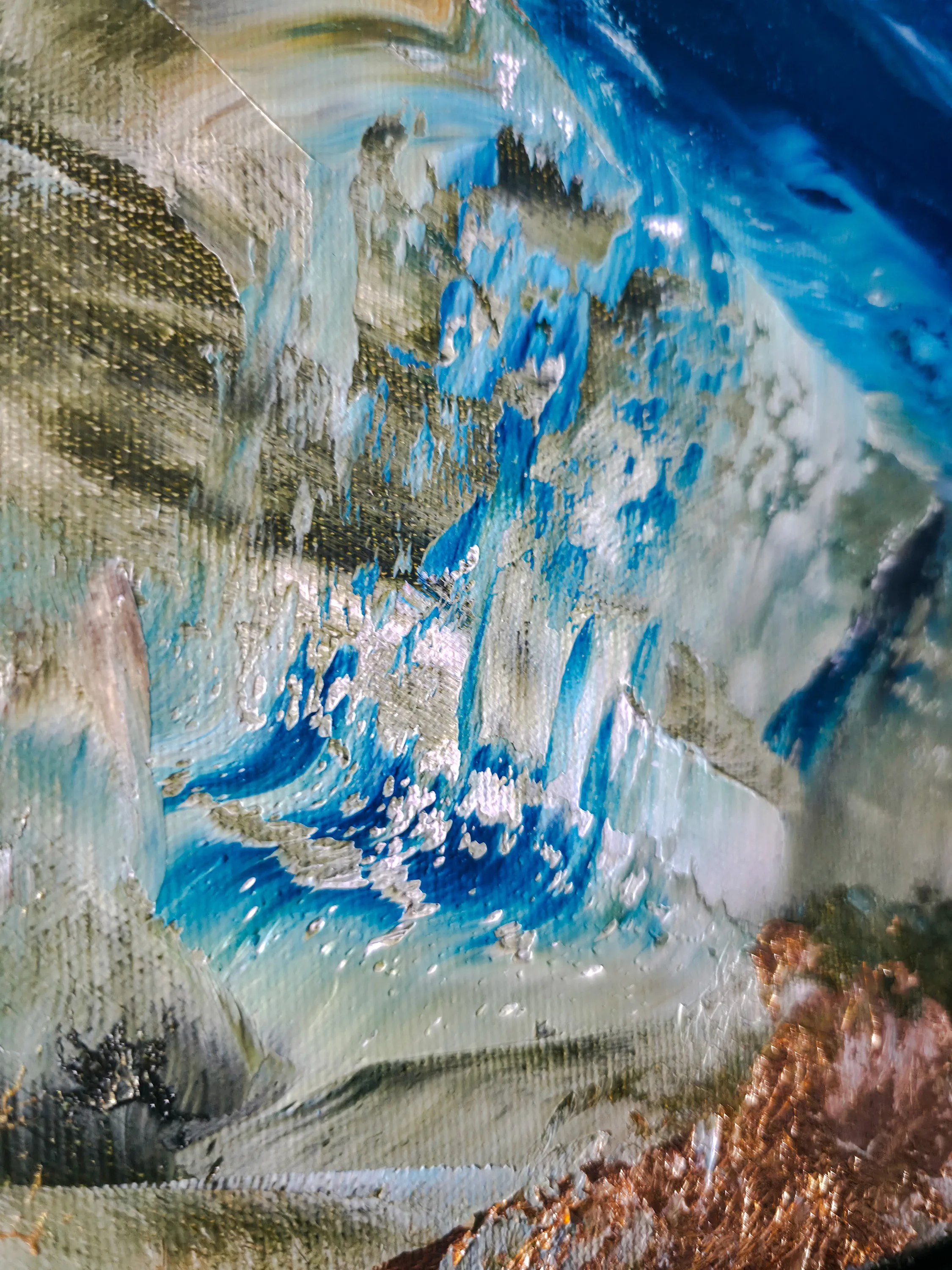
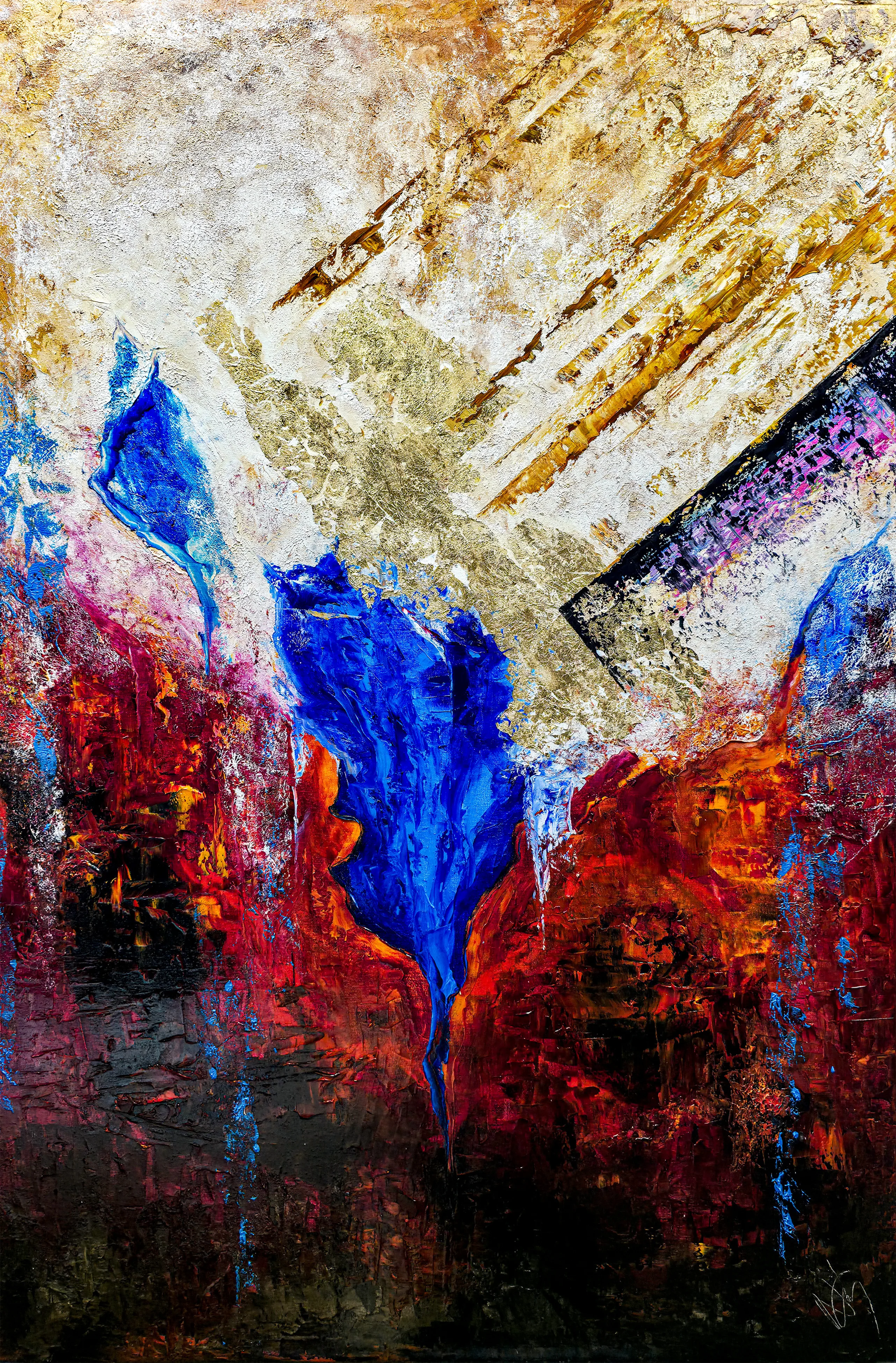
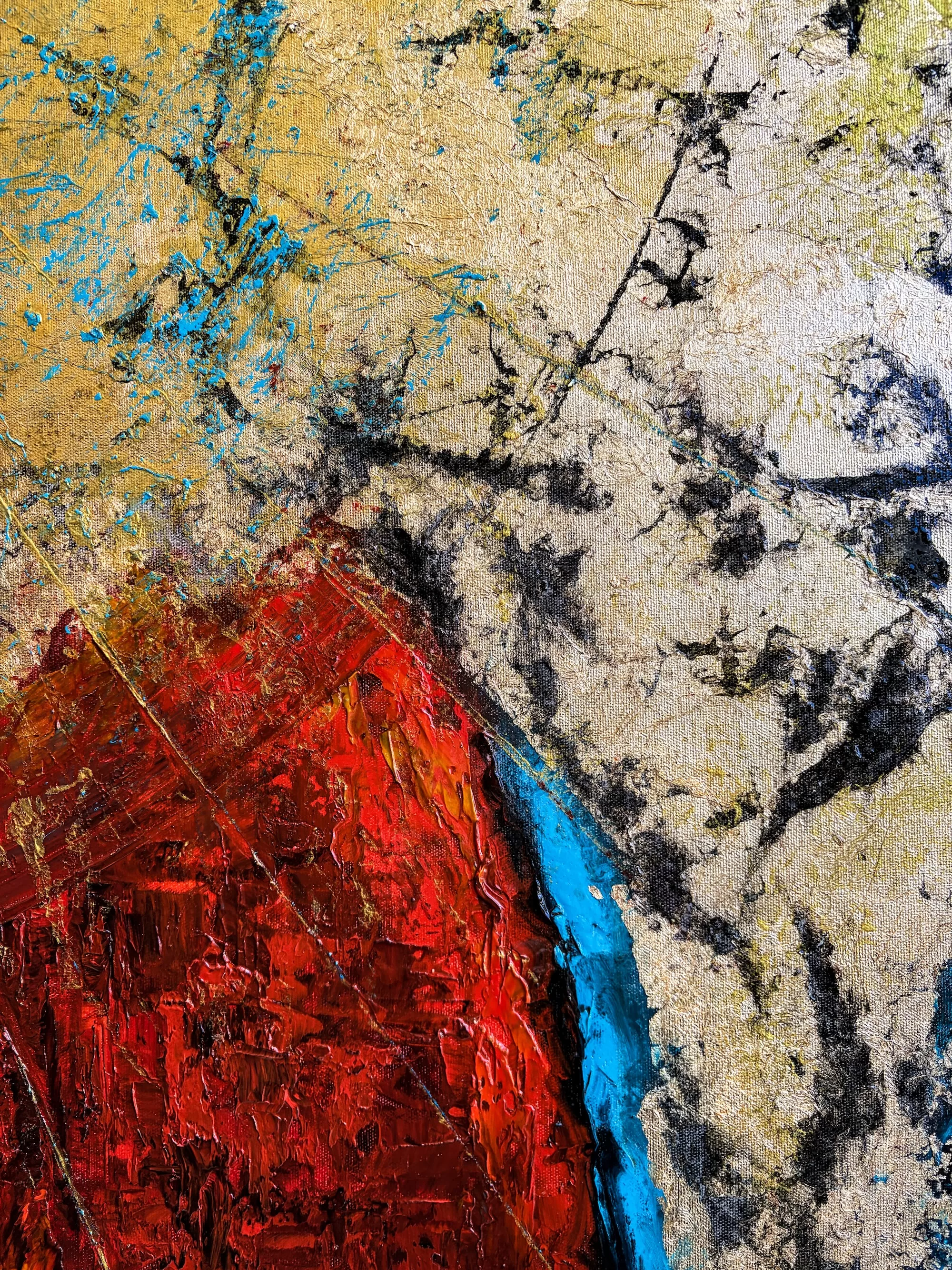
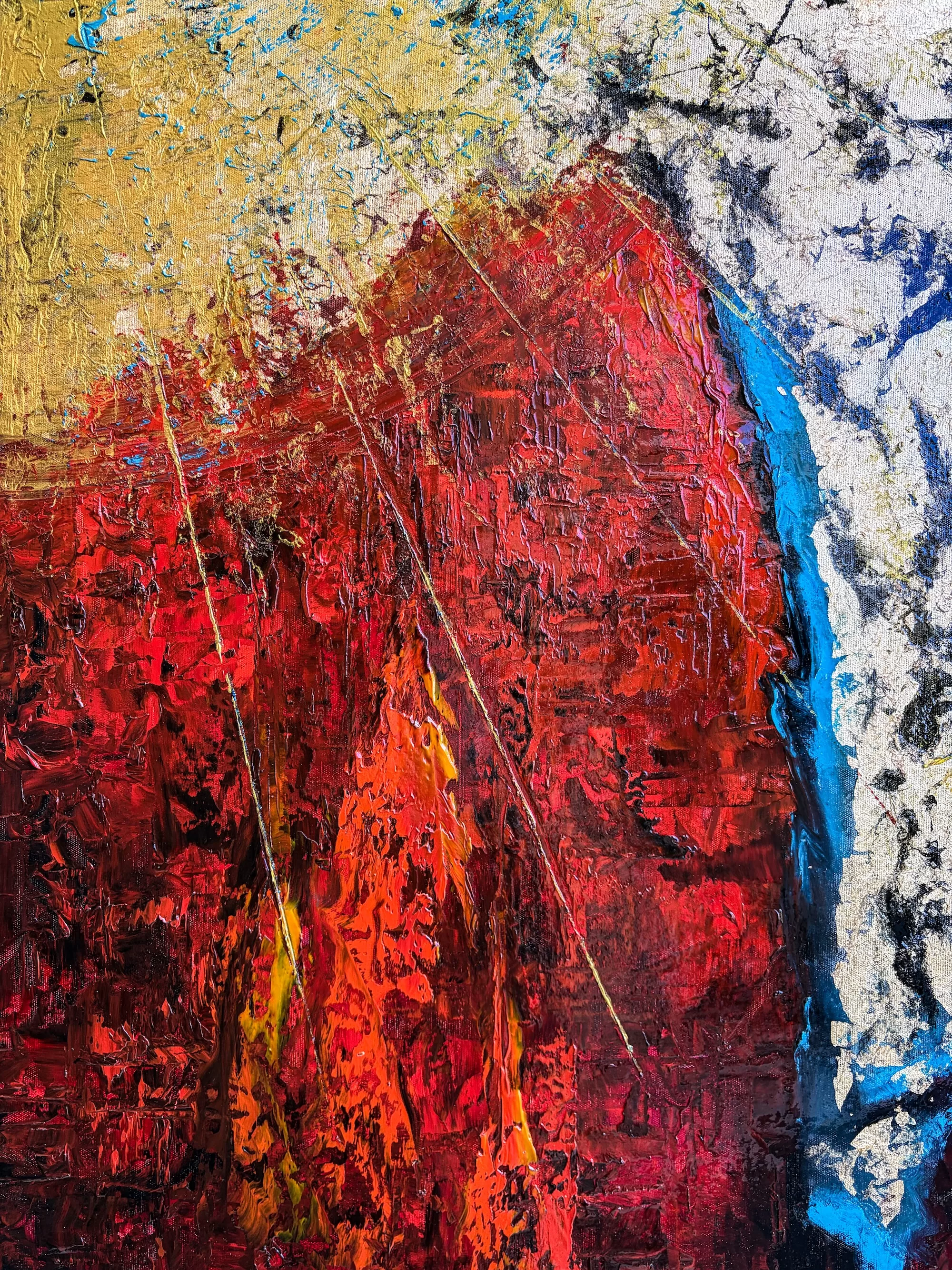
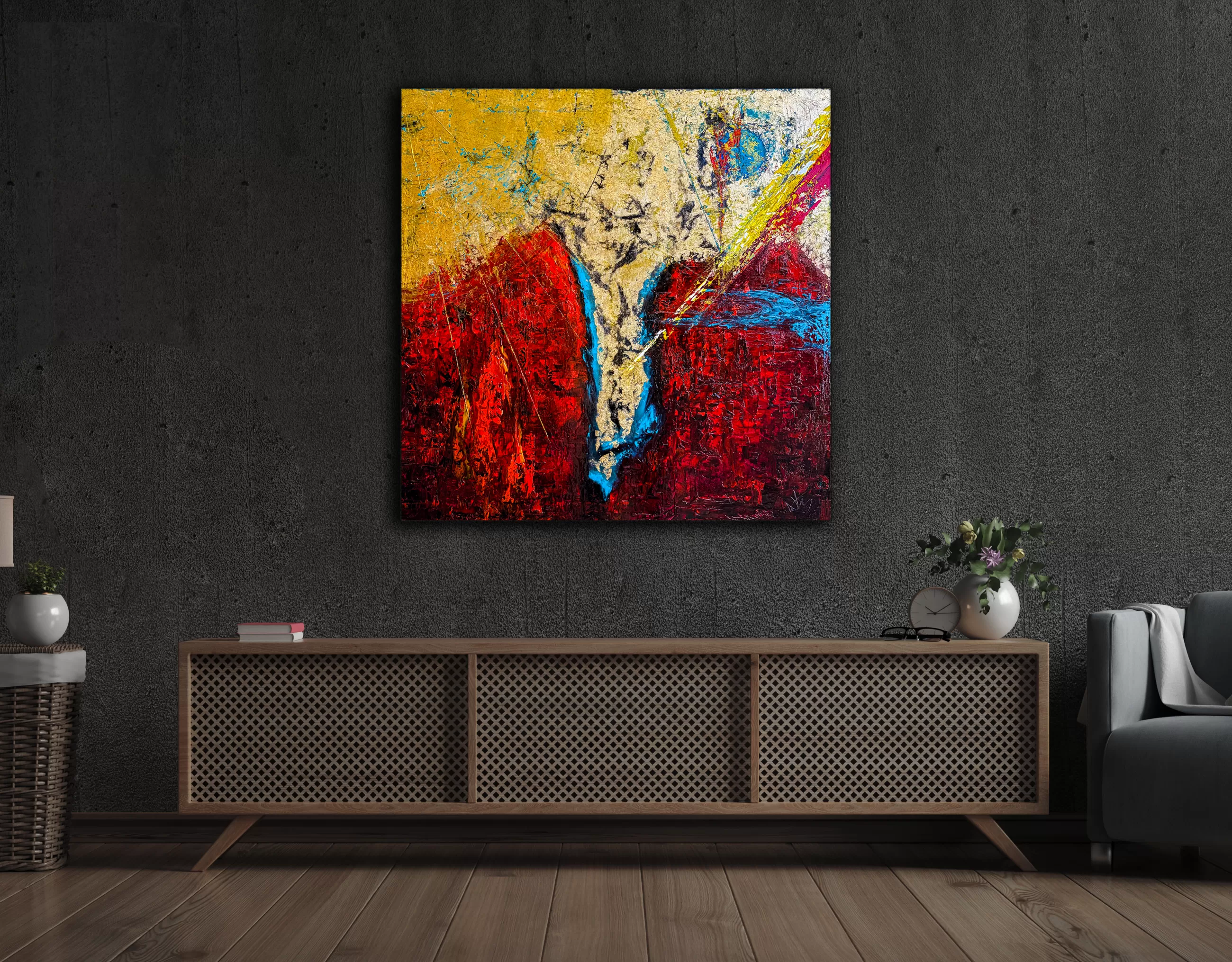
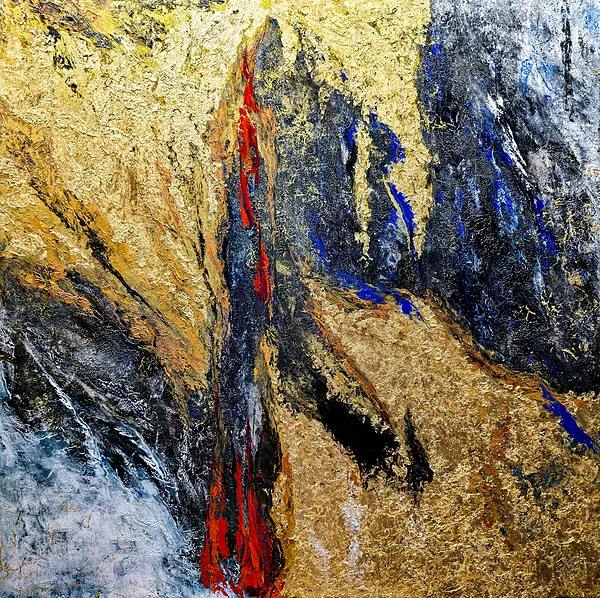
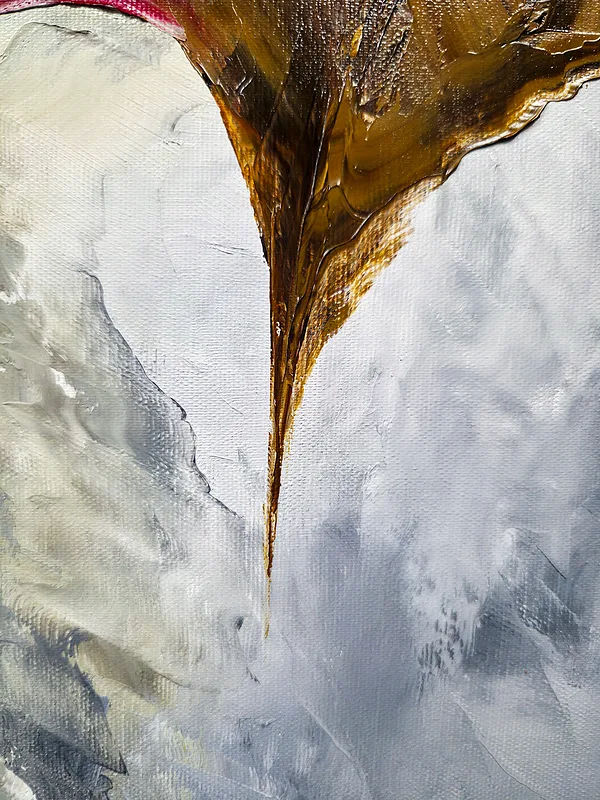
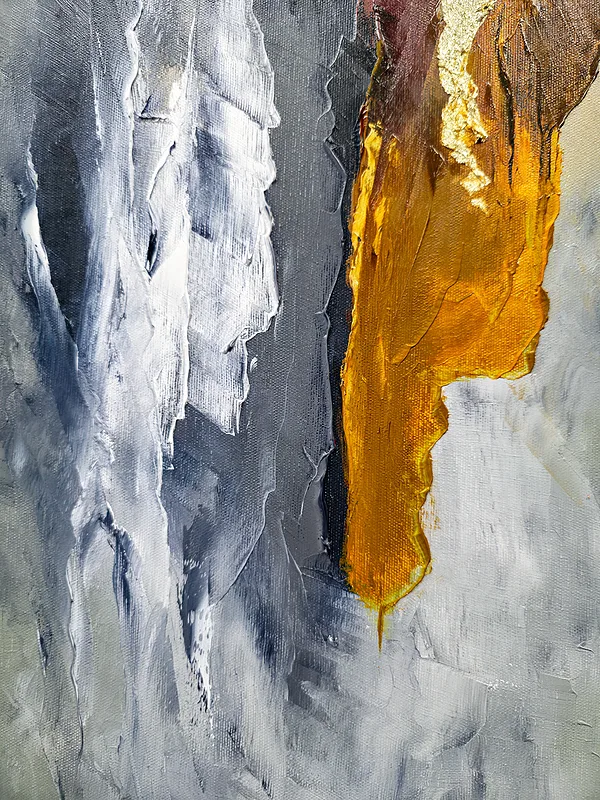
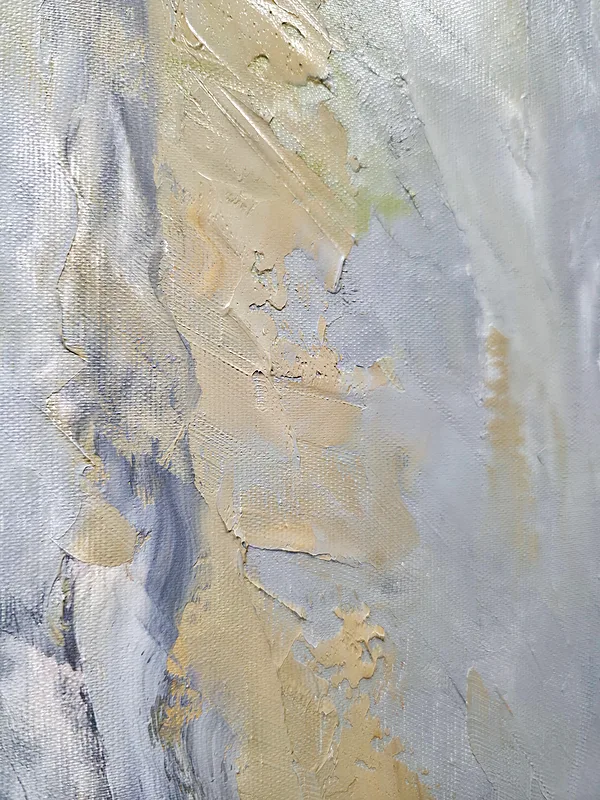
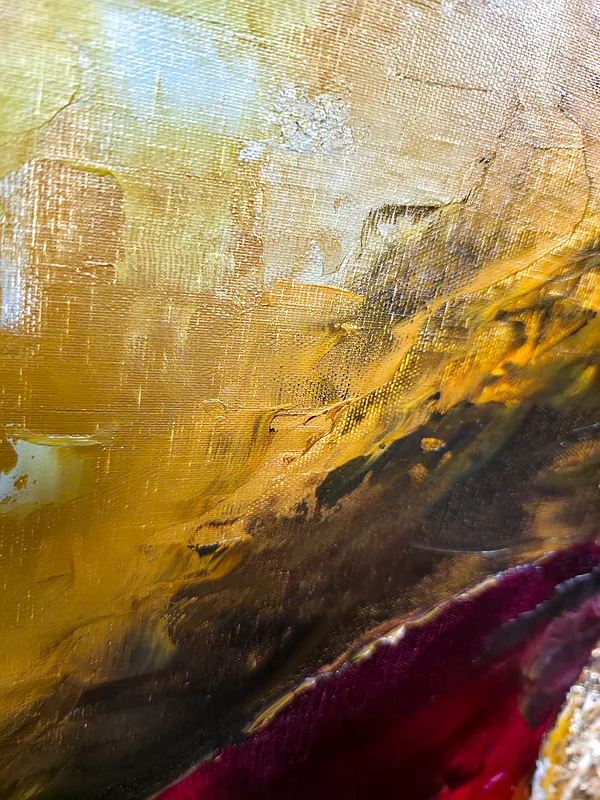
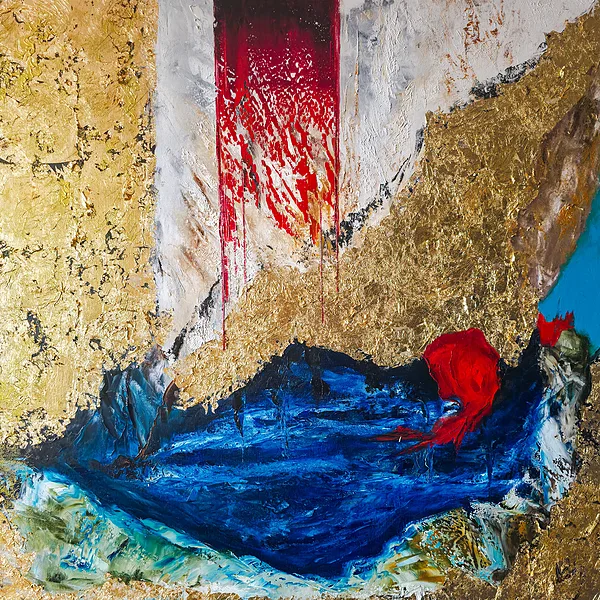
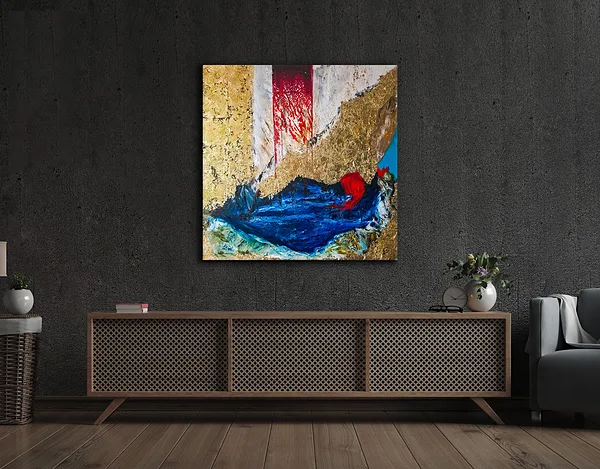
The painting evokes the prophetic world of Isaiah, where the fire of the divine utterance, judgement, and the hope of renewal converge in a single monumental composition. The prophet, who lived in the eighth century BC, becomes the voice through which the divine will is proclaimed to humanity.
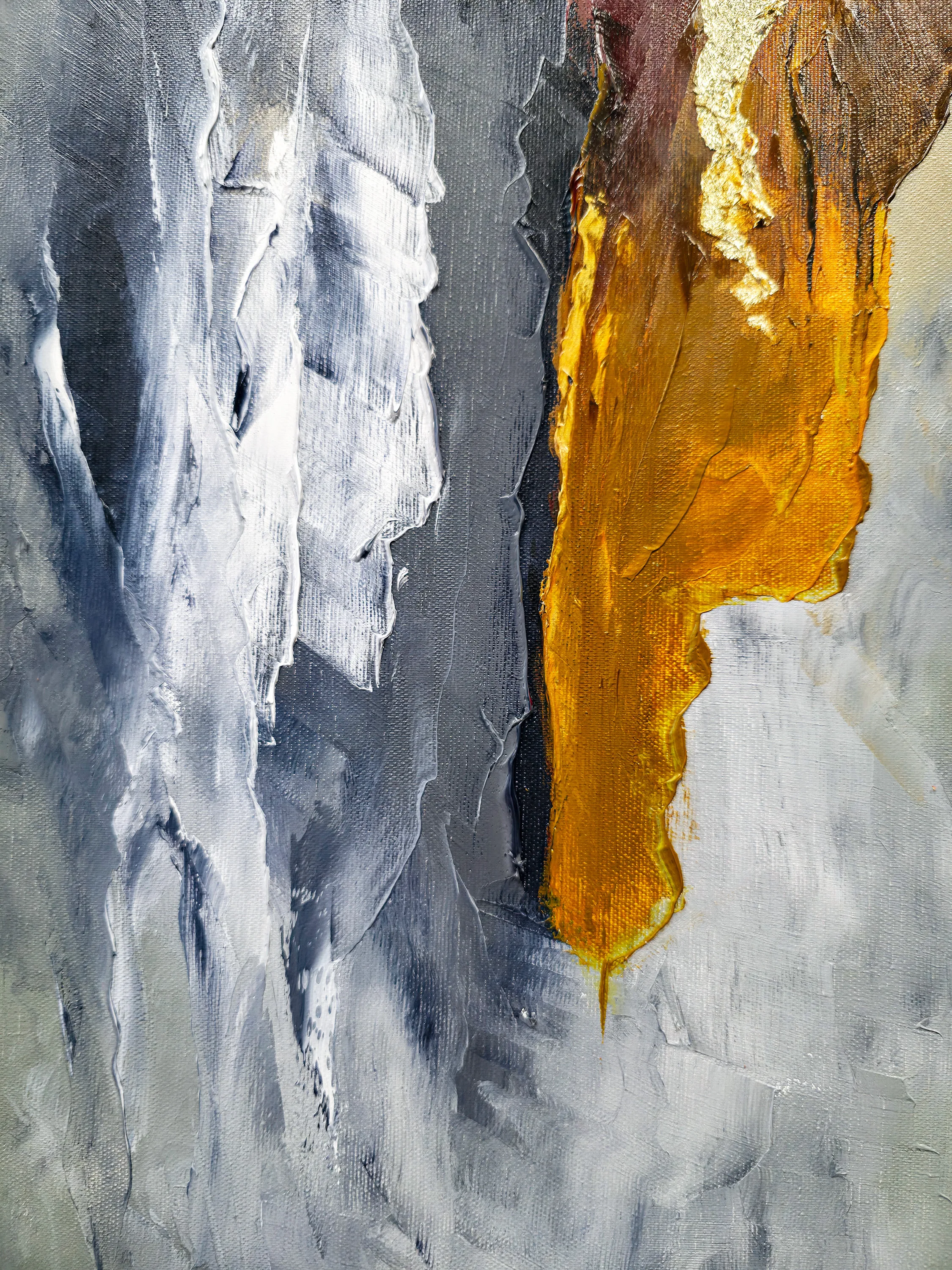
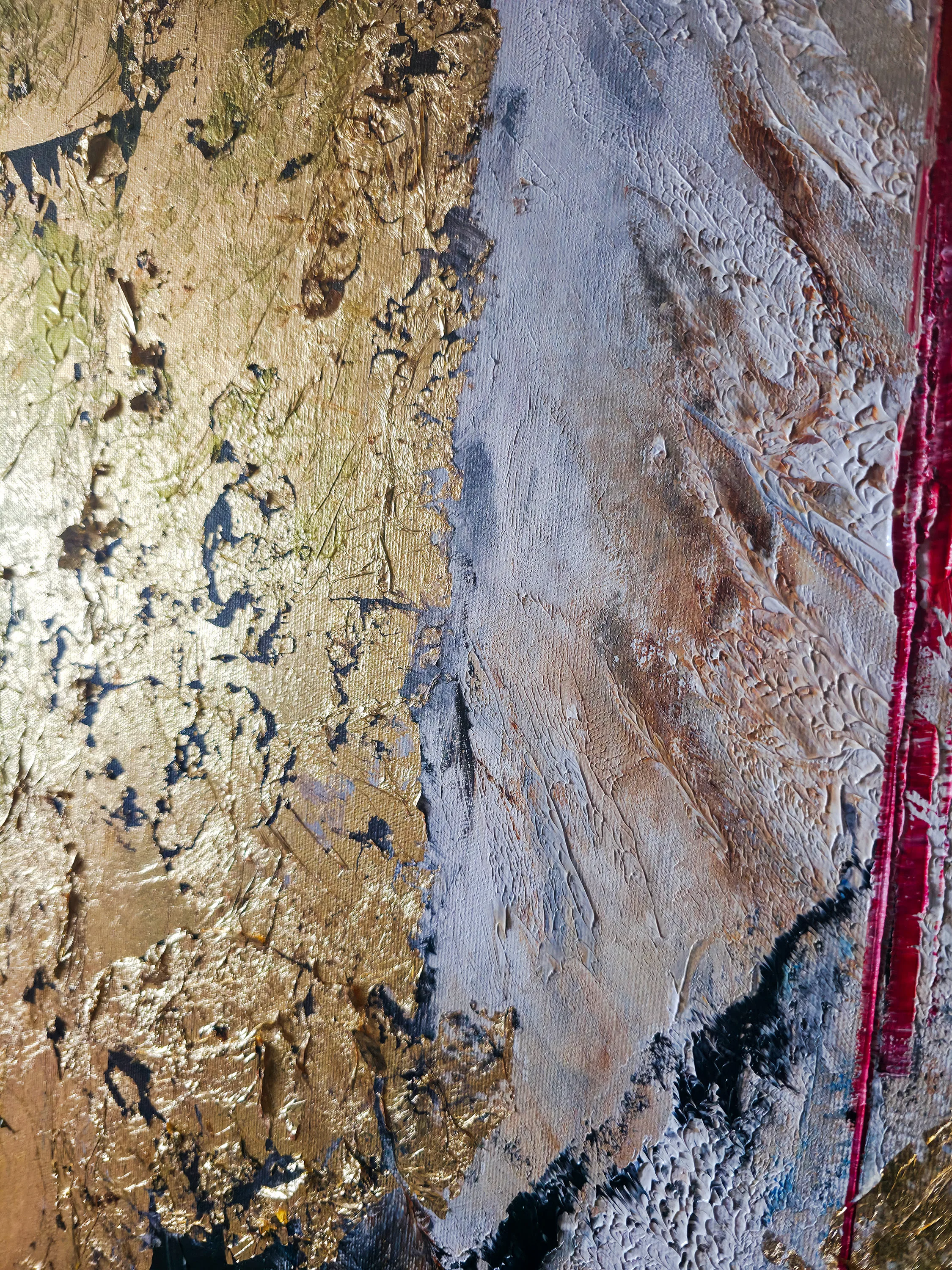
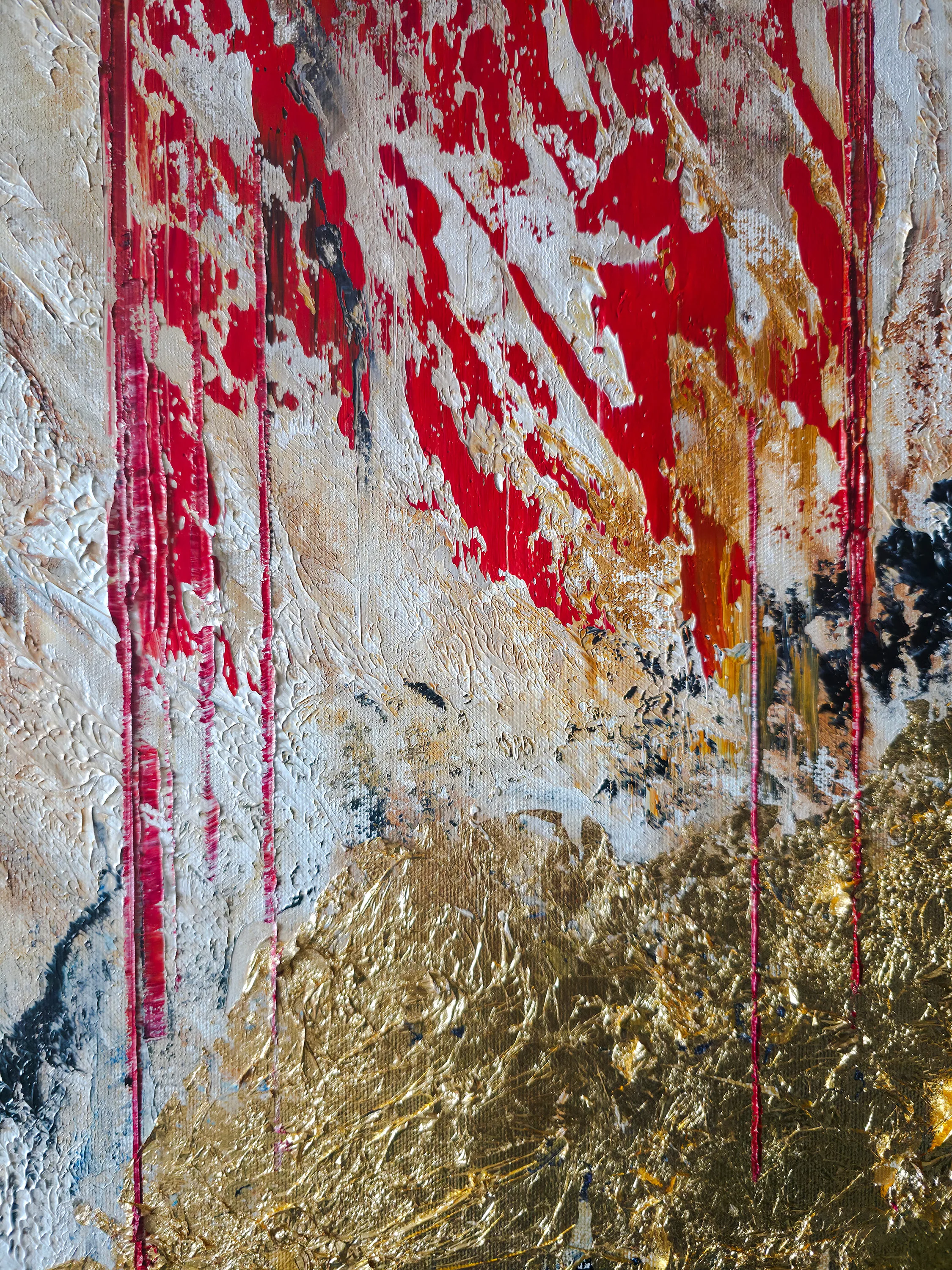
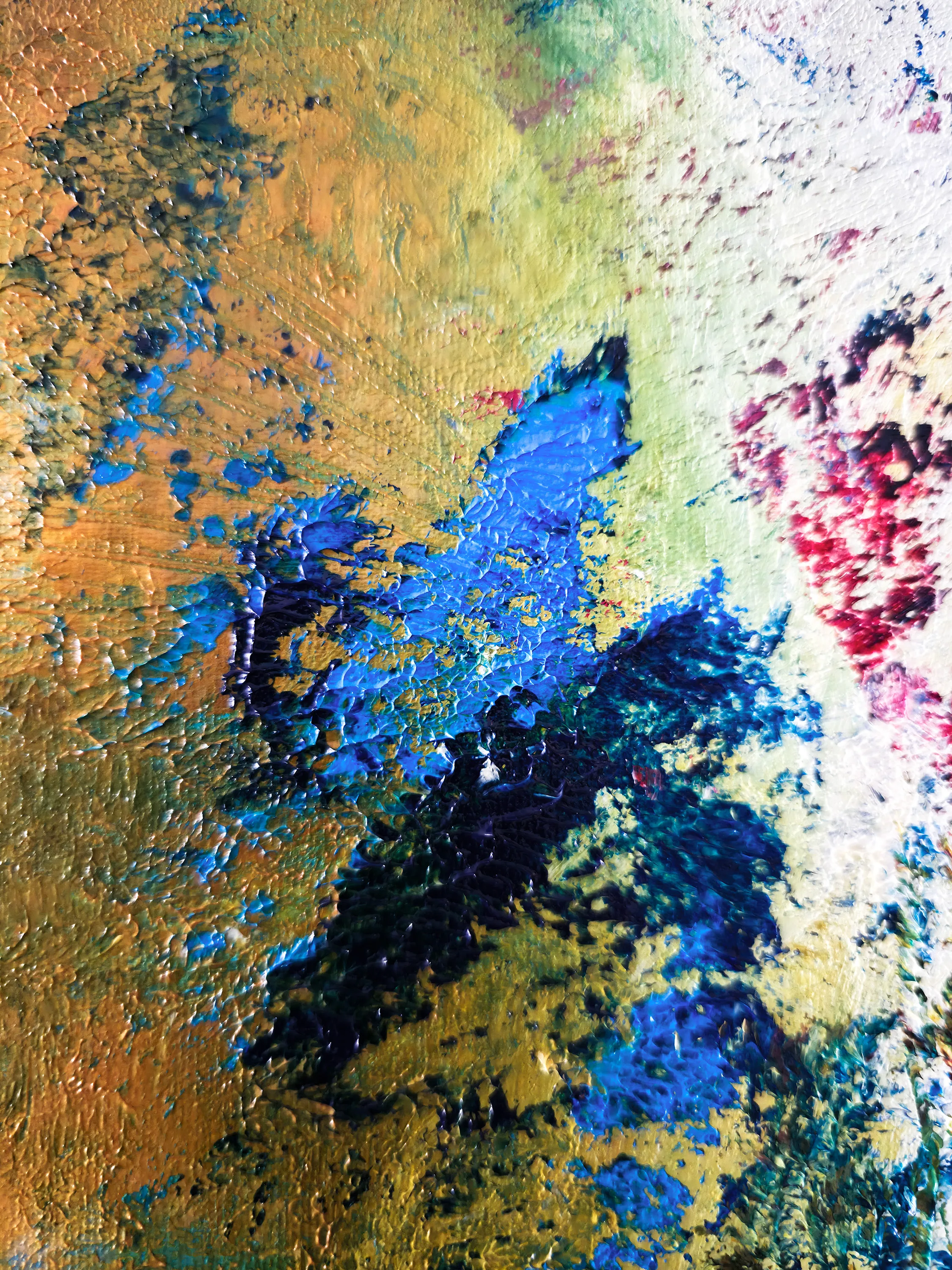
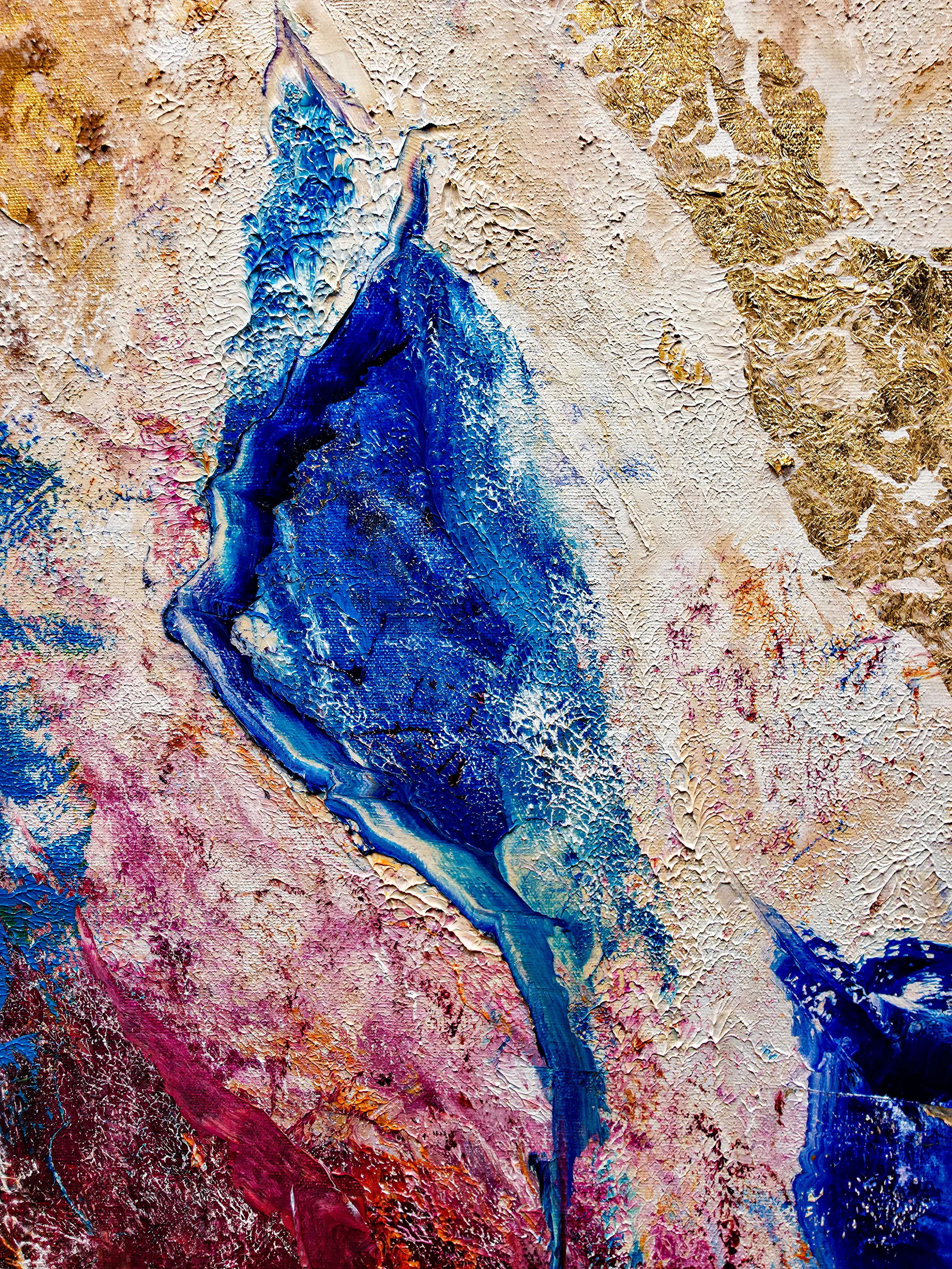
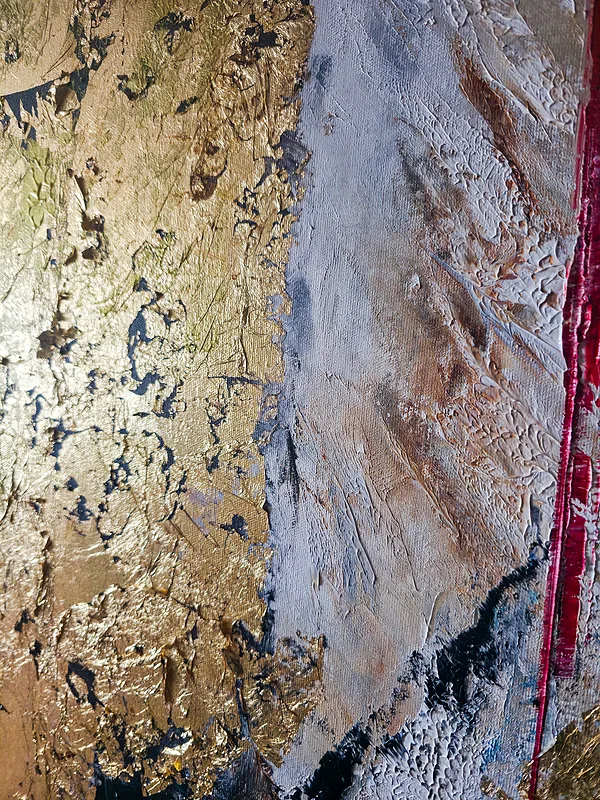
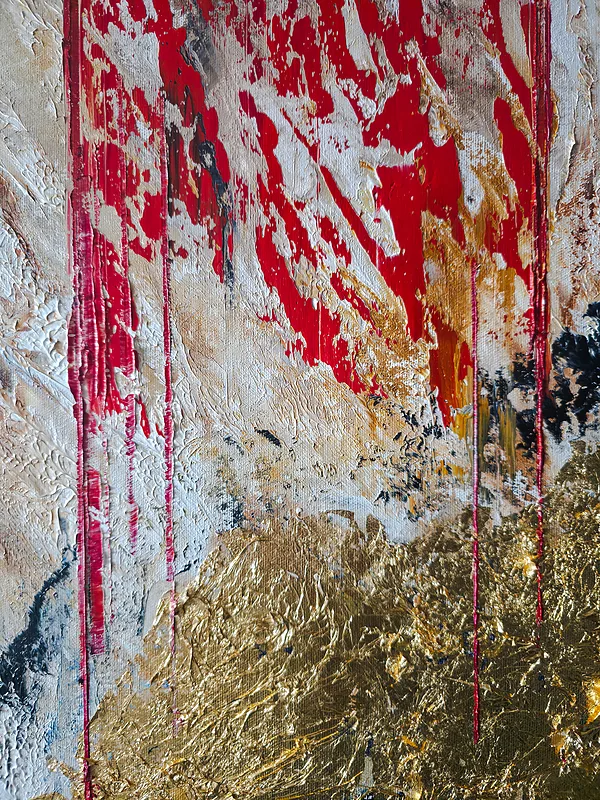
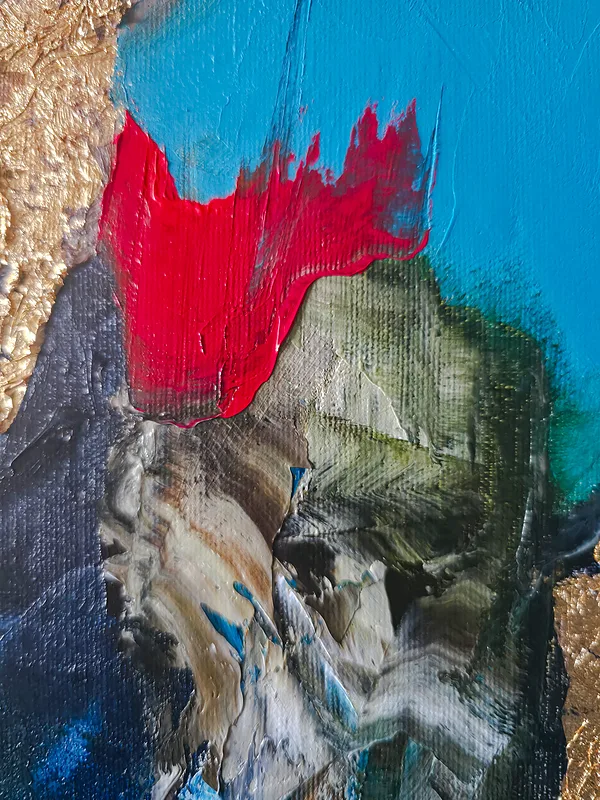
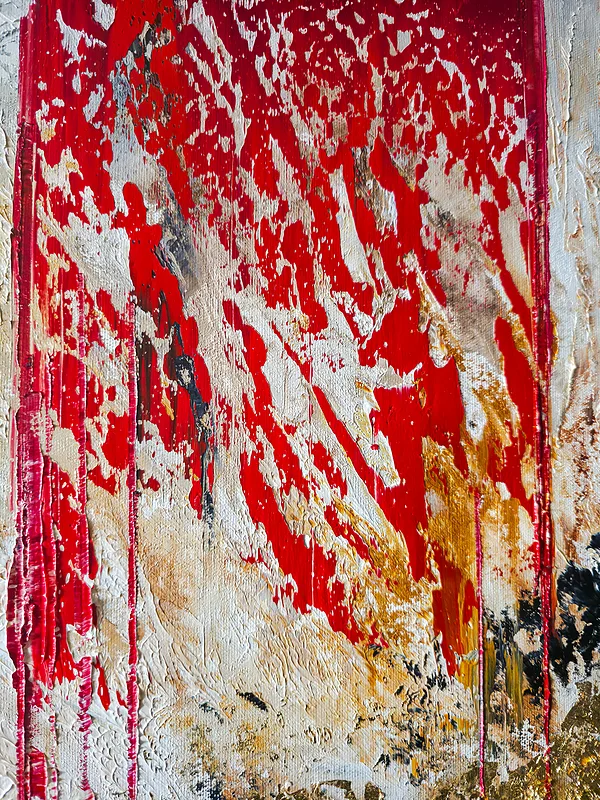
On the left, a fractured golden surface recalls the walls of an ancient sanctuary. Beside it, a crimson structure rises amid ridged layers of silvery-white paint, its flowing, fiery forms evoking the glowing coals of the heavenly altar. In Isaiah’s vision, a seraph takes a burning coal from the altar and touches the prophet’s lips, purifying him for his divine calling:
“Here am I; send me.” (Isaiah 6:8, KJV)
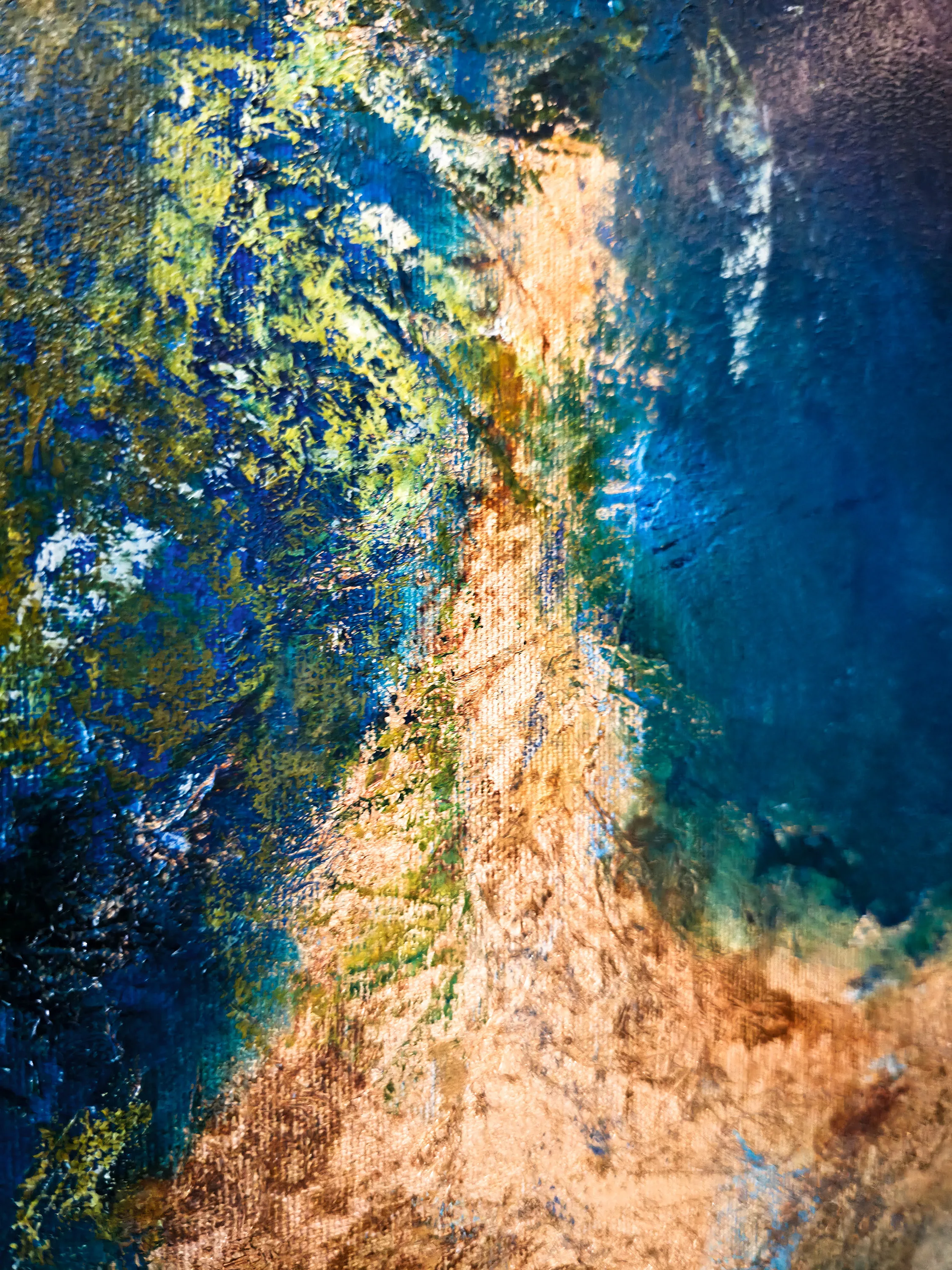
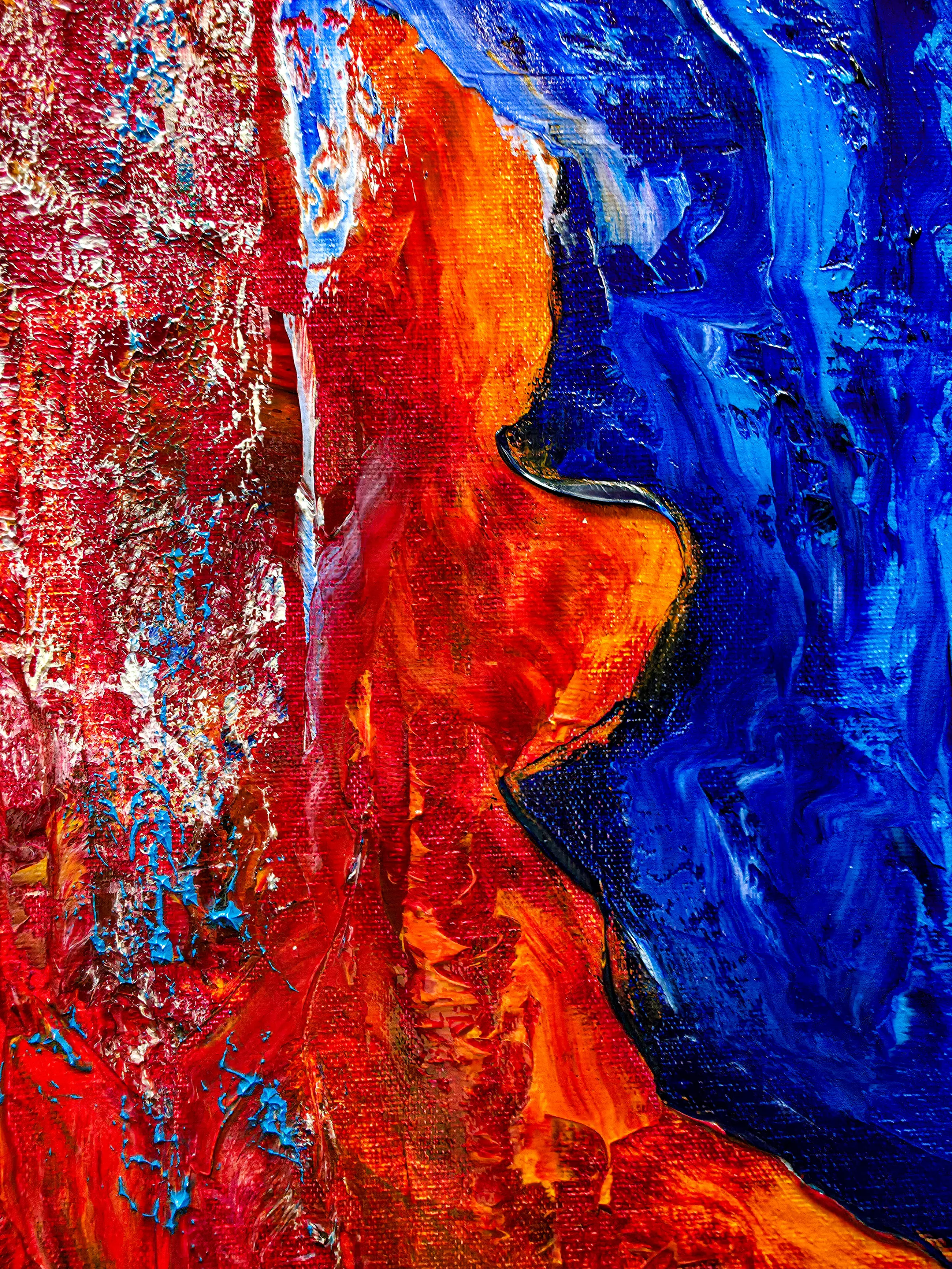
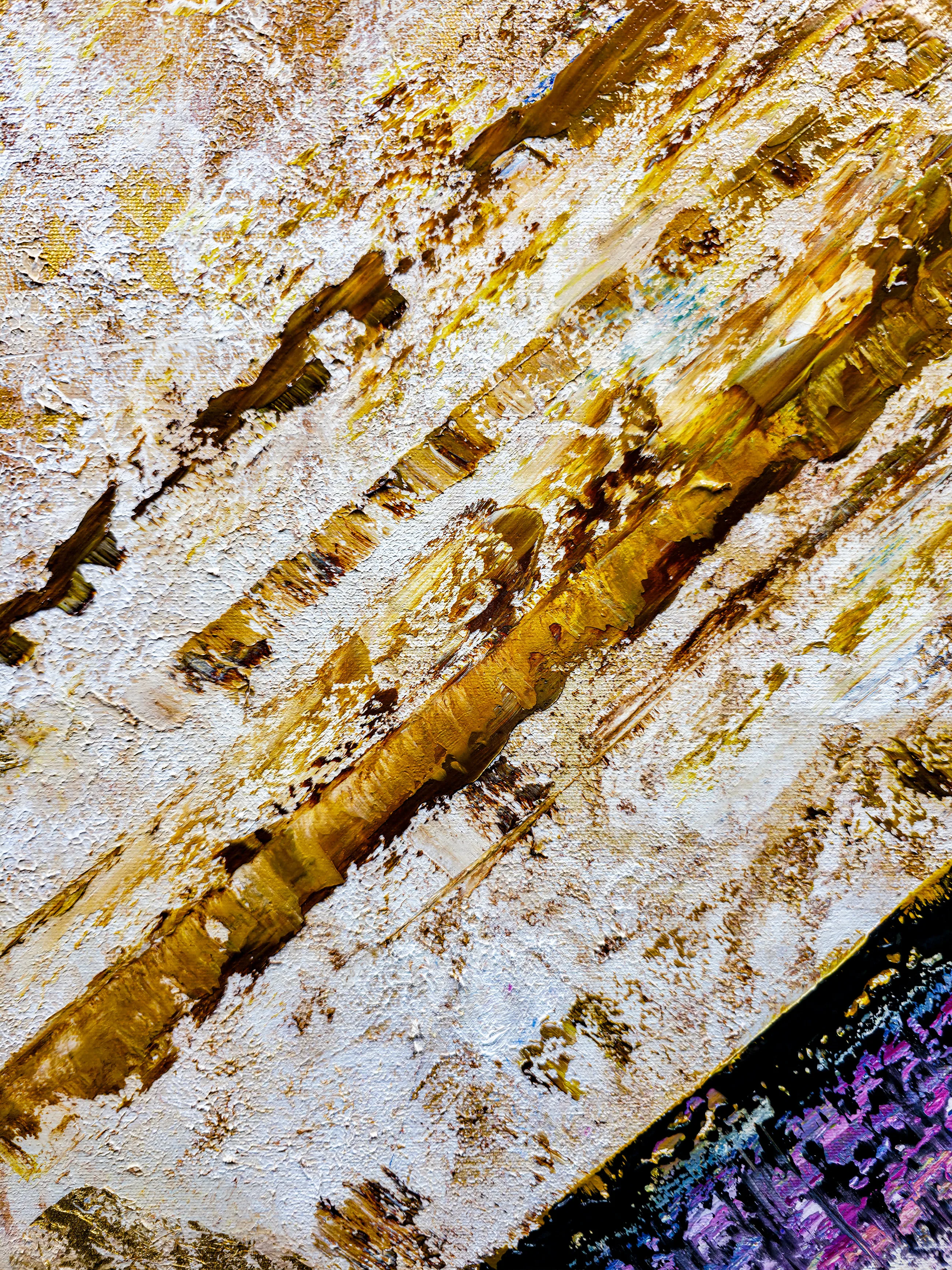
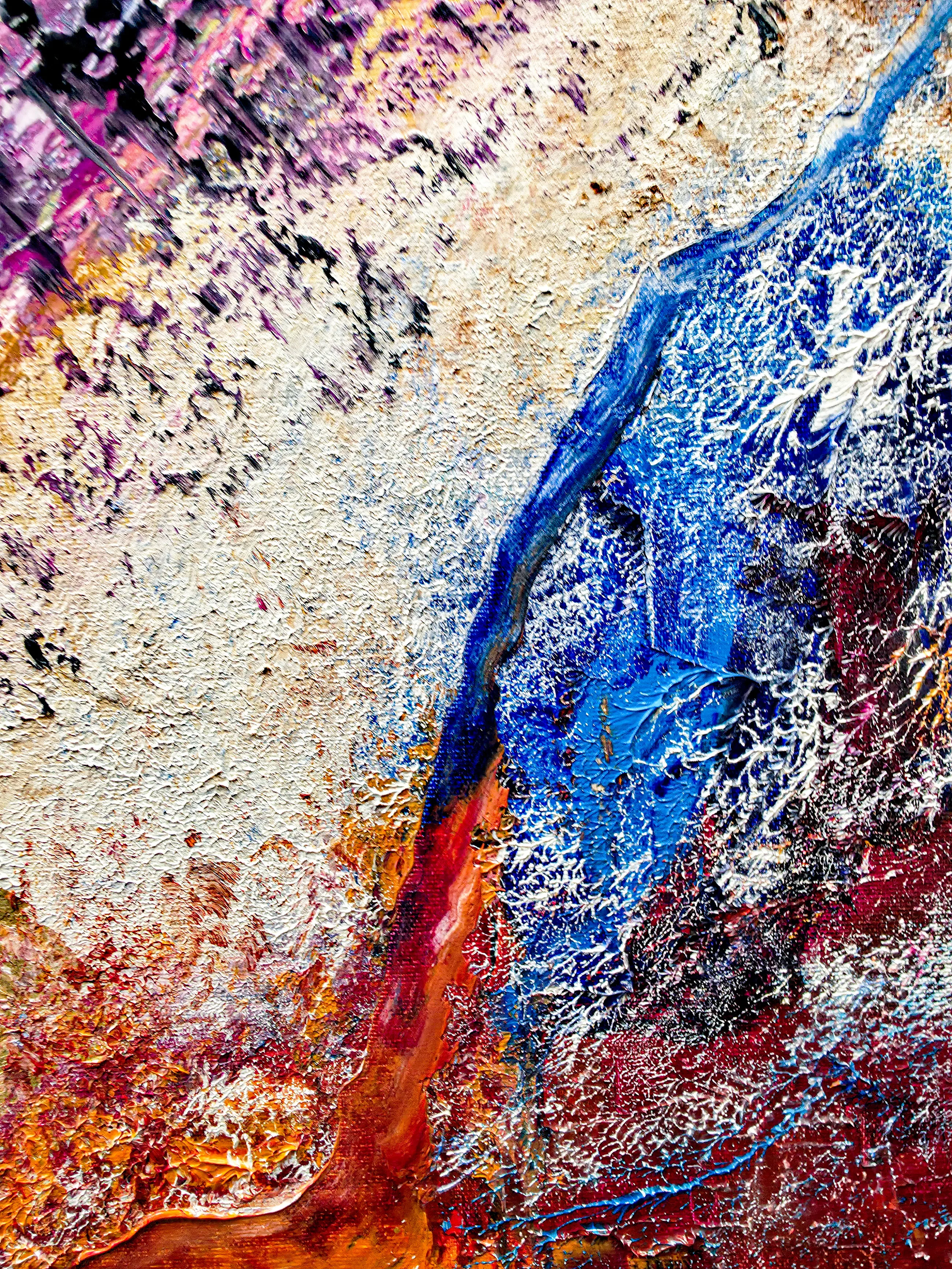
The great mass of gold rising diagonally on the right evokes both Jerusalem in tribulation and Zion renewed. Its cracked surface bears the wounds of history, while its radiance preserves the hope of a future yet to come. The lower portion of the canvas is dominated by undulating masses of deep blue, cobalt, and ultramarine. Water surging from the depths evokes the fulfilment of Isaiah’s prophecy: the wilderness brought back to life.
“For in the wilderness shall waters break out, and streams in the desert.” (Isaiah 35:6, KJV)
The turquoise glowing along the edges evokes the enduring promise of the Garden of Eden. Above the blue abyss, the red form embodies the living force of the prophetic word, while the crown-like motif emerging at the far right conveys the hope of endurance and renewal. The painting reveals the timeless truth at the heart of the Book of Isaiah: earthly powers pass away, but the word of God endures through the centuries.
“The grass withereth, the flower fadeth: but the word of our God shall stand for ever.” (Isaiah 40:8, KJV)
The Book of Judges (Gideon Defeats the Midianites)
- 140 x 160 cm
- Oil and gold on canvas
- Place and date of creation: Sitges, 2026
- The work is part of the series 'Old Testament III – In Search of the Mysteries of Eternity'
- AVAILABLE FOR PURCHASE
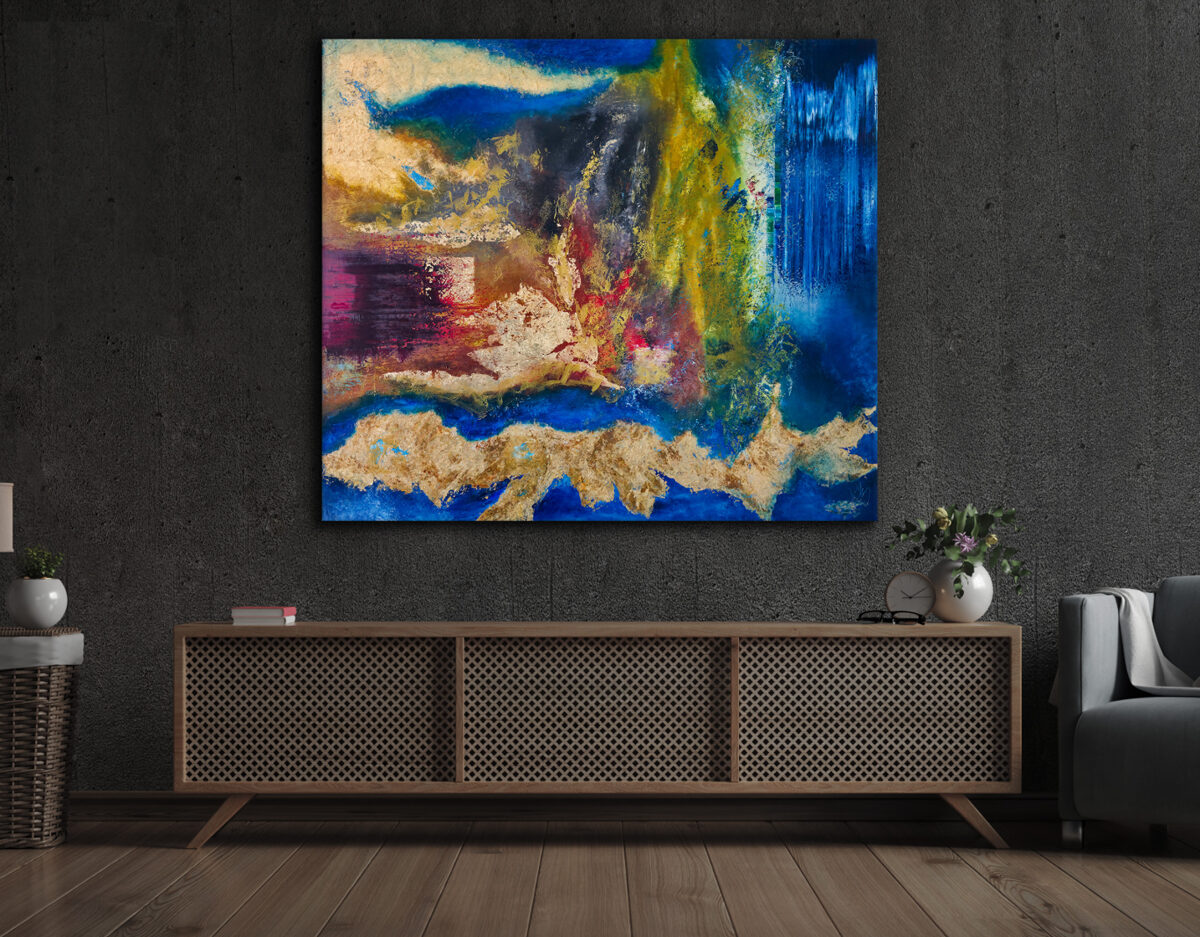
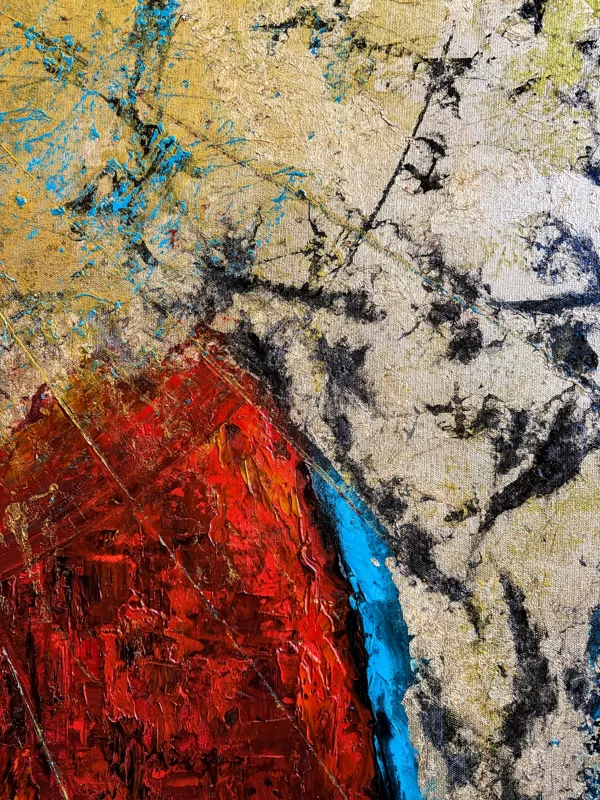
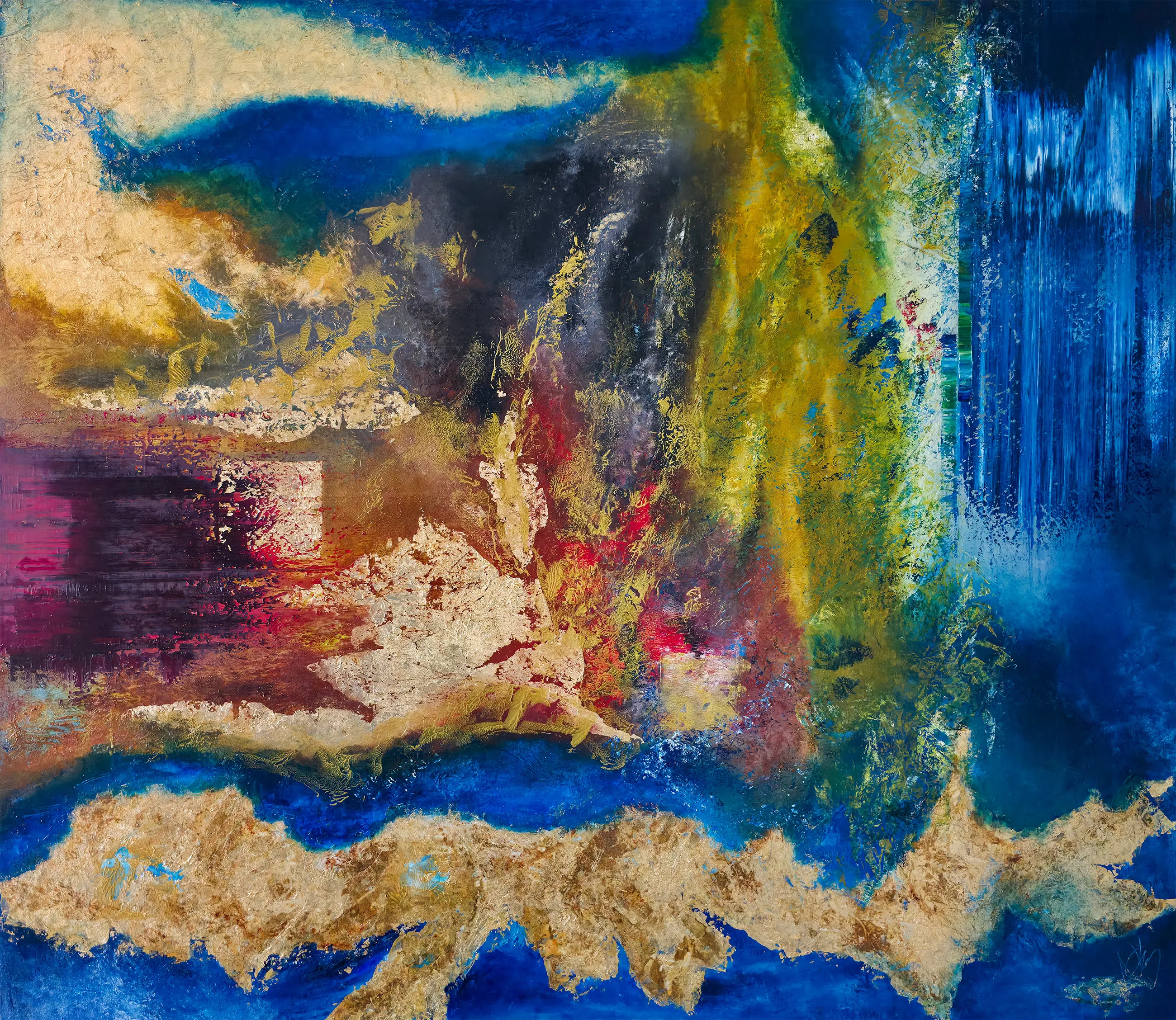
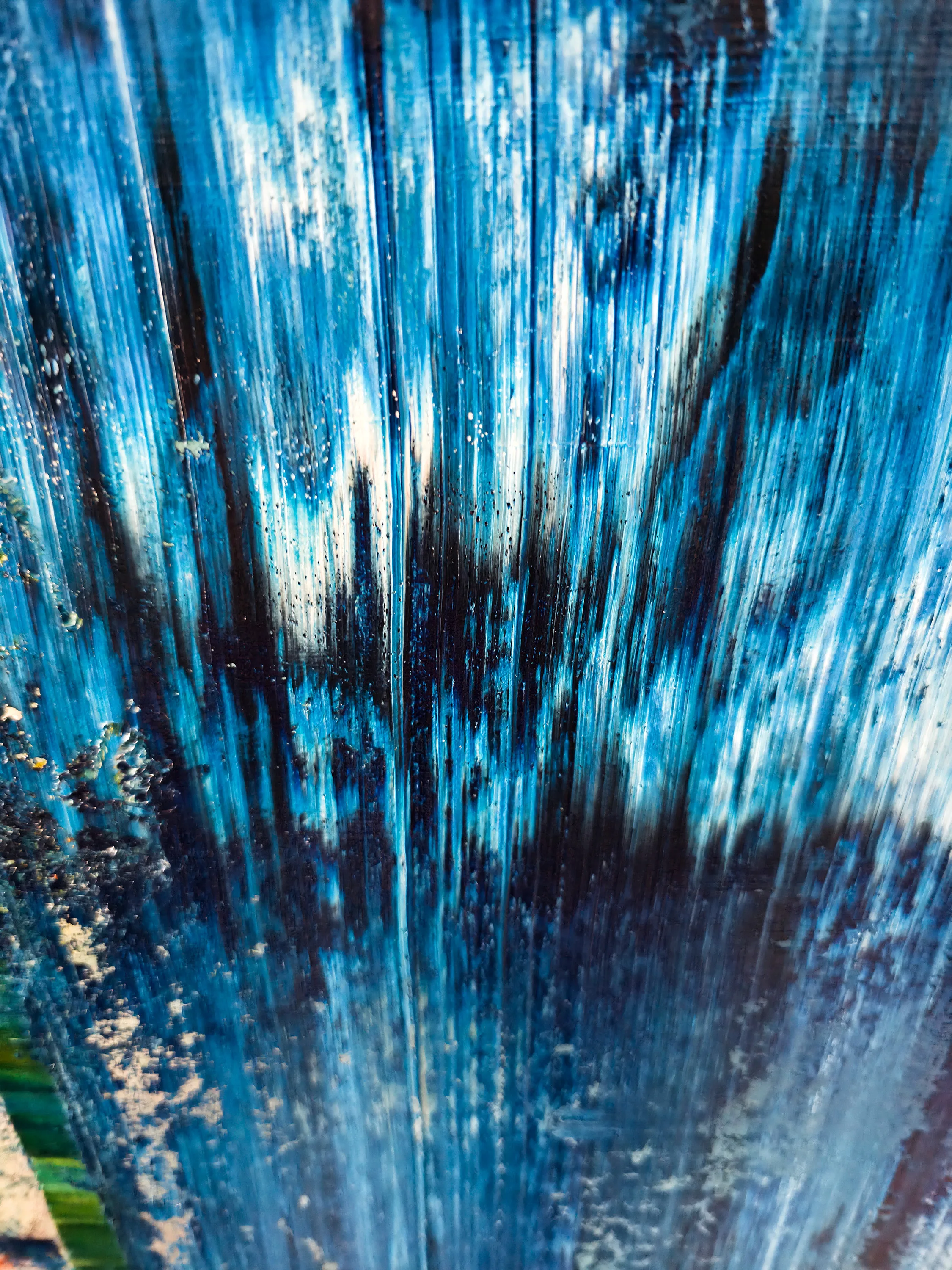
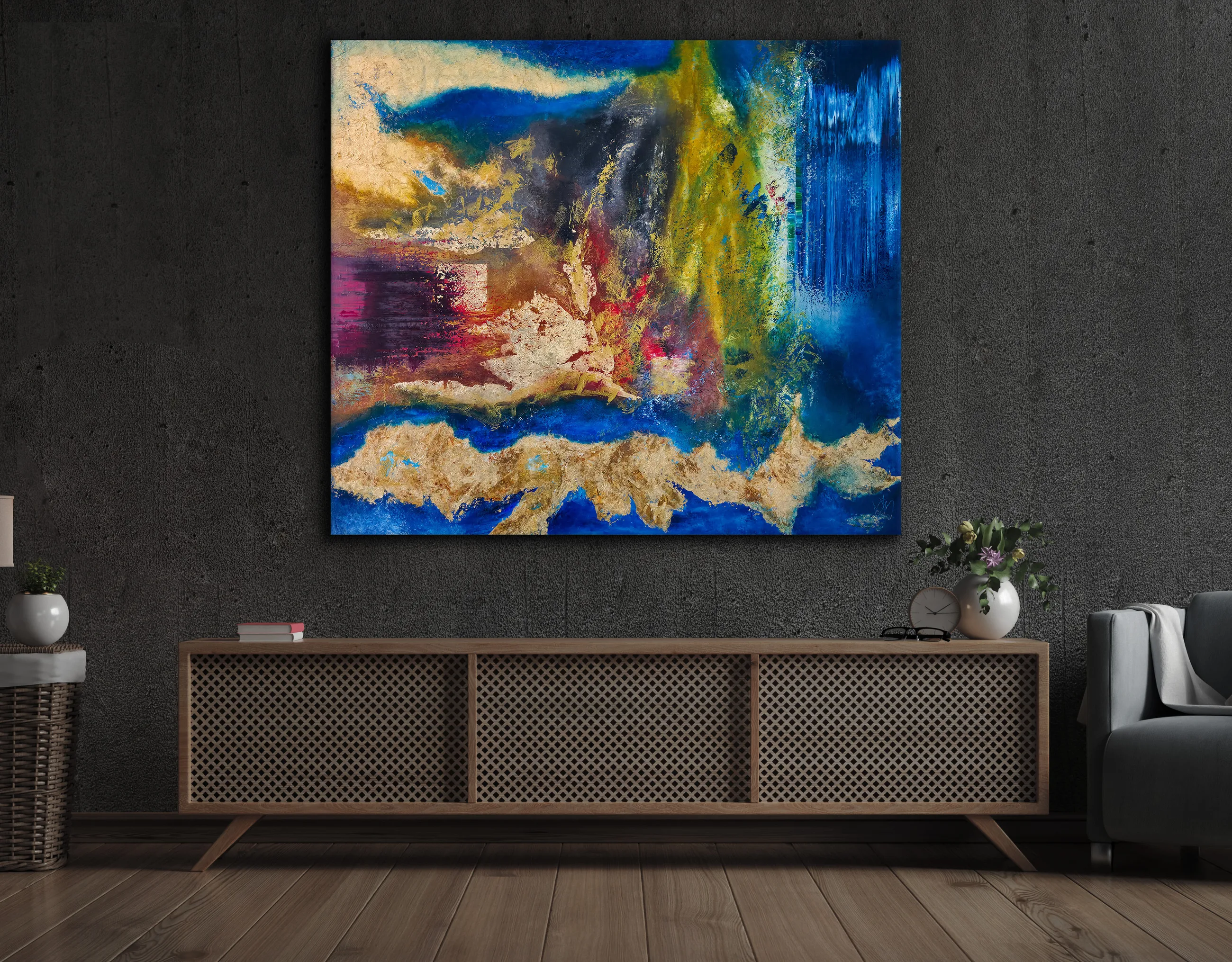
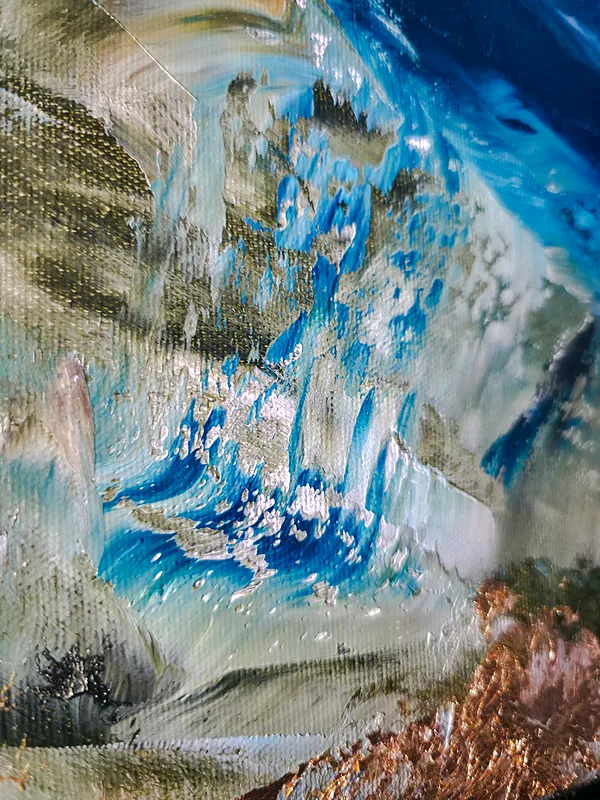
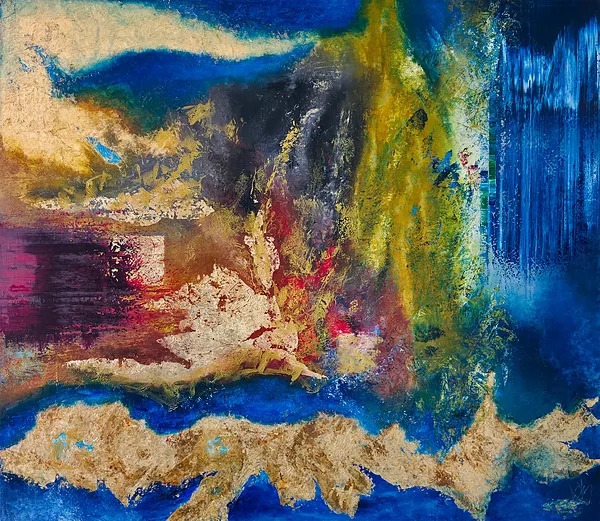
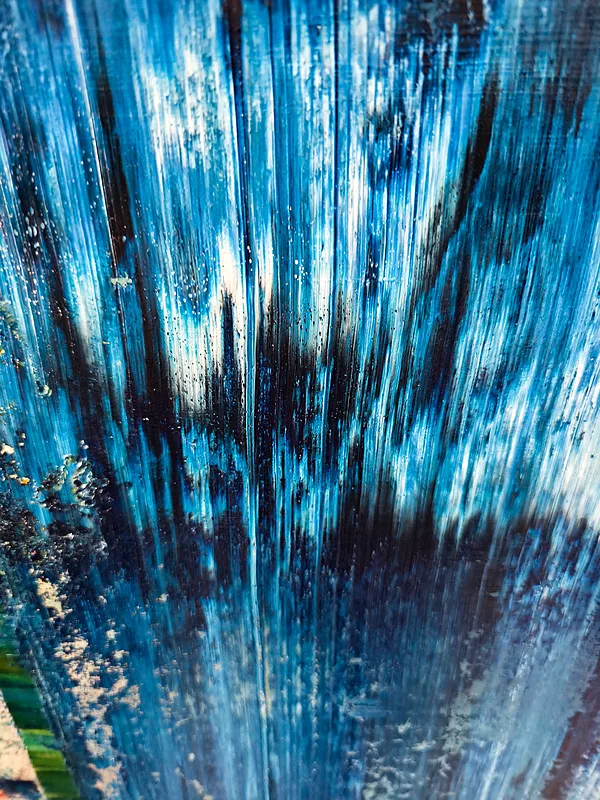
The artist condenses the drama of Gideon’s story into the collision of two elemental forces. On the left, a vast backdrop of gold, bronze, scarlet, and soot-black layers surges forward, bearing the weight of an entire world. From the right, the dazzling blues of cobalt, ultramarine, and turquoise descend in vertical currents, seemingly arresting the advancing mass.
According to Scripture, Israel is oppressed by Midian. Fleeing an enemy that repeatedly destroys their crops, the people retreat to mountain strongholds and caves. Gideon himself is secretly threshing wheat when a remarkable greeting is heard:
“The LORD is with thee, thou mighty man of valour.” (Judges 6:12, KJV)
In the central field of abstraction, dark masses begin to churn and gather. The Midianites, Amalekites, and peoples of the East fill the valley, “as grasshoppers for multitude”, their camels beyond counting.
The dark, earth-toned masses pressing into one another give form to this overwhelming force. Black, brown, red, and grey layers are compressed together, set against the clear, ordered expanse of blue on the right.
The canvas evokes Gideon’s victory while leading us back to the sacred moment of his calling. Within the gold lingers the memory of the altar; within the red, the fire that sprang from the rock and the light of the torches concealed inside the jars continue to burn. Below, the once-terrifying multitude of Midian collapses into disarray as it flees, while on the right, the steadfast flow of cobalt blue evokes the strength of the three hundred chosen men. Between these opposing forces rises Gideon’s face, hardened like stone: the likeness of a man whom the Eternal called mighty even when he still sought refuge in the shelter of his own fear.
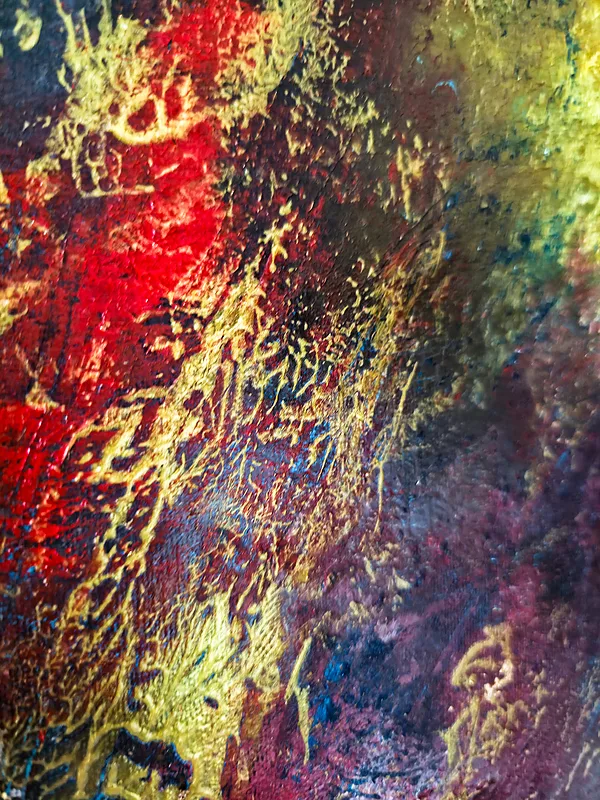
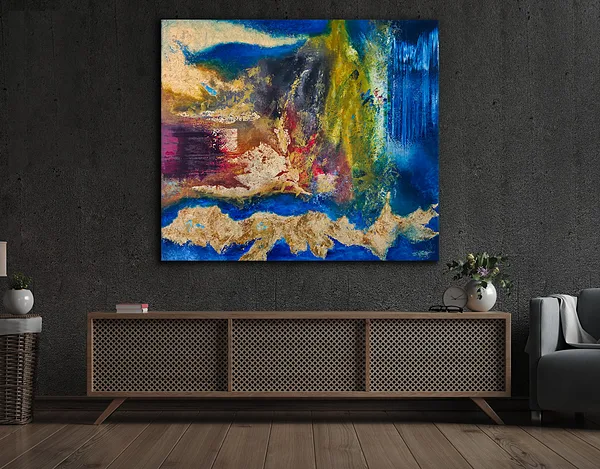
Miriam
- 150 x 100 cm
- Oil and gold on canvas
- Place and year of creation: Sitges, 2026
- The artwork is part of the series 'Old Testament III - In Search of the Secrets of Eternity'
- AVAILABLE FOR PURCHASE
“And Miriam the prophetess, the sister of Aaron, took a timbrel in her hand; and all the women went out after her with timbrels and with dances. And Miriam answered them, Sing ye to the LORD, for he hath triumphed gloriously.” (Exodus 15:20–21, KJV)
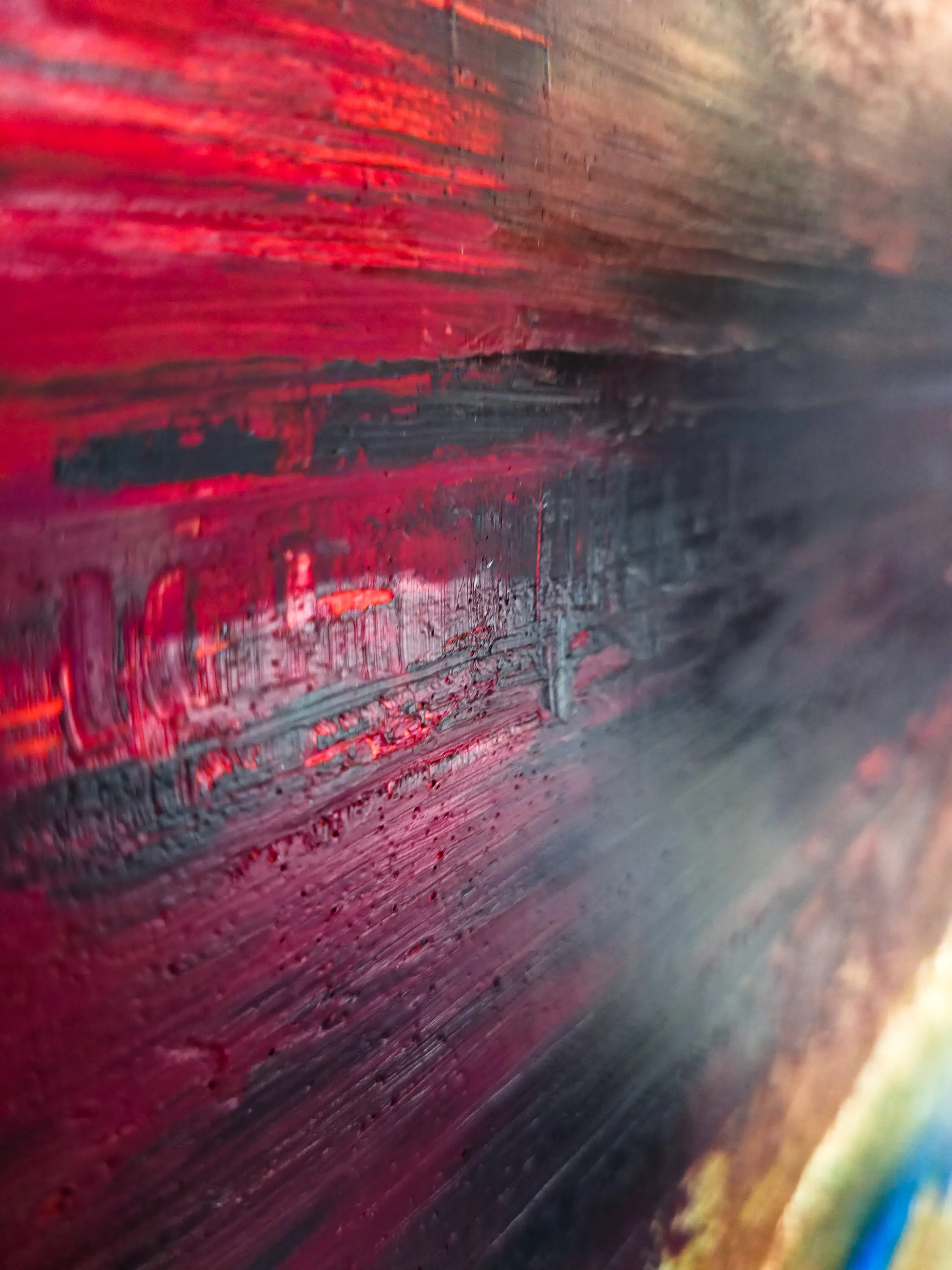
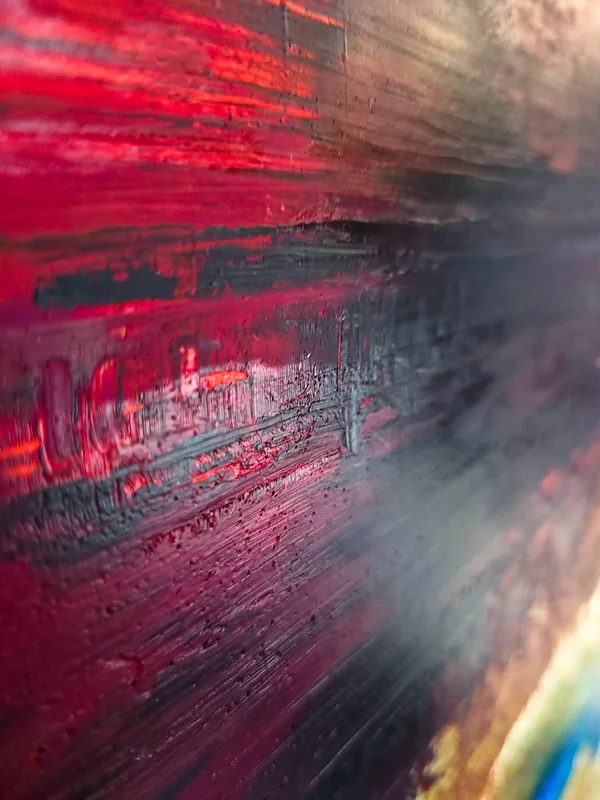
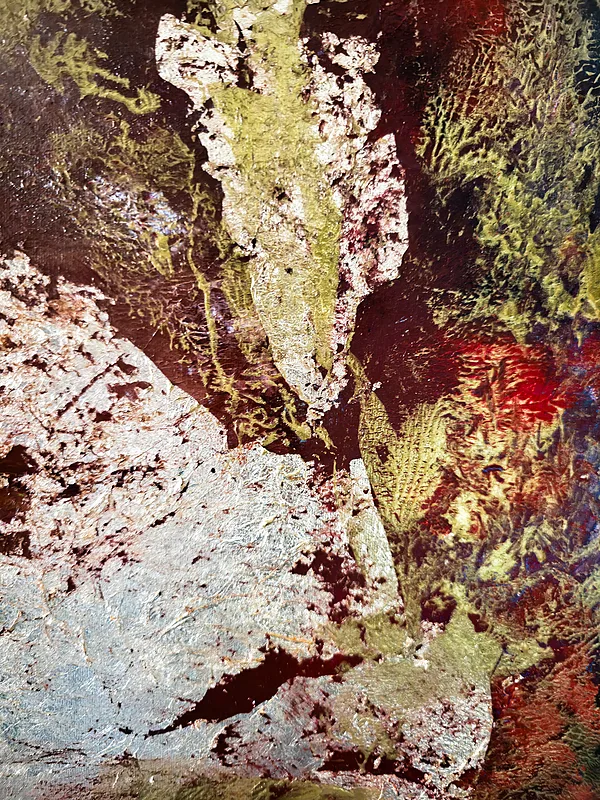
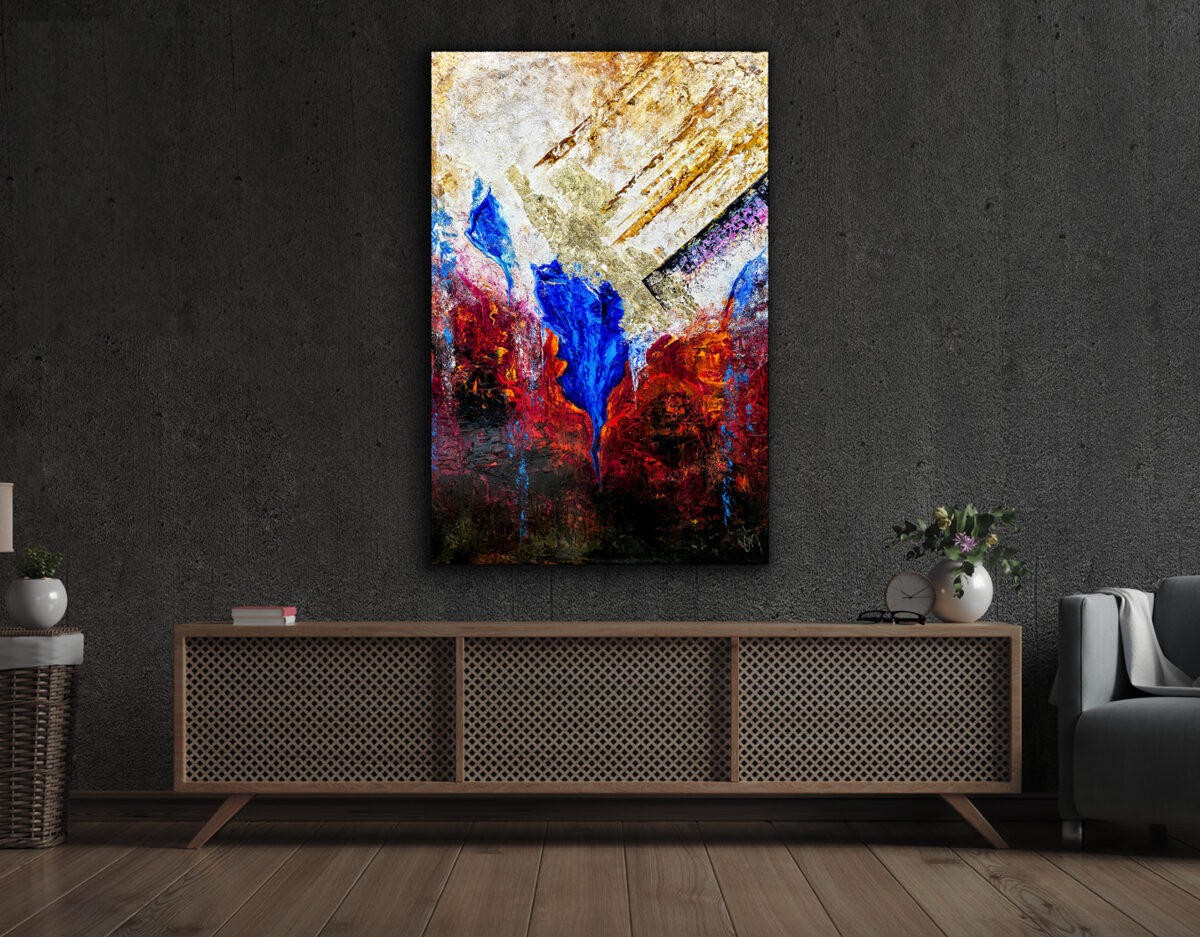
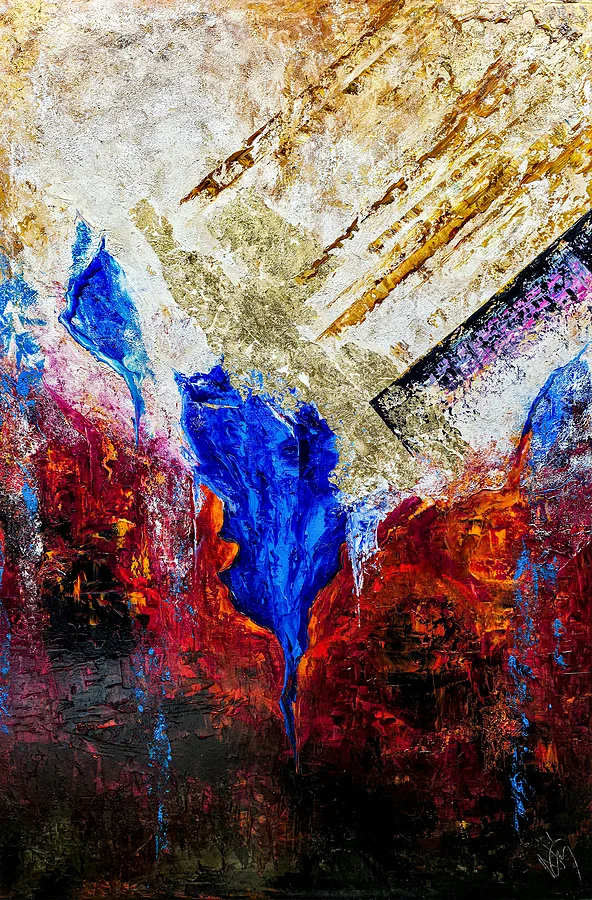
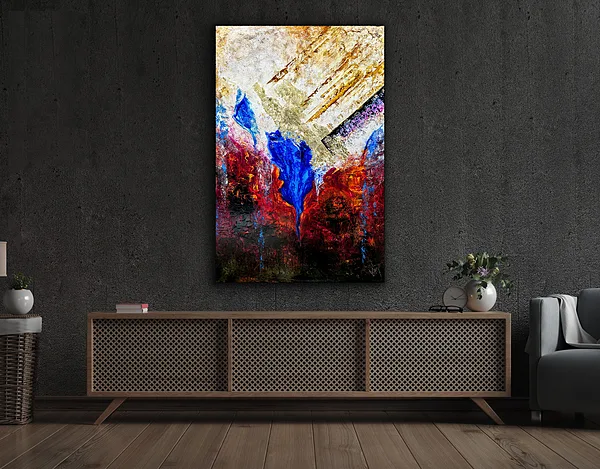
The painting transforms Miriam’s life into a vision of deliverance and thanksgiving emerging from adversity. From the earthy depths of crimson and brown, a deep blue form rises amid layers of white light, while golden rays above bring celestial order to the composition. The dark, red-tinged lower region evokes the weight of bondage in Egypt, where Pharaoh’s deadly decree threatened the lives of Hebrew infant boys:
“Every son that is born ye shall cast into the river.” (Exodus 1:22, KJV)
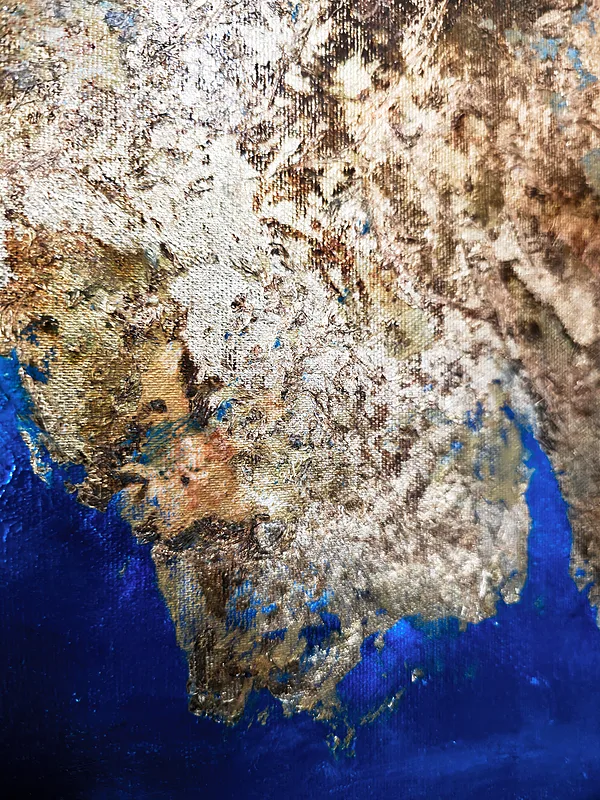
The blue first evokes the Nile, among whose reeds Moses’s basket drifted. Miriam, still a young girl, watched over her brother from the riverbank, already serving, through her vigilance, the future of Israel. Later, the image of the river expands into the mighty gateway of the parting Red Sea. The same waters that once cradled the life of a single child now open a path to freedom for an entire people.
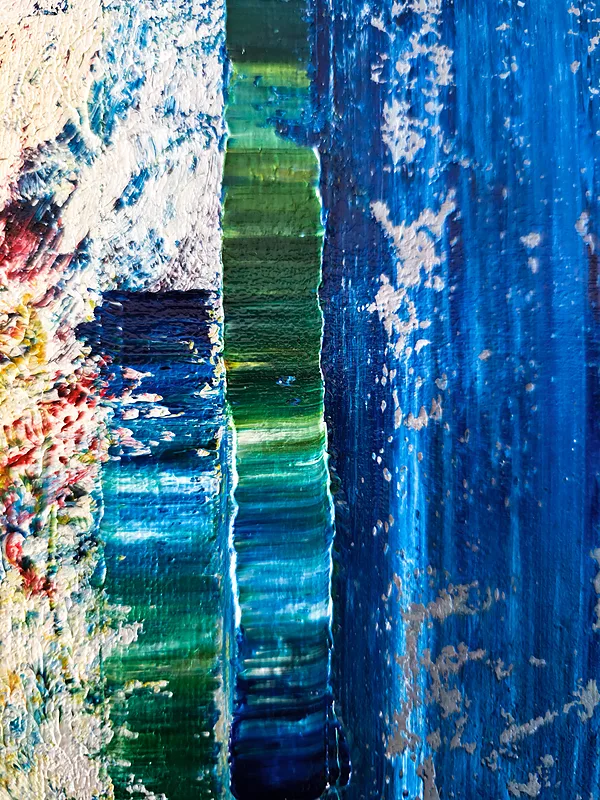
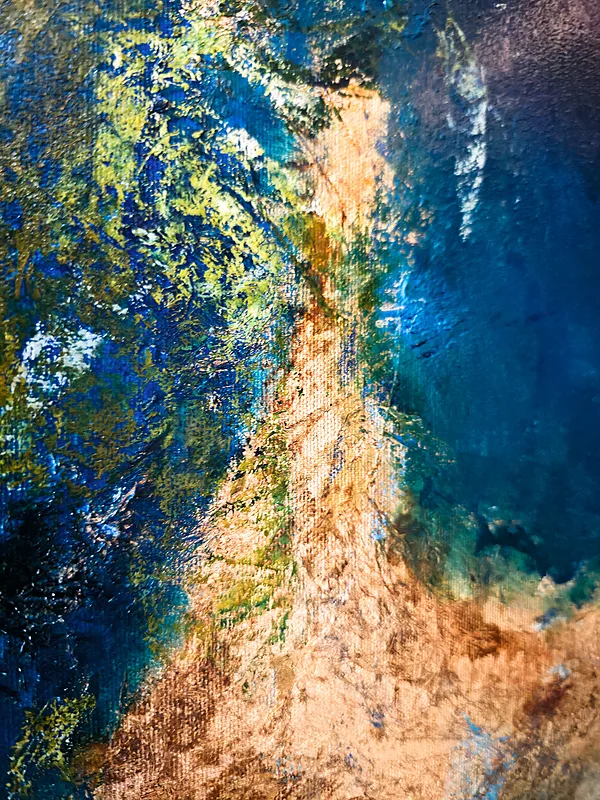
Rising above the earthly layers of red and black, the central blue form embodies the power of deliverance. Turquoise rivulets of paint evoke the life-giving waters and the creative force of the Garden of Eden, while veils of white suggest the light of grace descending upon the earth. The composition’s upward-flowing rhythm expands Miriam’s personal story into a collective memory of her people’s deliverance.
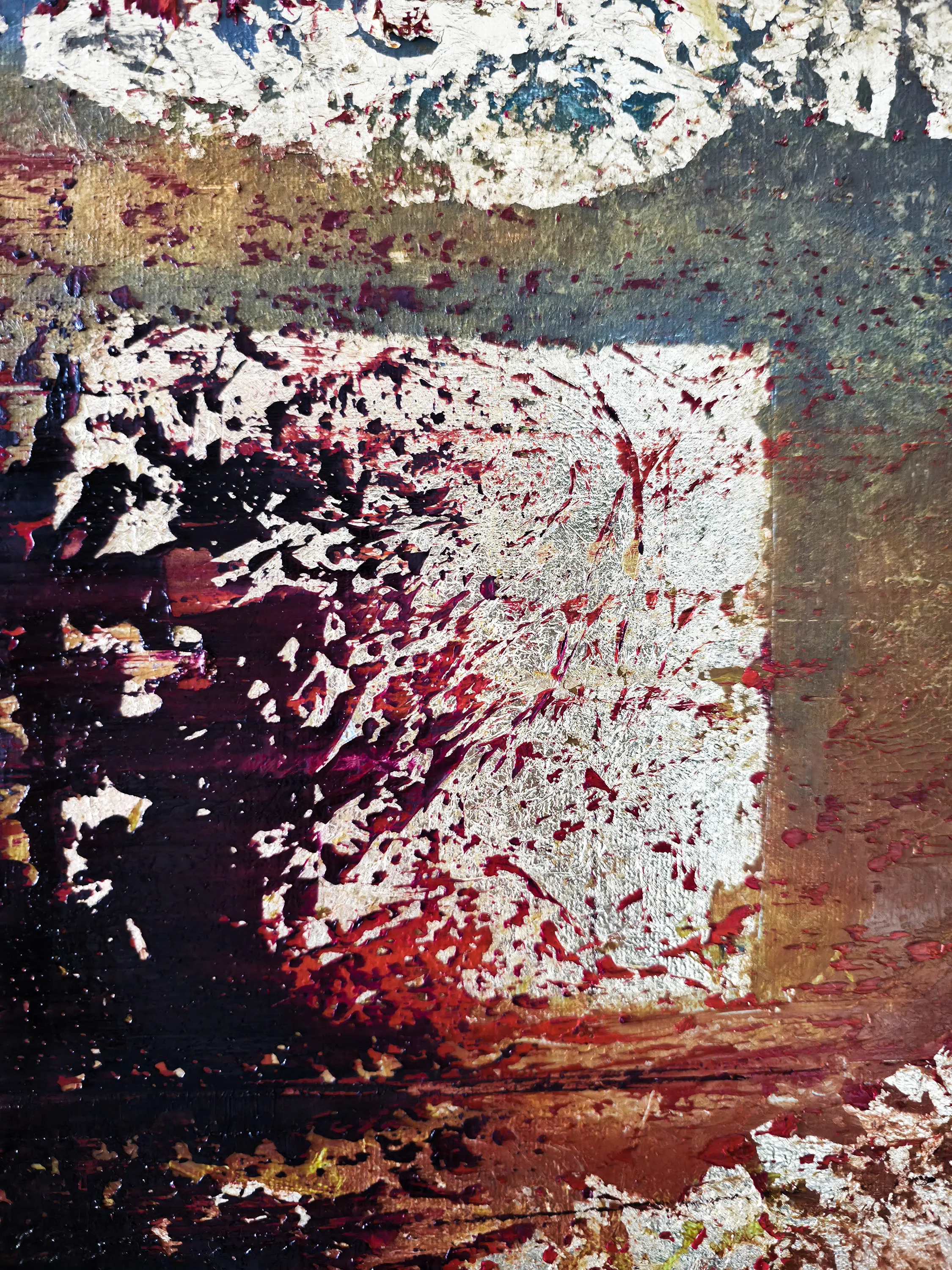
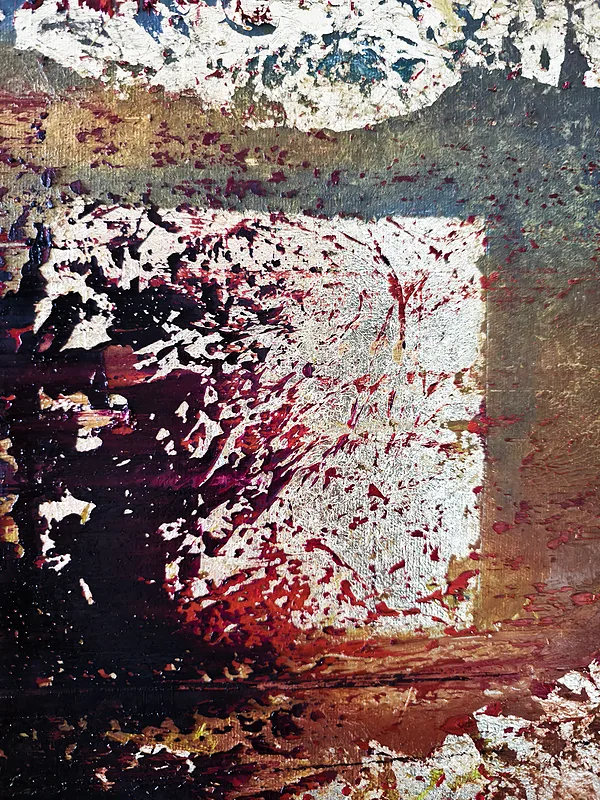
The golden rays in the upper realm embody the radiance of divine glory. Among them, a dark square interrupts the path of light, signifying Miriam’s human frailty and recalling her challenge to Moses’s authority and the subsequent seven days during which she was excluded from the camp (Numbers 12). Yet gold enfolds the dark form and carries the eye onwards, placing the memory of punishment within the wider horizon of forgiveness and restoration.
Miriam’s story reveals the encounter between human frailty and divine faithfulness.
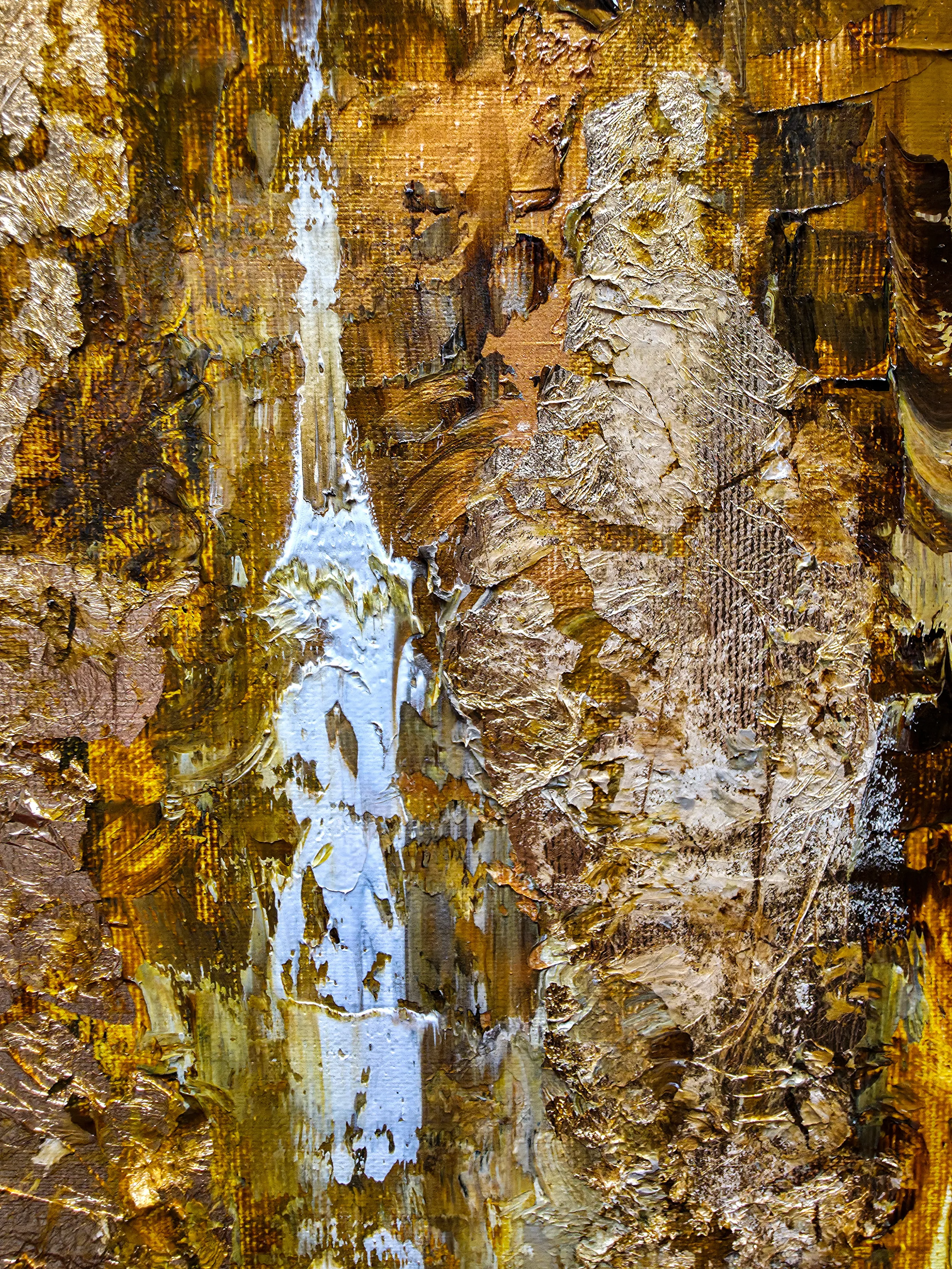
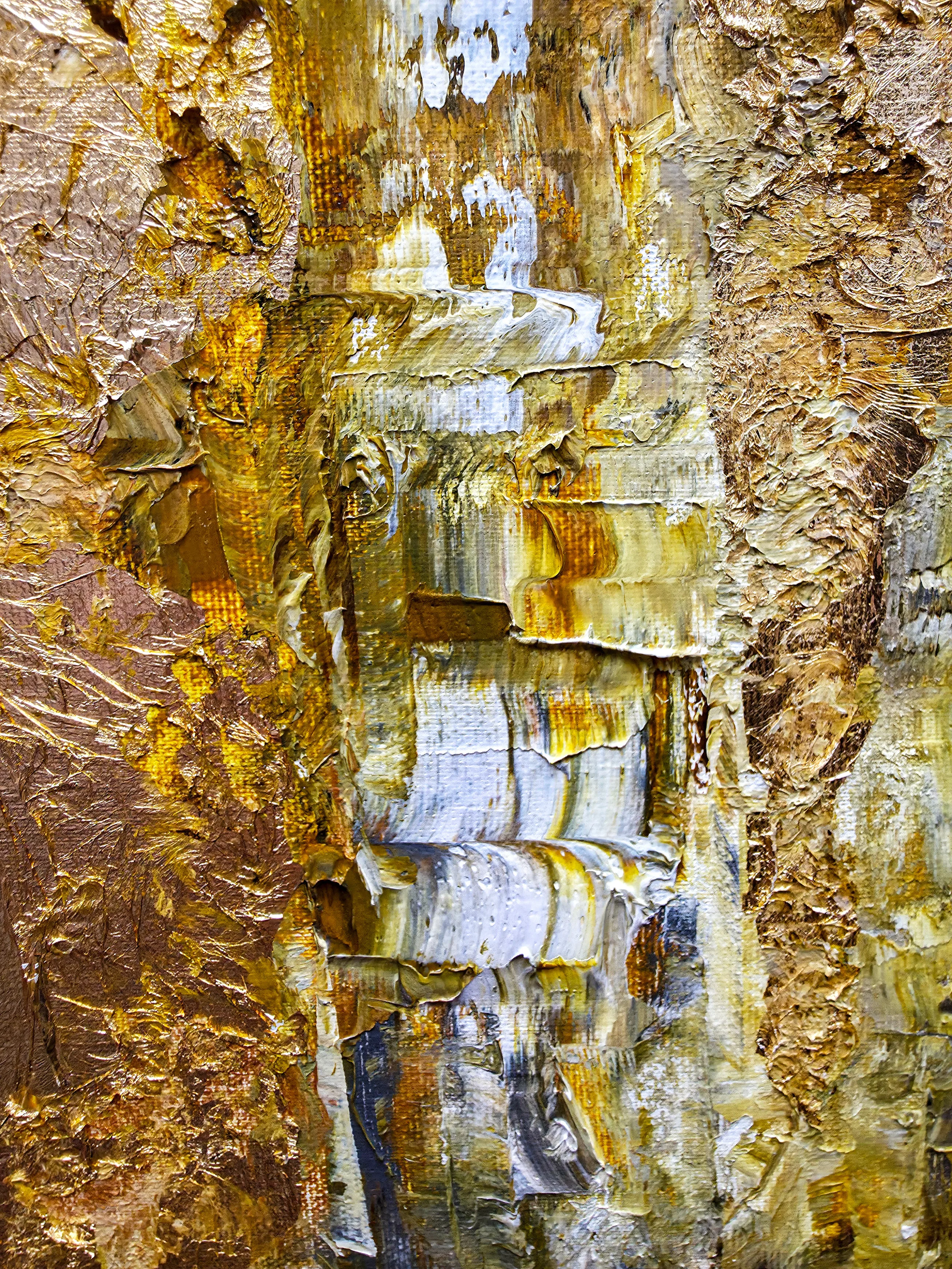
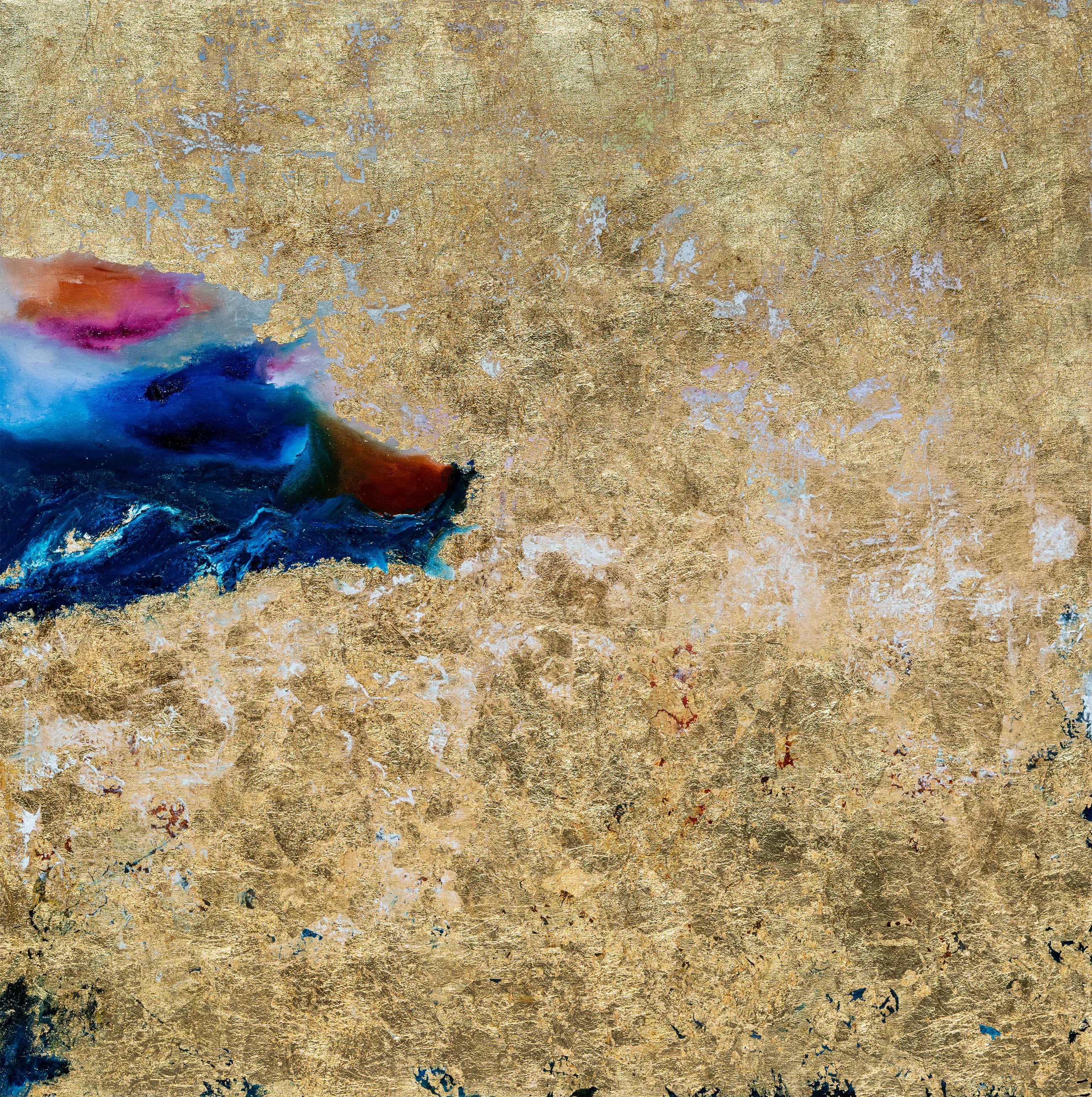
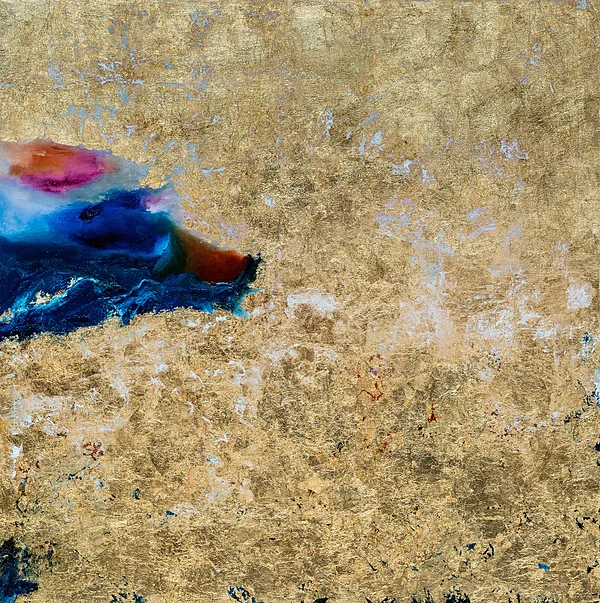
Jacob's Ladder
- 100 x 100 cm
- Oil and gold on canvas
- Place and year of creation: Sitges, 2026
- The work is part of the 'Old Testament III – In Search of the Mysteries of Eternity' series
- AVAILABLE FOR PURCHASE
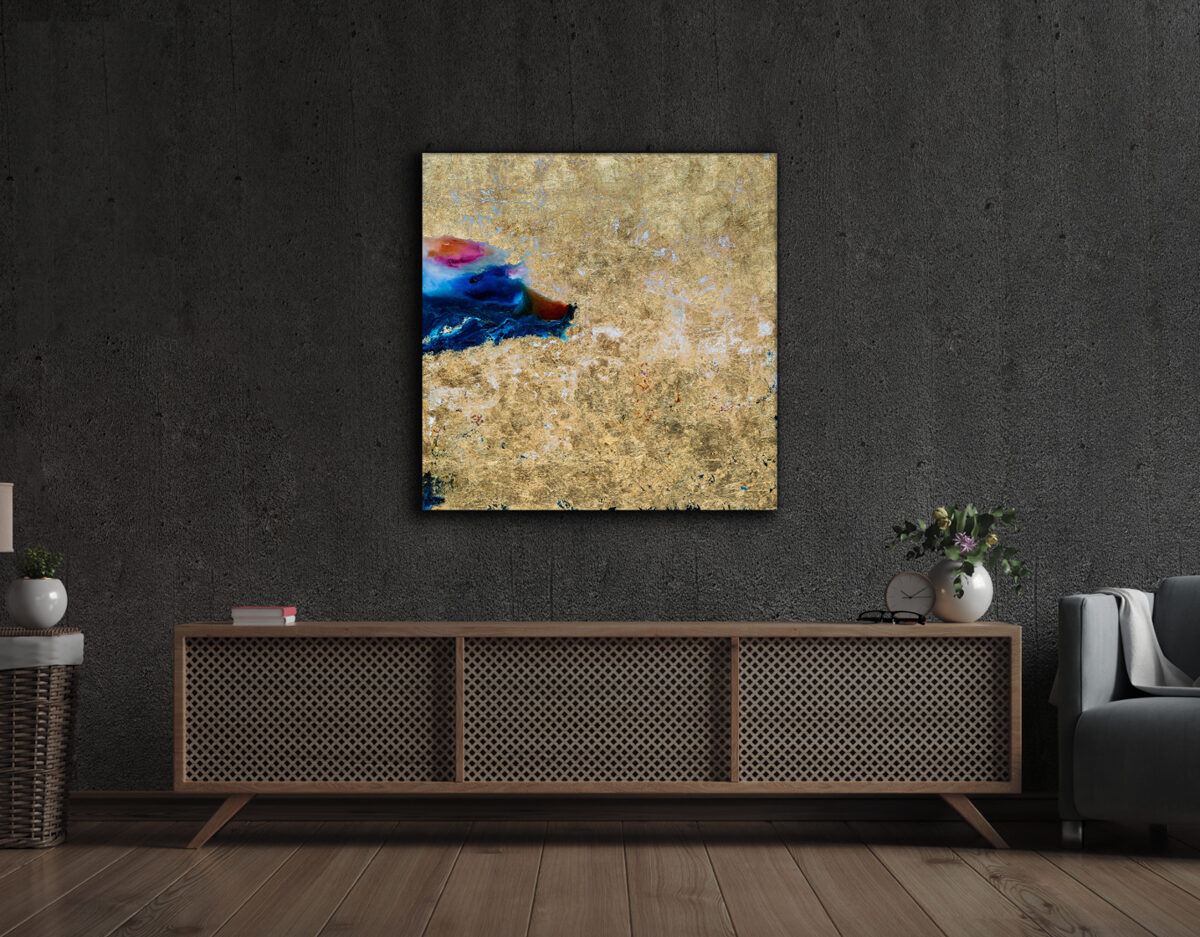
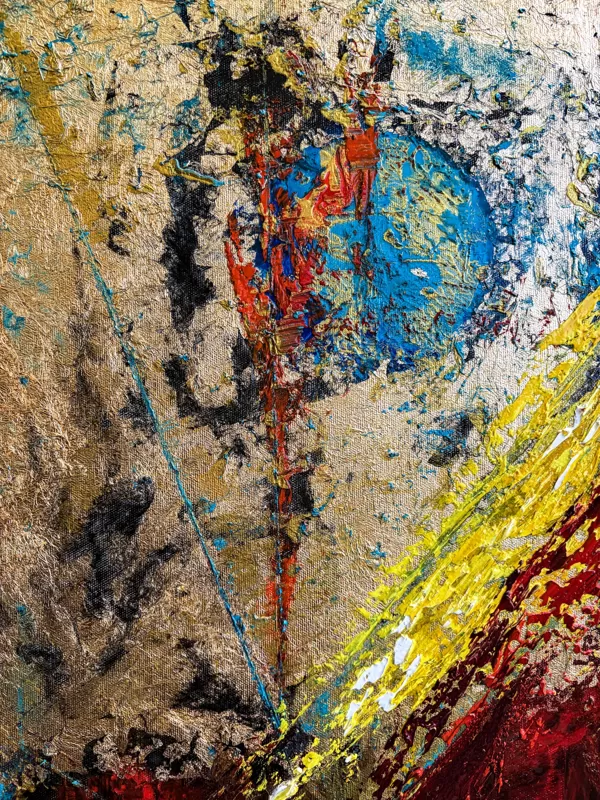
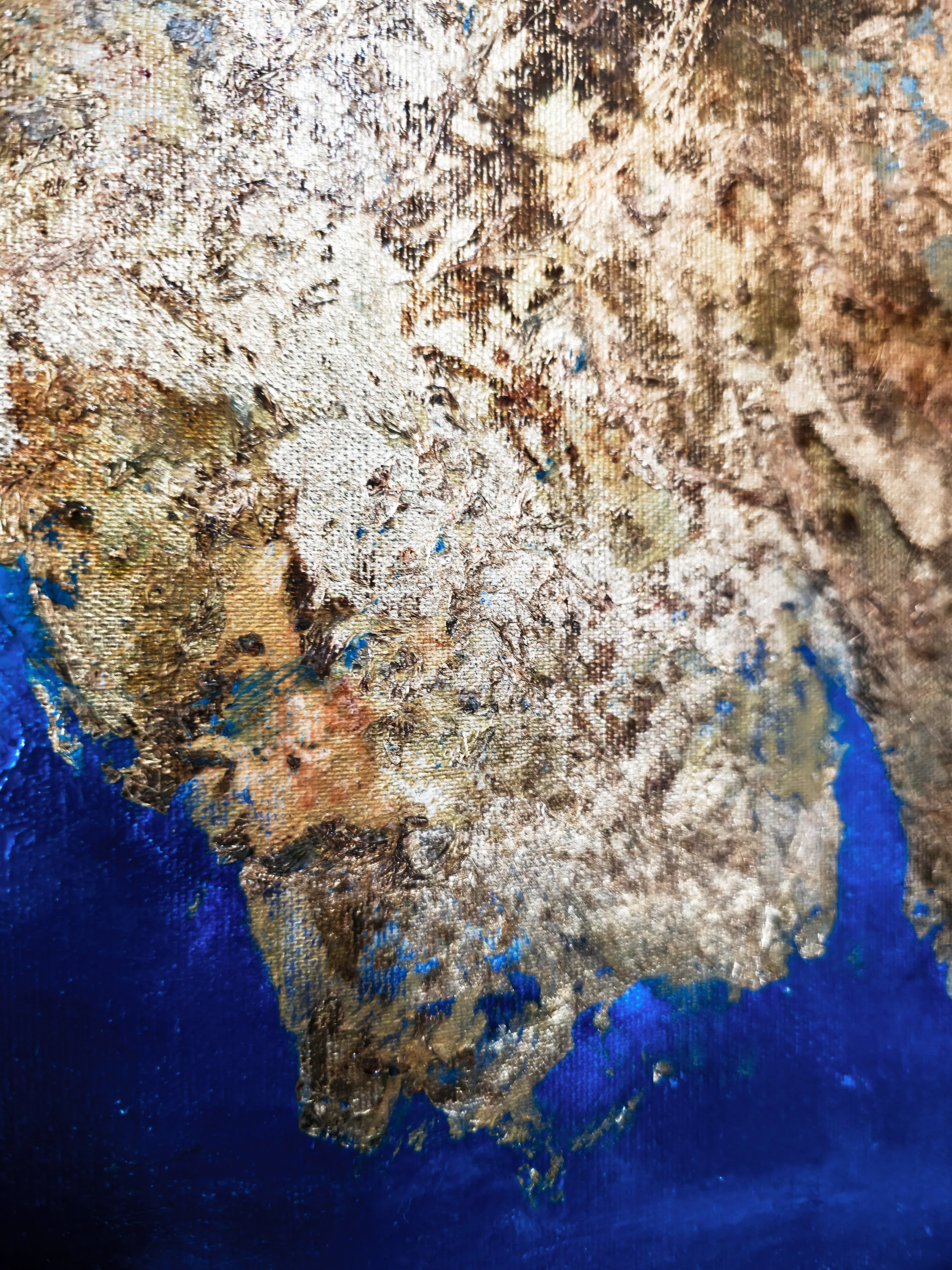
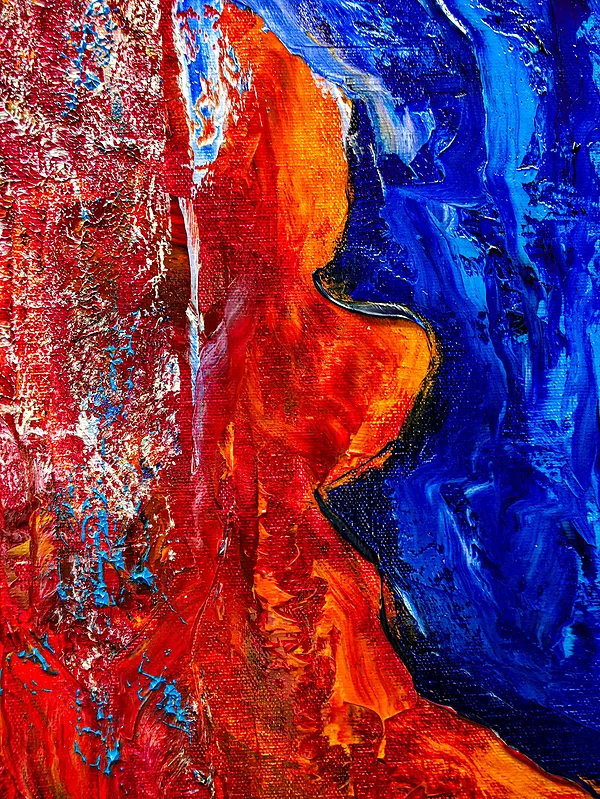
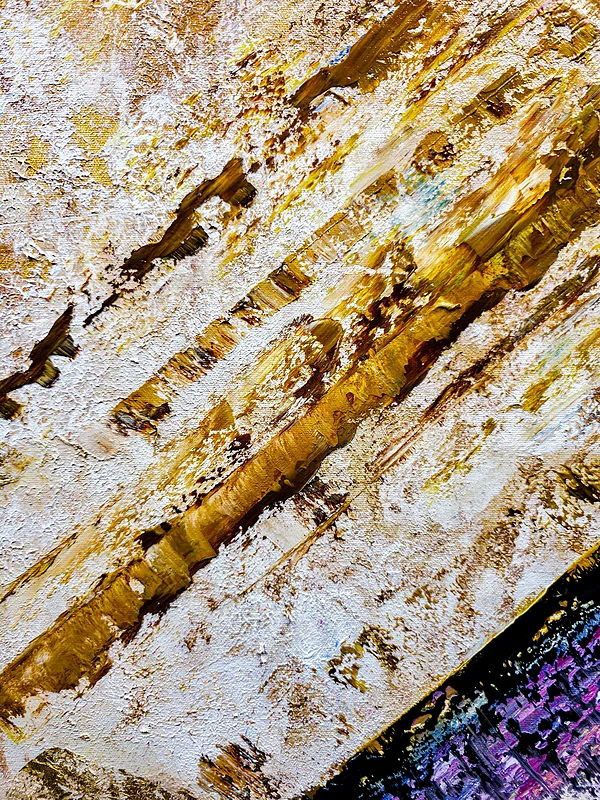
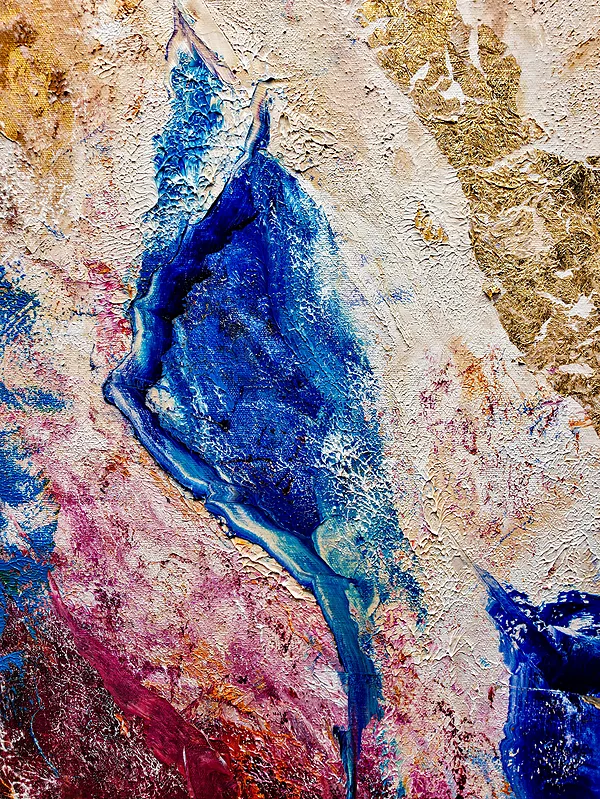
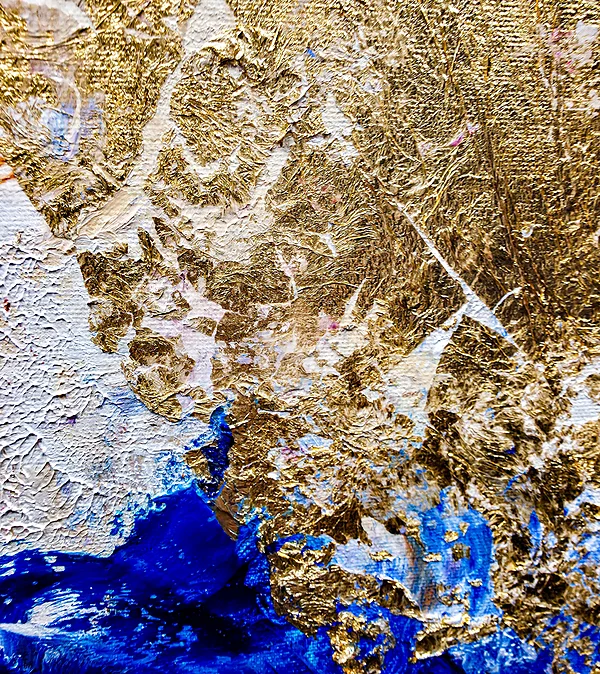
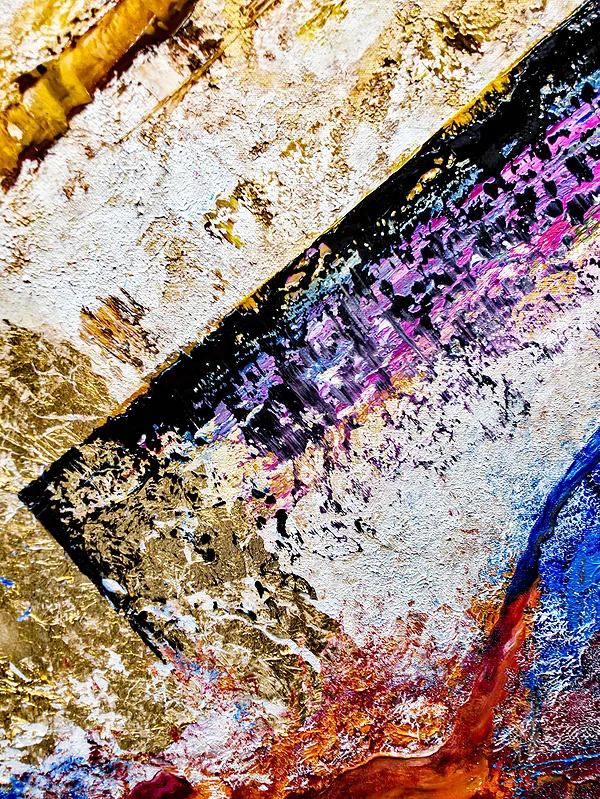
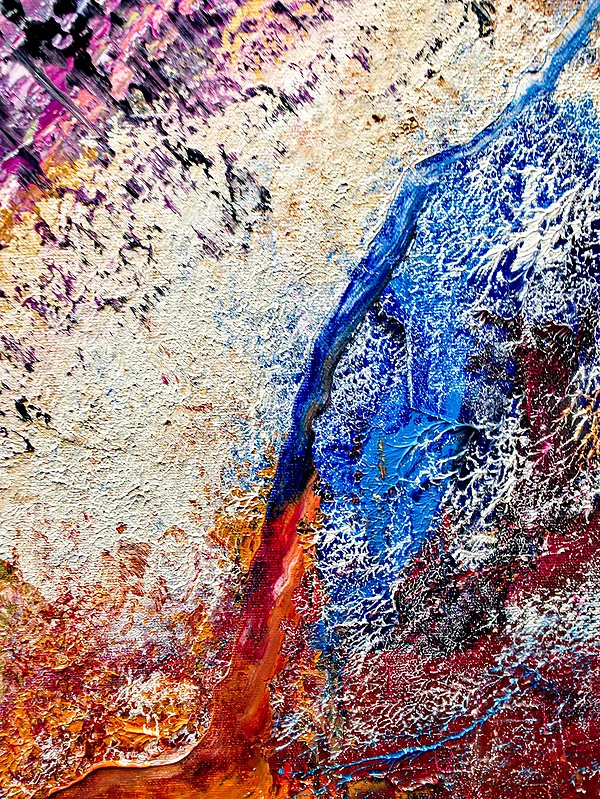
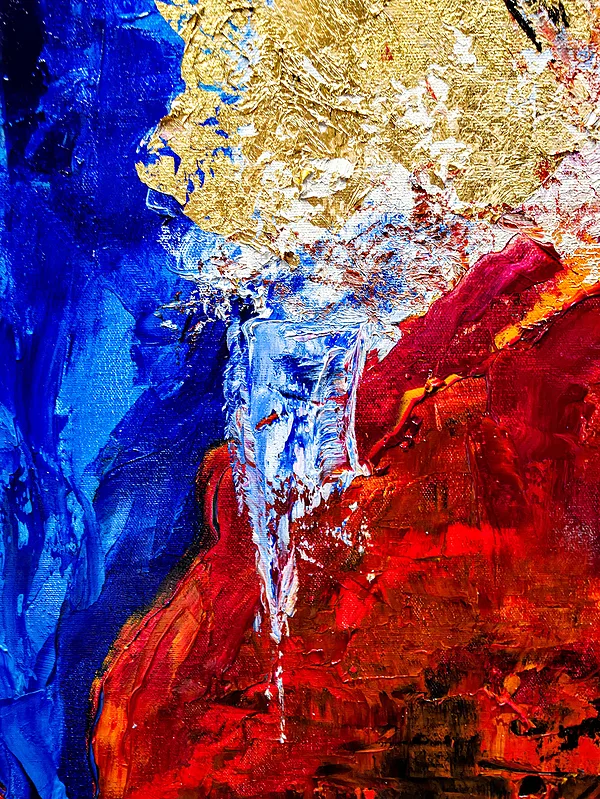
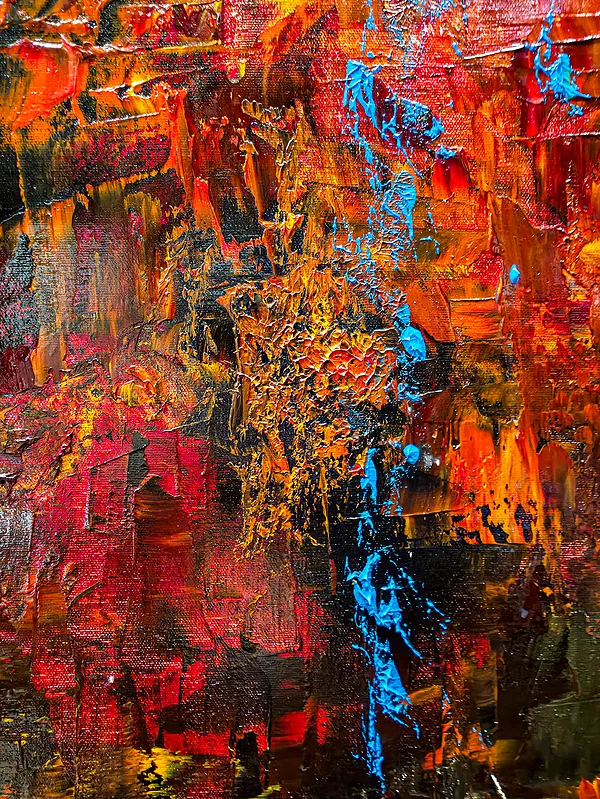
This luminous work leads the viewer into the mysterious realm of Old Testament visions and dreams. The golden field that floods the canvas, shimmering in a thousand shades, evokes the nocturnal dream of a solitary traveller: that extraordinary moment when the gates of heaven opened before Jacob and the Eternal revealed the wondrous path connecting earth and heaven.
In the silence of the night, an extraordinary vision appeared to Jacob in a dream: a ladder extending from earth to heaven, with angels ascending and descending upon it, and the Lord standing above, reaffirming the covenant He had made with Abraham and Isaac.
“And he dreamed, and behold a ladder set up on the earth, and the top of it reached to heaven: and behold the angels of God ascending and descending on it.” (Genesis 28:12, KJV)
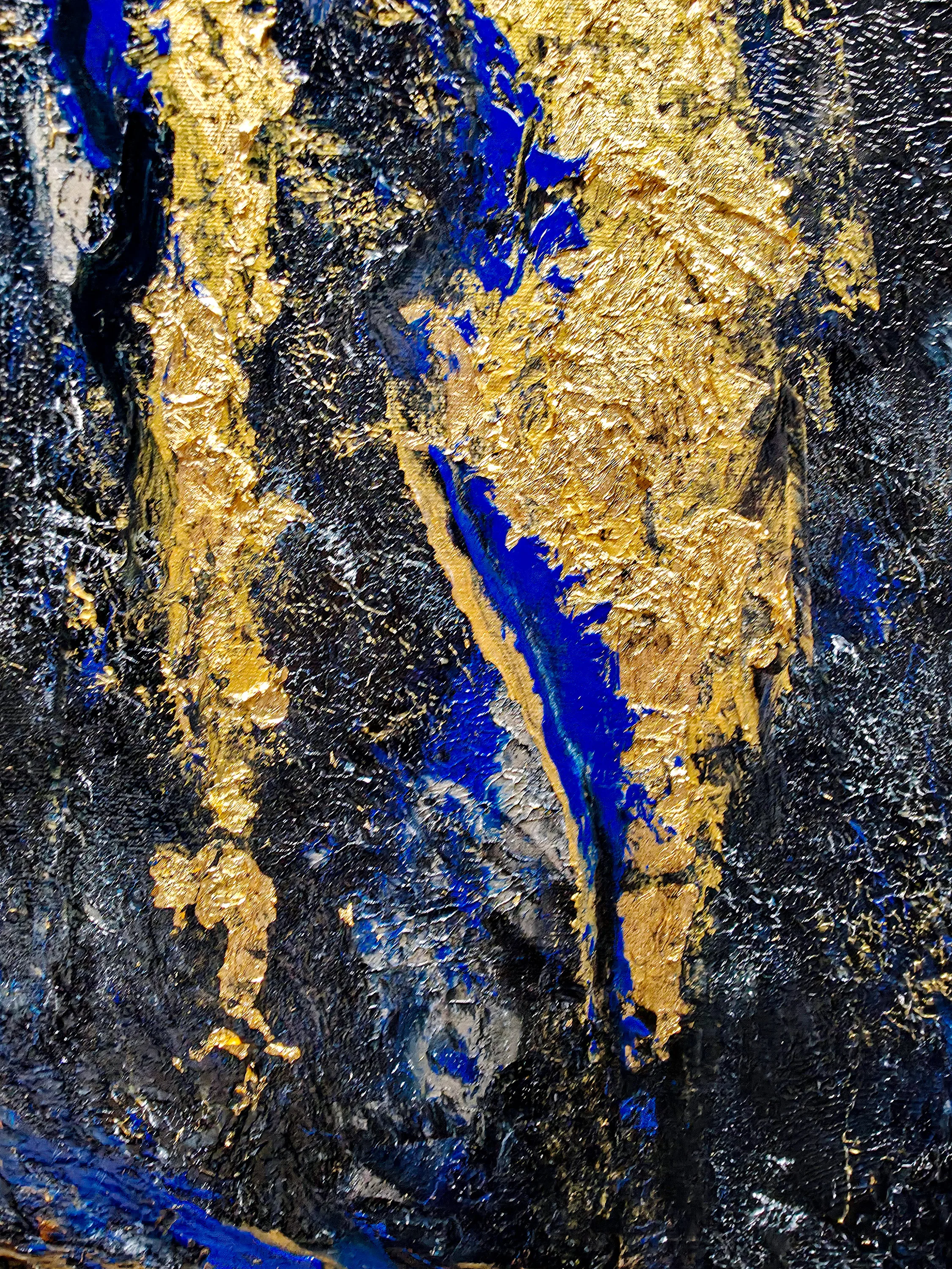
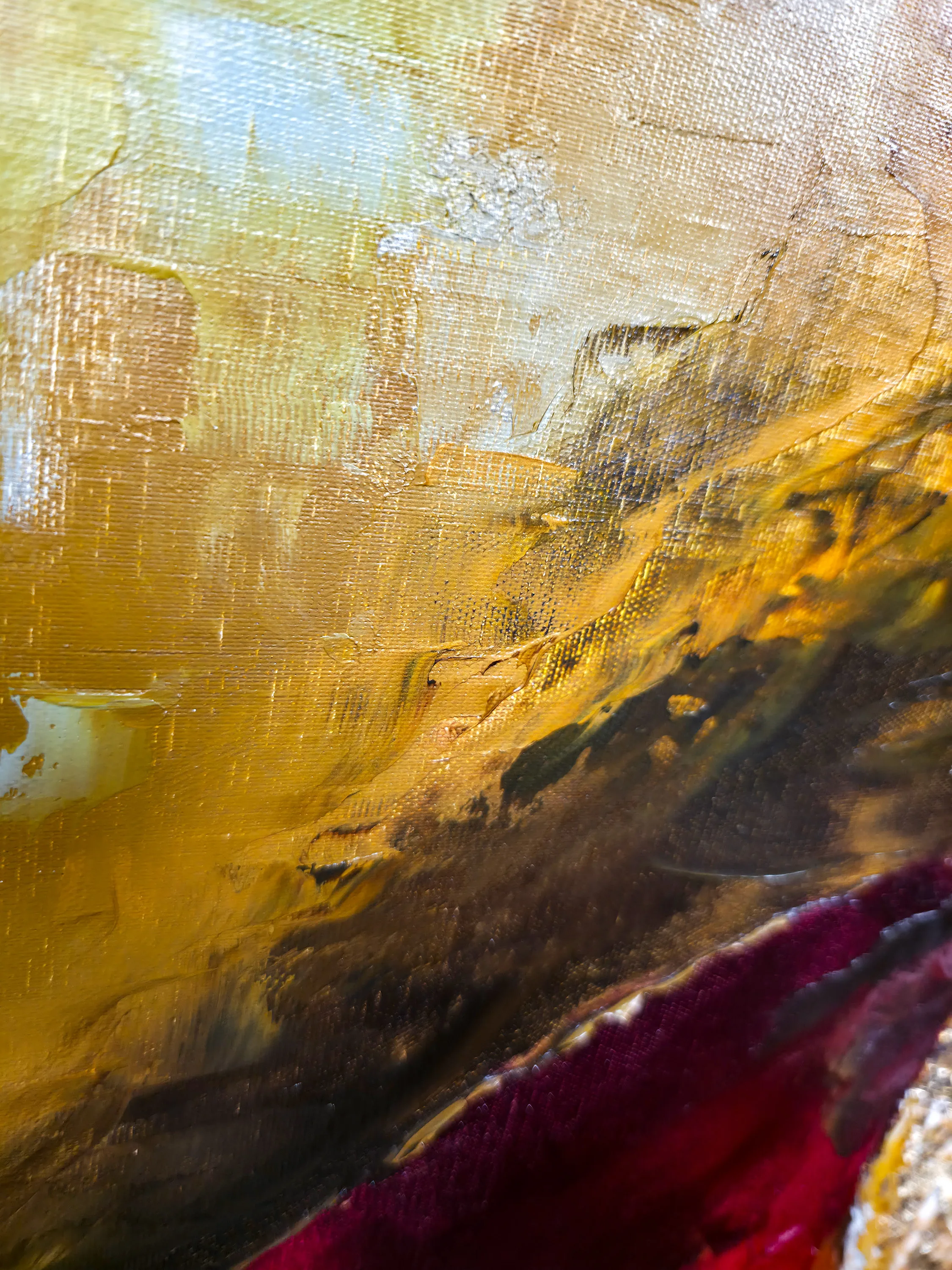
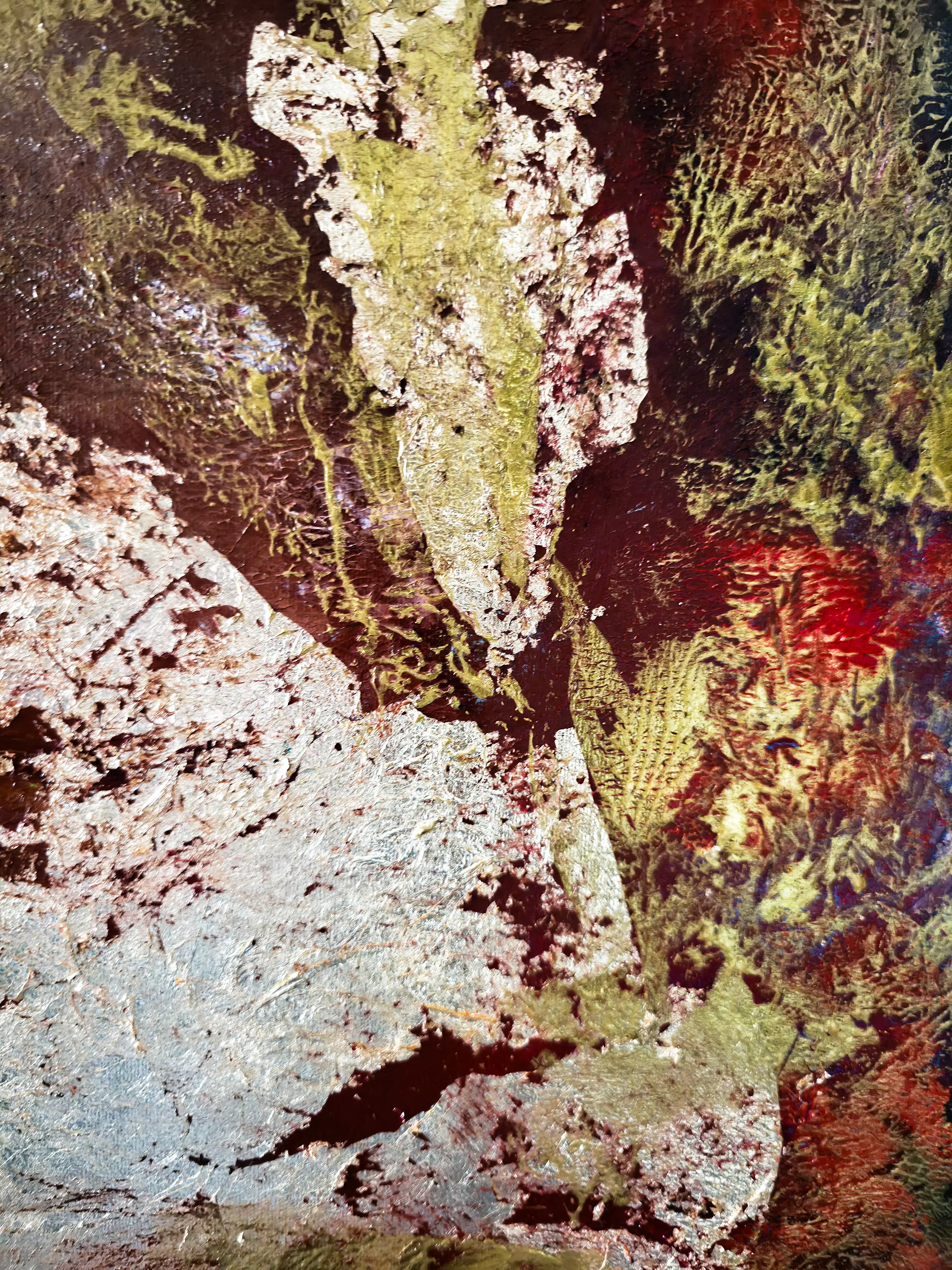
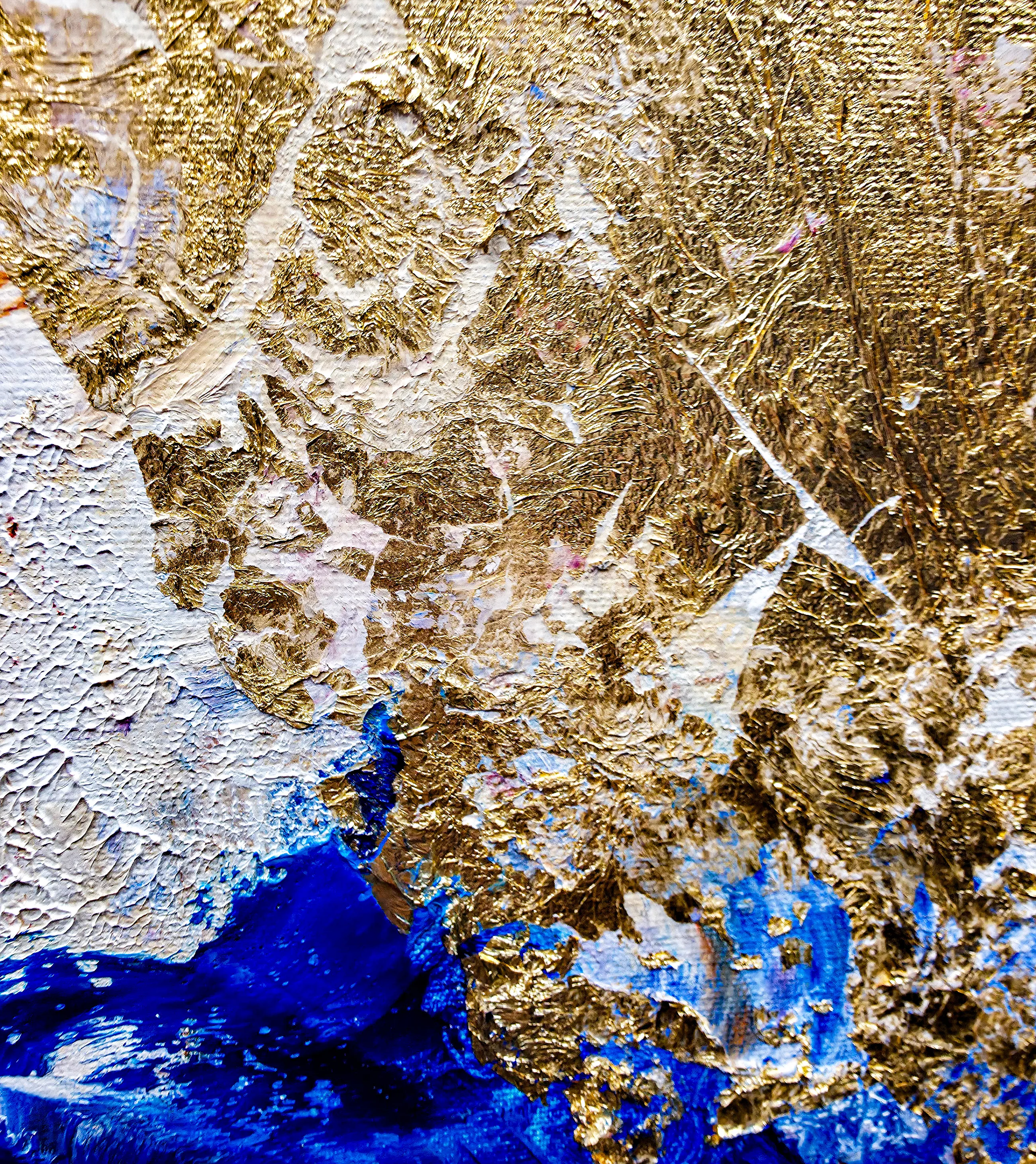
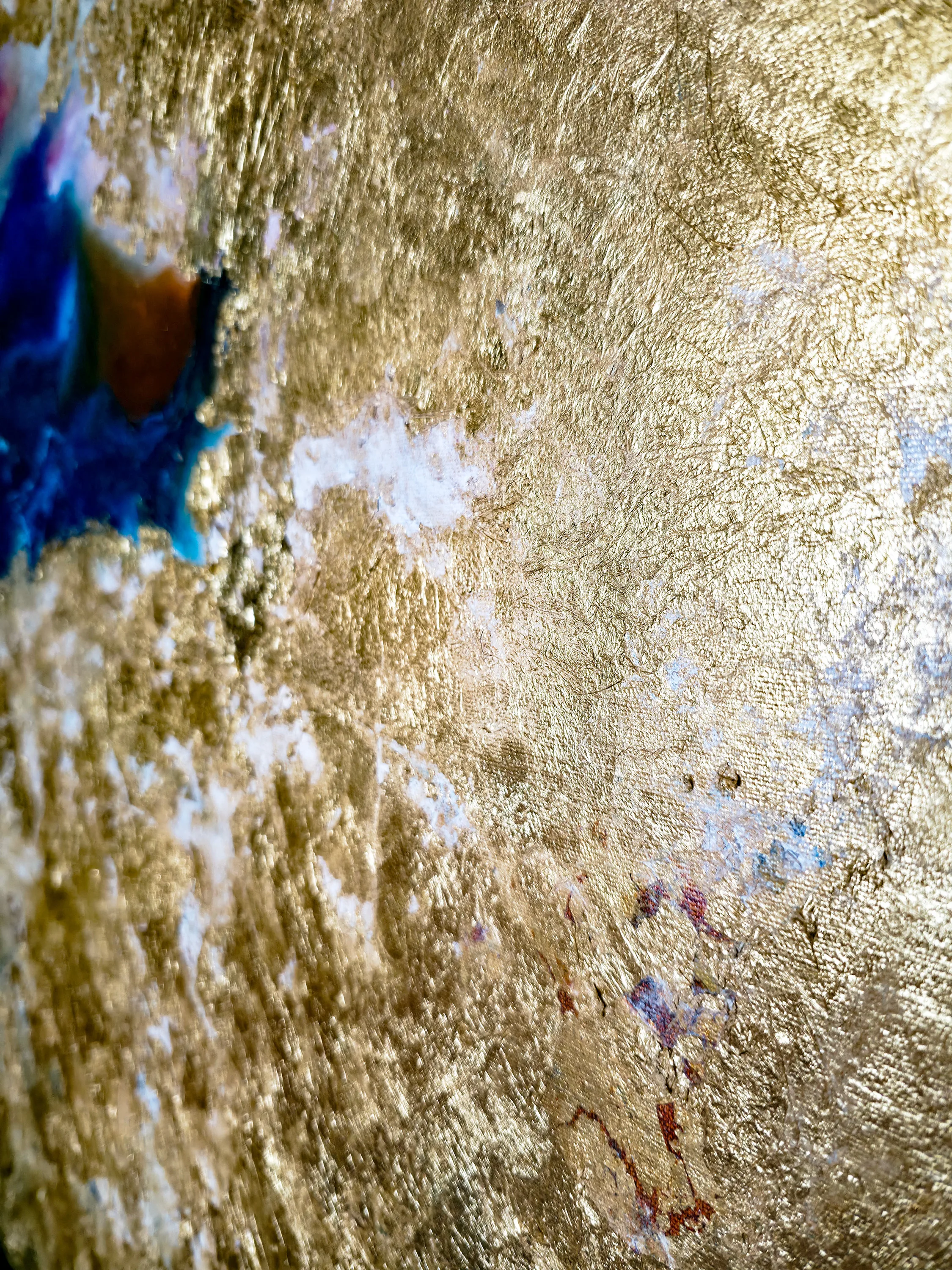
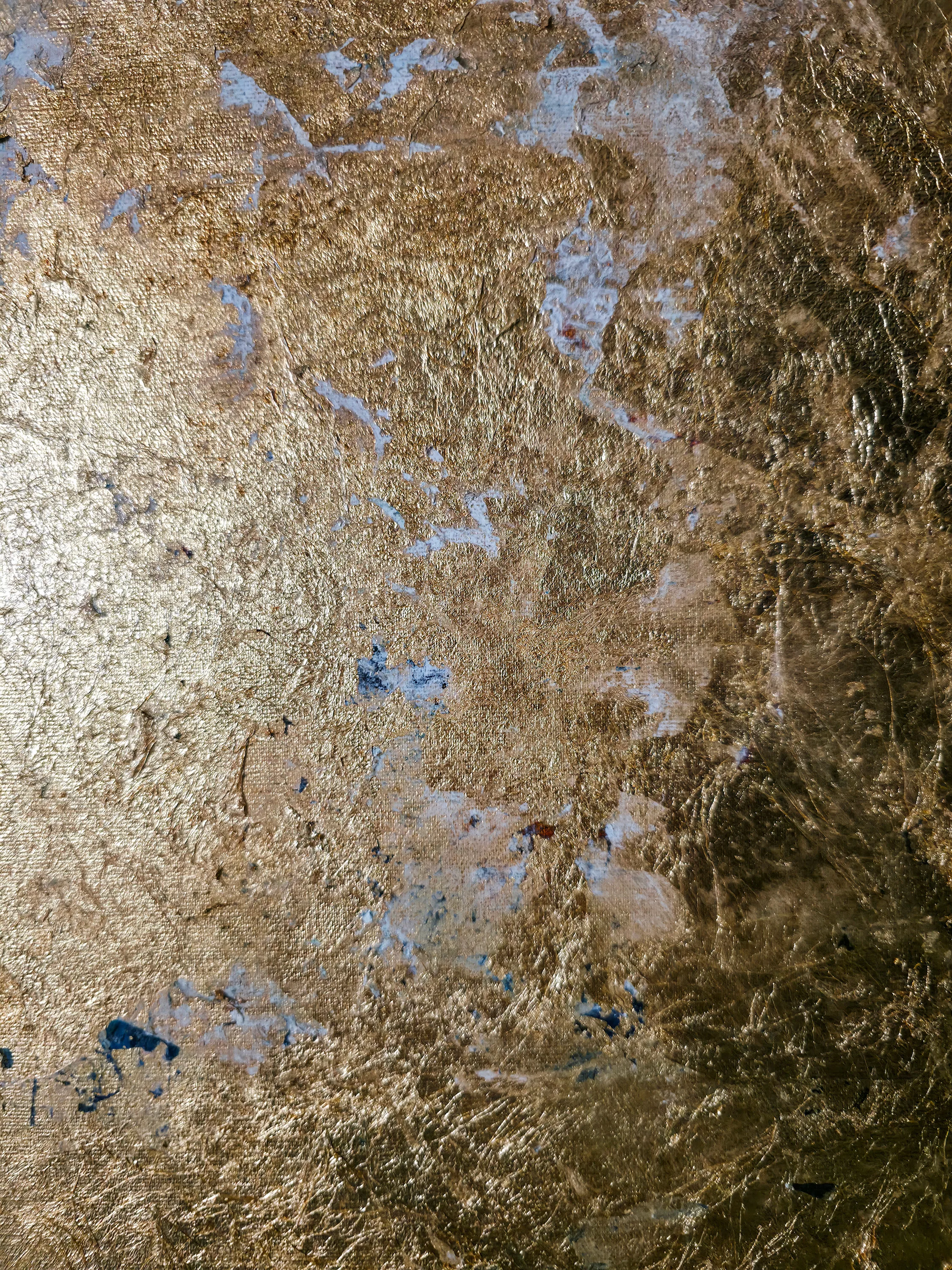
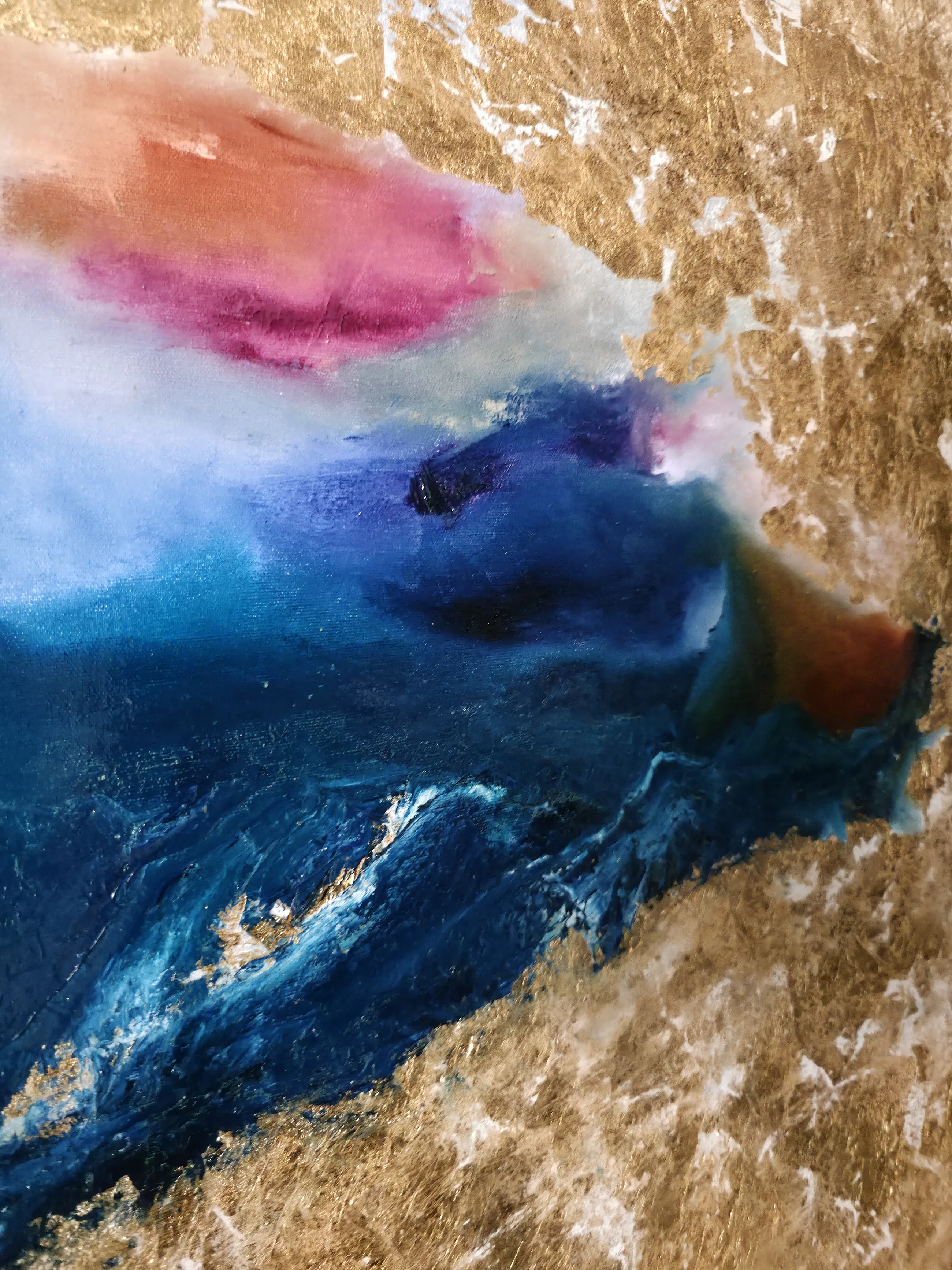
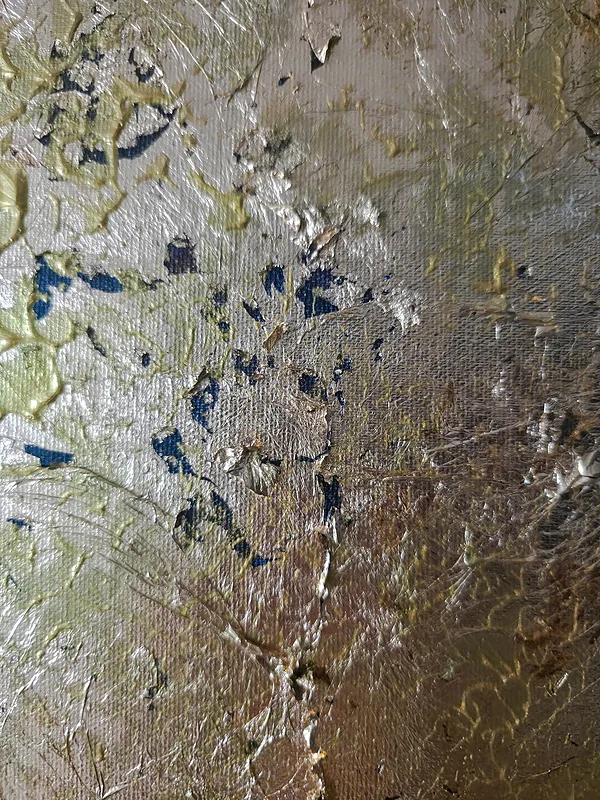
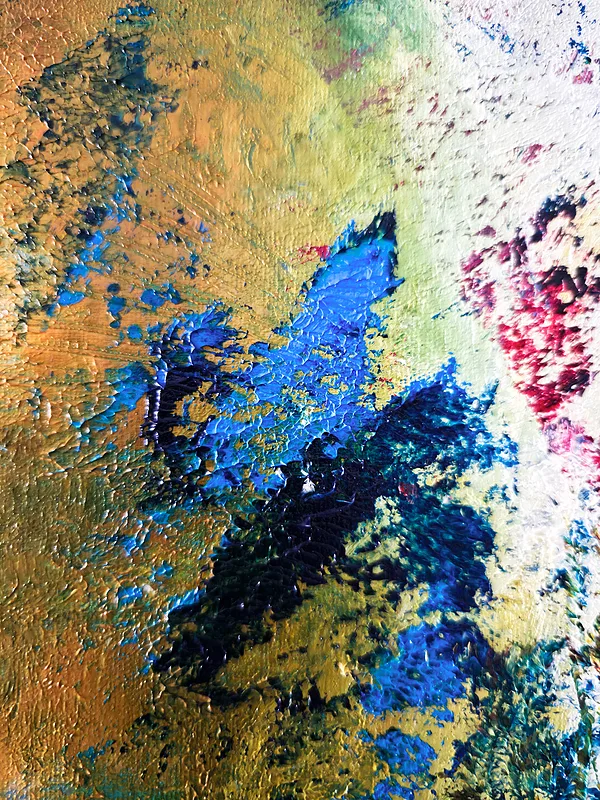
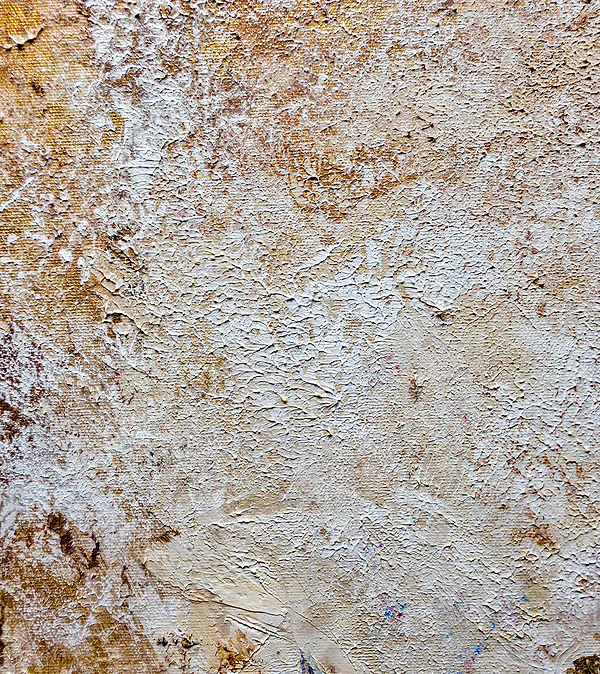
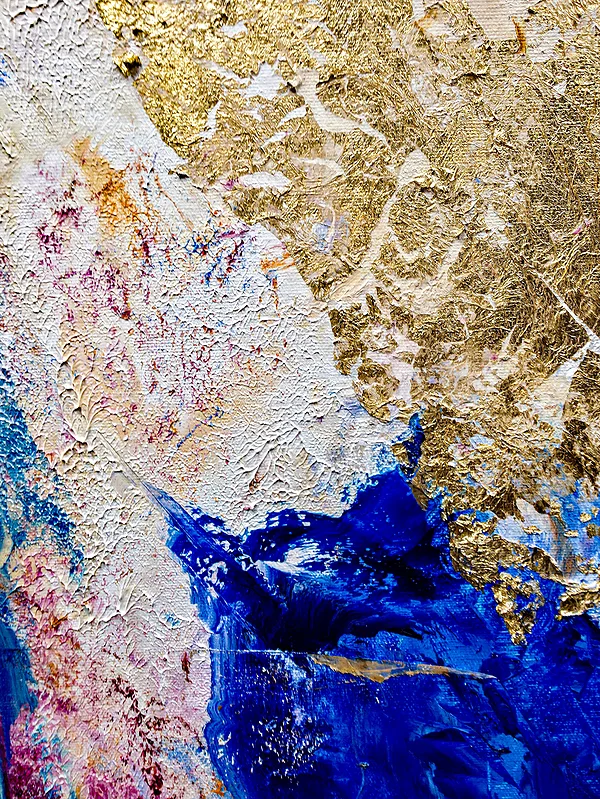
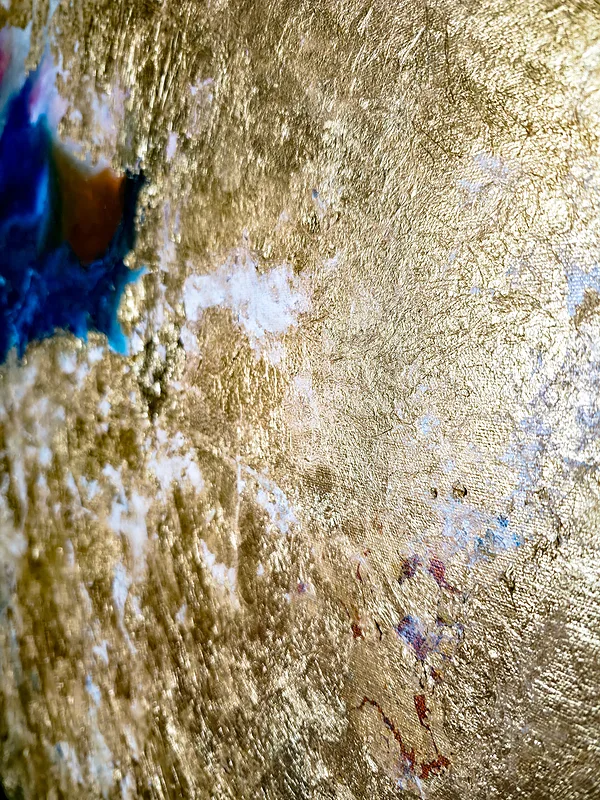
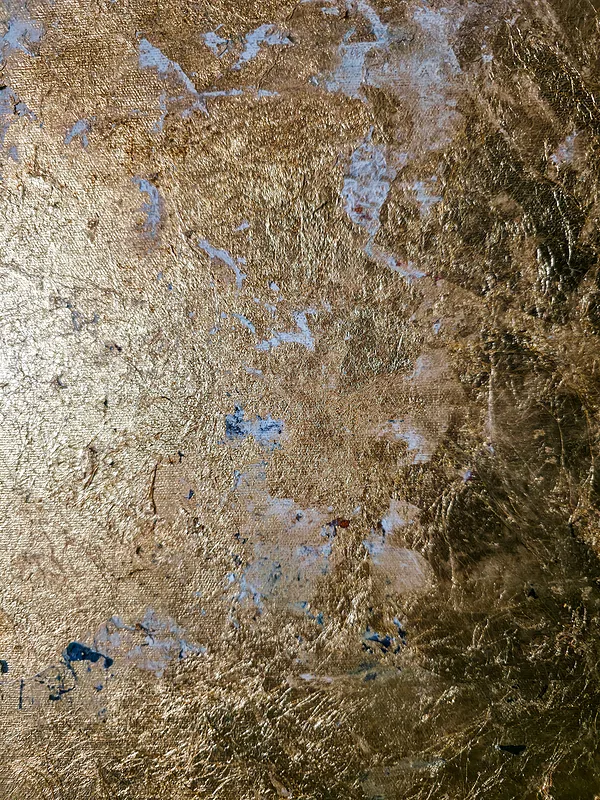
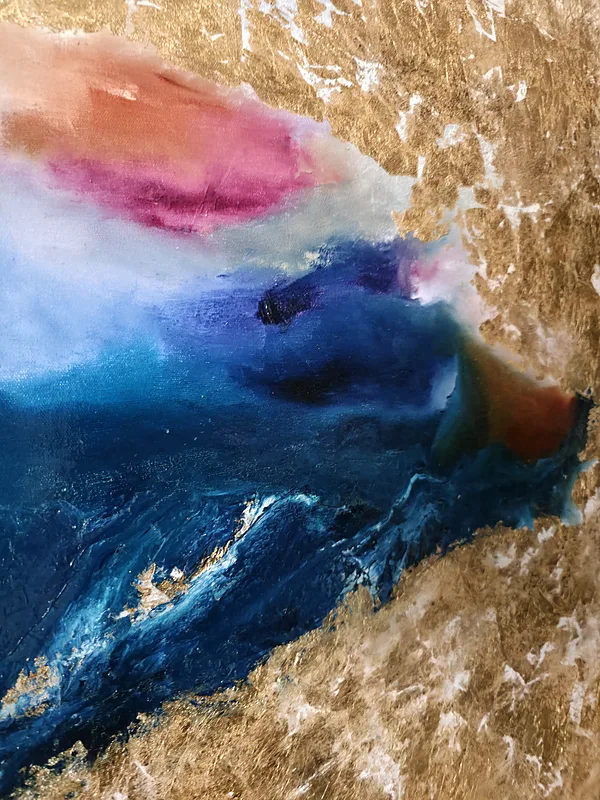
The patinated surfaces of the honey-coloured gold leaf evoke, in places, the walls of an ancient sanctuary and, elsewhere, a manuscript adorned with gold, its timeworn pages preserving the mysterious signs of biblical memory. Emerging from the left, a deep-blue form penetrates the radiant world of gold with striking vitality. Dense layers of indigo and ultramarine, darkening almost to black, are articulated by brilliant cobalt-blue brushstrokes, rocky furrows, and translucent glimmers of azure.
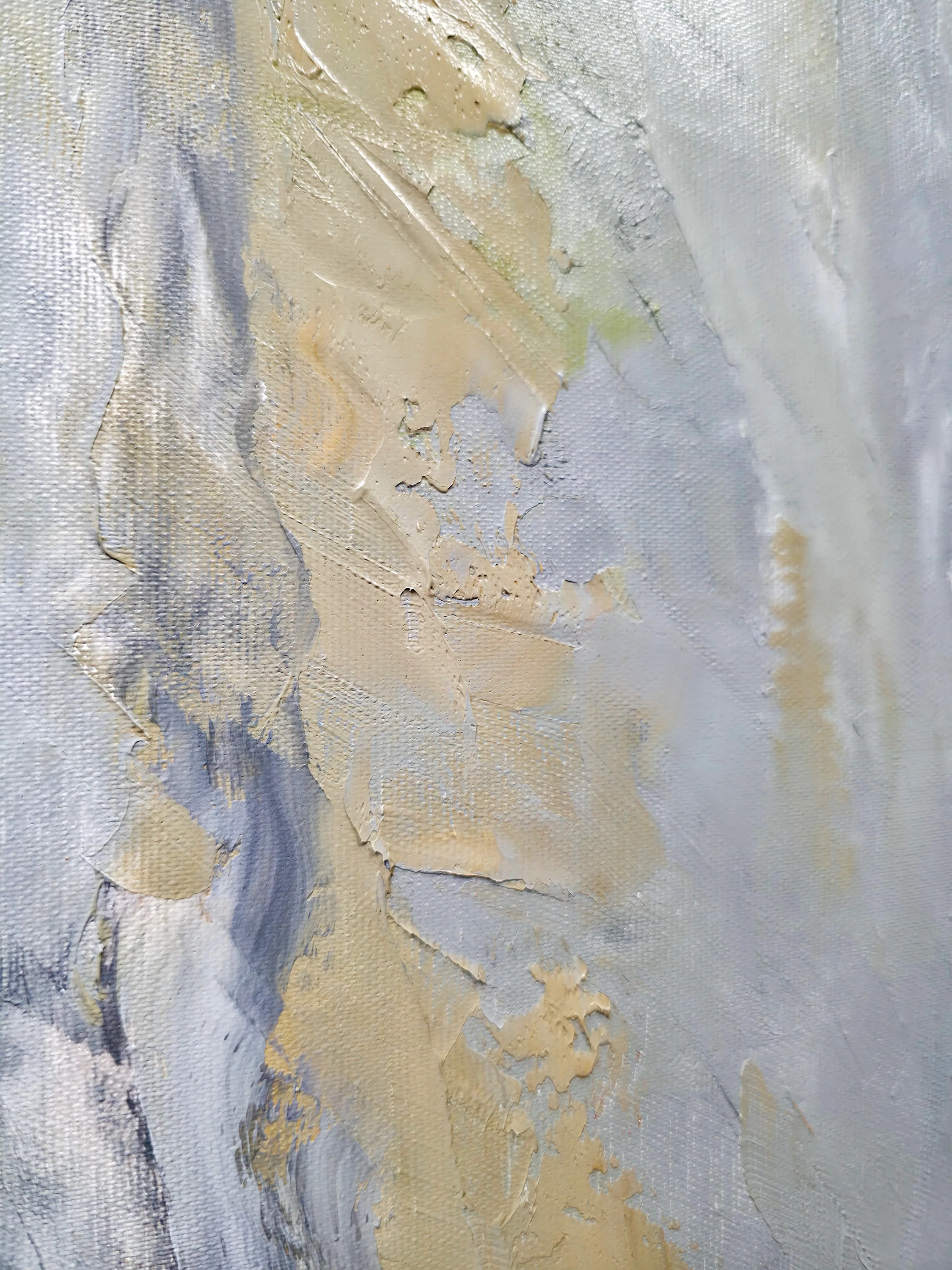
Yet the painting’s most extraordinary secret reveals itself only gradually. In the central area, the subtle divisions of the gold layers begin to disclose the outlines of a ladder, almost imperceptible at first, its structure divided into small rectangular sections. Faint, fragmented grid-like details emerge from the broken gold surfaces, following two parallel vertical lines and evoking the image of a mysterious ladder. This elusive ladder may be understood as the conceptual centre of the work.
Jacob’s sacred encounter unfolds as the composition’s deepest inner event. Upon awakening, he was overcome by the realisation of the extraordinary significance of the place, whose true nature had until then remained unknown to him:
“Surely the LORD is in this place; and I knew it not.” (Genesis 28:16, KJV)
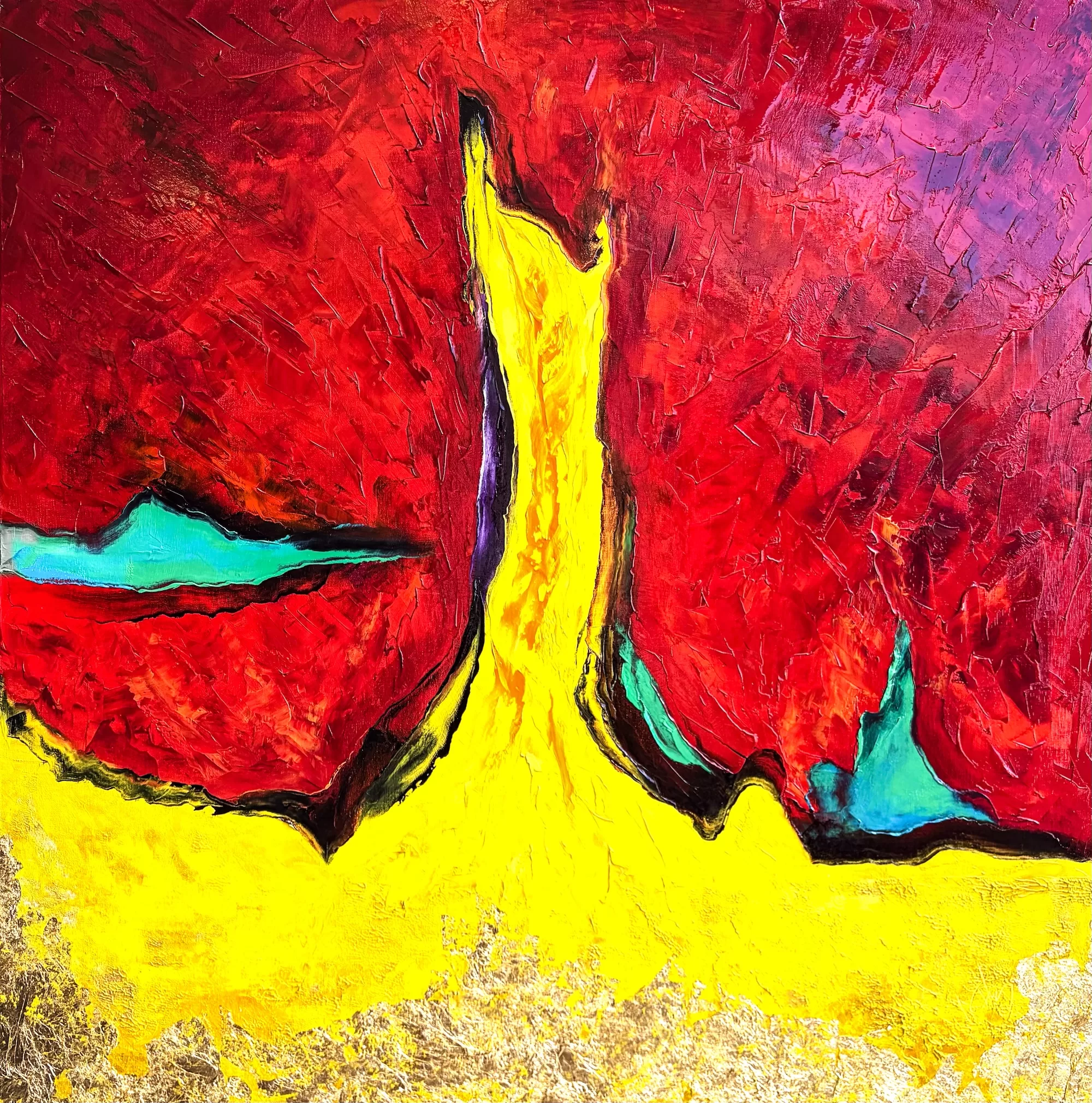
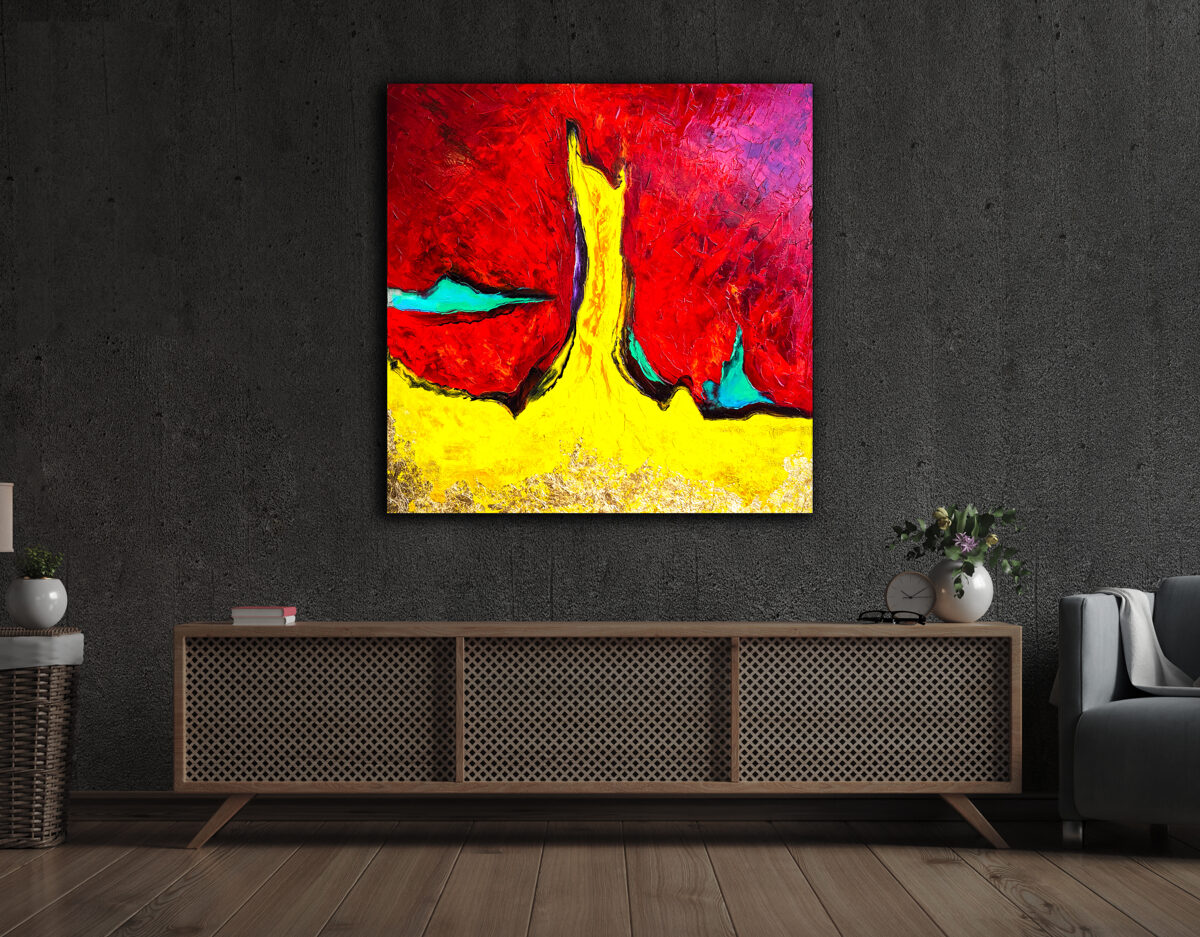
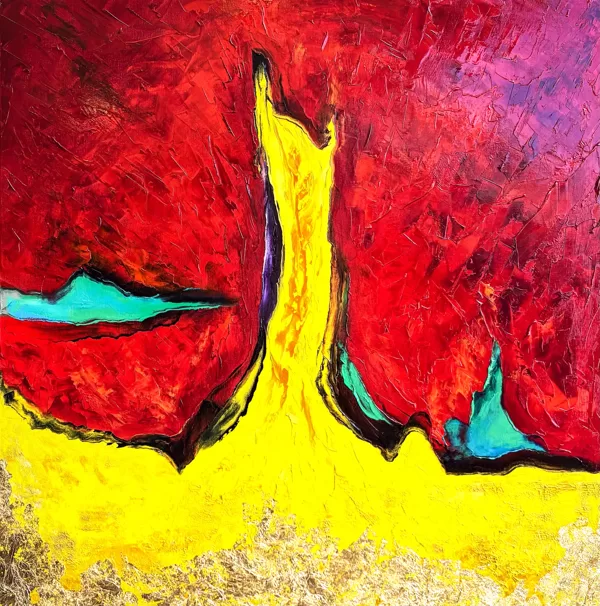
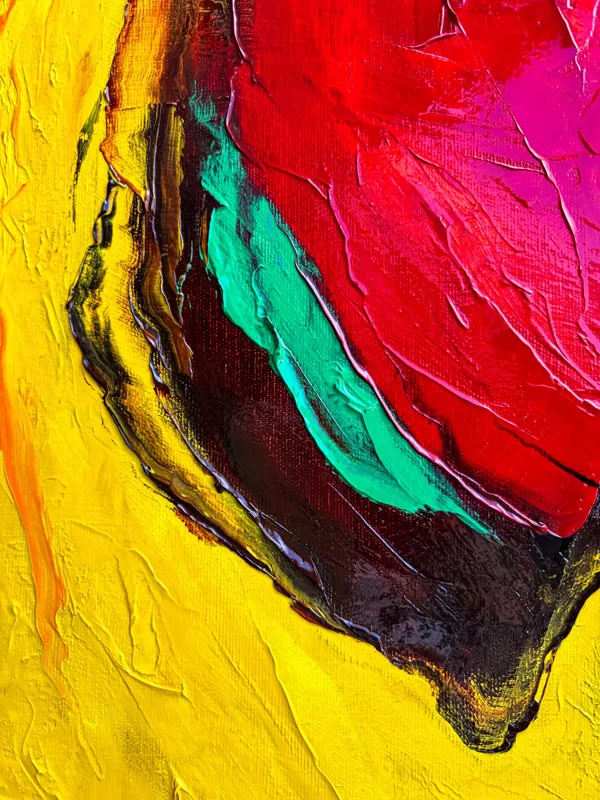
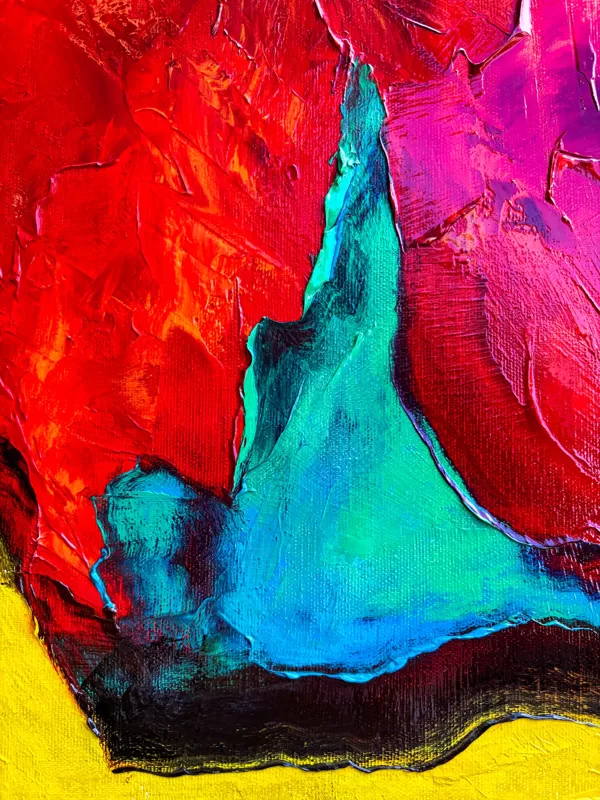
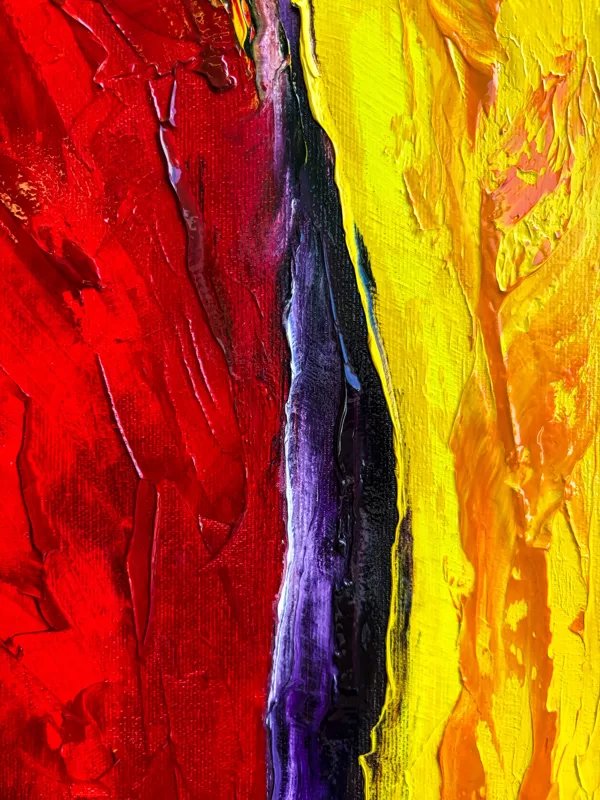
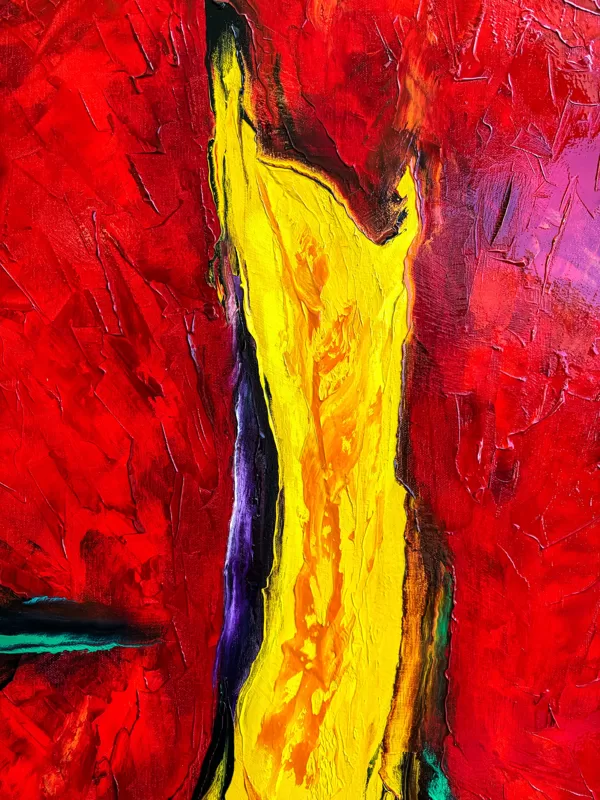
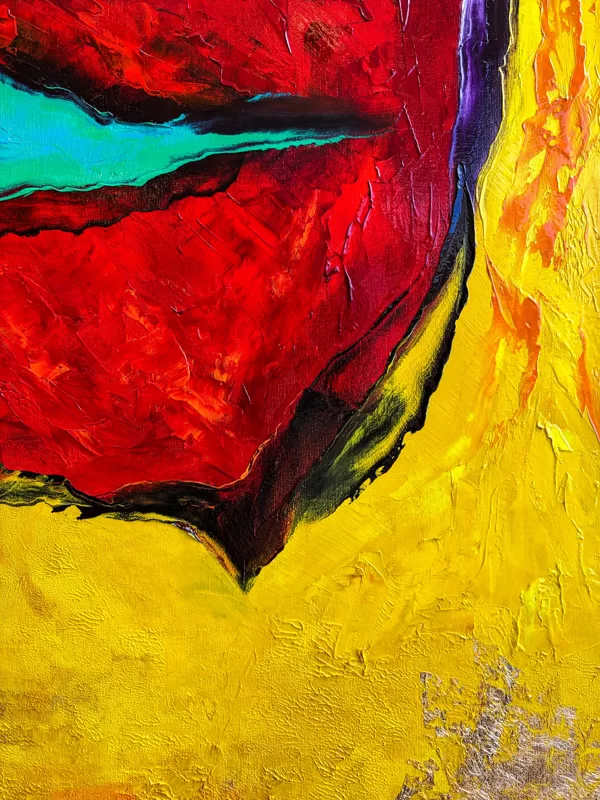
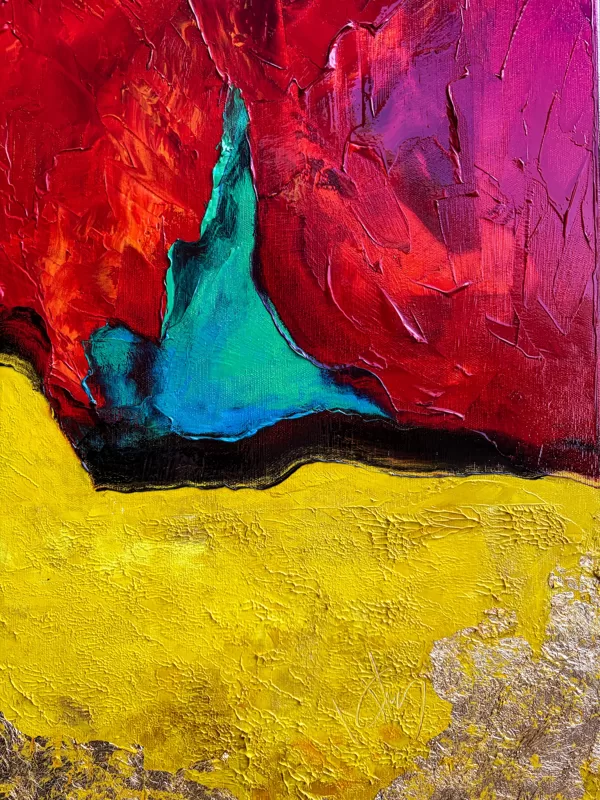
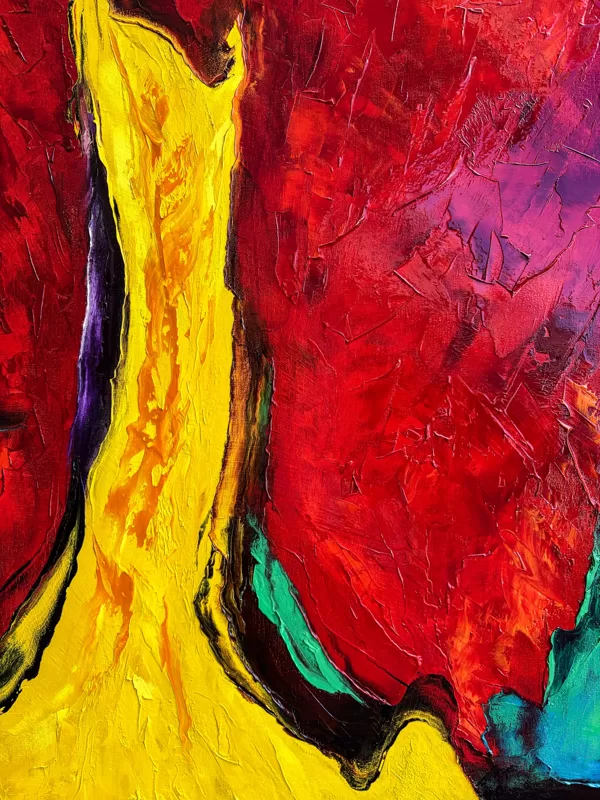
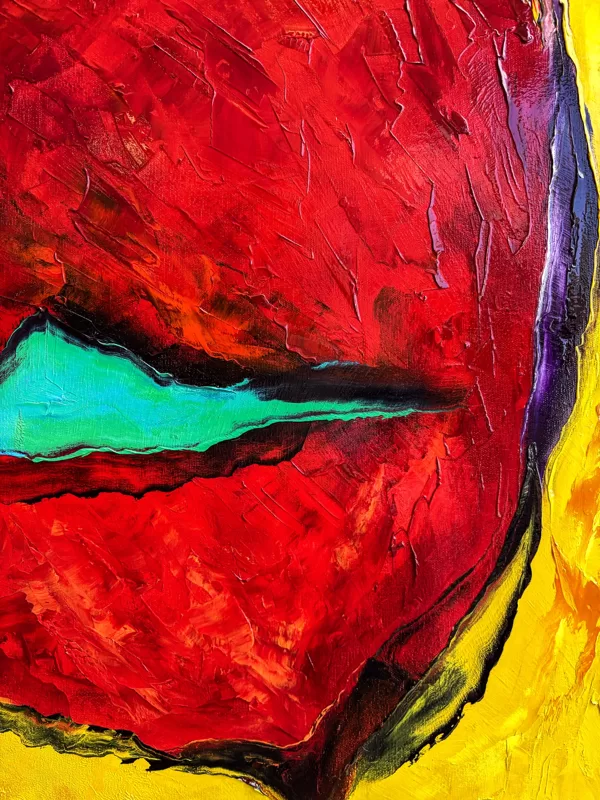
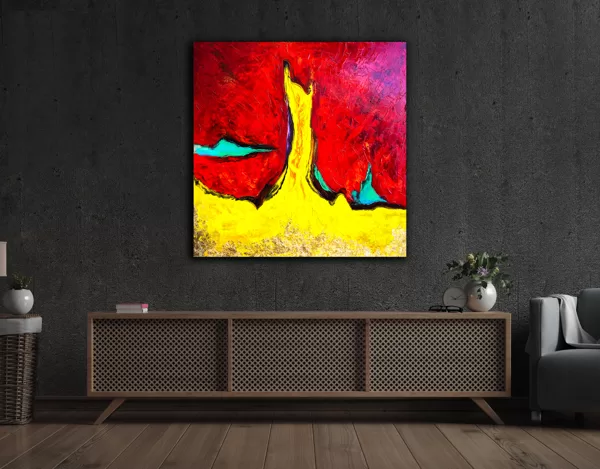
Liberation
- 100 x 100 cm
- Oil and gold on canvas
- Place and year of creation: Sitges, 2026
- This artwork is part of the "Light" series
- AVAILABLE FOR PURCHASE
The Triumph
- 100 x 100 cm
- Oil and gold on canvas
- Place and year of creation: Sitges, 2026
- This artwork is part of the "Light" series
- AVAILABLE FOR PURCHASE